Modular Sortation Systems for E-commerce Fulfilment Centres: A Design Guide
Modular sortation systems increase e-commerce throughput by 40%. Learn how decentralized 48V DC drives and standardized divert modules optimize fulfilment centres.
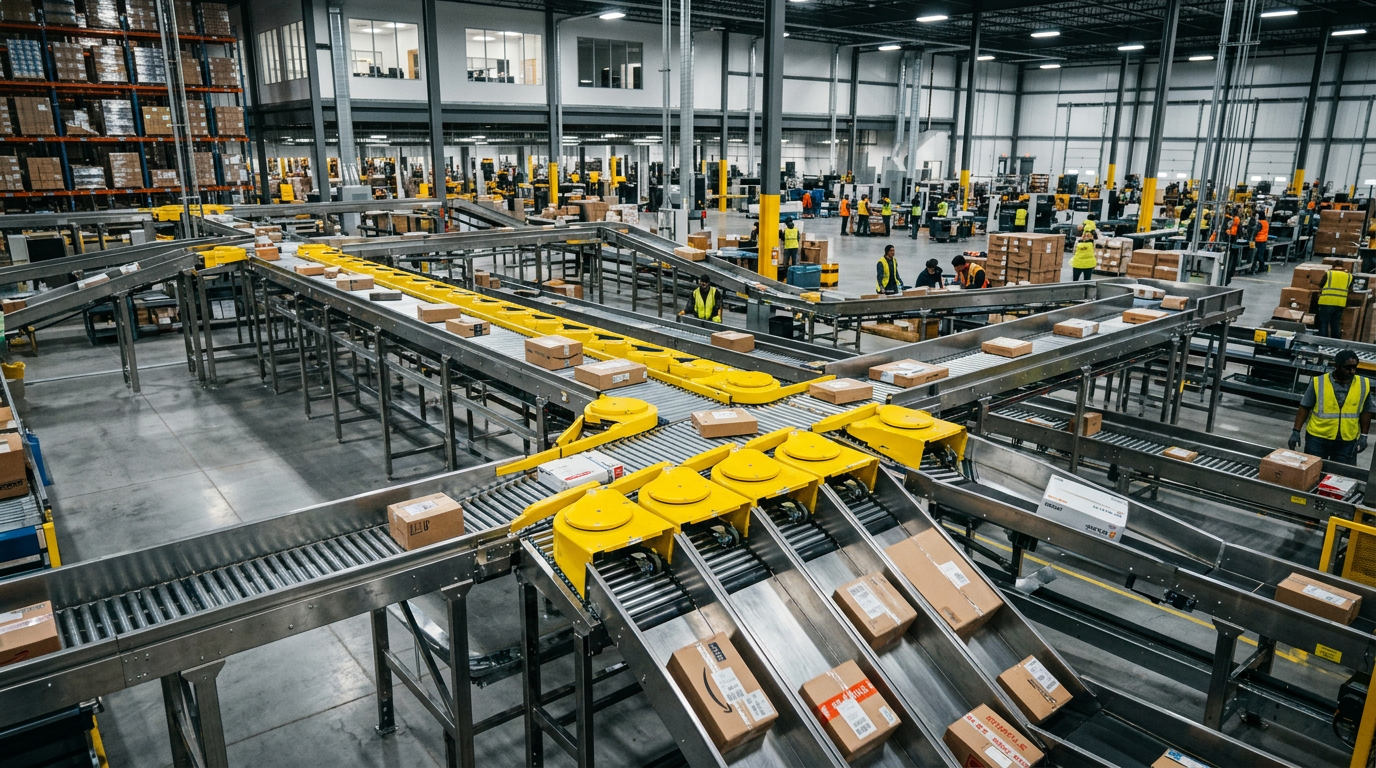
Modular sortation systems in modern e-commerce fulfilment centres can increase throughput by up to 40% compared to traditional fixed-path conveyors by utilizing decentralized control architectures and standardized 24V or 48V DC drive modules. These systems typically achieve sortation rates of 1,500 to 6,000 units per hour (UPH) per induction point while maintaining a footprint reduction of approximately 25% through high-density vertical and horizontal routing.
The Architecture of Modular Sortation
In the rapidly evolving landscape of e-commerce, the shift from rigid, high-capacity "Big Iron" sorters to modular alternatives is driven by the need for scalability. A modular sortation system is defined by its ability to be reconfigured, expanded, or repaired without dismantling the entire line.
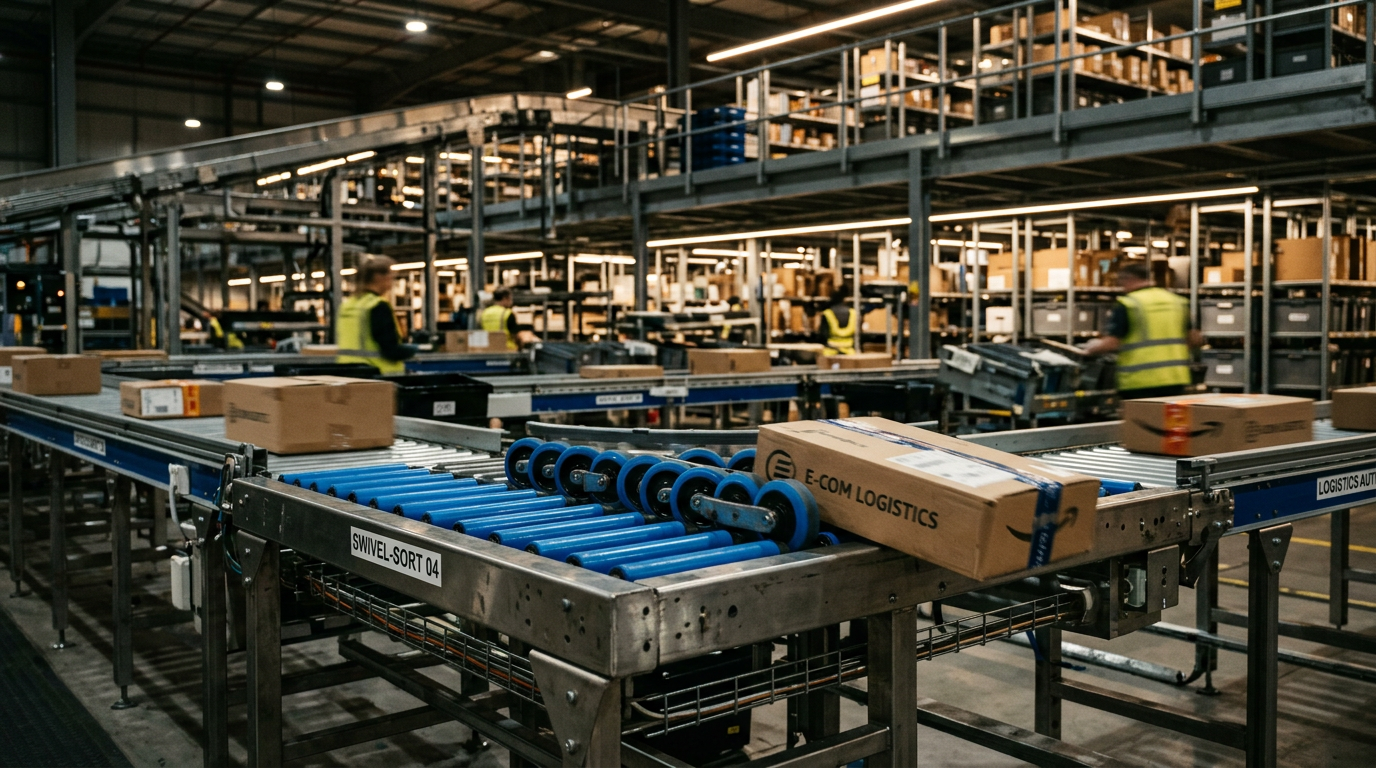
Modern systems are built on standardized mechanical frames—often utilizing aluminum profiles or stainless steel for longevity—and integrated with plug-and-play electronic components. The intelligence of these systems is frequently decentralized. Instead of a single massive PLC managing every motor, local zone controllers manage individual "divert modules" or "swivel wheel modules." This architecture aligns with the IEC 61131-3 standard for programmable controllers, ensuring interoperability across different automation layers.
Key Components of Modular Sorters
- Diverter Modules: Using high-speed pivoting wheels or rollers to transition parcels at angles ranging from 30 to 90 degrees.
- Cross-Belt Modules: Specialized for small, high-friction items like polybags or fragile electronics.
- Pop-up Sorters: Vertical lift modules that engage only when a specific barcode is scanned, minimizing energy consumption.
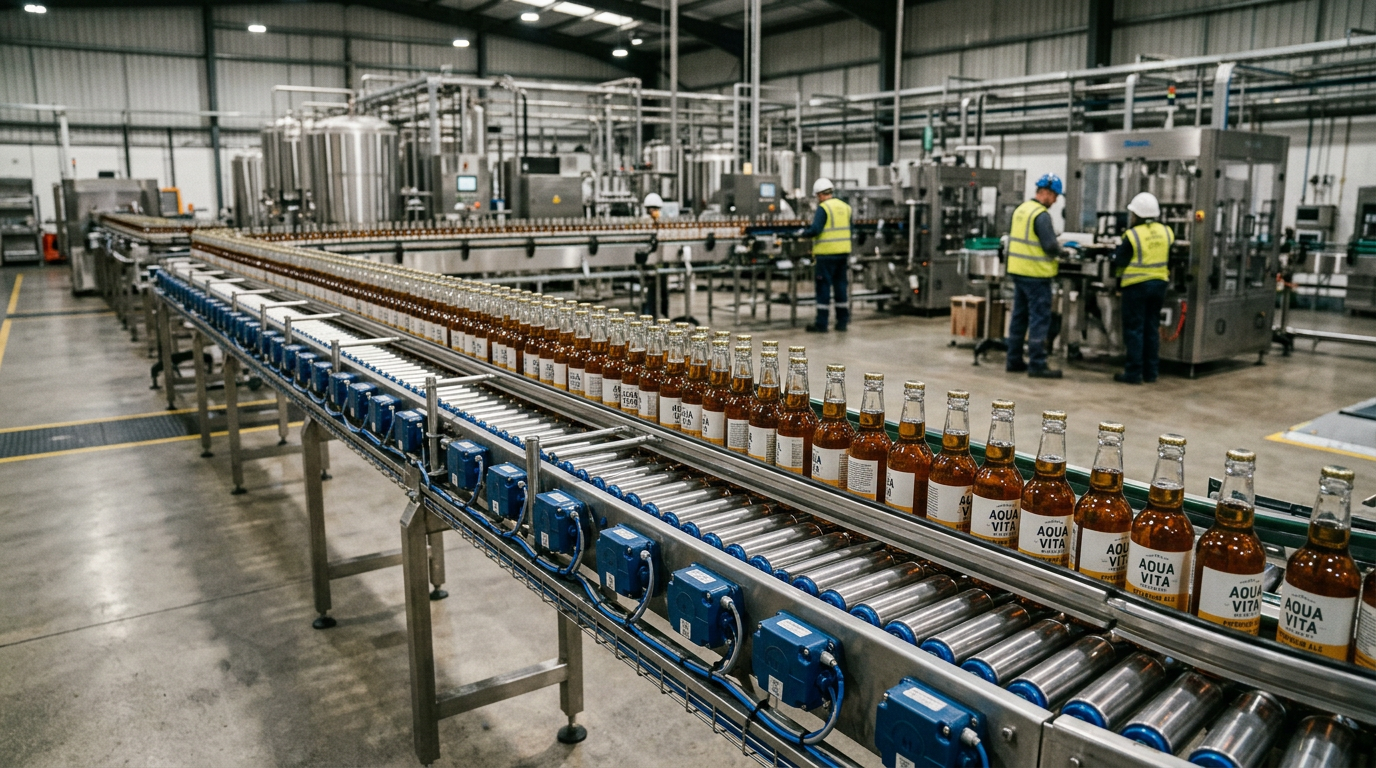
- Integrated Sensors: IP67-rated photoelectric sensors that communicate via IO-Link to provide real-time tracking of parcel position and dimensions.
Comparative Performance: Modular vs. Conventional Sorters
When selecting a sortation technology, engineers must balance initial capital expenditure (CAPEX) against operational flexibility and long-term maintenance costs.
| Feature | Conventional Shoe Sorter | Modular Swivel-Wheel Sorter | Modular Cross-Belt Sorter |
|---|---|---|---|
| Throughput (UPH) | 10,000+ | 2,500 - 4,500 | 6,000 - 15,000 |
| Noise Level (dB) | > 75 dB | < 65 dB | < 70 dB |
| Motor Type | AC Induction (IE3/IE4) | 24V/48V DC Brushless | Servo / Linear Induction |
| Installation Time | Months | Weeks | Weeks |
| Maintenance | High (Mechanical Wear) | Low (Plug-and-Play) | Moderate |
| Flexibility | Fixed | Highly Reconfigurable | Scalable |
Energy Efficiency and the Drive Toward 48V DC
Sustainability in the warehouse is no longer optional. Modern modular systems are transitioning from 24V DC to 48V DC architectures to reduce cabling costs and heat dissipation. By utilizing IE3 or IE4 efficiency class motors, operators can achieve significant energy savings.
Modular systems often employ "run-on-demand" logic. Unlike traditional belt conveyors that run continuously, modular divert sections only activate when a parcel is detected within the zone. This reduces mechanical wear and lowers the total cost of ownership (TCO). For companies seeking a partner in designing these high-efficiency layouts, Easy Conveyors provides the specialized modular building blocks necessary to scale from small regional hubs to massive international distribution centers.
Handling the "Polybag Problem"
One of the greatest challenges in e-commerce fulfilment is the polybag—a flexible, lightweight plastic envelope that often behaves unpredictably on traditional roller conveyors. Modular sortation systems address this through:
- Tight Roller Pitch: Reducing the gap between rollers to prevent bags from snagging.
- High-Friction Belting: Using specialized materials like POM (Polyoxymethylene) with rubber inserts to maintain grip during high-speed diverts.
- Active Alignment: Modular "centering" conveyors that use independent belt speeds to square the parcel before it reaches the sortation point.
These technical refinements are critical for maintaining the high "read rates" required by automated scanning tunnels. Any misalignment can result in a "no-read," forcing the parcel into a manual exception lane and increasing labor costs.
Easy Conveyors stocks the material handling discussed here — ready to ship across Europe.
Control Integration and AI-Driven Diagnostics
The software layer of modular sortation has become as important as the hardware. Integration with a Warehouse Management System (WMS) or Warehouse Execution System (WES) allows for dynamic routing. If one sorter leg becomes congested, the modular system can re-route parcels through an alternative path.
Furthermore, the rise of "Digital Twins" allows engineers to simulate sortation logic before a single module is installed. Using standards such as ISO 23247 for digital twin frameworks, fulfilment centres can predict bottlenecks and optimize motor torque settings for different package weights. This level of granular control is a cornerstone of industrial automation and material handling innovation.
Safety and Compliance Standards
Safety is paramount in high-speed sortation. Modular systems must adhere to rigorous international standards to ensure worker protection:
- ISO 13849-1: Pertains to safety-related parts of control systems, ensuring that a sensor failure or emergency stop triggers a safe state.
- EN 619: The European standard for continuous handling equipment and systems, covering safety and electromagnetic compatibility (EMC) requirements.
- NEMA 12/IP54: Minimum protection ratings for control enclosures in dusty warehouse environments.
Ensuring compliance with OSHA standards regarding pinch points and guarding is essential during the commissioning phase. Modular systems offer an advantage here, as safety guards are often integrated directly into the standardized frame design, reducing the risk of human error during field installation.
Future Trends: Robotic Integration and Autonomous Modules
Looking ahead, we are seeing the convergence of modular conveyors and Autonomous Mobile Robots (AMRs). Some sortation modules are now being designed as "mobile cells" that can be moved by an AMR to different parts of the warehouse depending on seasonal demand (e.g., Black Friday peaks).
This hybrid approach combines the high-volume throughput of fixed modular sortation with the extreme flexibility of robotics. By focusing on modularity, fulfilment centres can future-proof their operations, ensuring that the infrastructure they build today can adapt to the shipping demands of 2030 and beyond. Considerations for "drum motor selection" and "VFD soft-start tuning" remain critical as these mobile modules still rely on high-efficiency drive components to function autonomously. Properly tuned systems reduce vibration, which is a leading cause of sensor misalignment in modular setups.
Conclusion
The shift toward modular sortation systems represents a fundamental change in how e-commerce logistics is handled. By prioritizing flexibility, energy efficiency, and decentralized control, fulfilment centres can manage the increasing complexity of parcel shapes and delivery speeds. Whether upgrading a legacy facility or designing a greenfield site, the modular approach offers a scalable path toward true operational excellence.
Frequently Asked Questions
What is the difference between modular and traditional sortation systems?
Modular sortation uses standardized, plug-and-play sections (diverts, transfers, zones) that can be easily reconfigured or expanded, whereas traditional systems are often custom-engineered, fixed-path structures that are difficult to modify once installed.
Why are 48V DC drives becoming the standard for modular conveyors?
Transitioning from 24V to 48V DC reduces current draw by half for the same power output, allowing for longer cable runs, smaller wire gauges, and less heat dissipation, which improves overall system reliability.
Can modular sortation systems handle polybags and flexible packaging?
Modular systems handle polybags by using high-friction belt inserts, tighter roller pitches to prevent 'diving' between rollers, and active centering modules to ensure the bag is properly positioned for scanning.
What is the average throughput of a modular divert module?
A typical modular divert module can handle between 1,500 and 4,500 units per hour (UPH), depending on parcel size, weight, and the drive technology used (e.g., 24V BLDC vs. high-speed AC).
How does modularity affect maintenance and downtime?
Maintenance is significantly easier because most components are 'plug-and-play.' A failed motor or sensor can be replaced in minutes without specialized tools, and modules can be swapped out during short maintenance windows without stopping the entire line.