Modular Sortation Systems for E-Commerce Fulfilment Centres
Modular sortation systems enable e-commerce hubs to scale throughput to 15,000+ PPH with 40% faster installation and plug-and-play flexibility for seasonal peaks.
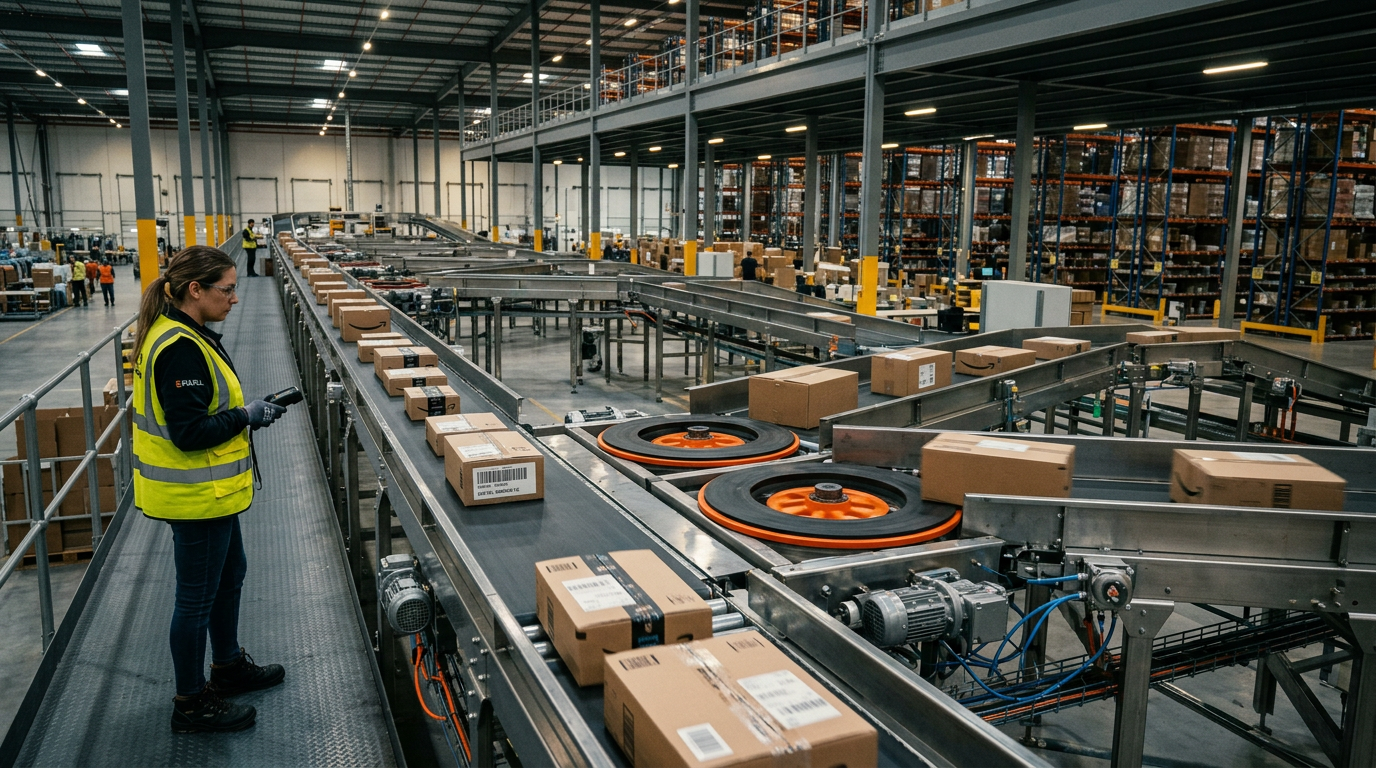
Modular sortation systems in modern e-commerce fulfillment centers achieve throughput rates exceeding 15,000 units per hour while reducing installation lead times by up to 40% compared to traditional fixed-path tilt-tray or cross-belt systems. These systems utilize standardized, pre-configured diverts and transfers that allow operations managers to scale capacity incrementally by adding nodes rather than re-engineering the entire line.
The Architecture of Modular Sortation
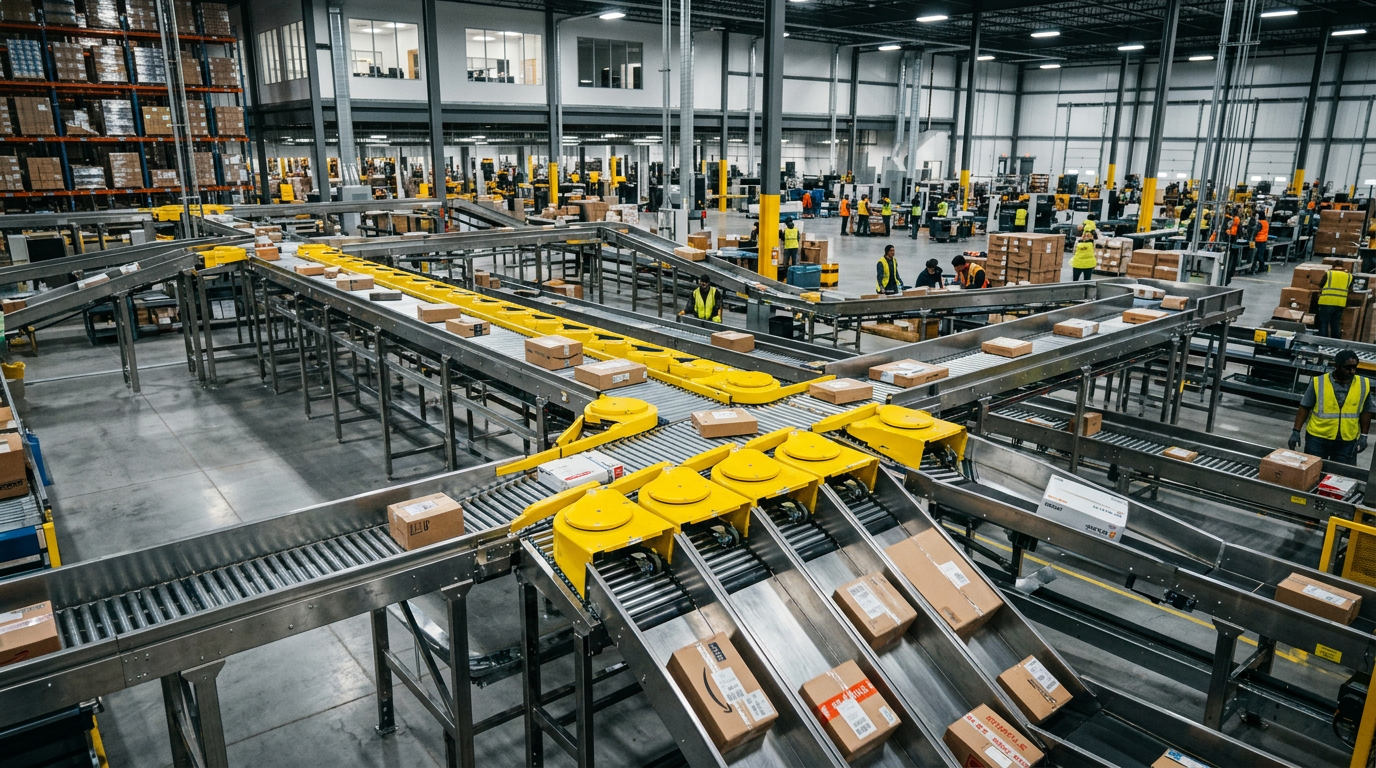
In the high-velocity environment of e-commerce, the "one-size-fits-all" approach to sortation is increasingly obsolete. Modular sortation systems are built on the principle of decentralization. Unlike legacy systems that rely on a single massive motor and a continuous loop, modular units function as autonomous cells. Each cell contains its own drive, logic controller, and sensing array.
This architecture allows for "plug-and-play" scalability. When a facility needs to increase its daily parcel volume from 50,000 to 75,000 units, engineers can simply insert additional modular divert segments into the existing conveyor run. This flexibility is critical for managing the seasonal peaks typical of the e-commerce sector, where Black Friday volumes can be 5x higher than average daily throughput.
Key Components of a Modular Sorter
- Divert Modules: Typically utilizing multi-directional rollers or pop-up wheels to transition items from the main line to a spur.
- Control Nodes: Integrated PLC or decentralized I/O blocks that communicate via industrial Ethernet protocols (Profinet, EtherNet/IP).
- Intelligent Sensors: Photoelectric sensors that detect package dimensions and orientation in real-time.
- Variable Frequency Drives (VFDs): Critical for managing the ramp-up and ramp-down speeds to prevent product slippage or damage.
Performance Comparison: Modular vs. Traditional Sorters
When selecting a sortation technology, engineers must balance initial capital expenditure (CAPEX) against long-term operational flexibility. Modular systems often have a higher per-meter cost but offer significantly lower total cost of ownership (TCO) through reduced downtime and easier maintenance.
| Feature | Modular Roller/Belt Sorter | Traditional Cross-Belt Sorter |
|---|---|---|
| Max Throughput | 2,000 - 8,000 PPH per module | 15,000 - 25,000+ PPH |
| Footprint Flexibility | High (Can be reconfigured) | Low (Fixed loop) |
| Maintenance | Low (Swap-out modules) | High (Complex mechanical chain) |
| Energy Efficiency | High (Run-on-demand) | Medium (Continuous loop) |
| Noise Level | < 70 dB | 75 - 85 dB |
| Installation Time | Days/Weeks | Months |
Technical Standards and Efficiency
Energy efficiency is no longer an afterthought; it is a regulatory and operational requirement. Modern modular systems utilize IE3 or IE4 efficiency class motors to minimize power consumption. Furthermore, the ability to implement "run-on-demand" logic—where individual modules power down when no package is detected—can reduce energy consumption by up to 30% compared to continuously running systems.
Safety standards are equally rigorous. Modular systems must comply with ISO 13849-1 for safety-related parts of control systems. Because these systems are decentralized, the safety circuits must be designed to ensure that an Emergency Stop (E-Stop) triggered at one node correctly communicates across the entire modular network to prevent pile-ups at the transition points.
Easy Conveyors stocks the material handling discussed here — ready to ship across Europe.
Integrating Modular Units with Existing Lines
A common challenge for e-commerce facilities is the integration of new sortation technology into legacy infrastructure. This is where the expertise of a specialist is invaluable. For instance, Easy Conveyors provides modular components that are specifically designed for rapid integration, allowing facilities to upgrade their sortation capabilities without replacing their entire conveyor backbone.
When planning an integration, engineers should focus on the following technical parameters:
- Communication Latency: Ensure that the fieldbus cycle time is sufficient for high-speed diverting (typically <10ms).
- Mechanical Alignment: Precision leveling of modular transitions is required to prevent "snagging" of polybags, which are notorious for getting caught in small gaps.
- VFD Soft-Start Tuning: Proper tuning of the acceleration curves ensures that delicate electronics or liquid goods are not jarred during the diversion process.
Design Trade-offs: Throughput vs. Product Range
While modular sortation offers immense flexibility, there are trade-offs to consider regarding the "parcel mix." The rise of polybags and ultra-small envelopes in e-commerce has forced a redesign of divert modules.
The Polybag Challenge
Traditional roller diverts often struggle with thin polybags because the material can sag between rollers. Modular belt sorters, which use small-diameter nose bars and tight transfers, are generally superior for these product types. If your facility processes a high percentage of non-rigid packaging, modular belt modules with high-friction surfaces are the recommended standard.
Heavy Goods and Automotive Parts
Conversely, if the facility handles heavier items, such as automotive components or bulk household goods, the focus shifts to load-bearing capacity and torque. In these cases, modular systems utilizing heavy-duty roller conveyor design with reinforced frames are necessary to prevent structural deflection under load.
Future Trends: AI and Self-Optimizing Sorters
The next frontier for modular sortation is the integration of Edge AI. By processing sensor data at the module level rather than a central server, systems can now predict component failures before they occur. For example, an increase in current draw in a specific divert motor, as monitored by the VFD, can trigger a maintenance alert in the Warehouse Management System (WMS) to replace a bearing during a scheduled break.
Furthermore, we are seeing a shift toward "autonomous" modular units that can negotiate their own throughput speeds based on upstream and downstream congestion. This reduces the "stop-start" cycles that contribute to mechanical wear and increases the overall lifespan of the system components.
Maintenance and Troubleshooting
One of the primary benefits of modularity is the "Mean Time to Repair" (MTTR). In a traditional sorter, a broken link or a seized motor could shut down the entire facility for hours. In a modular system, the malfunctioning unit can often be bypassed or physically swapped out in less than 30 minutes.
To maximize uptime, operations teams should maintain a stock of "critical modules"—complete assemblies of the most common divert and drive units. When a failure occurs, the faulty module is removed, a new one is bolted in, and the communication cables are reconnected. The faulty unit is then repaired offline in a controlled maintenance environment, ensuring that the primary sortation line continues to fulfill orders.
By adhering to standardized mechanical interfaces and standardized communication protocols, e-commerce fulfillment centers can build a resilient, scalable, and highly efficient material handling ecosystem that is ready for the demands of the future.
Frequently Asked Questions
What is a modular sortation system?
Modular sortation refers to a decentralized conveyor system where individual divert and transfer units are self-contained modules with their own drives and controls, allowing for rapid reconfiguration and scaling.
How many parcels per hour can a modular sorter handle?
A standard modular divert module can typically handle between 2,000 and 8,000 parcels per hour (PPH), though this varies based on product size and the number of diverts installed in series.
Can modular sorters handle polybags and flexible packaging?
Yes, modular sorters are ideal for polybags, provided they use small-diameter rollers or modular belt transfers to minimize gaps where flexible packaging could snag.
What is the main advantage of modular vs. traditional sorters?
Modular systems offer faster installation, easier maintenance (module swapping), and the ability to scale capacity incrementally, whereas traditional sorters are often fixed in capacity and footprint.