Maximizing Throughput: Modular Sortation Systems for E-commerce
Modular sortation systems increase e-commerce throughput by 30% using decentralized diverters and 24V DC MDR technology for rapid scaling and energy efficiency.
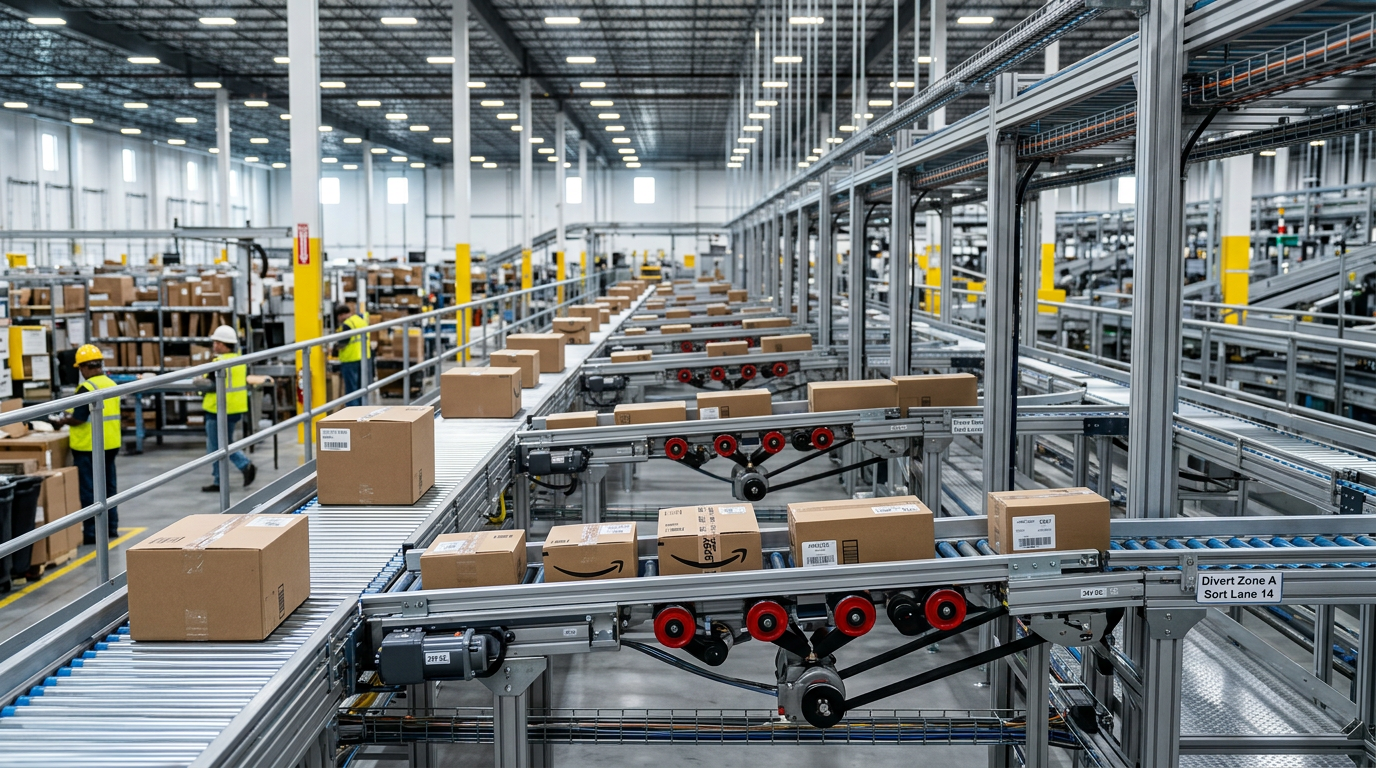
At the core of modern logistics, modular sortation systems achieve throughput rates of 2,000 to over 10,000 units per hour (UPH) by utilizing a decentralized architecture that allows for 30% faster deployment compared to traditional fixed-path sorters. These systems rely on high-speed diverters, pop-up rollers, and cross-belt modules that can be reconfigured or expanded within a single weekend shift to meet seasonal peak demands.
The Shift Toward Modular Sortation Architecture
For decades, e-commerce fulfillment relied on "monolithic" sorters—massive, custom-engineered steel structures designed for a specific volume and a specific footprint. However, the volatility of modern retail cycle times has rendered these rigid systems a liability. Modular sortation systems solve this by treating the conveyor line as a series of plug-and-play sections.
A modular approach utilizes standardized mechanical interfaces and localized control logic. According to VDMA standards, the integration of decentralized drive technology allows each module to operate with its own internal logic, communicating with the Warehouse Management System (WMS) via industrial Ethernet protocols like PROFINET or EtherNet/IP. This granularity means that if one section of the sorter requires maintenance, the rest of the loop can often remain operational, or "fail-soft," preventing a total facility shutdown.
Key Technologies in Modular Sortation
To achieve the precision required for polybags, cartons, and padded mailers, modular systems employ several distinct divert mechanisms:
1. Pop-up Roller and Wheel Diverts
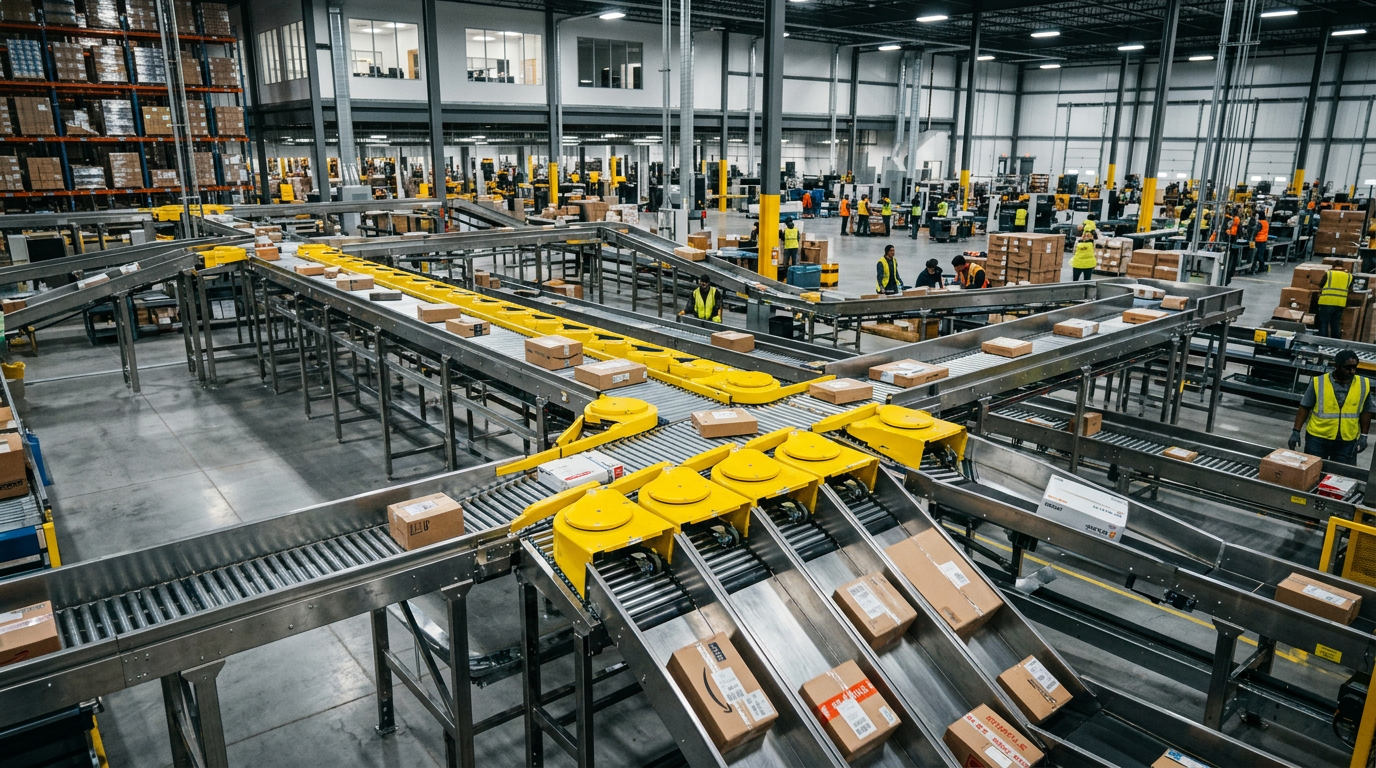
Commonly used for medium-rate applications (up to 4,000 UPH), these modules sit within the conveyor frame. When a barcode is scanned and matched to a destination, a bank of wheels rises pneumatically or electrically to steer the package at a 30, 45, or 90-degree angle. These are ideal for "zone-skipping" in e-commerce sortation.
2. High-Speed Cross-Belt Modules
For high-velocity fulfillment centers, modular cross-belt sorters offer the highest accuracy. Each carrier is a mini-conveyor belt oriented 90 degrees to the direction of travel. Because the discharge is motorized rather than gravity-fed, these systems handle "non-conveyables" like round mailing tubes or lightweight envelopes with a 99.9% accuracy rate.
3. Swivel-Wheel Diverters
These modules offer maximum flexibility, capable of bi-directional sorting. By rotating the drive wheels 180 degrees, a single module can service two different chutes on opposite sides of the line, significantly reducing the system's total footprint.
| Feature | Pop-up Wheel Divert | Swivel-Wheel Divert | Modular Cross-Belt |
|---|---|---|---|
| Throughput (UPH) | 2,000 - 4,500 | 4,000 - 8,000 | 10,000+ |
| Product Weight | 0.5kg - 35kg | 0.1kg - 50kg | 0.05kg - 35kg |
| Divert Angle | Fixed (30°/90°) | Dynamic (0-90°) | 90° Motorized |
| Maintenance Level | Moderate | Low (Electric) | Moderate |
| Typical Drive Type | 24V DC MDR | Servo / Stepper | Linear Induction / Servo |
Scaling for Peak Season: The "Lego" Strategy
The primary advantage of modularity is the ability to scale "out" rather than "up." In a traditional setup, increasing capacity meant replacing the entire sorter. In a modular environment, engineers can add additional diverter modules to create new discharge points or extend the induction zone to accommodate more operators during peak periods like Black Friday.
The Easy Conveyors product range exemplifies this philosophy, providing standardized chain and belt platforms that integrate seamlessly with automated sortation logic. By utilizing pre-engineered modules, plant managers reduce the "engineering debt" associated with custom-built solutions.
Easy Conveyors stocks the material handling discussed here — ready to ship across Europe.
Efficiency and Sustainability: Motor Technology
Energy consumption is a critical KPI in 24/7 fulfillment operations. Modern sortation modules have transitioned from AC induction motors with complex pneumatic linkages to 24V or 48V DC Motor Driven Rollers (MDR).
These rollers operate on a "run-on-demand" basis. Instead of a 5kW motor running a continuous chain, only the rollers under the package are energized. This can lead to energy savings of up to 50% (SEW-Eurodrive case studies). Furthermore, the use of IE3 and IE4 efficiency class motors (IEC 60034-30-1) ensures that even during high-duty cycles, the carbon footprint of the sortation process remains optimized.
Design Trade-offs: When to Choose Modular
While modularity offers flexibility, there are design trade-offs to consider:
- Induction Gapping: Modular sorters require precise "gapping" (the space between packages). If the induction modules are not tuned correctly, "doubles" (two packages entering one divert zone) can cause jams. Sophisticated VFD soft-start tuning is essential for induction modules to prevent package slippage.
- Control Complexity: While mechanical installation is faster, the decentralized nature of these systems requires robust PLC programming. Each module must act as a node on the network, necessitating high-speed data processing to handle the sub-millisecond divert triggers required at high speeds.
- Maintenance Profiles: Modular systems often have more individual motors than a single long-belt sorter. However, these motors are typically smaller, cheaper, and can be replaced in minutes via quick-disconnect cables (M12 or M8 connectors), moving away from intensive on-site wiring.
Implementation: From Receiving to Shipping
In a typical fulfillment center, modular sortation is deployed in three primary areas:
- Inbound Decanting: Sorting incoming bulk shipments to specific tote aisles for put-away.
- Order Consolidation: Redirecting multi-item orders to specific pack stations where they meet other components of the same order.
- Outbound Shipping: The final sort where packages are routed to specific carrier chutes (e.g., DHL, FedEx, UPS) based on the shipping label.
For facilities handling food or pharmaceuticals, hygienic wash-down design principles must be applied to the modular frames, ensuring that even the most complex sortation logic is housed in IP66 or IP69K rated enclosures to withstand cleaning protocols.
Future-Proofing with AI and Vision Systems
The next evolution of modular sortation involves the integration of AI-enabled vision systems. Unlike traditional fixed-position scanners, modular AI cameras can be mounted at any point on the frame to identify package orientation, size, and label position on the fly. This data is fed back to the diverter module to adjust the torque and speed of the divert action autonomously, further reducing the risk of damage to fragile e-commerce goods.
By adopting a modular sortation strategy, e-commerce operators gain the agility to pivot their operations as quickly as consumer trends shift, ensuring that the facility built today remains relevant for the demands of 2030 and beyond.
Frequently Asked Questions
What is the difference between modular and traditional sortation?
Modular sortation uses standardized, self-contained sections (modules) that can be rearranged, whereas traditional sortation is a single, large-scale custom machine that is difficult to modify once installed.
What is the average throughput for a modular sorter?
Throughput varies by technology: Wheel diverters handle 2,000–4,500 UPH, while modular cross-belt systems can exceed 10,000 UPH depending on package size and gapping.
Are modular sorters energy efficient?
Yes, most modular systems use 24V or 48V DC Motor Driven Rollers (MDR) which only run when a package is detected, reducing energy consumption by up to 50% compared to continuous-run AC systems.
Can modular sorters handle polybags and small envelopes?
Modular sorters are highly flexible; they can handle everything from lightweight polybags (50g) to heavy cartons (50kg), provided the correct divert module (e.g., swivel wheel vs. cross-belt) is selected.
What is the maintenance requirement for these systems?
Because divert modules use quick-disconnect cables and standardized parts, a failed motor or controller can usually be replaced in under 15 minutes, significantly reducing Mean Time to Repair (MTTR).