Scaling Efficiency: Modular Sortation Systems for E-commerce Fulfilment Centres
Modular sortation systems offer e-commerce hubs the flexibility to scale from 2,500 to 15,000 UPH with plug-and-play 24V DC divert modules and high-speed controls.

Modular sortation systems in e-commerce fulfillment utilize scalable divert modules to achieve throughput rates between 2,500 and 15,000 units per hour (UPH) while maintaining a footprint efficiency up to 30% higher than traditional fixed sorters. By leveraging standardized 24V or 48V DC drive technology and plug-and-play communication protocols like EtherNet/IP or PROFINET, these systems allow retailers to scale sortation capacity linearly in response to seasonal peaks.
The Shift Toward Modular Sortation Architecture
In the volatile landscape of e-commerce, the rigid, monolithic sortation systems of the past—such as massive tilt-tray or cross-belt sorters—are increasingly being challenged by modular alternatives. Traditional systems require significant upfront capital expenditure (CAPEX) and offer limited flexibility; once installed, expanding their capacity often requires weeks of downtime and structural modifications.
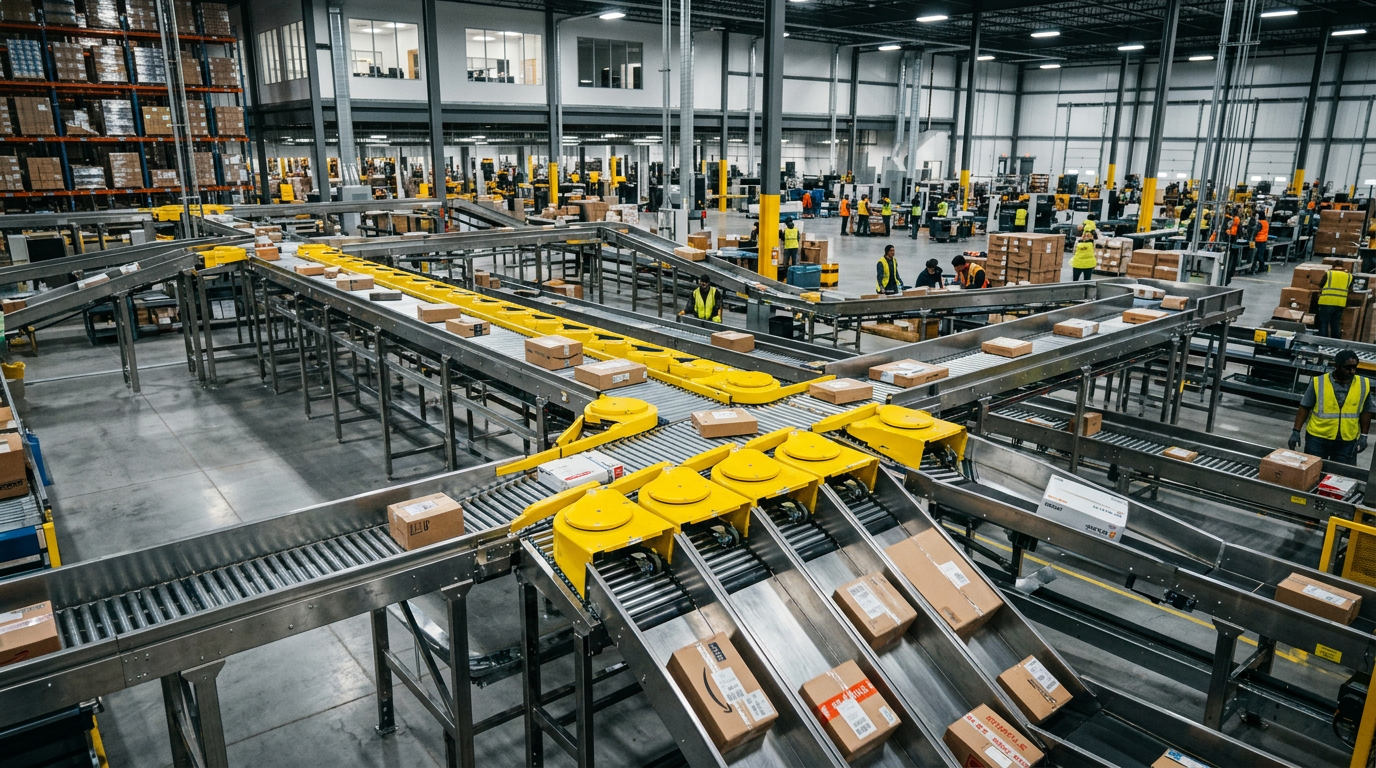
Modular sortation systems, by contrast, are built from standardized segments. These units, often referred to as "sort cells" or "divert modules," can be integrated into existing conveyor lines with minimal mechanical intervention. This architecture supports a "pay-as-you-grow" model, allowing fulfillment centers to start with a basic layout and add divert points or induction zones as SKU counts and order volumes increase.
Key Performance Metrics for Modular Sorters
When evaluating these systems, engineers focus on three primary metrics:
- Throughput Density: The number of parcels sorted per square meter of floor space.
- Divert Accuracy: The percentage of correctly routed items, typically required to be >99.9% in high-speed environments.
- Gapping Precision: The ability of the software to maintain consistent spacing between items to maximize the efficiency of the divert mechanism.
Core Technologies in Modular Sortation
Modern modular systems rely on several distinct mechanical approaches to move product from a primary transport line to a secondary destination, such as a shipping gaylord or a packing station.
Pop-up Diverts and Transfer Modules
Pop-up units use rollers or small belts that rise vertically to engage the bottom of a parcel. These are ideal for standardized cardboard boxes and rigid totes. They generally operate on a 24V DC platform, making them energy-efficient and easy to maintain. However, they may struggle with "polybags"—the flexible plastic mailers that now constitute up to 50% of e-commerce volume.
Swivel-Wheel Diverts
Swivel-wheel modules feature arrays of multidirectional wheels that can pivot at precise angles (often 30°, 45°, or 90°). These systems offer high throughput (up to 8,000 UPH) and can handle a wider variety of packaging types, including bubble mailers and small padded envelopes. The sophisticated control of each wheel allows for "divert-on-the-fly" capabilities without stopping the main flow.
Vertical Switch Sorters
For facilities with multi-level mezzanines, modular vertical switches allow parcels to change elevations while being sorted. This is critical for maximizing vertical cube utilization in expensive urban "last-mile" hubs.
Technical Comparison: Modular vs. Conventional Sorters
| Feature | Modular Sorters (Divert Modules) | Conventional Sorters (Cross-Belt) |
|---|---|---|
| Typical Throughput | 2,000 - 15,000 UPH | 15,000 - 30,000+ UPH |
| Installation Time | Days / Weeks | Months |
| Energy Profile | Modular 24V/48V DC (Run-on-demand) | High-voltage AC (Continuous run) |
| Maintenance | Module replacement (Hot-swappable) | Specialized onsite mechanical teams |
| Scalability | High (Add/Move modules) | Low (Fixed loop/track) |
| Packaging Suitability | Mixed (Totes, Boxes, Polybags) | High (All types) |
Easy Conveyors stocks the material handling discussed here — ready to ship across Europe.
Electrical and Control Integration
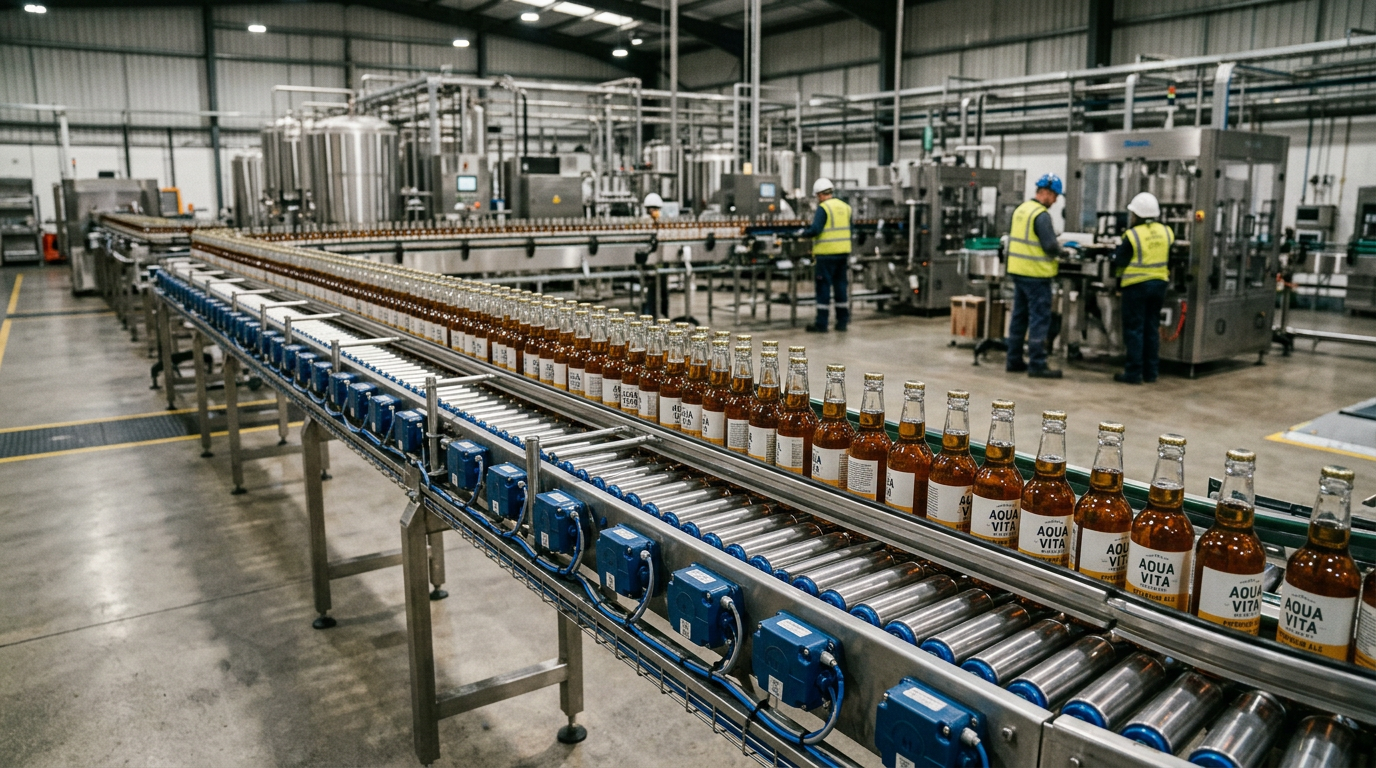
The "modularity" of these systems is not just mechanical; it is deeply rooted in the electrical controls. Most modern modules utilize Motor Driven Roller (MDR) technology. These rollers contain internal brushless DC motors that eliminate the need for complex pneumatic piping or external drive chains.
Sophisticated decentralization is achieved through Fieldbus modules. By using an IO-Link or EtherNet/IP interface, every divert point acts as an intelligent node on the network. This allows for predictive maintenance; for example, the system can monitor the current draw of a specific divert motor. If the current spikes beyond ISO 10816 vibration standards or manufacturer-defined thresholds, the system flags a potential bearing failure before a breakdown occurs.
When designing these complex fulfillment networks, partnering with an experienced manufacturer is vital. Easy Conveyors provides high-quality modular components that allow integrators to build flexible, high-performance sortation lines tailored to specific facility dimensions.
Addressing the Polybag Challenge
The rise of flexible packaging is the single largest disruptor in sortation design. Polybags do not behave like rigid boxes; they can wrap around rollers, slide unpredictably on friction-top belts, and fail to trigger traditional photo-eye sensors.
To maintain high throughput with polybags, modular systems are incorporating:
- Small-diameter rollers: Reducing the gap between rollers (pitch) to prevent thin packages from sagging.
- High-friction belts: Specialized coatings on divert belts to ensure "grip" on plastic surfaces.
- Vision-based sensing: Moving beyond simple light-break sensors to 3D volume dimensioning and AI-powered edge detection to ensure the divert mechanism triggers at the exact center of gravity of the package.
Strategic Maintenance and Reliability
One of the most significant advantages of modularity is the reduction in Mean Time To Repair (MTTR). In a conventional system, a failure in the main drive chain can halt the entire sorter. In a modular setup:
- Redundancy: If one divert module fails, the control logic can be re-routed to send parcels to a secondary station or a "re-circ" loop.
- Hot-Swappability: Mechanical teams can often swap an entire 1-meter divert section in under 30 minutes, compared to the hours required for belt splicing or chain repair.
- Standardization: Facilities only need to stock one or two types of spare modules to cover the entire line, drastically reducing spare parts inventory costs.
Selecting the right components requires a deep understanding of conveyor belt friction coefficients and VFD soft-start tuning to ensure that high-speed diverts don't cause parcels to tumble or slip. Furthermore, integrating these modules with hygienic wash-down design standards (where applicable for grocery fulfillment) ensures long-term compliance with safety regulations.
Future Outlook: AI and AMR Integration
The next evolution of modular sortation involves the integration of Autonomous Mobile Robots (AMRs) with modular conveyor pick-up points. Instead of fixed chutes, a modular divert might feed directly onto an AMR deck. This creates a hyper-flexible environment where the "sortation destination" is no longer a physical location, but a mobile platform that can move to whichever outbound dock has the highest priority.
As e-commerce continues to demand faster delivery windows and higher SKU variety, the ability to rapidly reconfigure sorter layouts will become a competitive necessity rather than a luxury. Engineering teams must prioritize systems that offer mechanical simplicity, high-speed digital control, and the structural integrity to withstand 24/7/365 operations.
Frequently Asked Questions
Can modular sortation systems handle polybags?
Most modern modular diverts can handle a wide variety of packaging, but for high volumes of polybags, small-pitch rollers and high-friction divert belts are required to prevent jams.
What is the maximum throughput for a modular sorter?
While individual module limits vary, high-performance swivel-wheel diverts can achieve up to 15,000 units per hour (UPH) depending on parcel length and gapping. Kon-modular high-speed loop sorters still hold the record for higher volumes.
How do modular systems compare in energy efficiency?
Modular systems typically use 24V or 48V DC Motor Driven Rollers (MDR). These run only when a package is present, reducing energy consumption by up to 50% compared to AC-driven conveyor loops that run continuously.
What is the typical installation timeframe?
Modular systems can typically be installed or expanded in a matter of days or weeks, whereas traditional fixed-loop sorters often require months of structural engineering and installation.
Sources & references
- [1]Interroll Modular Conveyor Platform (MCP) and Sortation Solutions
- [2]Intralox Activated Roller Belt (ARB) Technology for E-commerce Sortation
- [3]Automated Sortation Systems and Material Handling Technology
- [4]Siemens Material Handling Automation and Modular Sortation Controls
- [5]ISO 15386:2014 - Packaging and Material Handling Equipment Standards