Optimizing 3PL Warehouses with Case and Tote Conveyor Systems
Optimize your 3PL warehouse with high-throughput case and tote conveyor systems. Learn about 24V MDR technology, ZPA logic, and modular design for maximum flexibility.
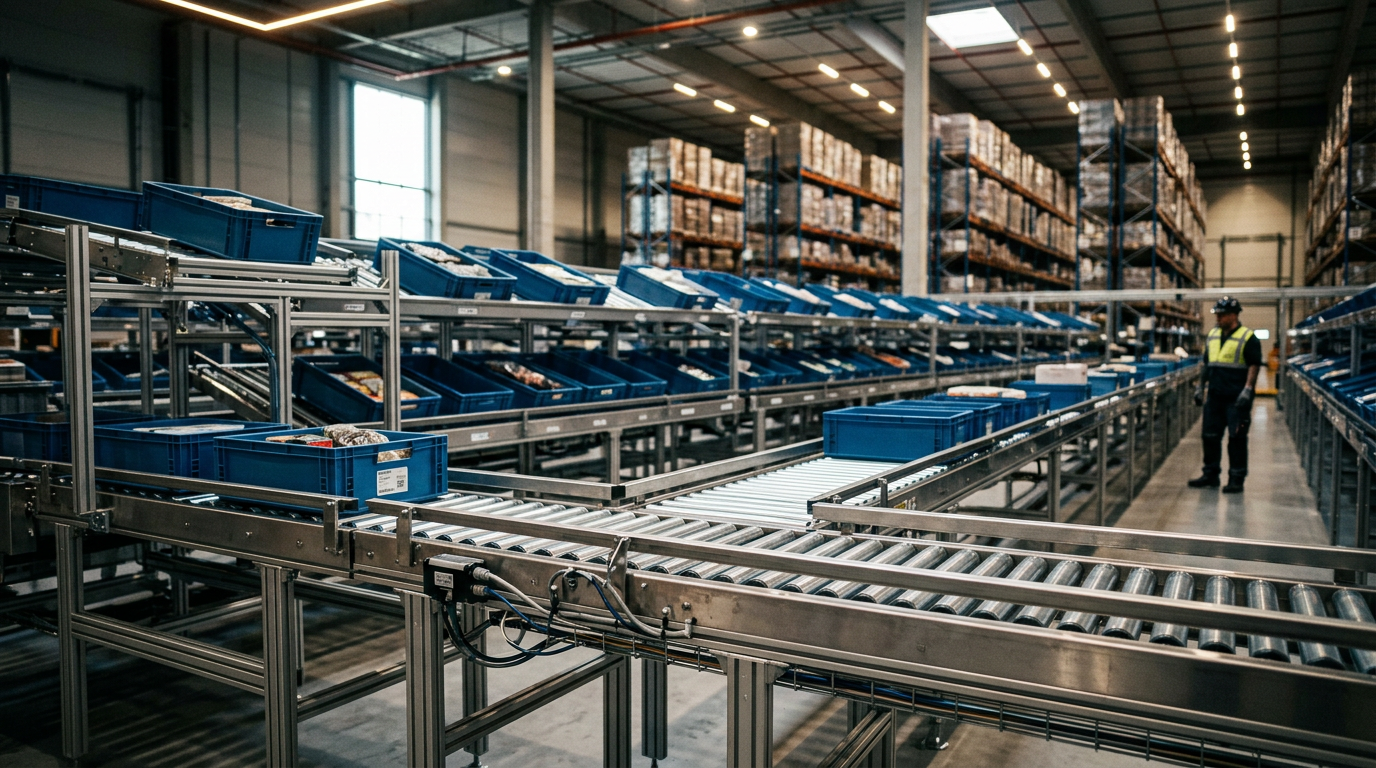
Modern 3PL (Third-Party Logistics) warehouses rely on high-speed case and tote conveyors to manage SKU proliferation and omnichannel fulfillment, where systems must typically handle throughputs ranging from 1,200 to 3,600 units per hour while maintaining a flexible footprint. By utilizing 24V DC Motorized Drive Roller (MDR) technology and modular plastic belt designs, facilities can achieve energy savings of up to 50% compared to traditional AC-driven lines through "run-on-demand" logic.
The Architecture of 3PL Conveyor Systems
In the high-stakes environment of third-party logistics, the ability to adapt to changing client contracts is paramount. Unlike a captive manufacturing plant, a 3PL facility might handle electronics one month and pharmaceutical totes the next. This necessitates a conveyor architecture that is both modular and highly scalable.
The core of most 3PL operations is the tote and case conveyor. These systems bridge the gap between receiving, storage (often involving AS/RS systems), picking stations, and shipping. The selection of the specific conveyor type depends heavily on the weight of the handled unit, the required throughput, and the physical characteristics of the packaging material.
24V DC Motorized Drive Rollers (MDR)
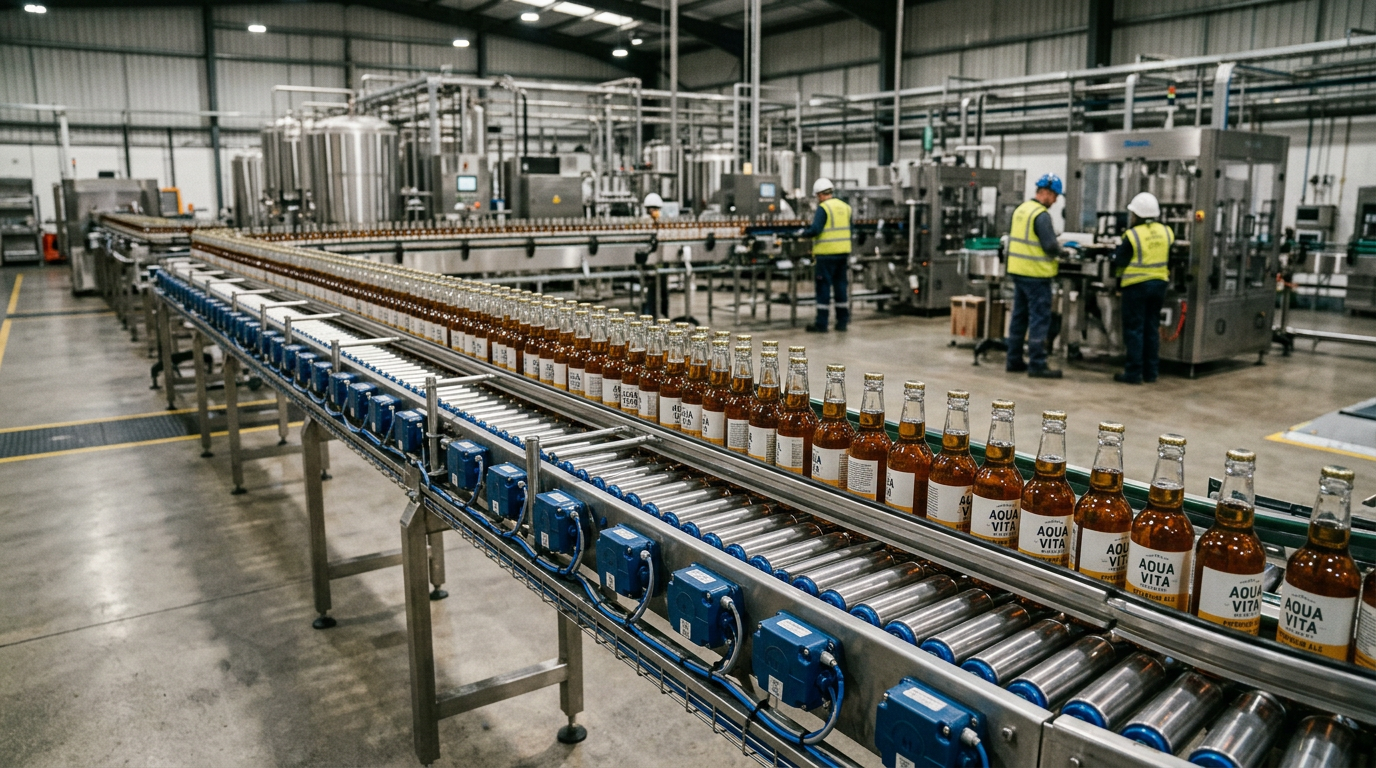
MDR technology has become the industry standard for 3PL warehouses. Unlike traditional conveyors that use a single large motor to drive a long section of belt, MDR systems divide the conveyor into "zones." Each zone is powered by a roller containing an internal brushless DC motor.
- Zero Pressure Accumulation (ZPA): This is the hallmark of MDR. It allows cases or totes to be buffered on the line without touching each other, preventing product damage and "shingling."
- Energy Efficiency: Because zones only run when a product is present, the system consumes significantly less power.
- Safety: 24V systems operate at a low voltage, reducing electrical risks and often simplifying the installation process compared to 480V AC systems.
Modular Plastic Belt Conveyors
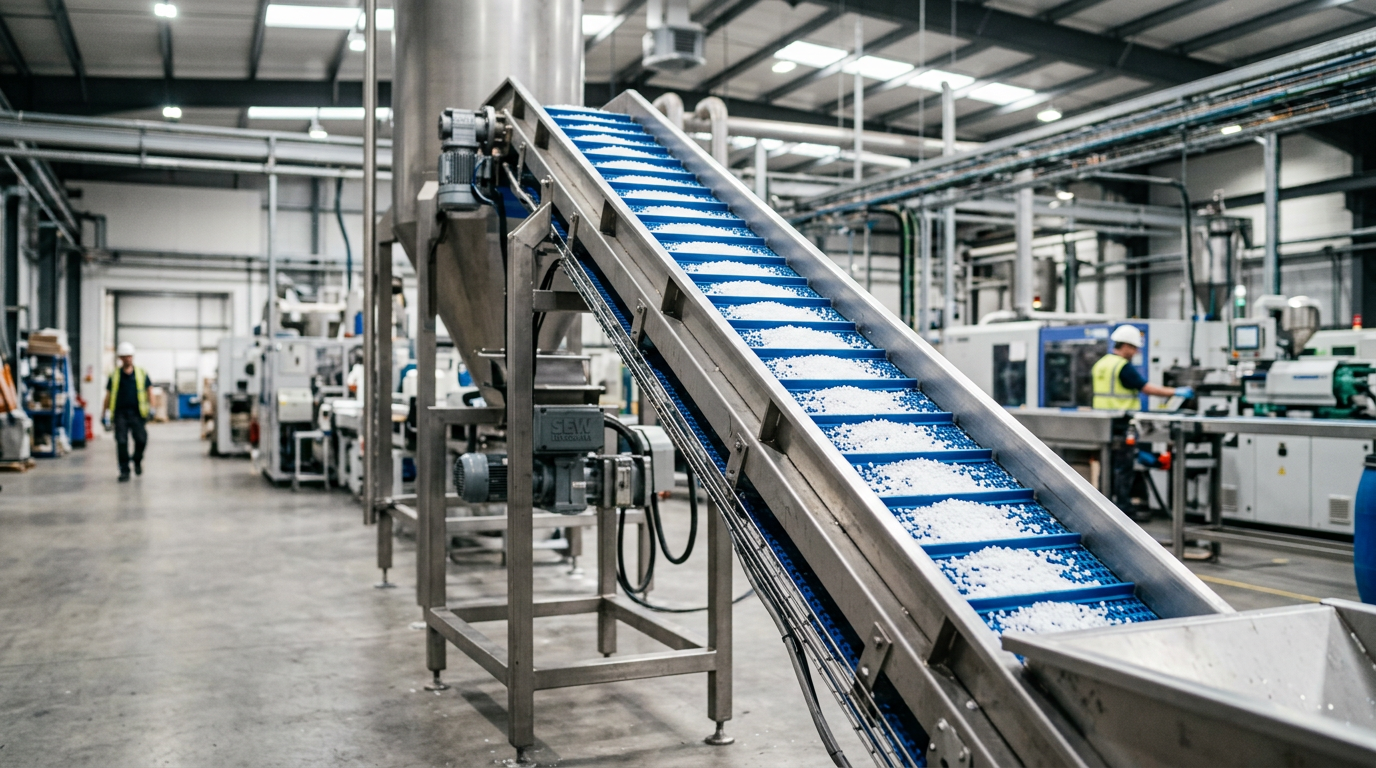
For heavier totes or operations requiring high-speed sortation and curves, modular plastic belt conveyors offer superior durability. These belts consist of interlocking plastic segments, which makes them easy to repair. If a section is damaged, you simply replace the individual slats rather than the entire belt. For 3PLs looking for European-engineered reliability in these modular setups, Easy Conveyors provides specialized modules that integrate seamlessly into complex warehouse layouts.
Key Selection Criteria: MDR vs. AC Belt Conveyors
Choosing between MDR and traditional AC belt conveyors involves balancing initial capital expenditure (CAPEX) against long-term operational expenditure (OPEX).
| Feature | 24V DC MDR | AC Flat Belt Conveyor |
|---|---|---|
| Throughput | Moderate to High (up to 60m/min) | Very High (up to 120m/min) |
| Energy Consumption | Low (Run-on-demand) | High (Continuous run) |
| Noise Level | < 60 dB | 75-85 dB |
| Maintenance | Low (Modular swap-out) | Moderate (Belt tracking/tensioning) |
| Accumulation | Inherent (ZPA) | Requires mechanical rollers/clutches |
| Installation | Plug-and-play modules | Labor-intensive field wiring |
Optimizing Throughput with Sortation Modules
3PL warehouses are defined by their "many-to-many" routing requirements. A single tote might need to travel from a mezzanine picking area to a specific packing station out of fifty possibilities. This is where sortation modules become critical.
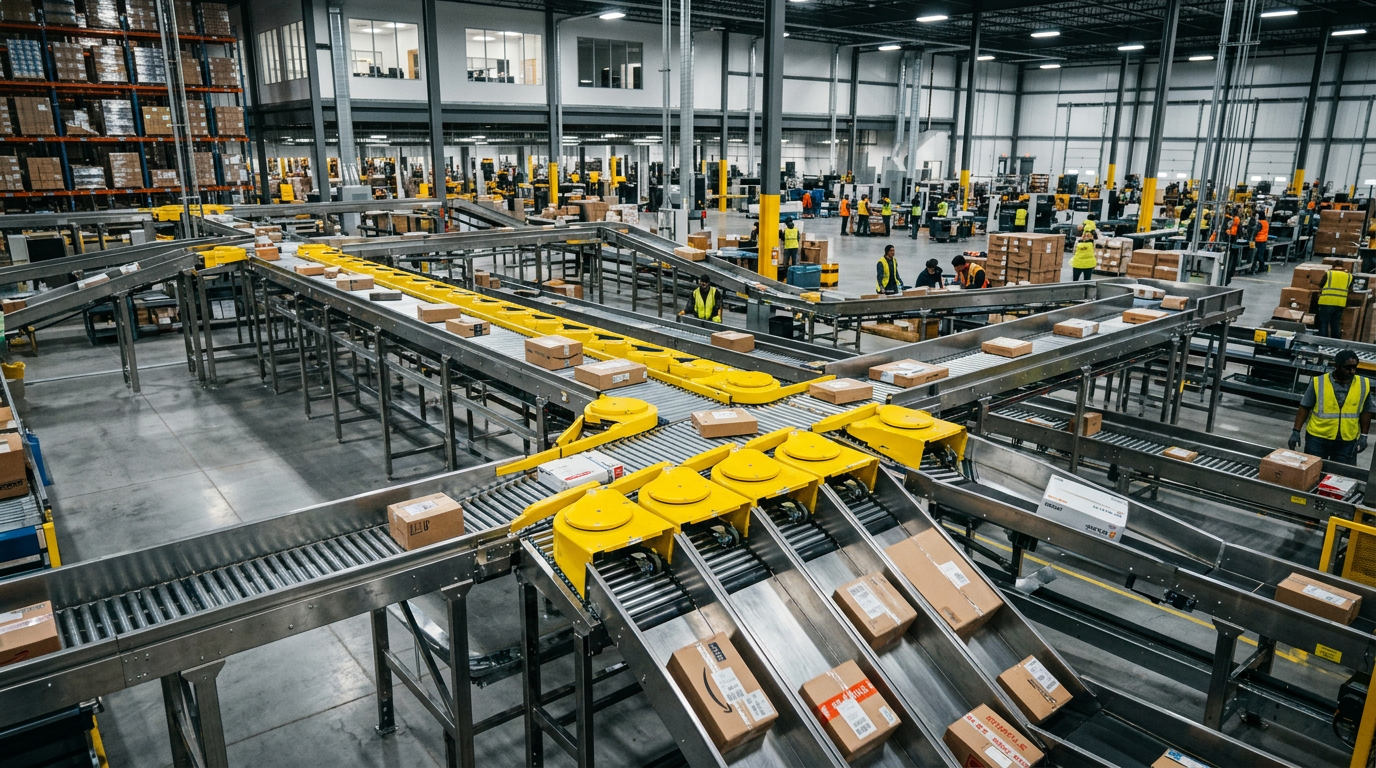
- Right-Angle Transfers (RAT): Ideal for tight spaces, these modules use small rollers or pop-up belts to shift a case 90 degrees.
- Shoe Sorters: For high-volume shipping sorters, "shoes" slide across the slats to gently nudge cases into the correct divert lane. These are common in 3PLs handling over 5,000 cartons per hour.
- Cross-Belt Sorters: Best for varied product types, including polybags and small totes, which might otherwise get stuck in roller gaps.
When designing these sections, engineers must consider "divert reliability." A failure in a sortation module can lead to recirculating loops, effectively reducing the facility's capacity by 20% or more during peak periods. Proper VFD soft-start tuning on heavier incline sections and precision sensors at divert points are essential to prevent jams.
Easy Conveyors stocks the material handling discussed here — ready to ship across Europe.
Integration with Warehouse Management Systems (WMS)
The hardware is only as effective as the software controlling it. Modern case conveyors are nodes in an IoT network. Each zone controller provides data back to the WMS/WCS (Warehouse Control System).
- Predictive Maintenance: By monitoring the current draw of individual rollers, the system can predict a motor failure before it happens. An increase of 15-20% in current often signals a failing bearing.
- Congestion Management: The WMS can dynamically adjust conveyor speeds based on downstream volume, preventing bottlenecks at "pick-to-light" stations.
- Variable Frequency Drives (VFDs): Even in 24V systems, larger incline or decline sections may use 400V/480V motors. In these cases, VFD soft-start tuning is vital to prevent cases from toppling during sudden starts.
Design for 3PL Flexibility: Scalability and Portability
A common mistake in 3PL conveyor design is "over-building" for a current contract without considering future needs. Using a modular conveyor design allows for rapid reconfiguration.
Engineers should prioritize "bolt-together" frames over welded structures. If a client's volume doubles, a modular system can be extended over a weekend. Furthermore, incorporating hygienic wash-down design elements—even in non-food 3PLs—can be a strategic advantage for handling high-end cosmetics or medical devices, which are high-margin sectors for logistics providers.
Maintenance and Reliability: Avoiding the "Single Point of Failure"
In a 3PL environment, downtime equals lost revenue and liquidated damages. To ensure 99.9% uptime:
- Standardize Motor Sizes: Keep only two or three types of MDR rollers in stock to cover the entire facility.
- Visual Diagnostics: Use LED-equipped zone controllers that indicate status (Run, Fault, Jam) at a glance.
- Proper Tensioning: For belt-over-roller sections, ensure weekly checks of belt tracking. Incorrect tracking is the leading cause of premature belt edge fraying.
The transition toward automated 3PL centers is accelerating. By focusing on modularity, energy-efficient electronics, and smart sortation, logistics providers can create a robust infrastructure capable of handling the volatile demands of modern global commerce. Referencing established standards like ISO 4414 for pneumatic safety and IEC 60204-1 for electrical safety ensures that these systems are not only efficient but also compliant with international safety benchmarks.
Frequently Asked Questions
Is MDR or AC belt conveyor better for a 3PL warehouse?
24V DC MDR (Motorized Drive Roller) systems are generally better for 3PLs due to their Zero Pressure Accumulation (ZPA) capability, lower energy consumption (up to 50% less), and ease of reconfiguration compared to traditional AC belt conveyors.
What are the standard tote sizes for automated conveyors?
Standard industrial totes for automated systems typically range from 200mm x 300mm to 600mm x 400mm, with weight capacities up to 35-50kg depending on the conveyor's roller pitch.
How does ZPA logic improve warehouse efficiency?
Zero Pressure Accumulation (ZPA) is a control logic that ensures items on a conveyor line never touch each other. Each zone only moves if the zone ahead is clear, preventing product damage and jams.
What is the expected lifespan of a 3PL conveyor system?
A well-maintained modular conveyor system in a 3PL environment typically has a lifespan of 10 to 15 years, though 24V rollers may require replacement every 5-7 years depending on duty cycles.