Optimizing Case and Tote Conveyors for 3PL Warehouse Efficiency
Optimize your 3PL warehouse with high-throughput case and tote conveyors. Learn about MDR vs AC drives, throughput calculations, and modular design for e-commerce.
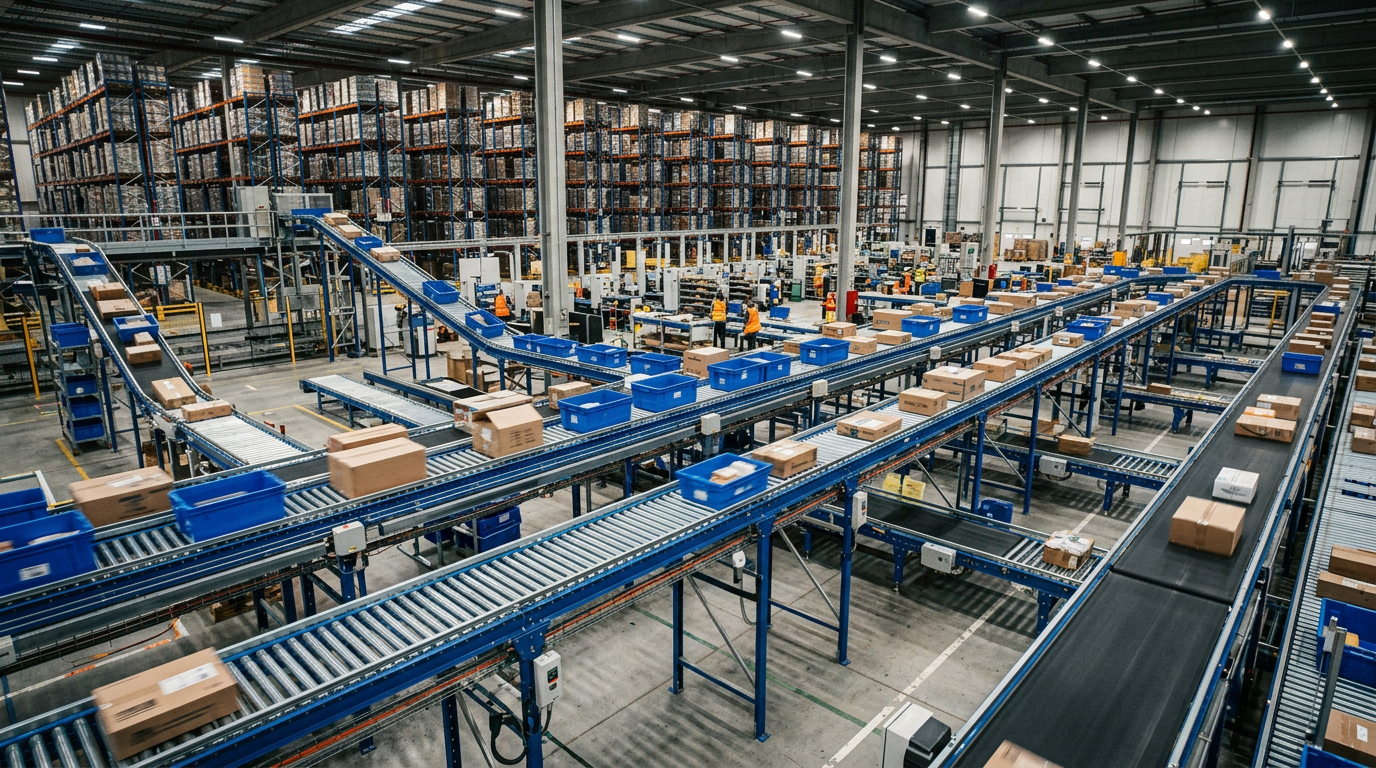
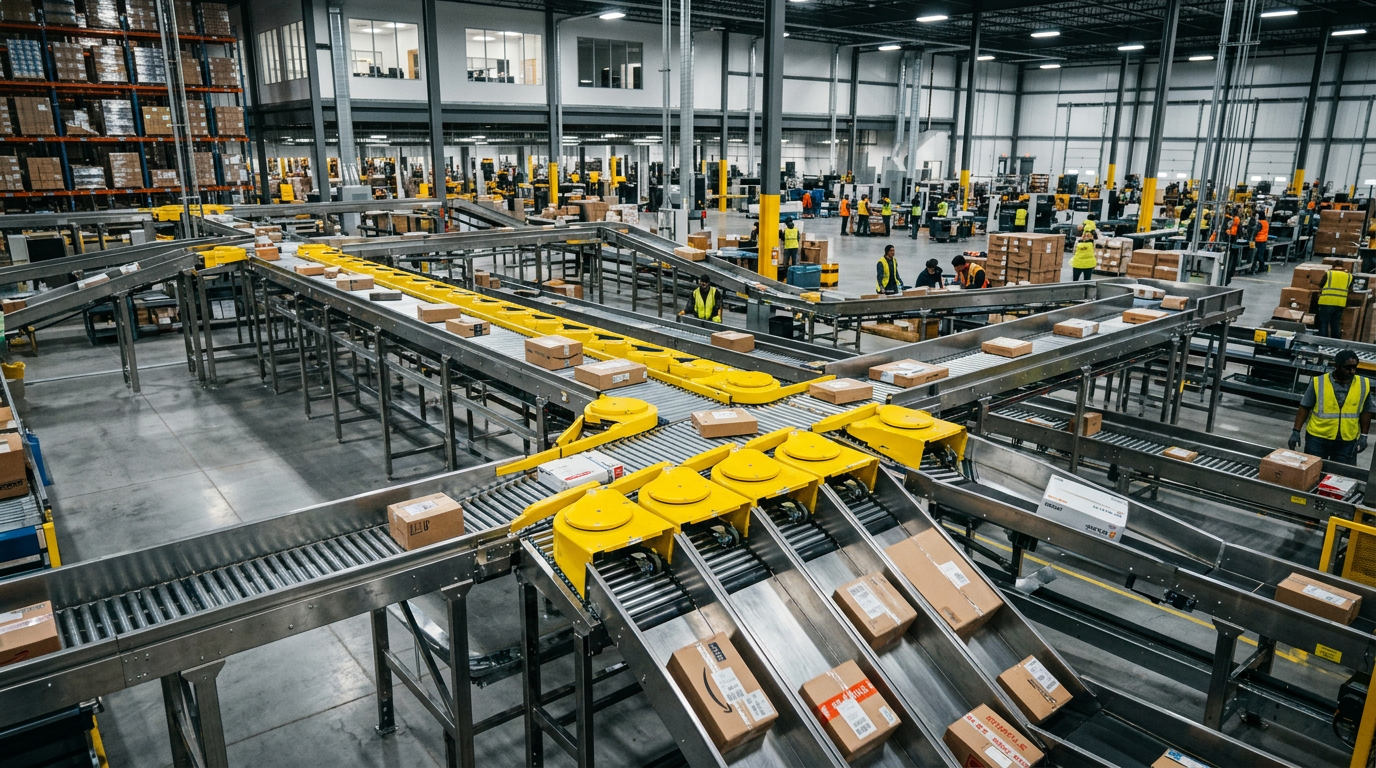
Modern 3PL warehouse operations rely on high-speed case and tote conveyors capable of handling throughput rates exceeding 2,500 units per hour while maintaining energy efficiency ratings of IE3 or higher. Selecting the right modular system requires balancing the flexibility of 24V DC roller technology with the raw power of AC-driven 400V belt systems to accommodate varying SKU dimensions and fluctuating seasonal volumes.
The Architecture of High-Throughput 3PL Conveyance
In the third-party logistics (3PL) sector, the "one-size-fits-all" approach to material handling has been rendered obsolete by the explosion of e-commerce and micro-fulfillment. Modern facilities must process everything from fragile electronics in standardized plastic totes to heavy bulk items in corrugated cardboard cases. The fundamental architecture of these systems is now built on modularity, allowing providers to scale or reconfigure lines within days rather than months.
MDS and MDR: The Engine of Modern 3PL
Most 3PL warehouses have shifted toward Motorized Drive Roller (MDR) technology for tote handling. Operating on 24V or 48V DC power, these systems utilize "run-on-demand" logic. Unlike traditional AC systems where a single motor runs a 50-meter section of conveyor continuously, MDR systems only activate the specific zone where a package is present.
- Energy Savings: Zero-pressure accumulation (ZPA) reduces energy consumption by up to 60%.
- Safety: The low-voltage nature of the rollers simplifies maintenance and improves operator safety.
- Noise Reduction: Operating decibel levels typically stay below 60 dB, significantly improving the warehouse environment.
Belt Conveyors for Irregular Load Profiles
While rollers are ideal for rigid plastic totes, case conveyors often require belt-over-roller or full-slider bed designs. This is particularly critical when dealing with "polybags" or damaged cardboard cases that might snag on roller gaps. For high-speed sortation induction points, specialized friction-top belts provide the necessary grip to maintain precise gaps between products, which is essential for barcode scanner accuracy.
Design Trade-offs: Case vs. Tote Considerations
When designing a combined system, engineers must account for the physical differences between plastic totes and cardboard cases. Totes have a consistent footprint and a rigid bottom, making them predictable for sensors and divert modules. Cases, however, may have "bowed" bottoms or loose flaps.
| Feature | Plastic Totes (Recommended) | Corrugated Cases (Requirements) |
|---|---|---|
| Surface Friction | Low (allows for easy accumulation) | High (requires positive drive) |
| Bottom Rigidity | High (ideal for MDR rollers) | Variable (may require belt-on-roller) |
| Max Incline | Up to 15° with standard belt | Up to 12° (risk of sliding/tipping) |
| Standard Sizes | 600x400mm or 400x300mm | Wide variance (requires wider beds) |
| Durability | High (5,000+ cycles) | Low (single use/prone to debris) |
Integrating Modular Flex
To meet these demanding specifications, many European logistics hubs turn to Easy Conveyors for their modular belt and roller components. Their systems allow for the rapid integration of curves, transfers, and inclines that are essential for multi-level mezzanine operations common in dense 3PL environments.
Easy Conveyors stocks the material handling discussed here — ready to ship across Europe.
Sizing and Throughput Calculations
The performance of a 3PL conveyor is defined by its "pitch" and "gap." For a system to handle 30 cases per minute, the belt speed and zone logic must ensure that even at peak speeds, the "VFD soft-start tuning" is optimized to prevent product toppling.
- Calculating Throughput: $T = (V \times 60) / (L + G)$, where $V$ is velocity in m/min, $L$ is product length in meters, and $G$ is the required gap for diversion.
- Width Selection: Always size the conveyor bed to be at least 50mm wider than the largest expected case to prevent side-rail friction and jams.
- Incline Sizing: For multi-story 3PL warehouses, spiral conveyors or high-friction grip-top belts are used. If an incline exceeds 15 degrees, a flighted belt or specialized vertical lift is mandatory to prevent product back-sliding.
Common Failure Modes in 3PL Environments
Despite their robustness, case and tote conveyors face specific stressors in a 3PL environment.
Debris Accumulation
Cardboard dust is the silent killer of conveyor bearings. Over time, fibers from "recycled content" boxes shed and enter the roller hex-holes. This increases torque requirements and can lead to premature motor failure. Using IP66-rated rollers or sealed-for-life bearings is a standard mitigation strategy.
Sensor Misalignment
In high-volume sortation, photo-eyes (sensors) are often bumped by manual pickers or misaligned by vibration. Advanced systems now utilize IO-Link sensors that provide diagnostic feedback, alerting maintenance teams to "dirty lenses" or alignment shifts before the line goes into a fault state.
Belt Tracking Issues
In long case-conveyor runs, "belt tracking" is a common maintenance headache. This often occurs due to uneven loading (heavy cases placed off-center). Systems utilizing "hygienic wash-down design" features—even in non-food applications—often benefit from easier-to-clean frameworks that make tracking adjustments more accessible for technicians.
Strategic Selection: Modularity vs. Customization
The trend in 2026 is moving away from bespoke steel-welded conveyors toward aluminum-profile modular systems. This shift is driven by the need for 3PLs to fulfill short-term contracts for different clients. If a contract ends, a modular conveyor can be disassembled and rerouted to a different area of the warehouse with minimal waste.
When selecting components, procurement leads should prioritize "drum motor selection" for sections requiring high torque and space efficiency, while reserving standard gearmotors for longer, slower transport sections where cost-efficiency is paramount. By blending these technologies, 3PL managers can achieve the highest ROI over the typical 5-to-7-year equipment depreciation cycle.
Frequently Asked Questions
Should I use MDR or AC drives for tote handling?
MDR (Motorized Drive Roller) systems are better for totes due to their 24V run-on-demand logic, which saves energy and allows for zero-pressure accumulation (ZPA), preventing totes from crashing into one another.
What is the ideal belt speed for case conveyors?
For standard corrugated cases, a speed of 0.5 to 1.0 meters per second is typical. High-speed sortation induction lines can reach speeds of 2.0 m/s or higher depending on the weight and stability of the product.
What are the standard dimensions for 3PL tote conveyors?
Most plastic totes used in 3PL warehouses follow the Euro-container standard, typically 600x400mm or 400x300mm. Conveyor widths are usually set to 460mm or 660mm to accommodate these safely.
How do I manage cardboard dust buildup on my conveyor lines?
Debris is best managed through a combination of high-grade sealed bearings (IP65+) and regular vacuuming of the conveyor beds. Avoid using compressed air, as it forces cardboard dust deeper into the motorized components.
Sources & references
- [1]Conveyor Systems: Belt, Roller, and Modular Solutions
- [2]Modular Plastic Conveyor Belts for E-commerce and Logistics
- [3]Motorized Drive Roller (MDR) Technology for Energy Efficient Conveying
- [4]ISO 7149:1982 - Continuous handling equipment -- Safety code -- Special rules
- [5]Automated Storage and Retrieval System (ASRS) and Conveyor Integration