Designing Modular Sortation Systems for E-commerce Fulfilment Centres
Learn how modular sortation systems enable e-commerce fulfillment centers to scale throughput by 40% using 24V DC technology and plug-and-play divert modules.
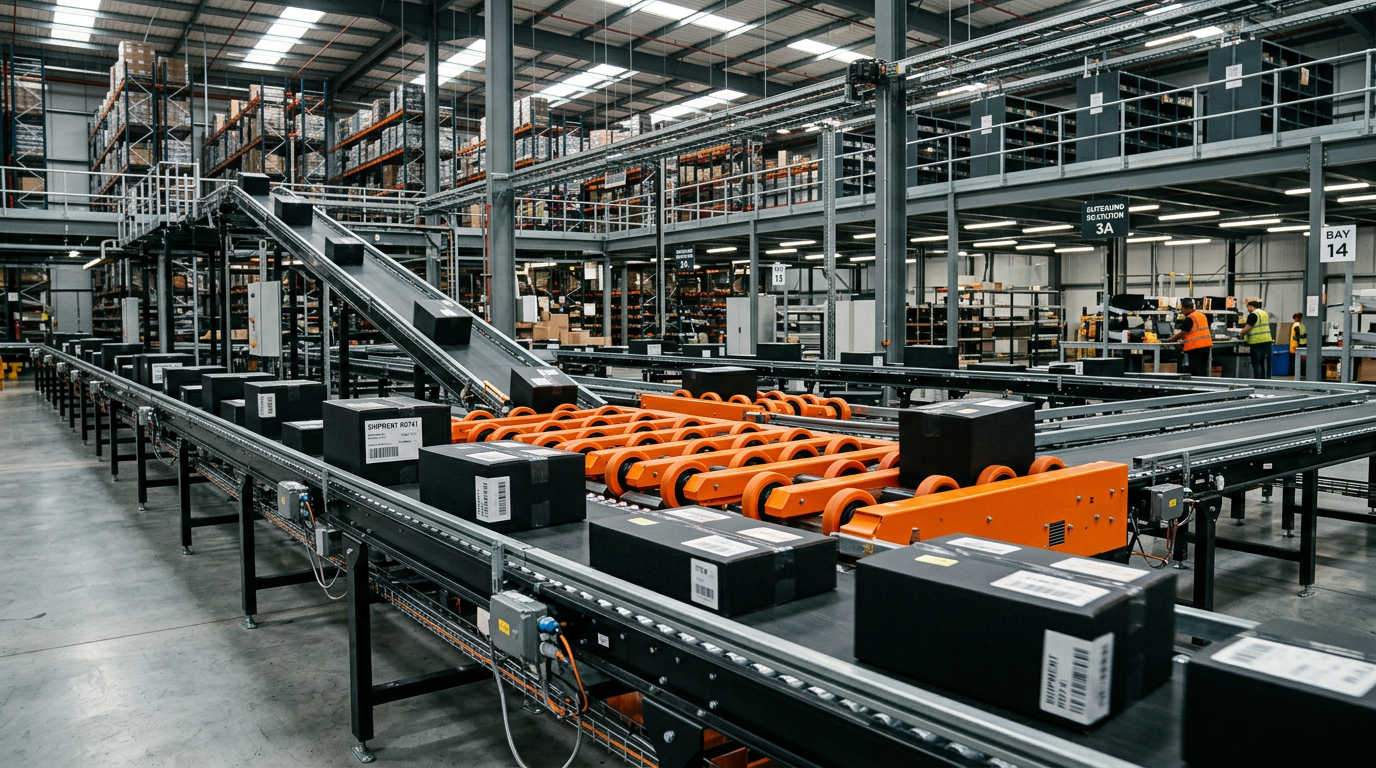
Modular sortation systems in e-commerce can increase throughput by up to 40% compared to traditional fixed infrastructures by utilizing a "plug-and-play" architecture that allows for 24-hour capacity scaling. These systems typically utilize divert modules, pop-up sorters, and steerable wheel arrays to handle parcel weights from 0.1kg up to 35kg at speeds reaching 2.0 meters per second.
The Evolution of Sortation in E-commerce
The rapid shift toward high-volume, low-density shipping in e-commerce has rendered traditional, monolithic sortation systems increasingly obsolete. In the past, a fulfillment center would install a massive cross-belt sorter with a fixed footprint, requiring months of onsite commissioning and high capital expenditure. Today, modularity is the primary driver of operational flexibility.
Modular sortation relies on standardized sections—typically 500mm to 1000mm in length—that can be daisy-chained to form complex routing networks. These systems are governed by decentralized control logic, where each module possesses its own "intelligence" (often via local PLC or IO-Link communication). This allows for rapid reconfiguration as seasonal peaks demand more discharge points or redirected product flows.
Core Technologies in Modular Sortation
When designing a modern fulfillment line, engineers must choose between several modular diverting technologies. The choice depends on the product mix (polybags vs. rigid cartons) and the required "sort rate" (measured in parcels per hour, or PPH).
1. Steerable Wheel Diverts (Multi-directional)
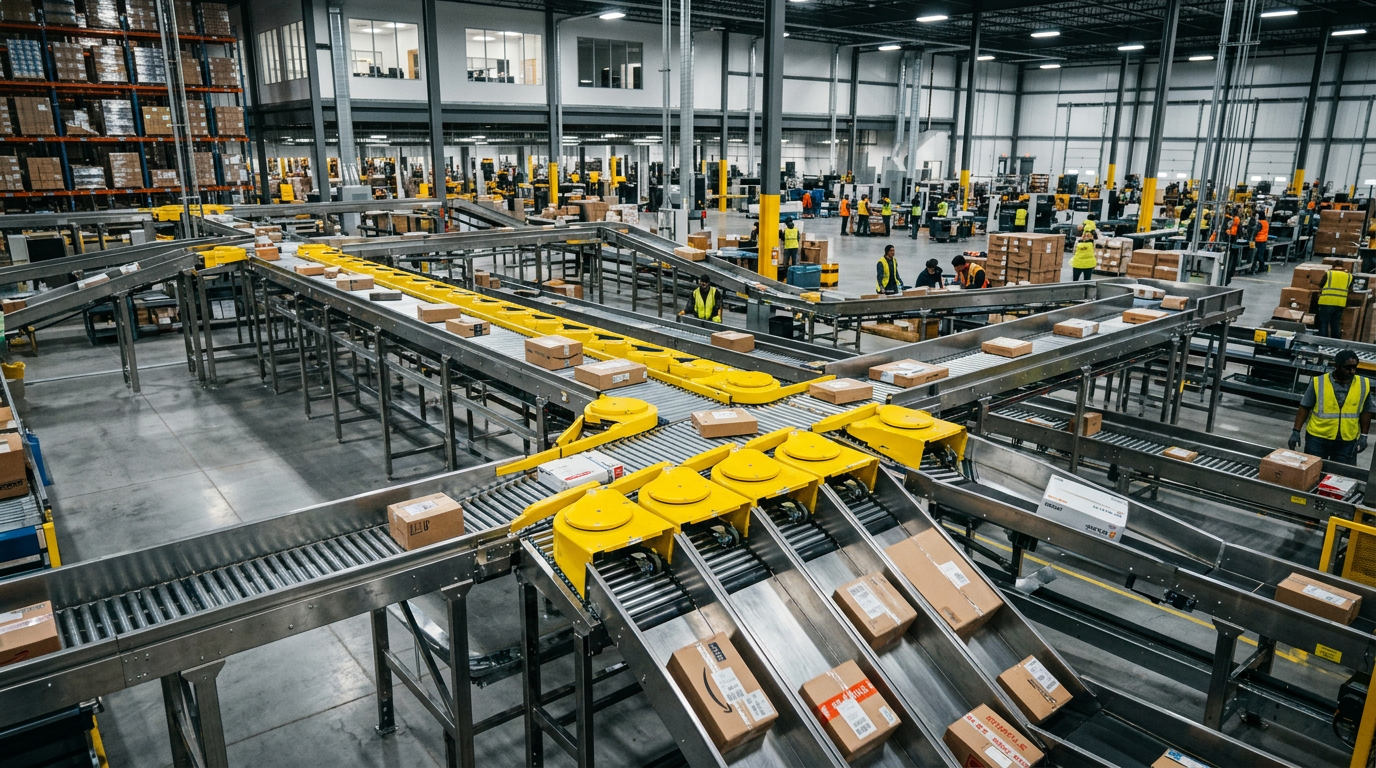
These modules consist of rows of rollers or wheels that can pivot on a vertical axis. When a parcel needs to be sorted, the wheels swivel to a predetermined angle (usually 30°, 45°, or 90°) to guide the product onto a spur.
- Best for: Rigid flat-bottomed cartons.
- Performance: Up to 4,000 PPH per diverter.
2. High-Speed Pop-up Sorters
A pop-up sorter remains flush with the conveyor surface until a parcel is detected. It then lifts vertically to engage the parcel's underside. These are often integrated directly into modular belt conveyor design frameworks to maintain a low profile.
- Best for: Small to medium parcels and high-friction packaging.
- Performance: High reliability for repetitive tasks.
3. Pusher and Shoe Modules
While traditional shoe sorters are large, modular versions now exist. Sliding "shoes" move across the slats of the conveyor to gently push items into a chute.
- Best for: Fragile items and varied packaging types (including polybags).
Comparing Sortation Technologies for E-commerce
| Feature | Steerable Wheels (Swivel) | Pop-up Roller Sorter | Cross-Belt (Modular) |
|---|---|---|---|
| Throughput (PPH) | 3,500 – 5,000 | 2,000 – 3,500 | 8,000 – 15,000+ |
| Min. Item Size | 100 x 100 mm | 150 x 150 mm | 50 x 50 mm |
| Max. Speed | 1.5 m/s | 1.2 m/s | 2.5 m/s |
| Energy Efficiency | High (24V DC) | Medium (Pneumatic/DC) | High (Servo) |
| Maintenance | Low (Modular swap) | Medium | High (Belt tensioning) |
Easy Conveyors stocks the material handling discussed here — ready to ship across Europe.
The Role of 24V DC Technology
The move toward modularity is inextricably linked to the adoption of 24V (or 48V) DC brushless motors and motorized drive rollers (MDR). Unlike AC-driven systems that run continuously, modular sorters often utilize "run-on-demand" logic. This means energy is only consumed when a parcel is physically present in a specific zone.
Integrating Easy Conveyors modules allows facility managers to leverage these energy-efficient drive systems within a robust, aluminum-profile framework that simplifies the mounting of sensors and pneumatic actuators. This standardized approach significantly reduces the "Total Cost of Ownership" (TCO) by minimizing electrical wiring and cabinet space requirements.
Integration with Warehouse Management Systems (WMS)
Sophisticated modular sortation is only as good as the data driving it. In an e-commerce environment, a parcel’s destination is often determined by a barcode or RFID tag scanned seconds before it reaches the divert point.
- Scanning Zone: High-speed 6-sided camera tunnels capture the SKU and dimensions.
- Tracking: The system tracks the parcel's position using pulse encoders on the conveyor motor, ensuring the divert module triggers exactly when the parcel is centered.
- Communication: Protocols like EtherNet/IP or PROFINET allow for real-time feedback. If a discharge lane is full, the system can autonomously route the parcel to an "overflow" loop or recirculate it, a hallmark of automated material handling resilience.
Design Trade-offs: Scalability vs. Cost
While modular systems offer unparalleled flexibility, engineers must account for the mechanical limitations of "plug-and-play" setups.
- Zone Length: The module length must be sized to the largest frequent parcel plus a safety gap (pitch). If the pitch is too small, the diverter cannot reset in time for the following item.
- Gap Optimization: High-speed sortation requires specialized "gapping" conveyors that accelerate or decelerate individual items to create a uniform distance. Without precise gapping, even the fastest modular sorter will experience jams or "miss-sorts."
- Friction and Surface: Polybags (now representing over 40% of e-commerce shipments) behave differently than cardboard. They have higher friction and are prone to snagging. Systems must utilize transition plates and specific belt textures—considerations found in hygienic wash-down design although adapted here for durability rather than sanitation.
Future-Proofing with Modular Infrastructure
The primary advantage of modular sortation is the ability to adapt to "Peak Seasons" (e.g., Black Friday). A facility can start with a basic layout and, as volume grows, physically insert additional divert modules into the existing line. This "Lego-brick" approach to engineering ensures that the initial investment isn't lost when requirements change, a common pitfall of bespoke, welded conveyor systems.
Furthermore, predictive maintenance is easier in modular setups. If a specific divert module shows signs of bearing wear or belt stretching, the entire module can be swapped out during a 30-minute scheduled break, rather than shutting down the entire line for a multi-hour repair. This maximizes "uptime," which is the critical metric for any e-commerce fulfillment operation.
Frequently Asked Questions
What is the difference between modular and traditional sortation?
Modular sortation uses standardized, pre-wired sections that can be added or rearranged, whereas traditional sortation is a fixed, bespoke installation that requires significant downtime to modify.
How many parcels per hour can a modular sorter handle?
Modern modular diverters can handle between 3,000 and 5,000 parcels per hour (PPH). For higher volumes, multiple modular lines can be run in parallel or integrated with cross-belt sorters.
Can modular sorters handle polybags and flexible packaging?
Yes, but they require specific design features like high-friction belts, small transfer gaps, and specialized divert wheels to prevent the flexible packaging from snagging.
What are the power requirements for modular sortation modules?
Most modular systems operate on 24V or 48V DC power, utilizing 'run-on-demand' logic that only consumes energy when a parcel is in motion within a specific zone.
How do I maintain a modular divert system?
Key maintenance includes checking belt tension, cleaning sensor lenses, and verifying the alignment of pivot wheels or pop-up mechanisms. Most modular components are rated for millions of cycles.
Sources & references
- [1]Conveyor system - Wikipedia
- [2]Modular Conveyor Platform (MCP) - Smart, Simple, Flexible
- [3]ISO 10218-2:2011 - Robots and robotic devices - Safety requirements for industrial robots - Part 2: Robot systems and integration
- [4]Application note: Conveyor Sorter Systems in Logistics
- [5]Intralox ARB (Activated Roller Belt) Technology for Sortation