Modular Plastic Belt Materials: The Engineering Guide to POM vs PP vs PE
Master modular plastic belt selection: Compare POM, PP, and PE materials for tensile strength, chemical resistance, and temperature limits in industrial automation.
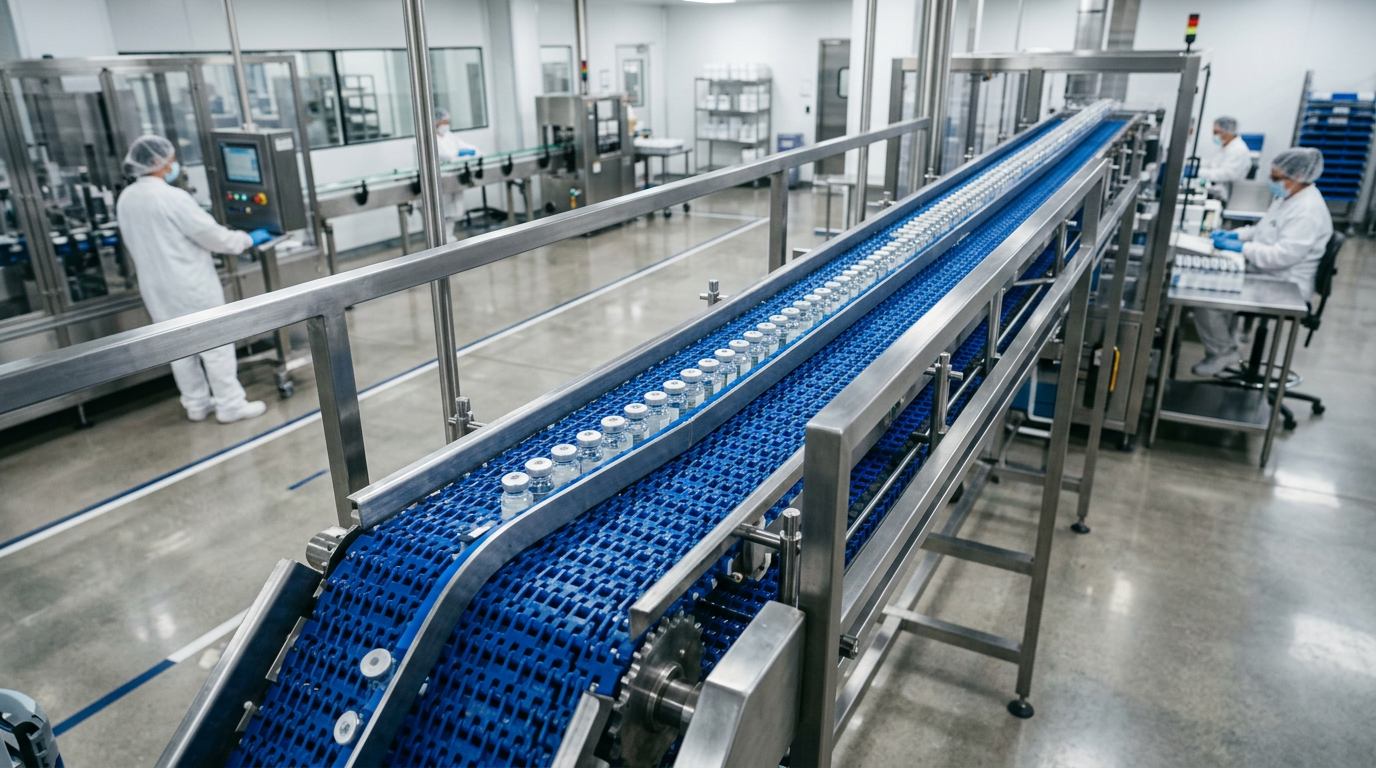
Selecting the optimal modular plastic belt material depends on the operating temperature and coefficient of friction, with Polyacetal (POM) offering a high tensile strength of up to 45,000 N/m, Polypropylene (PP) providing superior chemical resistance for wash-down environments, and Polyethylene (PE) excelling in cryogenic applications down to -70°C. Choosing the wrong polymer typically results in a 40% reduction in service life due to thermal expansion errors or premature hinge wear.
The Role of Polymer Science in Conveyor Engineering
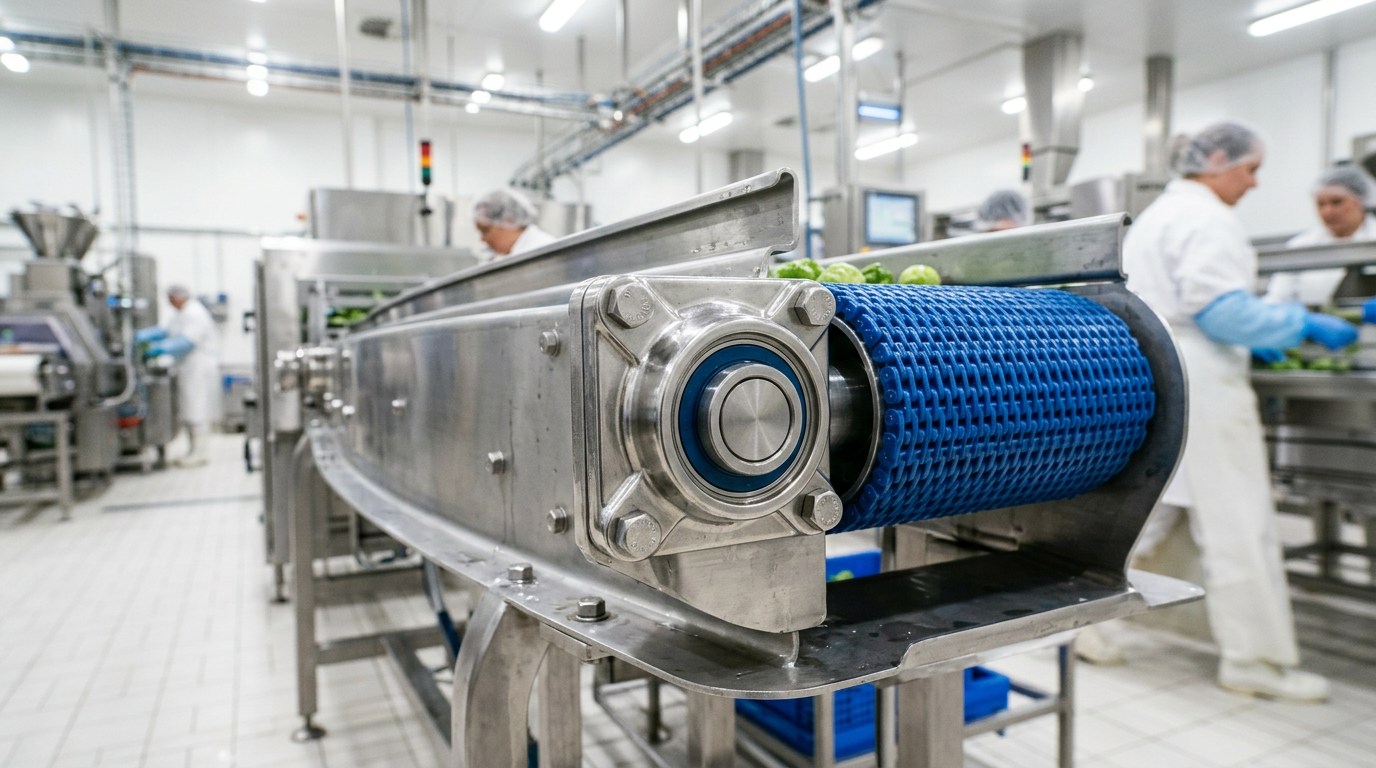
Modular plastic belts have revolutionized material handling by replacing continuous fabric belts with interlocking links. However, the performance of these systems is governed by the physical properties of the thermoplastics used. In modern automation, three primary materials dominate: Polyacetal (POM), Polypropylene (PP), and Polyethylene (PE). Each material interacts differently with the conveyor frame, environmental moisture, and the products being transported.
For engineers designing high-throughput systems, understanding the stress-strain curves and thermal expansion coefficients is critical. Selecting a material isn't just about cost; it is about matching the polymer’s molecular structure to the mechanical demands of the application. Failure to do so leads to "catenary sag" issues or catastrophic pin failure.
Comparative Material Analysis: POM, PP, and PE
The following table provides a technical comparison of the three most common modular belt materials based on industry standards such as ISO 10350-1 for plastics data acquisition.
| Property | Polyacetal (POM) | Polypropylene (PP) | Polyethylene (PE) |
|---|---|---|---|
| Tensile Strength | High (Best for long runs) | Moderate | Low |
| Impact Resistance | Good | Moderate | Excellent (at low temps) |
| Temp Range (°C) | -40°C to +90°C | +5°C to +105°C | -70°C to +65°C |
| Chemical Resistance | Good (Oils/Solvents) | Excellent (Acids/Bases) | Excellent |
| Density (g/cm³) | ~1.40 | ~0.90 | ~0.95 |
| Coefficient of Friction | Low | Moderate | Low |
Polyacetal (POM): The Workhorse of Automation
Polyacetal, often referred to by the brand name Delrin, is the default choice for most industrial applications. Its primary advantage is its high mechanical strength and low coefficient of friction. According to technical specifications from Intralox, POM belts can handle significantly higher loads per meter of width compared to PP or PE.
- Best Use Cases: Bottling lines, automotive parts conveying, and long-distance sortation.
- Key Advantage: Dimensional stability. POM absorbs very little moisture, meaning the belt pitch remains constant even in humid environments.
- Limitation: POM is sensitive to strong oxidizing agents like bleach (sodium hypochlorite), which is common in deep-cleaning cycles for food processing.
Polypropylene (PP): The Chemical Specialist
Polypropylene is a lightweight polyolefin known for its exceptional resistance to chemical fatigue. While it has lower tensile strength than POM, it is significantly lighter, which reduces the inertia of the system and lowers the torque requirements for the drum motor selection.
- Best Use Cases: Food processing (wash-down), chemical manufacturing, and high-temperature applications up to 105°C.
- Key Advantage: PP is highly resistant to the aggressive cleaning agents required by EHEDG standards for hygienic design.
- Limitation: It becomes brittle at low temperatures. If used in a cold room (below 5°C), the links are prone to shattering under impact.
Polyethylene (PE): The Cold Chain Expert
Polyethylene, specifically Ultra-High Molecular Weight (UHMW) variants or standard PE, is the go-to material for sub-zero environments. While it is the softest of the three materials and has the lowest load rating, its ductility at low temperatures is unmatched.
- Best Use Cases: Spiral freezers, ice cream production, and outdoor conveyors in northern climates.
- Key Advantage: Extreme impact resistance at temperatures as low as -70°C.
- Limitation: High thermal expansion coefficient. PE expands and contracts significantly with temperature swings, requiring careful calculation of catenary take-up loops.
Critical Design Factors
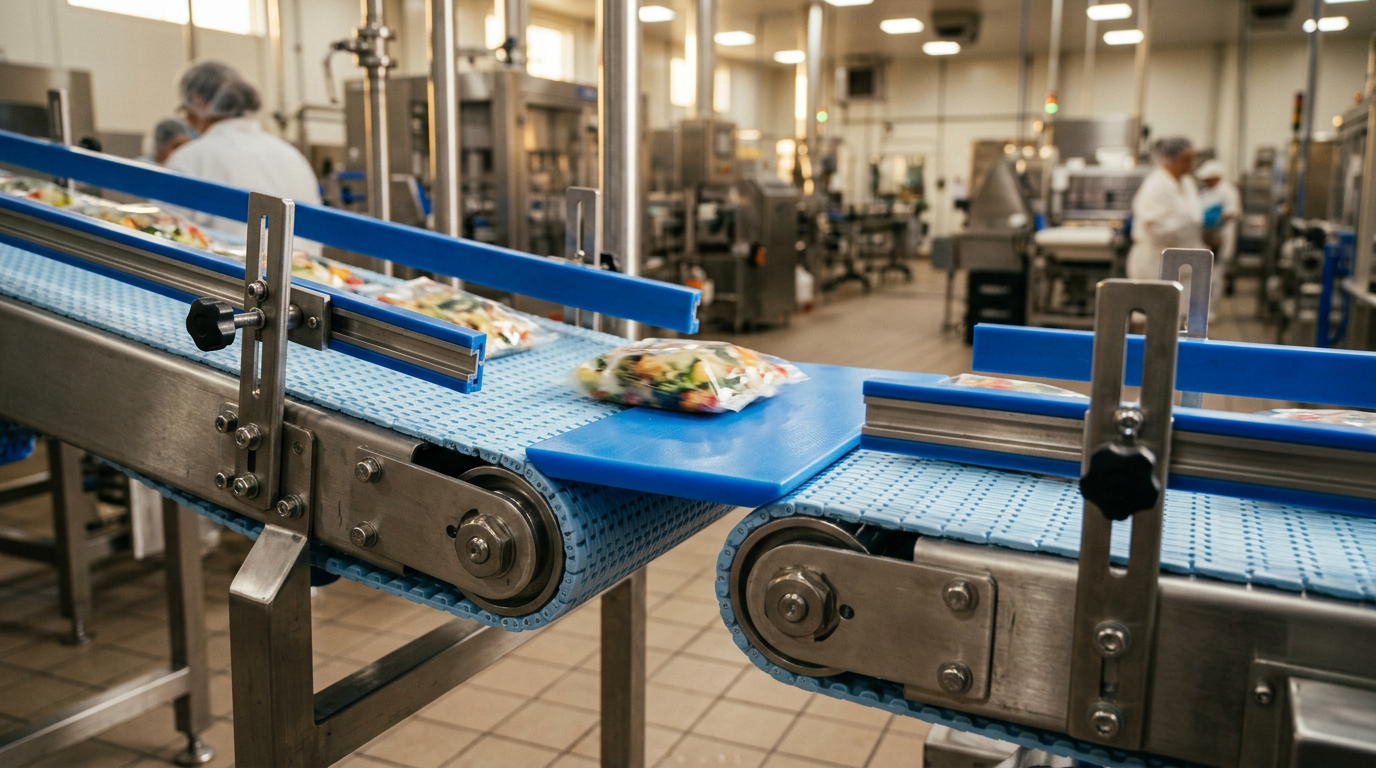
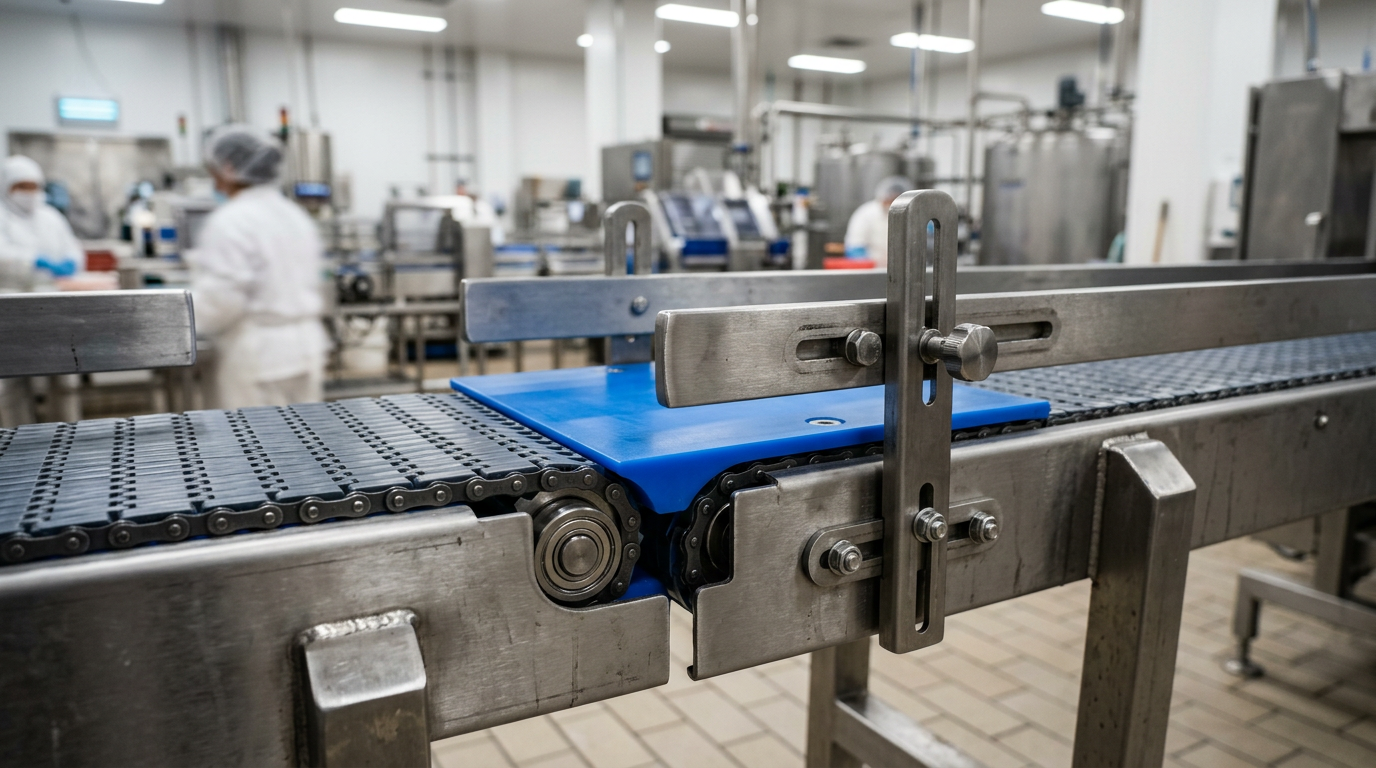
When integrating these materials into a modular system, engineers must consider the interaction between the belt and the wear strips. For instance, Easy Conveyors emphasizes the importance of matching belt materials with compatible slide rails to prevent "stick-slip" phenomena.
Thermal Expansion and Contraction
Thermoplastics have a much higher coefficient of linear thermal expansion (CLTE) than the steel frames they run on.
- POM: 0.12 mm/m/°C
- PP: 0.15 mm/m/°C
- PE: 0.23 mm/m/°C
In a 30-meter conveyor, a temperature rise of 20°C can cause a PE belt to grow by nearly 14cm. Without proper take-up management, this results in the belt jumping the sprockets.
Friction and Surface Energy
Friction affects both the power consumption of the motor and the stability of the product. POM offers the lowest dynamic friction against steel or plastic wear strips, making it ideal for high-speed accumulation. However, if a high-grip surface is needed for an incline, specialized "Rubber Top" or "Grip Top" inserts—often made of Thermoplastic Elastomer (TPE)—are co-molded onto the base PP or POM link.
Easy Conveyors stocks the conveyor components discussed here — ready to ship across Europe.
Material Selection for Specific Industries
- Meat & Poultry: PP is preferred due to its resistance to fats and heavy-duty cleaning chemicals. However, if the line involves a flash-freezer, a transition to PE is required.
- Warehousing & E-commerce: POM is the standard due to the high tensile loads and the need for low-friction accumulation where packages may stop while the belt continues to run.
- Beverage/Bottling: POM is used for its "slick" surface, allowing glass and PET containers to slide easily during mass-flow buffering.
Maintenance and Longevity
The wear of a modular belt occurs primarily at the hinge point (the pin and the link interface). According to Habasit, the abrasive wear rate is accelerated when grit or glass shards enter the hinge. In these scenarios, POM’s superior hardness provides a longer wear life than the softer PE.
When performing VFD soft-start tuning, it is essential to account for the material's elasticity. A PP belt will exhibit more "stretch" during startup than a POM belt, which may require a slightly longer acceleration ramp to prevent the belt from surging.
Summary of Selection Strategy
To select the right material, follow the "Rule of Three":
- Temperature: If below 5°C, use PE. If above 90°C, use PP.
- Chemicals: If using strong acids or bases, use PP.
- Load: If the conveyor is over 15 meters or carries heavy loads (e.g., >50kg/m²), use POM.
By aligning these polymer properties with the specific environmental conditions of the plant, operations managers can ensure maximum uptime and a lower Total Cost of Ownership (TCO). Use tools like the SEW-Eurodrive DriveConfigurator to calculate the resulting torque requirements once the material's friction coefficient is determined.
Frequently Asked Questions
Which modular belt material has the highest load capacity?
POM is generally the strongest, offering the highest tensile strength and lowest elongation under load, making it ideal for long conveyor runs.
What material should be used for cryogenic or freezer applications?
Polyethylene (PE) is the best choice for freezing environments, as it remains ductile and impact-resistant down to -70°C, whereas PP becomes brittle.
How does chemical resistance differ between PP and POM?
Polypropylene (PP) offers the best resistance to acids, bases, and aggressive cleaning agents typically used in food industry wash-down procedures.
Can POM belts be used outdoors in direct sunlight?
Standard POM is not UV-stabilized and can degrade (chalking) when exposed to direct sunlight for extended periods. Special UV-resistant additives are required for outdoor use.