The Engineer's Guide to Side Guides, Transfer Plates and End Rollers
Learn how side guides, transfer plates, and end rollers ensure product stability and seamless transitions in modular conveyor systems to reduce product loss.
Optimizing conveyor performance requires a precise balance between product stability and seamless transitions, achieved primarily through the integration of side guides, transfer plates, and end rollers. In high-speed modular systems, improper selection of these components can lead to a 15% increase in product loss and a 20% reduction in motor lifespan due to increased friction and back-pressure.
Effective conveyor design relies on these three critical interface components to maintain product orientation and ensure smooth handover between segments. While side guides manage the lateral boundaries of the flow, transfer plates and end rollers solve the "gap problem" inherent in modular layouts.
Side Guides: Ensuring Lateral Precision
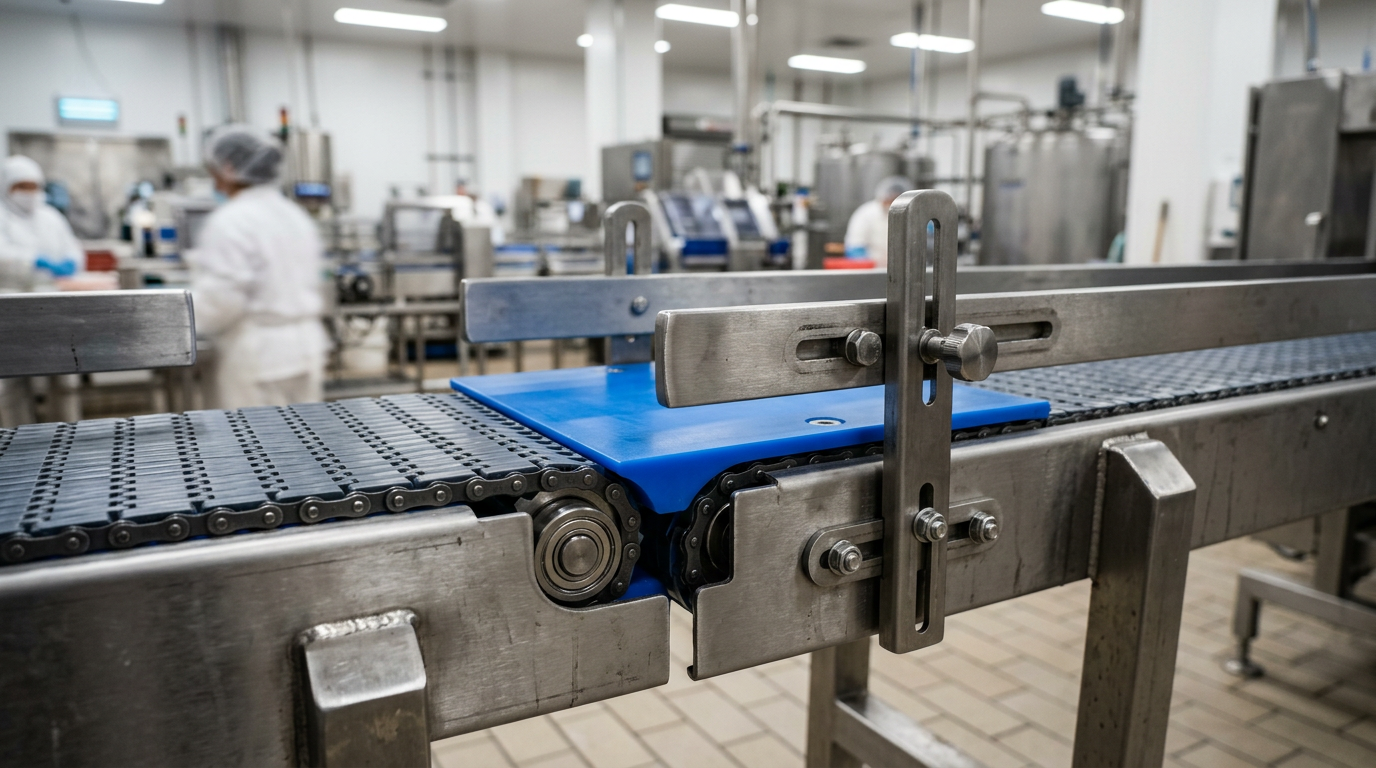
Side guides (or lateral rails) serve as the physical boundaries of the conveyor path. Their primary function is to prevent product spillage and maintain a consistent center line for downstream automation, such as labeling or vision inspection.
In modular systems, side guides are typically classified by their contact surface and adjustability:
- Fixed vs. Adjustable: Fixed guides are used in dedicated lines with a single product size, whereas adjustable systems utilize handwheels or pneumatic actuators for rapid changeovers.
- Contact Materials: Common materials include Ultra-High Molecular Weight Polyethylene (UHMW-PE) for low-friction transport and stainless steel for high-temperature or abrasive environments. According to ISO 1101, maintaining geometric tolerances in guide rail alignment is essential for preventing "snagging" during high-speed transport.
- Low-Friction Liners: For fragile packaging, guides often feature "bead" or "roller" liners. These reduce the lateral drag coefficient, preventing scuffing on delicate labels.
Transfer Plates: Bridging the Gap
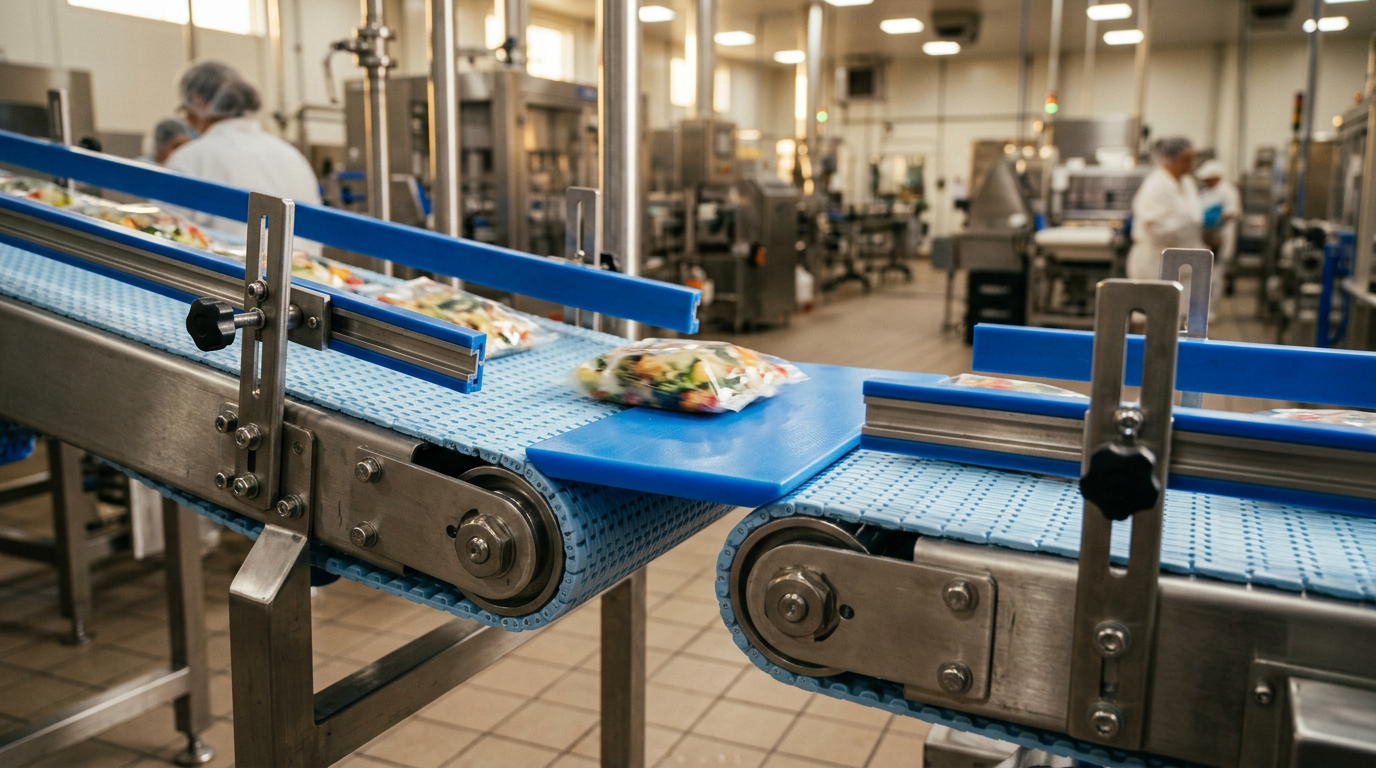
Transfer plates, often called "dead plates" or "transition plates," are stationary bridges placed between two conveyor sections or between a conveyor and a processing machine. They are essential when handling small footprints that would otherwise fall into the gap created by the radius of the conveyor sprockets.
To ensure food safety in processing environments, transfer plates must adhere to EHEDG guidelines regarding "cleanability" and the absence of "dead zones" where organic material can accumulate.
| Feature | Plastic (POM/PE) Transfer Plate | Stainless Steel Transfer Plate | Roller-Assisted Plate |
|---|---|---|---|
| Friction Level | Medium-Low | Medium-High | Very Low |
| Hygiene Rating | High (FDA Compliant) | Excellent (Washdown) | Moderate (Harder to clean) |
| Typical Gap Size | 10mm - 50mm | 5mm - 100mm+ | 50mm - 200mm |
| Durability | High (Impact resistant) | Maximum | High (Depends on bearings) |
| Application | General Packaging | Food/Pharma | Heavy boxes/Totes |
End Rollers and Nose Bars
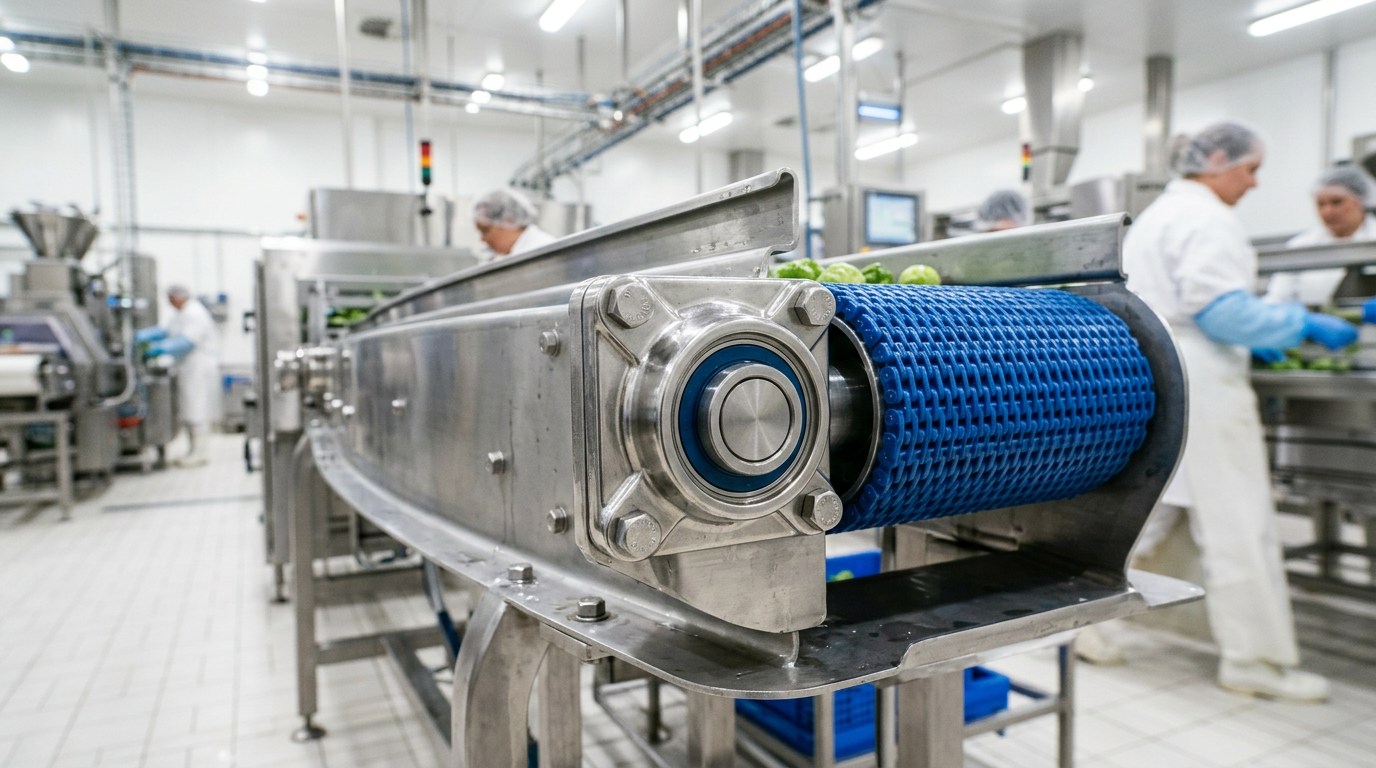
When products are too small or unstable for a standard transfer plate, engineers utilize "nose bars" or small-diameter end rollers. By reducing the turn radius at the end of the conveyor frame, the physical gap between two belts is minimized.
Modern modular belts often feature a "finger transfer" design. In this configuration, the transfer plate has a comb-like structure that meshes with the modules of the belt, allowing for a seamless transition even for top-heavy products like slender bottles or small electronics. For those designing complex layouts, Easy Conveyors provides a range of stan
Easy Conveyors stocks the conveyor components discussed here — ready to ship across Europe.
dardized modules that integrate these tiny-radius transitions to maintain product stability across junctions.
Engineering Considerations for Component Selection
Selecting the right combination of these components requires an analysis of the product's center of gravity, base stability, and the required throughput speed.
1. Calculating the Transfer Gap
The gap $G$ between two conveyors is determined by the sprocket radius $R$ and the thickness of the belt $T$. The formula $G = 2 \times (R + T)$ defines the minimum theoretical space that must be bridged. If the product diameter is less than $2G$, a transfer plate or nose bar is mandatory to prevent tipping.
2. Friction and Accumulation
In accumulation zones, side guides must be designed to withstand lateral pressure. If the conveyor continues to run while the product is stopped, the pressure against the side guides increases. Utilizing low-friction rollers within the side guide assembly can prevent "bridging," where products wedge themselves between the rails, causing a line stoppage.
3. Material Compliance
In the United States, components in direct contact with food must meet FDA 21 CFR requirements. This applies heavily to transfer plates and side guide liners. In Europe, similar regulations under EC 1935/2004 ensure that materials do not transfer harmful substances to the food products.
Integration with Automation
In modern "Industry 4.0" facilities, side guides are no longer just passive bars. They are often integrated with sensors to detect jams or equipped with servo-motors to automatically adjust for different SKU sizes. This integration ensures that the "VFD soft-start tuning" applied to the motors is complemented by the mechanical precision of the guiding system, preventing jerky movements that could cause products to topple at the transfer point.
Furthermore, for high-speed sortation, the transition from the main line to a diverted line relies on the precision of the transfer plate. If the plate is set even 1mm too high, it acts as a trip hazard; too low, and it creates an impact point that can damage the product or the belt. Precision leveling mounts and slotted mounting holes are standard features in professional-grade "modular conveyor systems" to allow for this sub-millimeter adjustment.
Maintenance and Wear Life
Regular inspection of these components is vital. Wear on a transfer plate usually manifests as a "groove" cut by the belt or the product, which eventually increases friction. Side guides, particularly plastic liners, should be checked for "burrs" or sharp edges that could damage packaging.
When replacing these parts, ensure that the fasteners are flush or recessed. A protruding bolt head on a side guide is a common cause of catastrophic jams in high-volume distribution centers. Using standardized "conveyor components" ensures that replacements fit perfectly without the need for onsite machining, reducing downtime during scheduled maintenance intervals.
By treating side guides, transfer plates, and end rollers as a cohesive "transition system" rather than individual accessories, plant managers can significantly improve the reliability and speed of their material handling operations. High-performance lines require this attention to detail to ensure that the investment in high-speed motors and advanced belts is not undermined by a simple gap or a misaligned rail.
Frequently Asked Questions
When is a transfer plate mandatory?
If the product length is less than twice the gap between conveyor sprockets, a transfer plate or nose bar is required to prevent tipping or 'diving' into the gap.
What is the best material for side guide liners?
UHMW-PE (Ultra-High Molecular Weight Polyethylene) is the industry standard due to its extremely low coefficient of friction, high impact strength, and FDA compliance.
What is the difference between a nose bar and an end roller?
A nose bar is a fixed, small-diameter stationary bar that the belt slides over, while an end roller is a rotating component. Nose bars allow for much tighter transfer radii (down to 6mm).
How do finger transfer plates work?
Finger transfer plates have comb-like teeth that sit between the ribs of a modular belt. This allows for a smooth transition without a vertical 'step,' which is crucial for thin or unstable products.