Modular Plastic Belt Conveyors in High-Care Food Production
Modular plastic belt conveyors enhance food safety in high-care zones. Learn about material selection, open-hinge cleanability, and IP69K integration for hygiene.
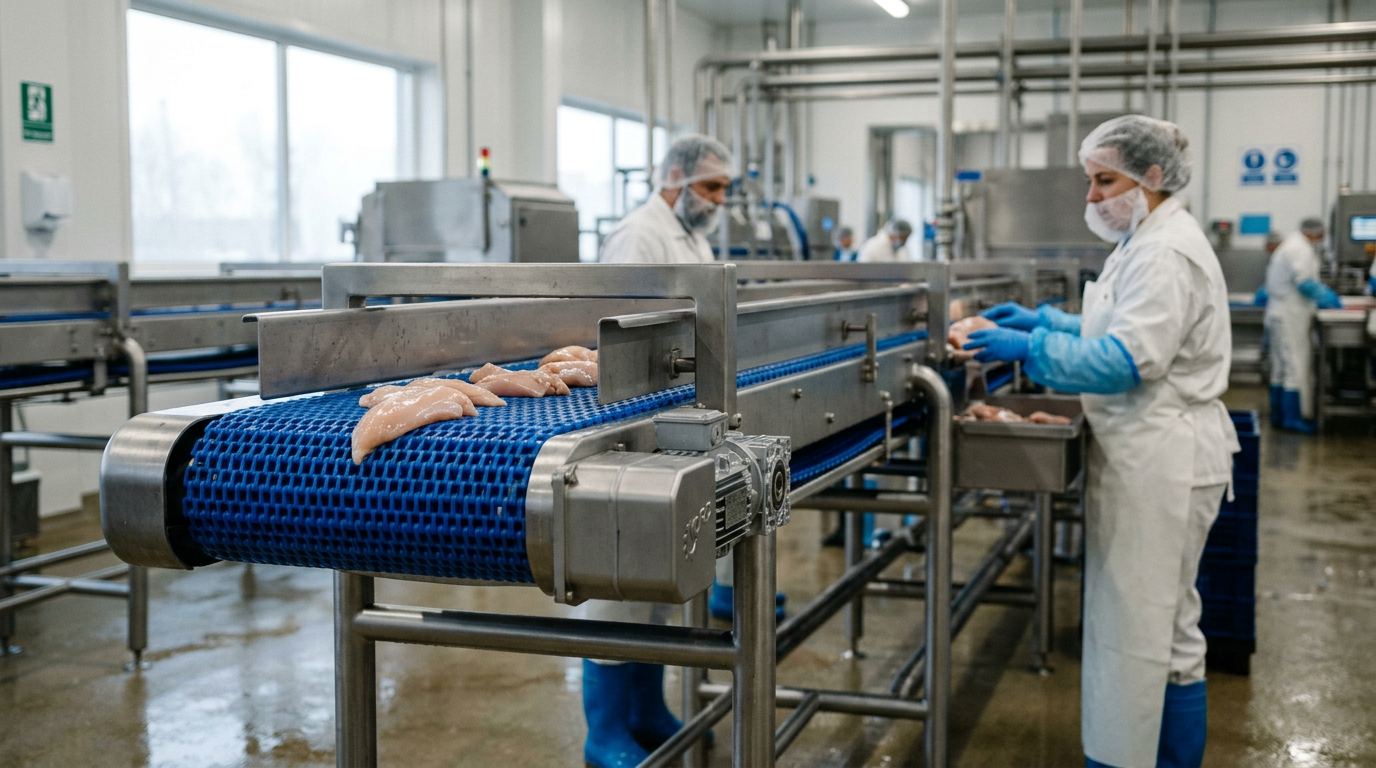
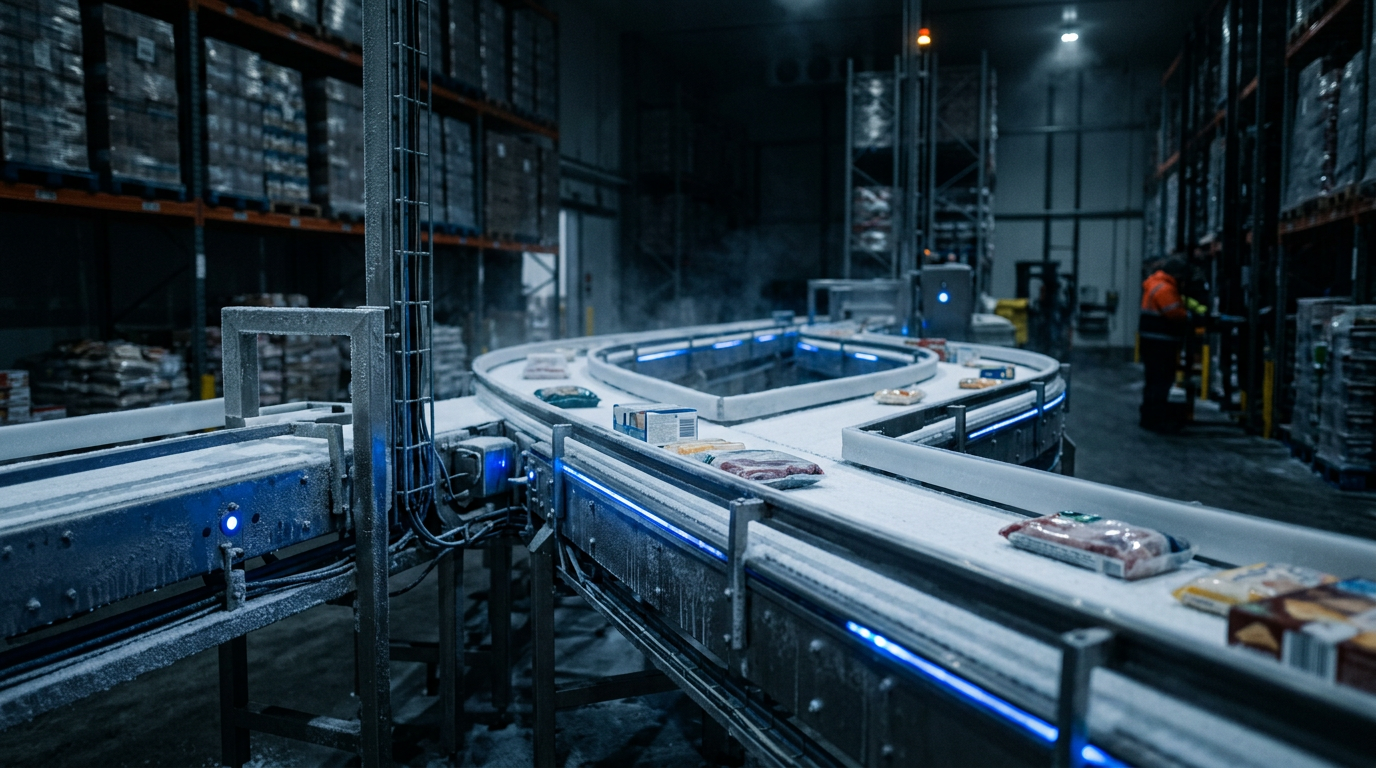
Modular plastic belt conveyors in high-care food production environments reduce bacterial contamination risks by up to 50% compared to traditional fabric-reinforced belts, primarily due to their non-porous surfaces and the ability to undergo validated clean-in-place (CIP) protocols. These systems utilize FDA-compliant materials like Polypropylene (PP) and Polyacetal (POM), engineered to withstand rigorous chemical sanitation and temperature fluctuations from -40°C in blast freezers to +100°C during sterilization cycles.
The Role of Modular Plastic Belts in High-Care Zones
In the hierarchy of food safety, "high-care" zones represent environments where products that are susceptible to microbiological contamination (like ready-to-eat meals, cooked meats, or dairy) are handled after a lethal kill step but before final packaging. In these areas, the conveyor system is not merely a transport mechanism; it is a critical control point.
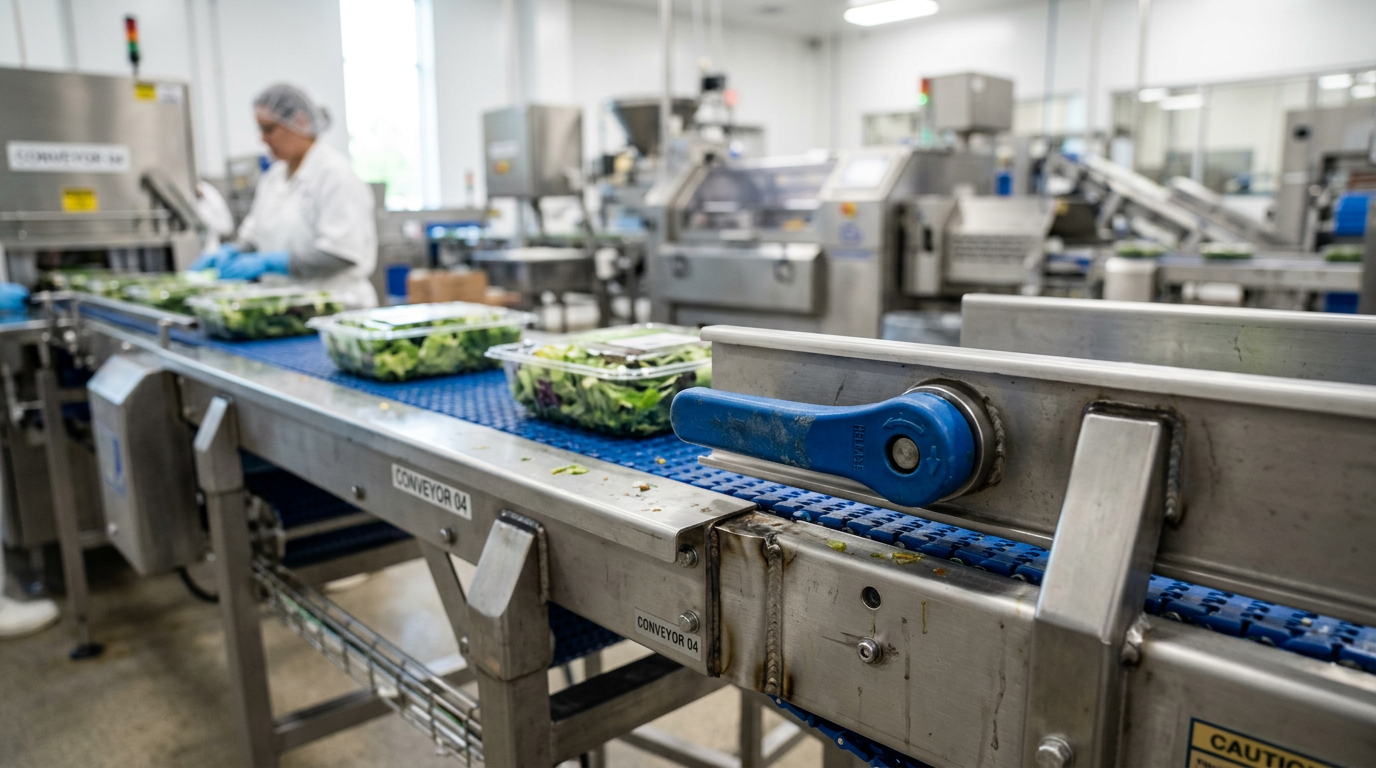
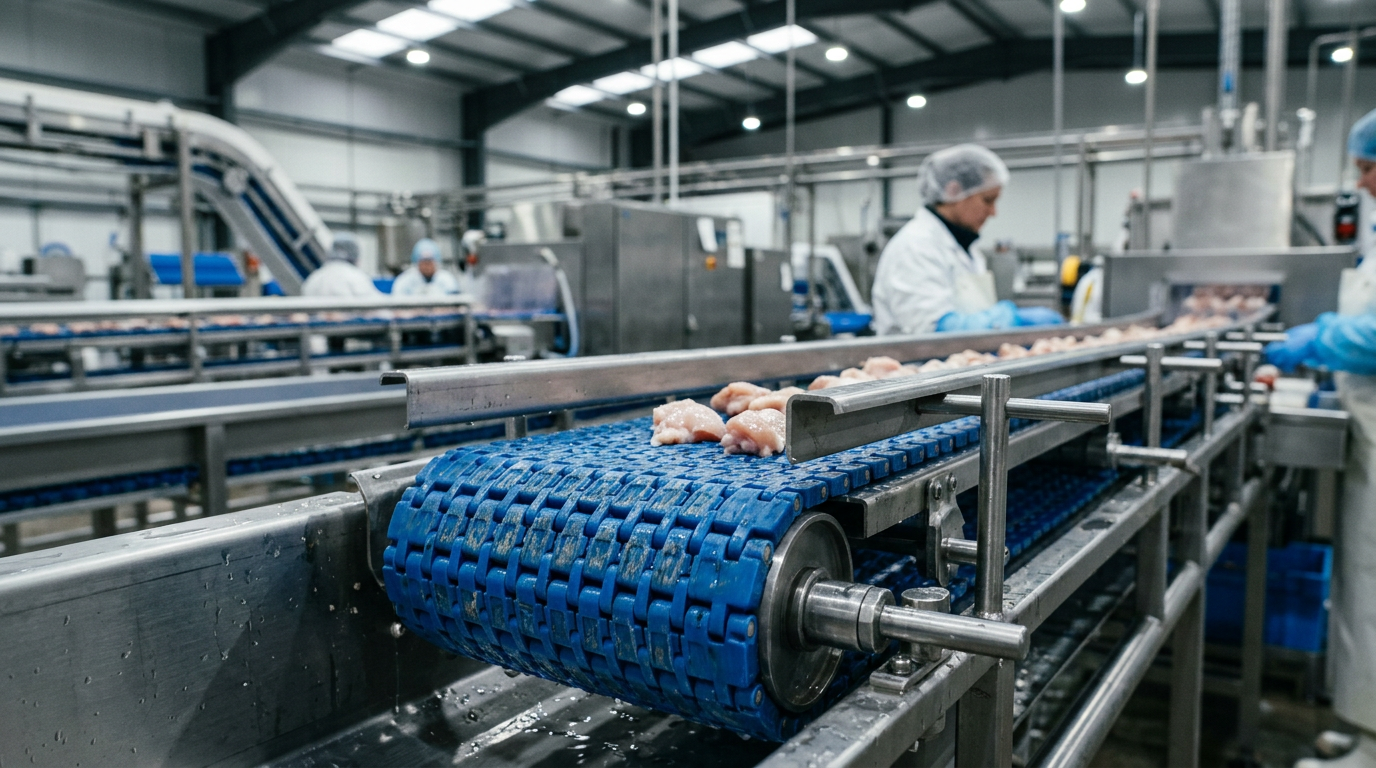
Traditional PVC or PU belts often suffer from "wicking," where the fabric reinforcement absorbs fluids and pathogens if the top cover is nicked. In contrast, modular plastic belts are composed of solid, injection-molded links. According to the European Hygienic Engineering & Design Group (EHEDG), hygienic equipment must be self-draining and free of crevices. Modern modular designs achieve this through "open-hinge" geometries that allow 360-degree access for water jets during the sanitation process.
Material Selection: PP vs. PE vs. POM
Selecting the right polymer is the first step in ensuring compliance and longevity. The choice depends on the specific thermal and chemical stresses of the production line.
| Material | Temp Range (°C) | Chemical Resistance | Impact Strength | Best Use Case |
|---|---|---|---|---|
| Polypropylene (PP) | +5 to +100 | Excellent (Acids/Bases) | Moderate | General high-temp washdown |
| Polyethylene (PE) | -73 to +66 | Good | High (Ductile) | Blast freezers / IQF |
| Polyacetal (POM) | -43 to +95 | Limited (Sensitive to pH < 4) | Very High | Heavy loads / Long conveyors |
| Detectables | Varies | Standard | Standard | Risk mitigation (X-Ray/Metal) |
Engineering for Sanitation: The "Cleanability" Factor
In high-care environments, downtime for cleaning is a significant operational cost. Modular systems allow for the integration of "Clean-In-Place" (CIP) manifolds, which spray high-pressure water and sanitizers directly into the hinge area as the belt rotates.
Open Hinge and Sprocket Engagement
To meet FDA 21 CFR 177 standards, every surface of the conveyor must be reachable. The evolution of "dynamic hinges" allows the pins to be exposed when the belt travels over the sprocket, effectively pushing out food debris that would otherwise be trapped. This mechanical action is superior to the static surfaces of flat belts, which often require manual scrubbing to remove biofilms.
For manufacturers looking to integrate these advanced hygienic features into a complete production line, Easy Conveyors provides modular solutions that prioritize easy-to-clean frameworks and tool-less belt removal, which are essential for maintaining high-care standards without sacrificing throughput.
Design Trade-offs: Modular vs. Monolithic
While modular belts are the industry standard, "monolithic" thermoplastic belts (extruded flat belts with positive drive lugs) are also gaining ground in high-care zones.
- Repairability: Modular belts excel here. If a single link is damaged by a dropped knife or tool, only that link needs replacement. A monolithic belt typically requires a full transverse weld, requiring specialized heat-joining equipment and significant downtime.
- Tracking: Because modular belts are driven by sprockets rather than friction, they are self-tracking. This eliminates edge fraying—a major source of foreign body contamination in fabric belts.
- Airflow: In cooling or proofing applications, modular belts can be configured with up to 50% open area, allowing for rapid heat transfer that solid belts cannot match.
Easy Conveyors stocks the modular systems discussed here — ready to ship across Europe.
Integration with Automation and VFDs
The efficiency of a high-care line is often determined by its control logic. Integrating modular conveyors with VFD soft-start tuning is critical to prevent "belt surge," which can occur when long belts are started under load. Excessive surging causes mechanical stress on the sprockets and can lead to premature pin wear.
Furthermore, implementing hygienic wash-down design for the motor and gearbox is non-negotiable. Most high-care facilities specify stainless steel motors or epoxy-coated drives with a minimum of IP69K ingress protection, ensuring the electronics can withstand 100-bar pressure washing at temperatures up to 80°C (IEC 60529).
Mitigating Risk: Foreign Body Detection
Despite their durability, plastic links can break. In high-care zones, this presents a "physical hazard" in HACCP (Hazard Analysis and Critical Control Points) terms. Leading manufacturers now offer:
- Metal-Detectable Plastics: Impregnated with metallic particles that trigger standard metal detectors.
- X-Ray Contrast Materials: High-density additives that show up clearly on X-ray inspection systems.
- Visual Contrast: Using "Signal Blue" (RAL 5005) or similar colors that do not occur naturally in food, making manual inspection more effective.
Maintenance and Lifespan Optimization
To maximize the life of a modular belt in a high-care facility, engineers must monitor pin wear. As the pins and hinges wear, the "pitch" of the belt increases. If the pitch exceeds a 3% elongation threshold, the belt will no longer seat correctly on the sprockets, leading to jumping and potential catastrophic failure.
Regular inspection of the drum motor selection or gearmotor alignment is also vital. Misalignment of the drive shaft by as little as 0.5 degrees can cause uneven loading across the belt width, leading to asymmetric wear and frequent "unzipping" of the modules under high tension.
Conclusion
Modular plastic belt conveyors have transformed high-care food production from a sanitation bottleneck into a streamlined, repeatable process. By selecting the correct material—whether it be PP for heat resistance or PE for cold chains—and utilizing open-hinge designs, manufacturers can meet the most stringent ISO 22000 food safety management requirements while maintaining operational efficiency. As automation continues to advance, the integration of smart sensors and hygienic drive systems will further solidify the modular belt's position as the backbone of the modern food factory.
Frequently Asked Questions
What defines a 'high-care' zone in food production?
High-care food production involves handling products susceptible to contamination after a kill step but before final sealing (e.g., sliced deli meats). It requires stringent environmental controls and hygienic equipment.
Why are modular belts in food plants usually blue?
Standard blue (often RAL 5005) is used because it provides the highest visual contrast against most food products, making it easier to identify plastic fragments if a belt is damaged.
What is the expected lifespan of a modular plastic belt?
While durability varies by load, a modular belt in a high-care facility typically lasts 5 to 7 years with proper maintenance, though pins may need replacement every 2 to 3 years.
How does Clean-In-Place (CIP) work with modular conveyors?
CIP systems use fixed manifolds to automate the sanitation process, reducing manual labor and ensuring that high-pressure water reaches the critical hinge areas of the belt consistently.