Optimizing Modular Plastic Belt Conveyors for High-Care Food Production
High-care food conveyors require EHEDG standards and modular plastic belts. Learn how open-hinge designs and 316 stainless steel reduce microbial risks by 40%.
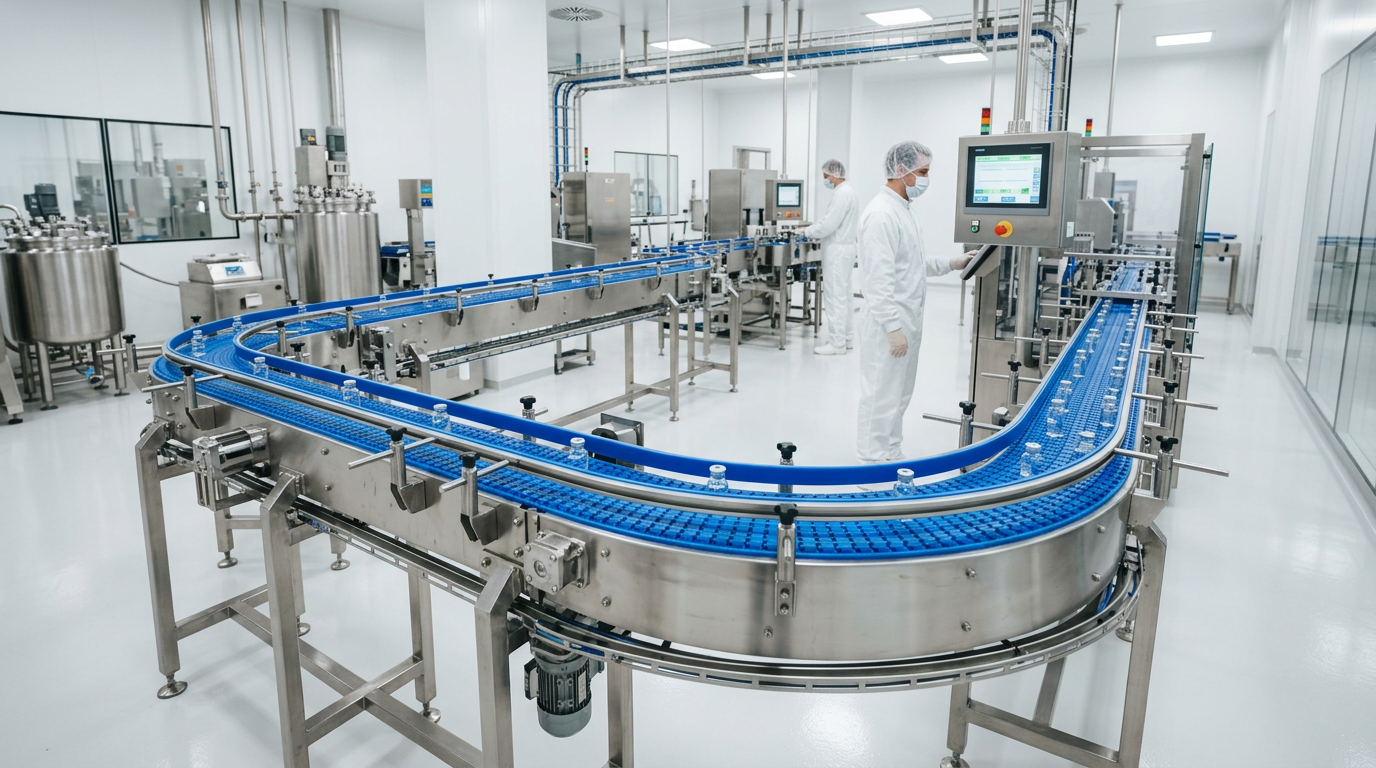
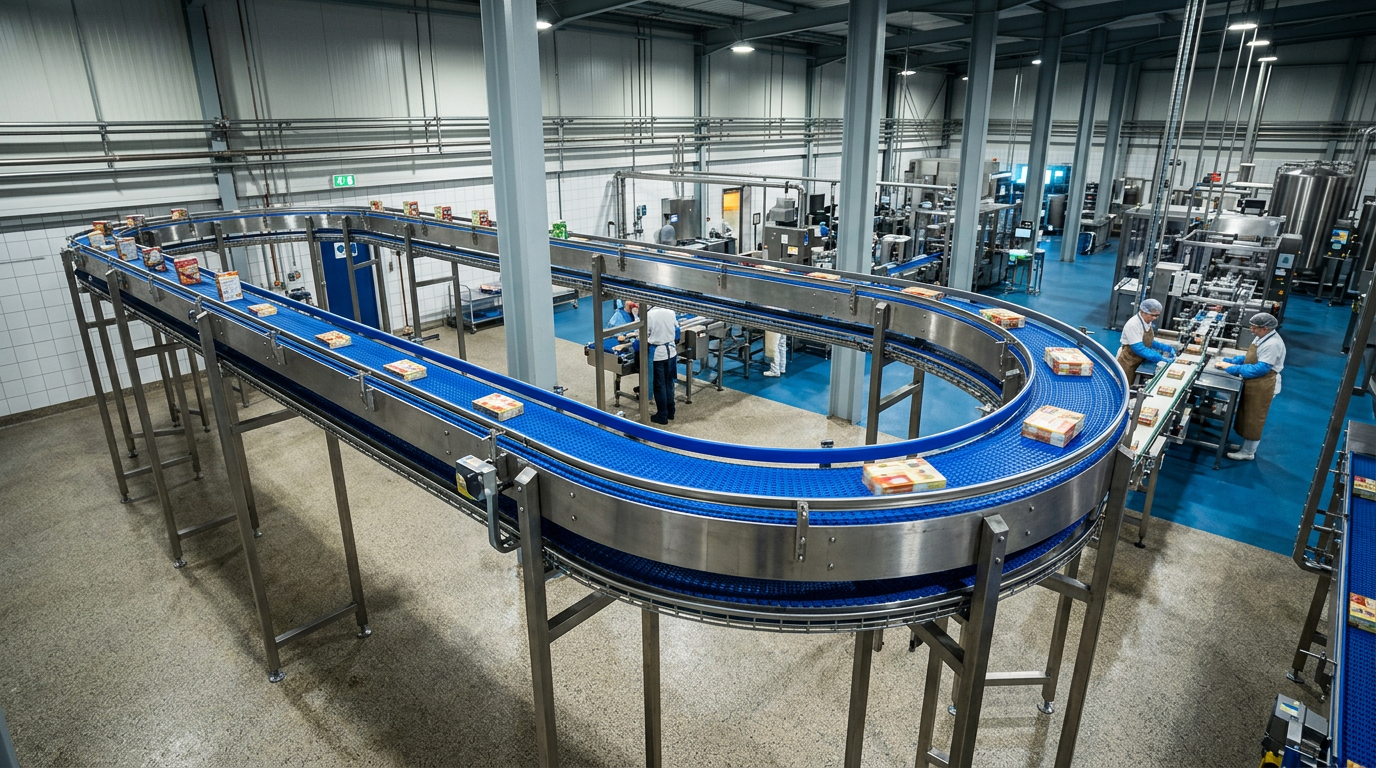
Modular plastic belt conveyors in high-care food production must achieve a microbial swab pass rate of 99% or higher, typically requiring equipment to meet EHEDG or 3-A sanitary design standards. These systems utilize positive-drive sprocket mechanisms and open-hinge belt geometries to eliminate the traditional "tensioning" requirements of fabric belts, thereby reducing bacteria-harboring friction points by up to 40%.
High-care environments — such as ready-to-eat (RTE) meat processing, dairy packaging, and fresh-cut produce lines — demand a level of hygiene that exceeds standard industrial applications. In these zones, the conveyor is not just a transport mechanism; it is a critical control point (CCP) in the food safety plan. The transition from traditional tensioned fabric belts to modular plastic belts (MPB) has revolutionized how these facilities manage cross-contamination risks and sanitation efficiency.
The Engineering Logic of Modular Plastic Belts
Traditional belt systems often suffer from tracking issues and require high tension to maintain drive. This tension creates "pinch points" where organic material can become trapped and pressurized, forming a biofilm that is resistant to standard cleaning.
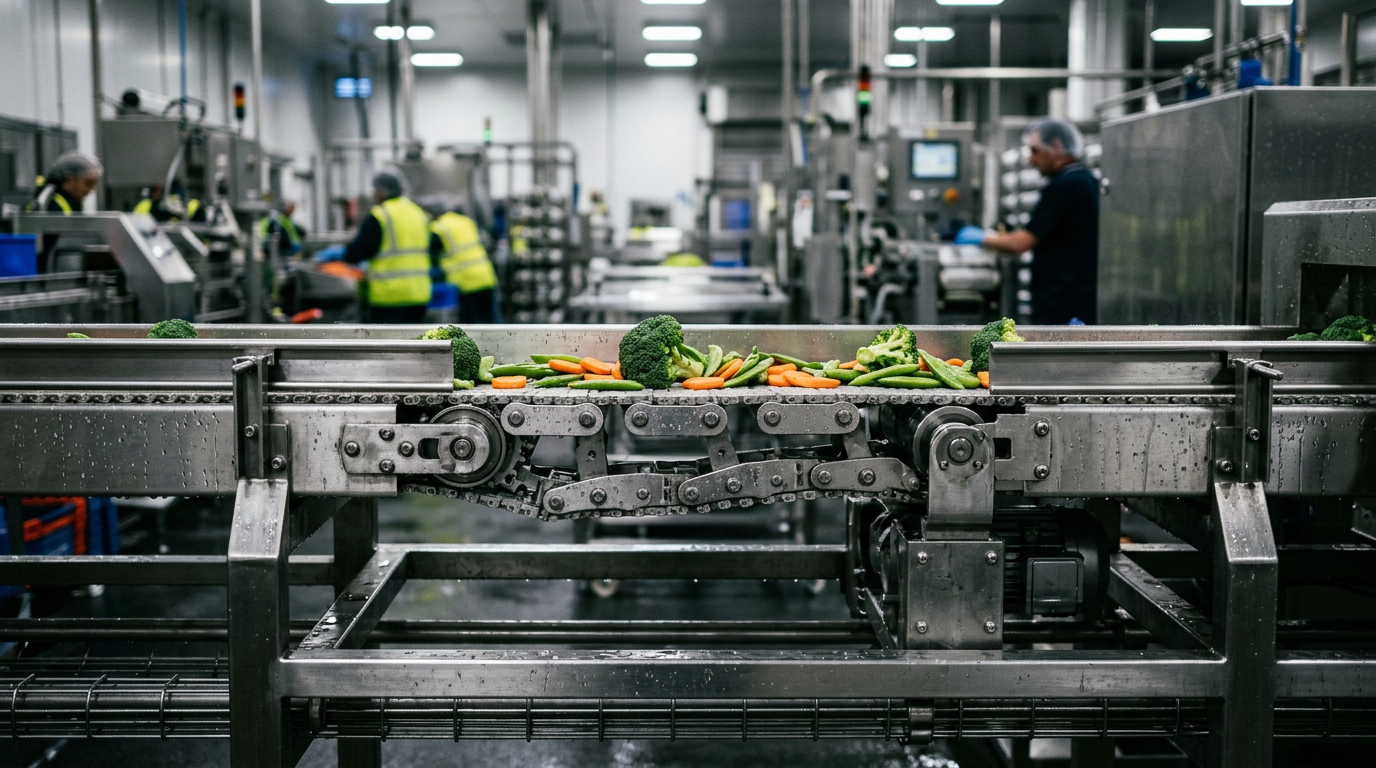
Modular plastic belts, conversely, operate on a sprocket-driven "dead deck" principle. Because they are assembled from interlocking modules, they can be designed with specifically engineered gaps. In high-care settings, the focus is on Open Hinge Design. This allows the cleaning solution to penetrate the pivot rod area where 80% of bacterial growth typically occurs.
Material Science: POM, PP, and PE
Selecting the right polymer is the first step in engineering a food-safe line.
- Polypropylene (PP): The standard for high-care due to its excellent chemical resistance to aggressive caustic cleaners. It handles temperatures from +5°C to +100°C.
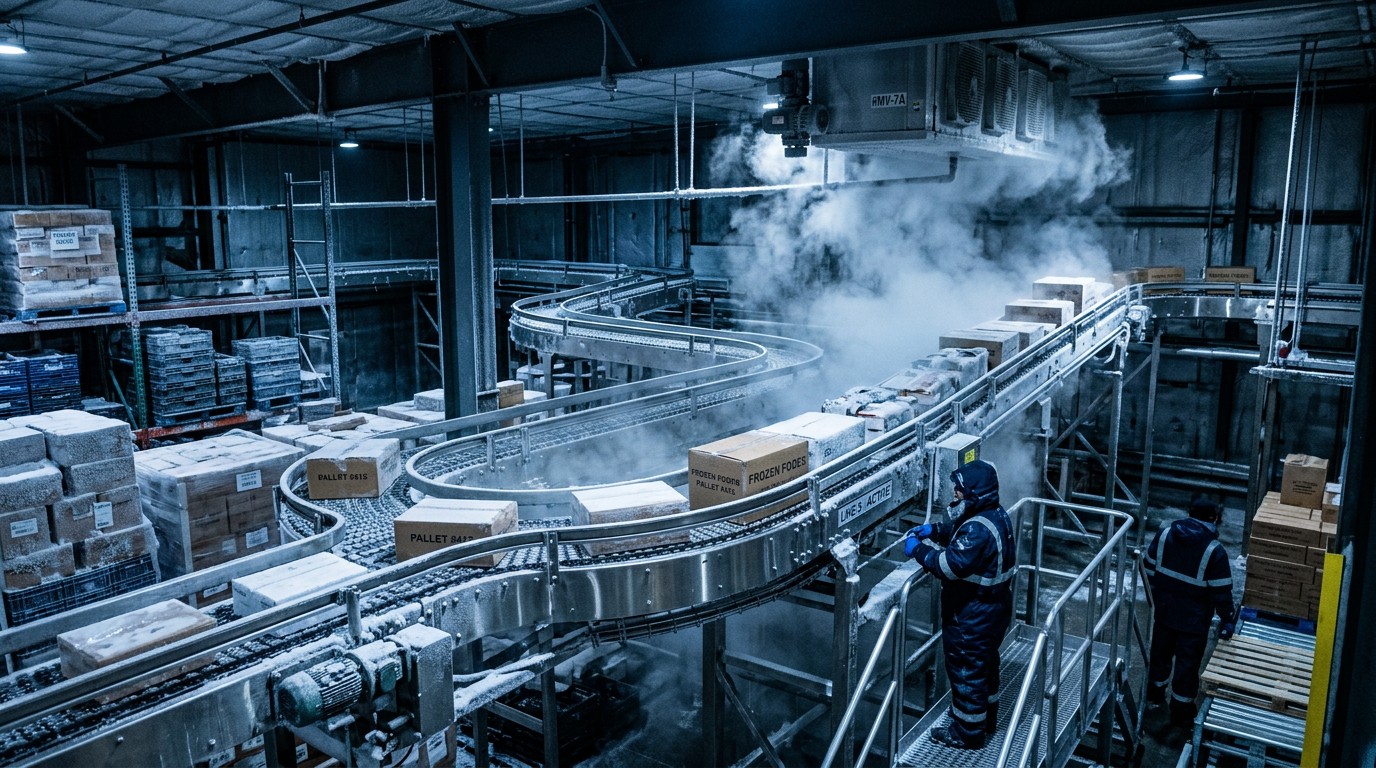
- Polyethylene (PE): Ideal for low-temperature applications like flash freezing or cold storage (down to -70°C), though it is softer and more prone to scarring.
- Acetal (POM): Offers high tensile strength and low friction but can be susceptible to "acetal rot" if exposed to high concentrations of chlorine-based sanitizers.
Sanitary Design Fundamentals (EHEDG & 3-A)
For a modular system to be truly "high-care ready," it must adhere to specific geometric constraints. The most critical is the avoidance of "horizontal ledges." Every surface must have a minimum slope of 3 degrees to ensure water and cleaning chemicals drain freely, preventing stagnant pools that fuel microbial growth.
The "Strip-Down" Requirement
In high-care production, the Mean Time to Clean (MTTC) is a vital KPI. Modern modular systems often feature tool-less lifters. These allow sanitation crews to lift the belt from the frame without disassembly, exposing the wear strips and sprockets for a full 360-degree washdown. Easy Conveyors specializes in these high-efficiency modular frames, providing the structural rigidity required for heavy loads while maintaining the open-access profiles necessary for food safety compliance.
| Feature | Low-Care / Industrial | High-Care Food Grade |
|---|---|---|
| Material | Powder Coated Steel | 304/316 Stainless Steel |
| Belt Drive | Friction (Friction-drive) | Sprocket (Positive-drive) |
| Surface Finish | Ra < 3.2 µm | Ra < 0.8 µm (Electropolished) |
| Weld Quality | Stitch welded | Continuous/Ground smooth |
| Motor Type | External Gearmotor | IP69K Drum Motor or Canned Motor |
| Drainage | Flat surfaces | 3° Minimum Pitch |
Handling Thermal Expansion and Load
One common failure mode in modular plastic belt conveyors is "belt tenting" or "surging." This occurs when the plastic expands due to heat (common in hot-fill or steam-cook applications) or contracts during washdown with cold water.
Engineering for high-care must account for the Coefficient of Linear Thermal Expansion (CLTE). For example, a 30-meter Polypropylene belt can expand by several centimeters when moved from a cold room to a hot wash environment. Designers must include "catenary sag" sections or take-up units that allow the belt to expand without losing sprocket engagement. Failure to calculate this leads to premature wear on the sprocket teeth and potential plastic shavings entering the food stream — a major physical contaminant risk.
Easy Conveyors stocks the modular systems discussed here — ready to ship across Europe.
Integration with Automation Components
In high-grade food zones, the drive system is as important as the belt. Integrating an IE3 motor class drive with an IP69K rating ensures energy efficiency while surviving daily high-pressure spray (100 bar+).
Advanced facilities are moving toward "smart" modular systems. By integrating sensors into the conveyor frame, operators can monitor belt stretch and sprocket alignment in real-time. This moves maintenance from a reactive "break-fix" model to a predictive one, preventing the catastrophic failure of a belt during a production run. For more on optimizing drive performance, see our guides on VFD soft-start tuning and drum motor selection.
The Total Cost of Ownership (TCO) Shift
While the initial CapEx for a high-care modular plastic belt system is 20-30% higher than a standard PVC conveyor, the OpEx savings are substantial:
- Water Savings: Open-frame designs require 25-50% less water for a "clean-in-place" (CIP) cycle.
- Labor Efficiency: Tool-less belt lifters reduce sanitation labor hours by roughly 30%.
- Belt Longevity: Positive drive eliminates the edge fraying common in fabric belts, extending the service life from 12 months to 5+ years.
Managing Physical Contamination
A significant concern in high-care zones is "plastic-on-plastic" wear. Over time, the friction between the belt and the wear strips can create micro-particulates. To mitigate this, engineers use UHMW-PE (Ultra-High Molecular Weight Polyethylene) wear strips with blue coloration. The blue color is critical because it does not occur naturally in food products, making it easily detectable by vision systems or manual inspection if a fragment enters the product flow.
Furthermore, any high-care modular system should be designed with "self-draining" sprockets. These sprockets have fluted recesses that eject debris as they rotate, preventing the build-up of material that could otherwise force the belt off the sprocket or cause mechanical stress.
Hygienic Wash-down Design Checklist
Safety managers should audit their conveyor systems against these criteria:
- No Exposed Threads: Use of hygienic nuts or cap covers on all bolts.
- Spacers: Ensure a minimum 50mm gap between the conveyor frame and the motor or leg stands to prevent "sandwich" points where bacteria grow.
- No Hollow Tubing: All supports should be solid bar stainless steel or hermetically sealed and vacuum-tested.
By focusing on these granular details, manufacturers can ensure their hygienic wash-down design remains compliant with evolving global food safety standards. Moving to modular plastic belts is not just an equipment upgrade; it is a fundamental shift toward an "inherently clean" manufacturing philosophy.
Frequently Asked Questions
Which plastic material is best for high-pressure washdown?
In high-care zones, Polypropylene is preferred for its chemical resistance to caustic foam cleaners, whereas Polyethylene is used for sub-zero temperatures like IQF tunnels. Moving to Acetal (POM) provides higher strength but requires caution with chlorine-based sanitizers.
What are the drainage requirements for high-care conveyor frames?
Standard practice suggests a minimum 3-degree slope on all horizontal surfaces and a 50mm standoff distance for all mounted components to allow for 360-degree spray access.
Do modular plastic belts require tensioning?
Modular belts use positive-drive sprockets, meaning they require zero tension to operate. This reduces bearing stress and eliminates the 'biofilm traps' found in tensioned fabric belt pulleys.
Why are most food-grade modular belts and wear strips blue?
Blue is the industry standard for high-care plastics because it provides the highest visual contrast against most food products, making accidental fragments immediately detectable by staff or automated vision systems.