Modular Plastic Belt Conveyors in High-Care Food Production
Modular plastic belt conveyors for high-care food zones require 99.9% microbial reduction and FDA-compliant materials like PP or PE for maximum hygiene.
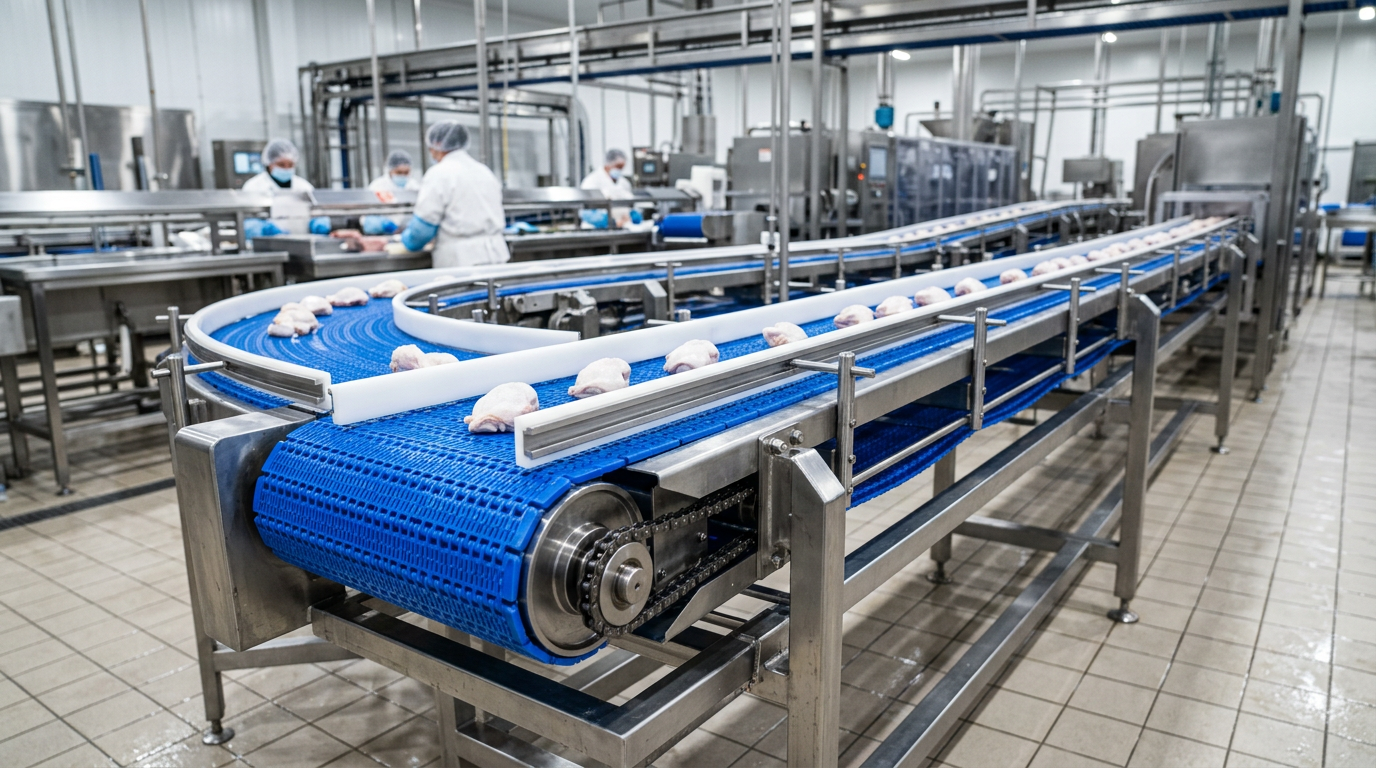
In high-care food production environments, modular plastic belt conveyors must adhere to a "zero-retention" design philosophy, where the hygiene of the system is measured by a microbial reduction of 99.9% (log 3) after standard Clean-in-Place (CIP) cycles. These systems utilize FDA-compliant materials like Polypropylene (PP) and Polyethylene (PE) to eliminate the risk of product contamination while providing superior drainage and accessibility for sanitation crews.
The Role of Modular Plastic Belting in High-Care Zones
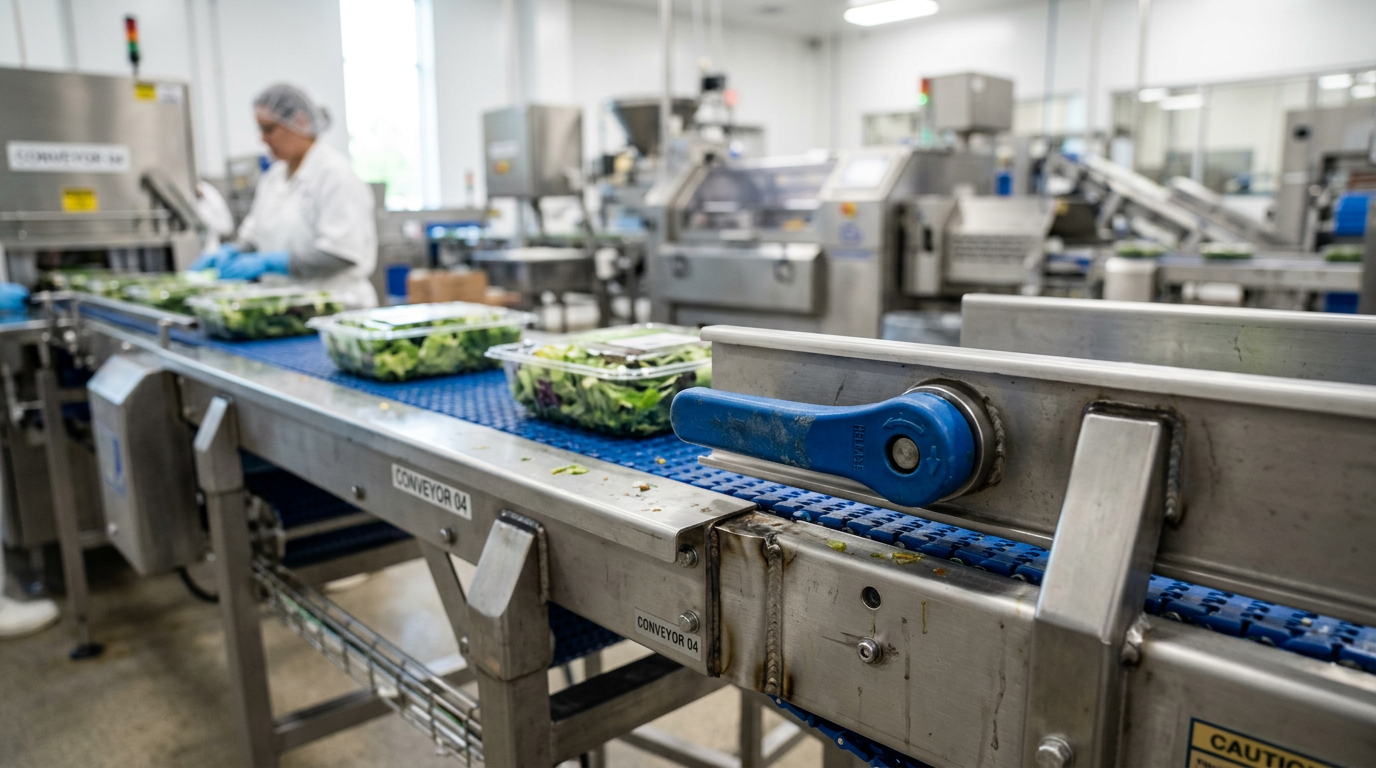
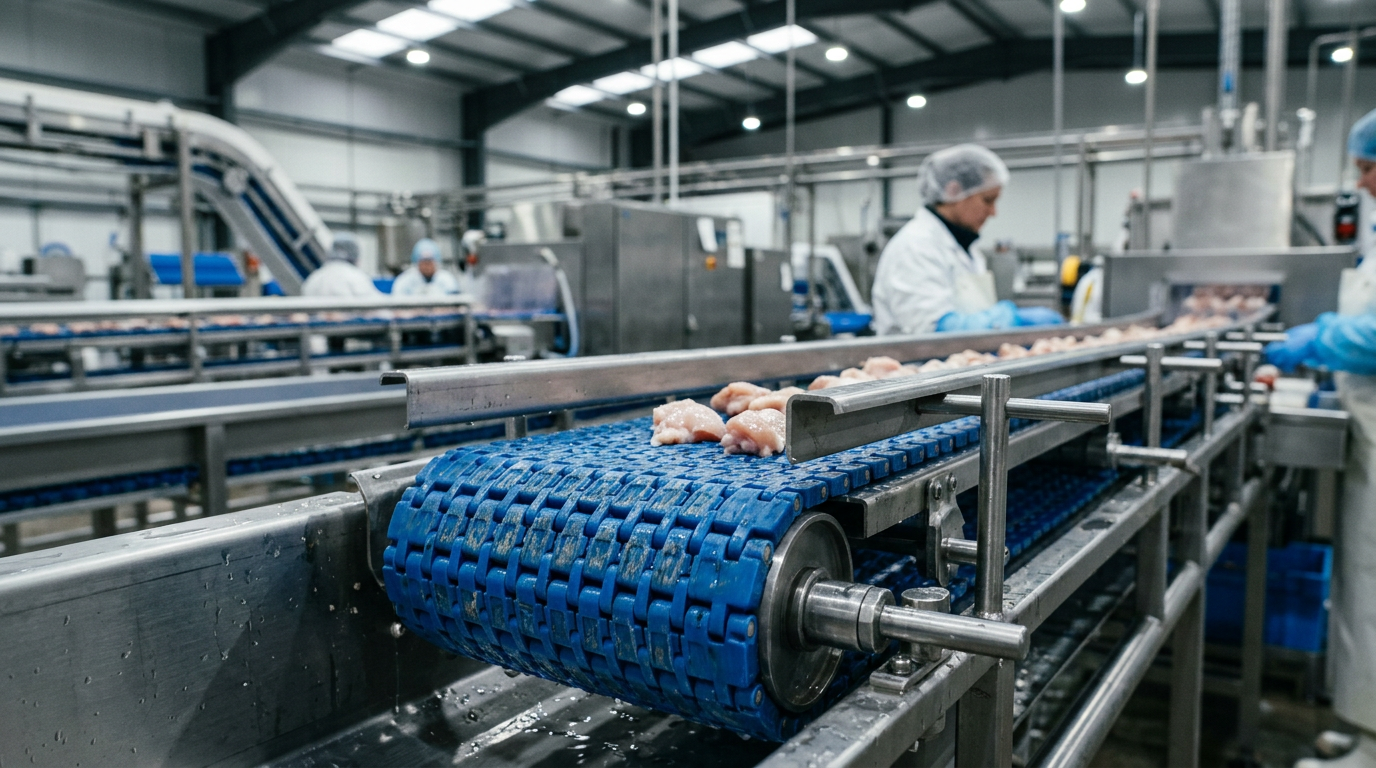
High-care production zones—defined by the European Hygienic Engineering & Design Group (EHEDG)—require conveyors that prevent the growth of Listeria, Salmonella, and other pathogens. Unlike traditional fabric belts that can fray and harbor bacteria within their fibers, modular plastic belts are composed of interlocking thermoplastic modules. These modules are joined by hinge pins, creating a robust yet permeable surface that allows for 180-degree cleaning access.
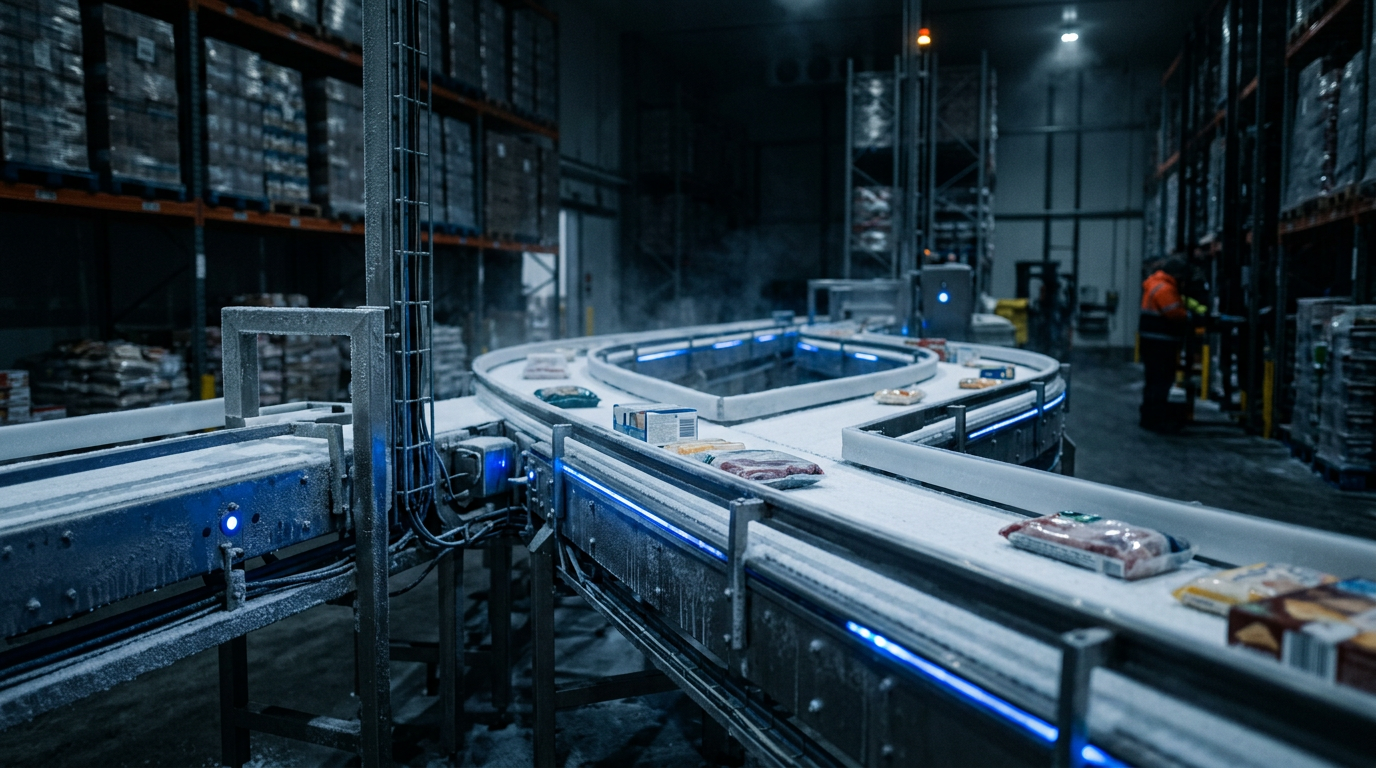
The transition to modular systems in these environments is driven by the need for mechanical reliability under extreme temperature fluctuations. In blast freezing or steam-cleaning applications, the thermal expansion coefficients of plastics like Polyoxymethylene (POM) must be carefully calculated to prevent belt buckling or drive sprocket misalignment.
Material Selection: POM vs. PP vs. PE
Selecting the correct polymer is the first critical step in engineering a conveyor for high-care food zones. Each material offers distinct advantages regarding chemical resistance, temperature range, and impact strength.
| Material Property | Polypropylene (PP) | Polyethylene (PE) | Polyoxymethylene (POM/Acetal) |
|---|---|---|---|
| Temperature Range | +5°C to +105°C | -73°C to +66°C | -43°C to +95°C |
| Chemical Resistance | High (Acids/Bases) | Excellent | Moderate (Sensitive to Acids) |
| Impact Strength | Moderate | High (at low temps) | High |
| FDA/EU Compliance | Yes | Yes | Yes |
| Primary Use Case | Microwave/Drying | Freezing/Cryogenic | Heavy Load/General Food |
For high-temperature washdowns involving caustic agents, Polypropylene is often the standard choice. However, for IQF (Individually Quick Frozen) lines, Polyethylene remains the gold standard due to its ability to remain ductile at temperatures as low as -70°C.
Engineering for Sanitation: The "Open Frame" Approach
The conveyor frame is as critical as the belt itself. In high-care zones, "closed" profiles—such as hollow square tubing—are avoided because they can develop internal condensation and bacterial colonies if the welds fail. Instead, engineers utilize open-profile 304 or 316L stainless steel frames with "spacer" technology.
These spacers ensure that there is a minimum gap of 50mm between the belt and the frame, allowing high-pressure water to reach every surface. Easy Conveyors specializes in these modular systems, providing European-engineered solutions that prioritize rapid belt removal and tool-less maintenance, which are essential for minimizing downtime in high-throughput food plants.
Key Hygienic Design Features:
- Sloped Surfaces: All horizontal surfaces on the conveyor frame must be sloped at a minimum of 3 degrees to prevent water pooling.
- Reduced Contact Points: Using "line contact" rather than "surface contact" between the belt and the wear strips.
- Internal Radii: All internal corners should have a minimum radius of 3mm (as per ISO 14159) to ensure they can be reached by spray nozzles.
Easy Conveyors stocks the modular systems discussed here — ready to ship across Europe.
Drive Systems and Motor Efficiency
In food production, the drive system must not only be powerful but also completely sealed. The industry is moving away from traditional gearmotors with external cooling fans, which can circulate airborne contaminants. Instead, many high-care facilities are adopting stainless steel drum motors or IE3-class hygienic gearmotors (IEC 60034-30-1).
When sizing these drives, engineers must account for the "friction factor" of the modular belt against the wear strips. While dry POM on UHMW-PE strips has a low friction coefficient, the introduction of water or food debris can increase drag by up to 30%. Implementing VFD soft-start tuning is highly recommended to reduce the mechanical stress on the plastic hinges during startup, particularly on long-distance transfer lines.
Maintenance and Lifespan Optimization
The lifespan of a modular plastic belt in a high-care environment is typically 3 to 7 years, depending on the aggressiveness of the sanitation chemicals and the load. Common failure modes include "hinge elongation" (stretching) and sprocket wear.
To maximize uptime, operations managers should implement a "predictive maintenance" schedule that includes:
- Bi-weekly pitch measurement: Checking for belt stretch beyond 2% of the original length.
- Sprocket alignment verification: Ensuring the drive teeth engage the center of the modules to prevent lateral tracking issues.
- Hygienic wash-down design reviews: Periodically auditing the effectiveness of the CIP system using ATP (Adenosine Triphosphate) bioluminescence testing to ensure zero biological residue.
Understanding hygienic wash-down design is not just about the equipment; it’s about the integration of the conveyor into the wider plant's HACCP (Hazard Analysis and Critical Control Points) plan. By selecting modular components that are "designed for disassembly," plants can reduce cleaning time by up to 50% compared to legacy PVC belt systems.
Compliance and Global Standards
Navigating the regulatory landscape is essential for global manufacturers. In the United States, equipment must meet FDA 21 CFR for food contact substances, while in Europe, Regulation (EC) No 1935/2004 governs materials intended to come into contact with food. Furthermore, the design of the machinery itself should align with ISO 14159:2002, which specifies hygiene requirements for the design of machinery.
By adhering to these standards, manufacturers can ensure that their modular plastic belt conveyors do not become the "weak link" in their food safety chain. Whether handling raw poultry, baked goods, or fresh produce, the modular approach offers the flexibility to adapt to changing production needs while maintaining the highest levels of biological security.
For more information on component selection, refer to our guides on drum motor selection and VFD soft-start tuning.
Frequently Asked Questions
Which plastic material is best for high-care food conveyors?
Polypropylene (PP) is best for high-temperature and chemical-heavy washdowns, while Polyethylene (PE) is superior for sub-zero freezing applications.
What is the difference between standard and hygienic conveyor frames?
Design for high-care zones focuses on 'open-frame' construction, sloped surfaces, and the elimination of hollow tubing where bacteria can grow.
How much clearance is needed for a washdown conveyor?
A 50mm clearance is generally recommended to allow sanitation nozzles to effectively clean the underside of the belt and the frame internals.
Why use modular plastic belts instead of PVC belts in food production?
Modular belts are easier to clean, handle higher loads without slipping, and allow for individual module replacement rather than replacing an entire belt.