Engineering Modular Plastic Belt Conveyors for High-Care Food Production
Modular plastic belt conveyors reduce cleaning time by 30% in food production. Learn how to select materials like POM/PP and design for EHEDG compliance.
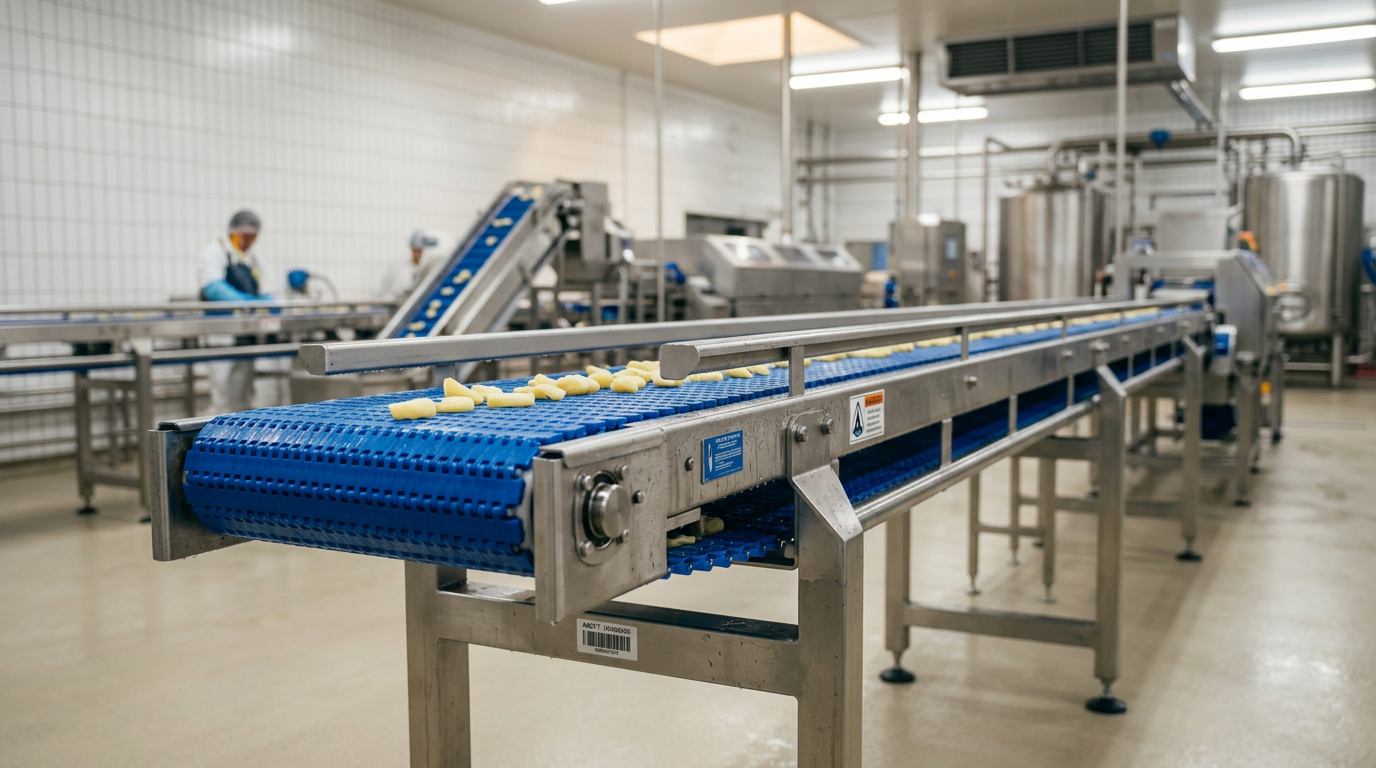
Modular plastic belt conveyors in high-care food production offer a 30% reduction in cleaning time and water consumption compared to traditional fabric belts by utilizing open-hinge designs and non-porous materials like Polypropylene (PP) or Polyacetal (POM). In high-care environments, these systems must adhere to strict sanitation standards, such as EHEDG guidelines and FDA 21 CFR regulations, to prevent biofilm accumulation and cross-contamination.
The Architecture of High-Care Modular Conveyors
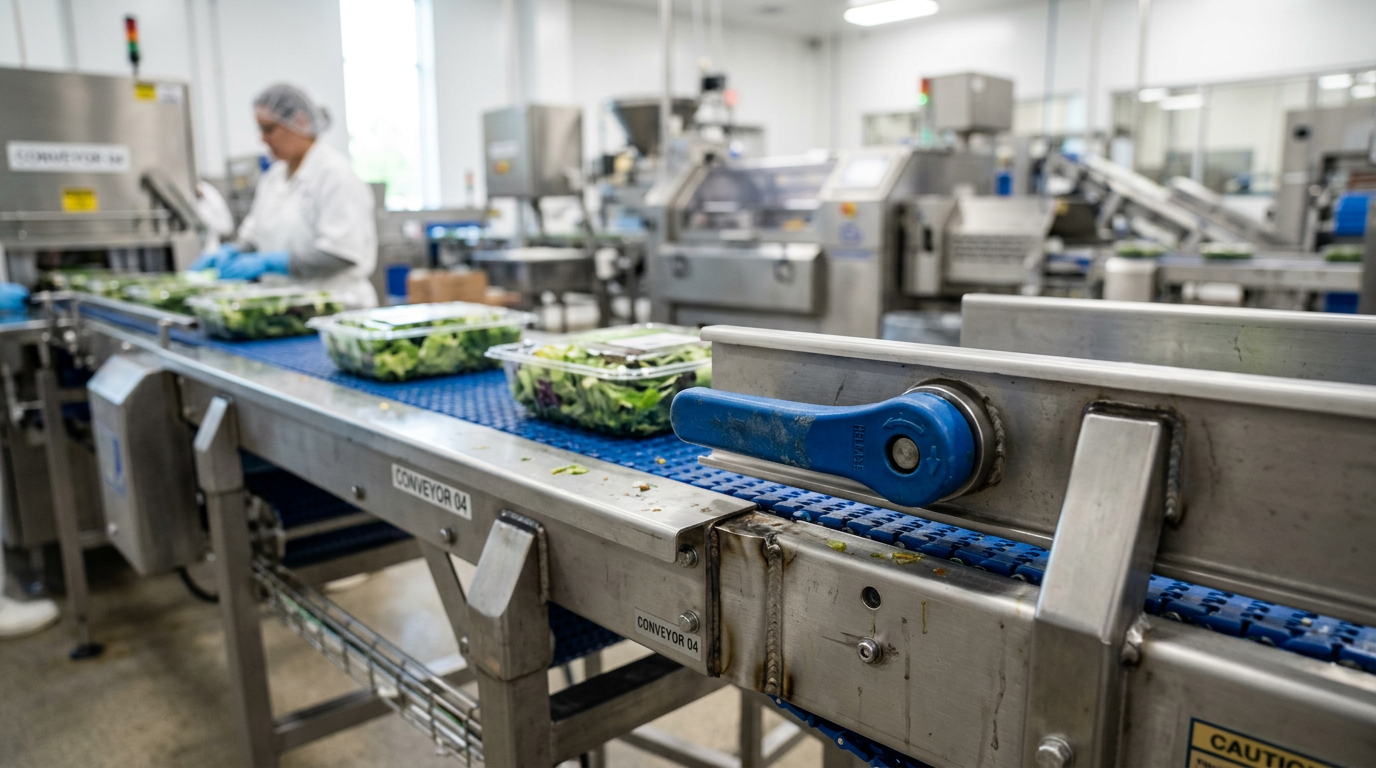
High-care food production zones—areas where ready-to-eat (RTE) products are exposed to the environment—demand equipment that can withstand aggressive chemical washdowns and frequent thermal cycling. Modular plastic belts are the industry standard here because they solve the primary failure point of traditional conveyors: the inability to inspect and clean the underside of the belt effectively.
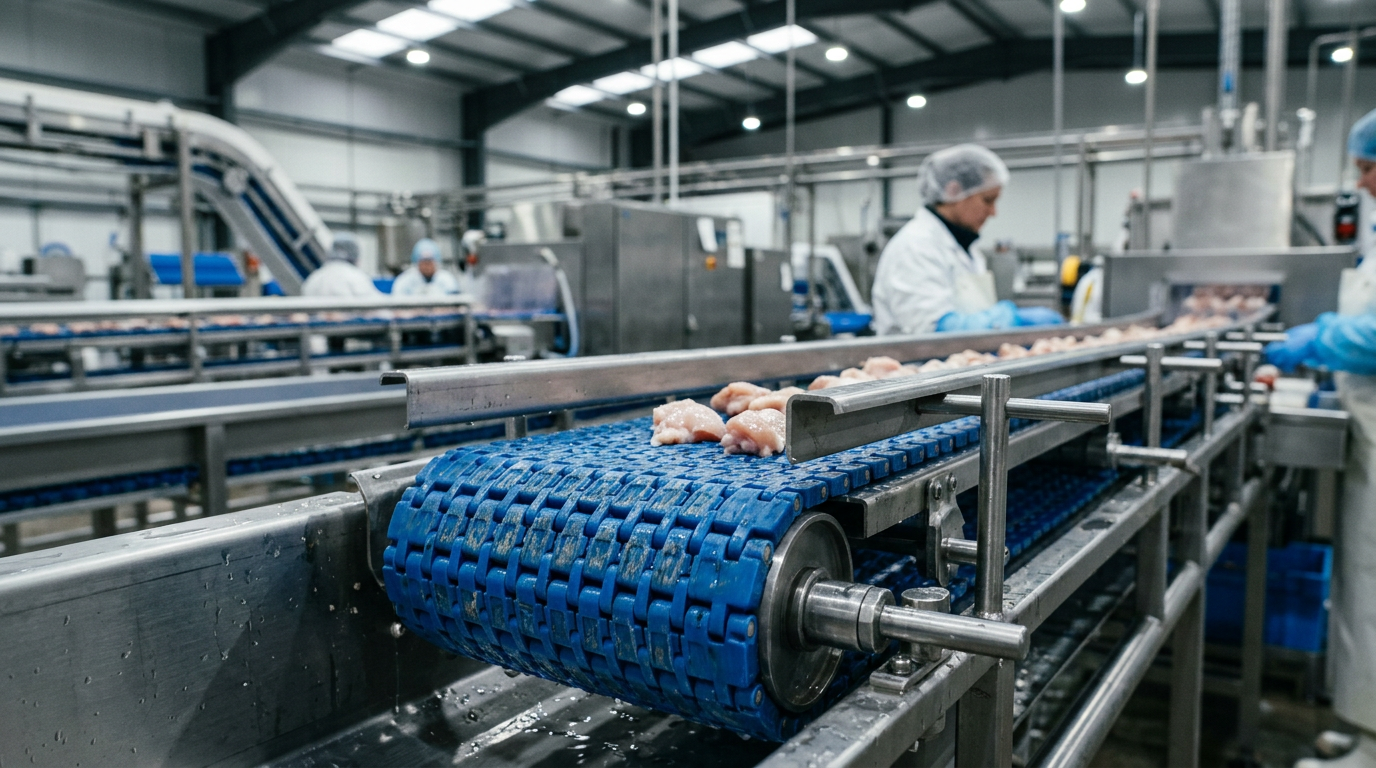
The "modular" aspect refers to individual plastic modules linked by hinge pins. This construction allows for "clean-in-place" (CIP) procedures where the belt can be lifted, or the sprocket drive can be accessed without full disassembly. For plant engineers, selecting the right material is the first step in ensuring long-term compliance and operational efficiency.
Material Selection: POM vs. PP vs. PE
The choice of polymer dictates the conveyor's resistance to temperature and chemicals.
| Feature | Polypropylene (PP) | Polyacetal (POM) | Polyethylene (PE) |
|---|---|---|---|
| Temperature Range | +5°C to +105°C | -40°C to +90°C | -70°C to +65°C |
| Impact Resistance | Medium | High | Very High |
| Chemical Resistance | Excellent (Acids/Bases) | Good (Oils/Solvents) | Excellent |
| Typical Use Case | High-temp washdown | General packaging/Heavy load | Deep freeze/Impact zones |
| FDA Compliance | Yes | Yes | Yes |
Engineering for Hygiene: Beyond the Belt
While the belt is the interface with the food, the conveyor frame determines the overall sanitary success of the line. In high-care zones, stainless steel (typically 304 or 316 grade) is mandatory. However, the geometry of the frame is what prevents "dead zones" where bacteria can proliferate.
Open Frame Design
Modern high-care modules utilize "spacer-less" designs. This means the longitudinal members are constructed from angled stainless steel rather than hollow tubes, which can harbor internal moisture and bacteria if a weld fails. According to ISO 14159, safety and hygiene must be integrated into the machine design phase. This includes ensuring all welds are continuous, ground smooth, and free of pits.
The Role of Sprocket Engagement
In high-care environments, traditional friction-drive systems are prone to slippage, especially when wet or greasy. Modular belts use a positive drive system where sprockets engage directly with the belt modules. This ensures perfect tracking and eliminates the need for high-tension take-up units, which can cause mechanical strain and create hard-to-clean pinch points. For specialized applications requiring complex routing, Easy Conveyors provides modular components designed to integrate seamlessly into existing hygienic workflows, focusing on ease of maintenance and rapid belt replacement.
Advanced Cleaning Strategies
The primary advantage of modular plastic belts in high-care zones is their compatibility with automated cleaning systems.
- Belt Lifters: Integrated mechanical levers that lift the belt several inches off the frame, allowing high-pressure sprayers to reach the internal wear strips.
- CIP Manifolds: Fixed spray bars positioned at the drive and return ends. These can be programmed via a central PLC to run a rinse-foam-sanitize cycle during shift changes.
- Scrapers and Ploughs: Specialized POM or food-grade silicone scrapers that remove heavy debris before it reaches the return path, reducing the organic load on the cleaning system.
Energy Efficiency and Motor Selection
In high-washdown areas, motor protection is critical. Engineers should specify motors with at least an IP69K rating to withstand 100-bar pressure at 80°C. Furthermore, moving toward IE3 premium efficiency motors (IEC 60034-30-1) is becoming standard for European manufacturers looking to reduce the Total Cost of Ownership (TCO). Many plants are now opting for "drum motors"—where the motor and gearbox are sealed inside the drive pulley—to eliminate external surfaces and cooling fins that are difficult to sanitize.
Easy Conveyors stocks the modular systems discussed here — ready to ship across Europe.
Common Failure Modes in Food Environments
Despite their robustness, modular systems can fail if not properly specified.
- Elongation and Surging: Over time, plastic pins can wear, causing the belt to "stretch." If the catenary sag isn't monitored, the belt may jump teeth on the sprockets.
- Chemical Embrittlement: Using high-concentration chlorine or peracetic acid (PAA) beyond recommended levels can make PP belts brittle, leading to fractured modules.
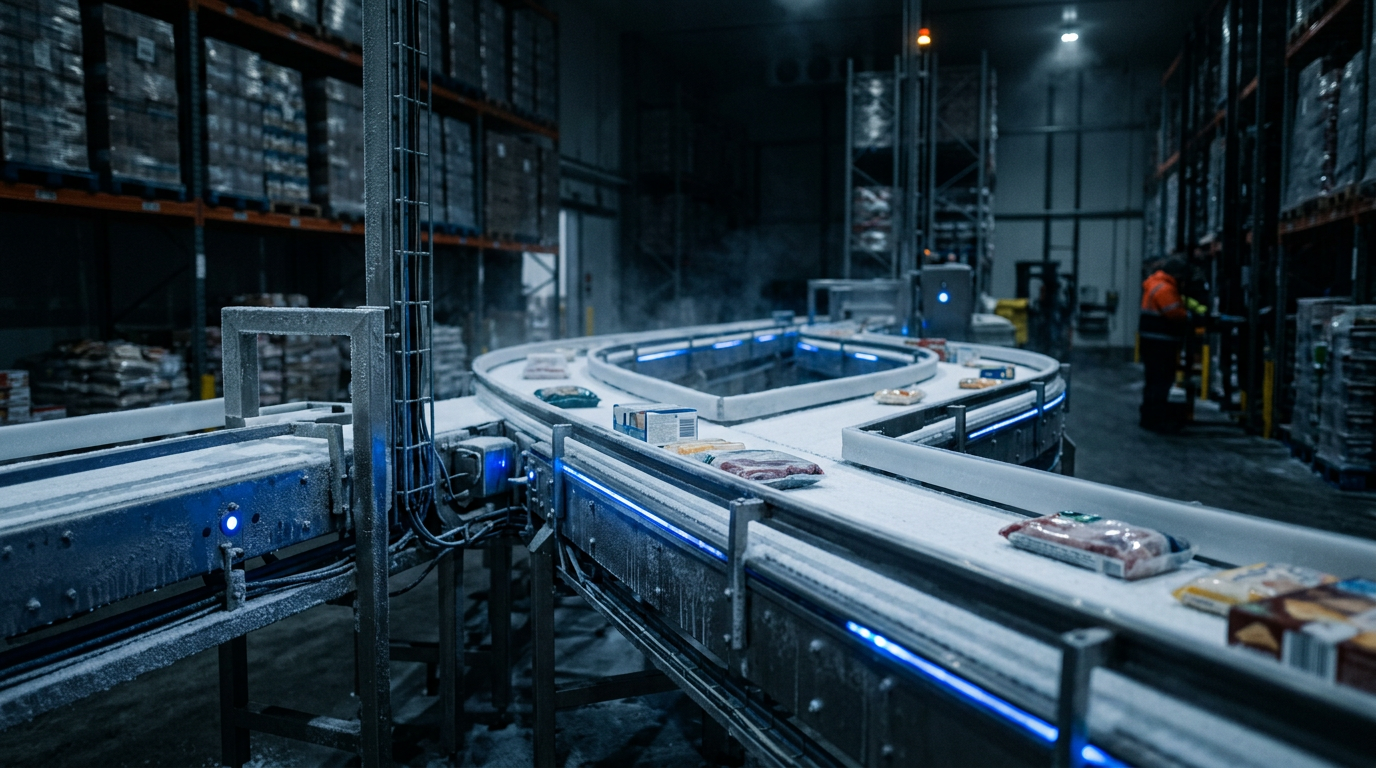
- Thermal Shock: Moving a belt from a -30°C freezer directly into a +60°C washdown can cause material fatigue. PE is generally preferred for these extreme gradients.
Effective VFD soft-start tuning is essential to prevent these failures. High-torque starts on a loaded belt can shear pins or damage sprocket teeth. Implementing a ramp-up time of 2.0 to 3.0 seconds significantly extends the component lifecycle.
Integration with Automation Cells
In modern "Lights Out" food production, modular conveyors serve as the backbone for robotic pick-and-place cells. Precise belt indexing is required for the vision systems to identify product coordinates. This is where the stability of modular plastic belts excels over fabric belts, which may wander laterally. By utilizing encoders and high-resolution sensors, the conveyor becomes a precision positioning tool rather than just a transport medium.
When designing these lines, it is also important to consider hygienic wash-down design for the support structures and cable management. Using stainless steel cable trays and ensuring no horizontal surfaces exist where water can pool will meet the rigorous requirements of global food safety audits.
Conclusion: The Future of High-Care Conveying
The transition toward modular plastic belt systems in high-care food production is driven by the dual needs for food safety and operational uptime. As labor costs rise, the ability to automate the cleaning process and reduce the frequency of belt replacements offers a clear ROI. By selecting materials tailored to the thermal and chemical environment and insisting on open-frame engineering, manufacturers can achieve the highest levels of hygiene while maintaining a flexible, modular production floor. High-quality modular systems ensure that as production needs evolve, the conveying infrastructure can grow and adapt without compromising food safety.
Frequently Asked Questions
What is the best plastic material for a high-care conveyor belt?
Polypropylene (PP) is preferred for high-temperature washdowns (up to 105°C) and resistance to acids. Polyacetal (POM) is much stronger and offers better impact resistance, but it can be sensitive to strong concentrations of chlorine.
What IP rating is required for conveyor motors in food zones?
In high-care zones, an IP69K rating is required. This ensures the component can withstand high-pressure (80-100 bar), high-temperature (80°C) washdown jets from all angles without water ingress.
Why are modular belts better than fabric belts for hygiene?
Modular belts use a positive drive (sprockets) while fabric belts use friction. Modular belts allow for better drainage, are easier to repair by replacing single links, and don't require the high tension that can lead to bacterial growth in rollers.
What does 'open-frame design' mean in food conveying?
Open-frame design refers to a conveyor structure built with angled stainless steel profiles rather than hollow tubes. This eliminates internal 'dead spaces' where bacteria can grow and allows for 360-degree inspection and cleaning.