Modular Plastic Belt Conveyors in High-Care Food Production
Modular plastic belt conveyors reduce contamination risks by 40% in high-care food production. Learn about material selection, hygienic design, and ROI.
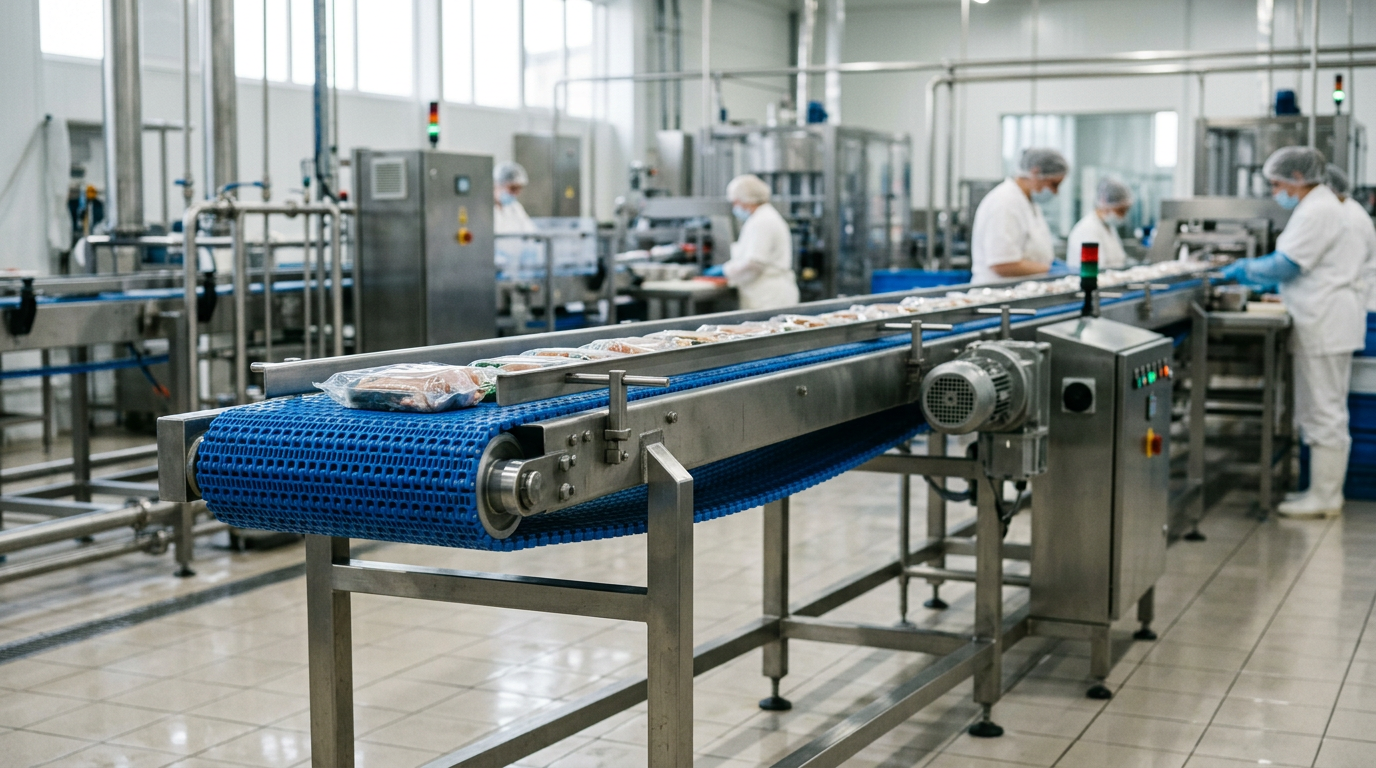
Modular plastic belt conveyors in high-care food production environments reduce bacterial harborages by up to 40% compared to traditional fabric belts, primarily due to their open-hinge design and non-porous materials like Polypropylene (PP) or Polyacetal (POM). In facilities governed by EHEDG guidelines, these systems utilize modular links that allow for rapid thermal expansion management and tool-less maintenance, ensuring compliance with strict hygiene standards while maintaining line speeds of up to 60 meters per minute.
The Anatomy of High-Care Modular Conveying
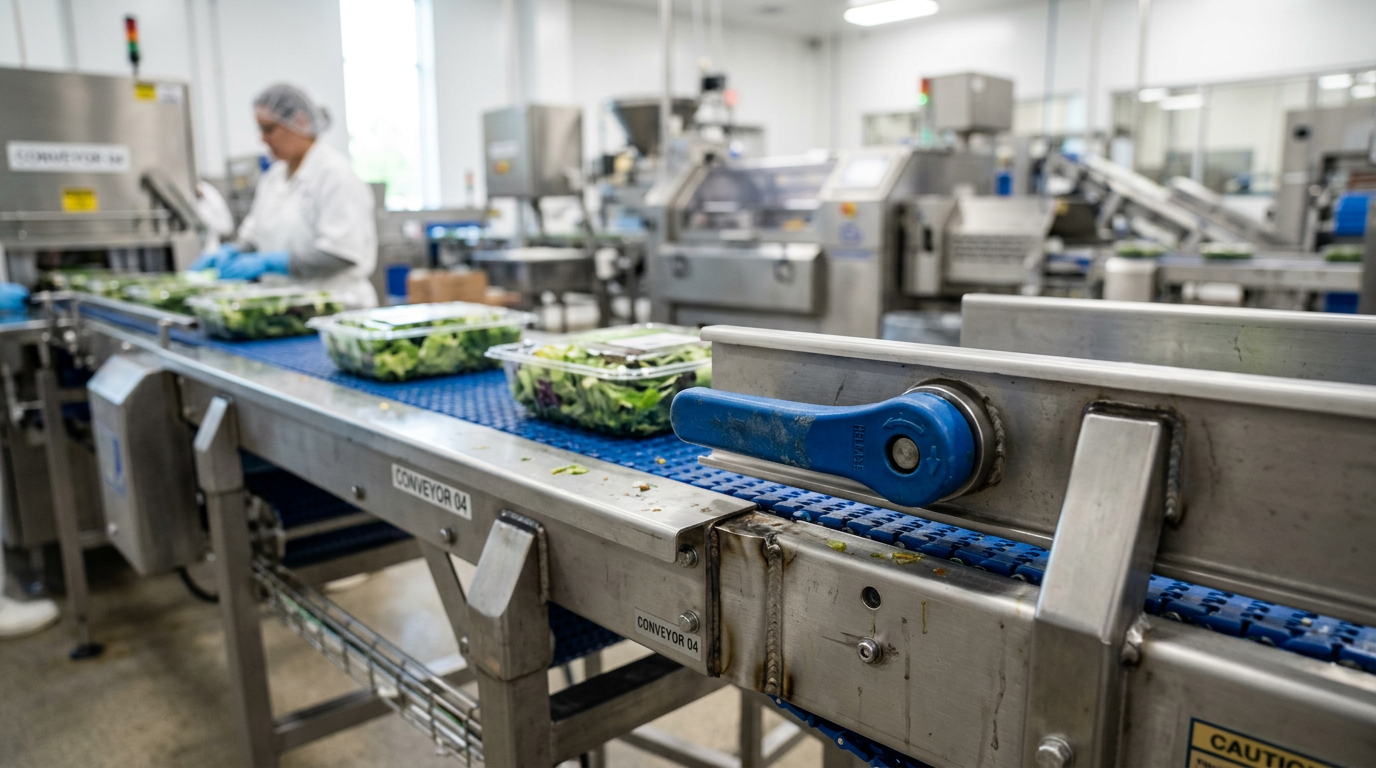
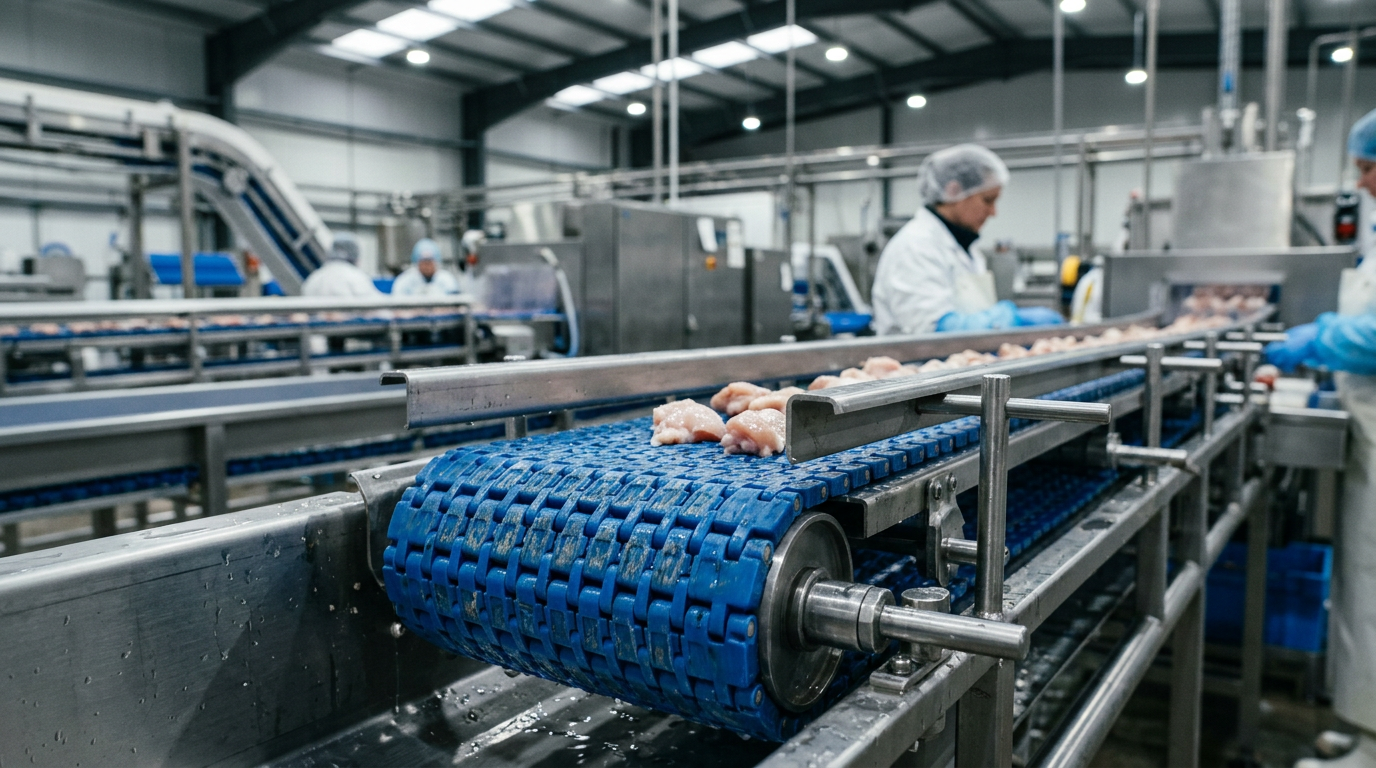
In "high-care" or "high-risk" food production—areas where ready-to-eat products are handled after a terminal kill step—the conveyor system is the primary surface that interacts with the product. Traditional PVC or PU fabric belts often suffer from fraying edges and delamination, which are significant contamination risks. Modular plastic belts mitigate these risks through a construction of interlocking injection-molded links.
The engineering of these belts focuses on three pillars: cleanability, durability, and material safety. Under FDA Title 21 CFR, materials must be migration-tested to ensure no chemicals leach into the food. Furthermore, the design must account for the rigorous washdown cycles involving caustic chemicals and high-pressure water (often exceeding 70 bar).
Material Selection: PP vs. PE vs. POM
Choosing the right polymer is critical for the longevity of the modular system.
| Property | Polypropylene (PP) | Polyethylene (PE) | Polyacetal (POM) |
|---|---|---|---|
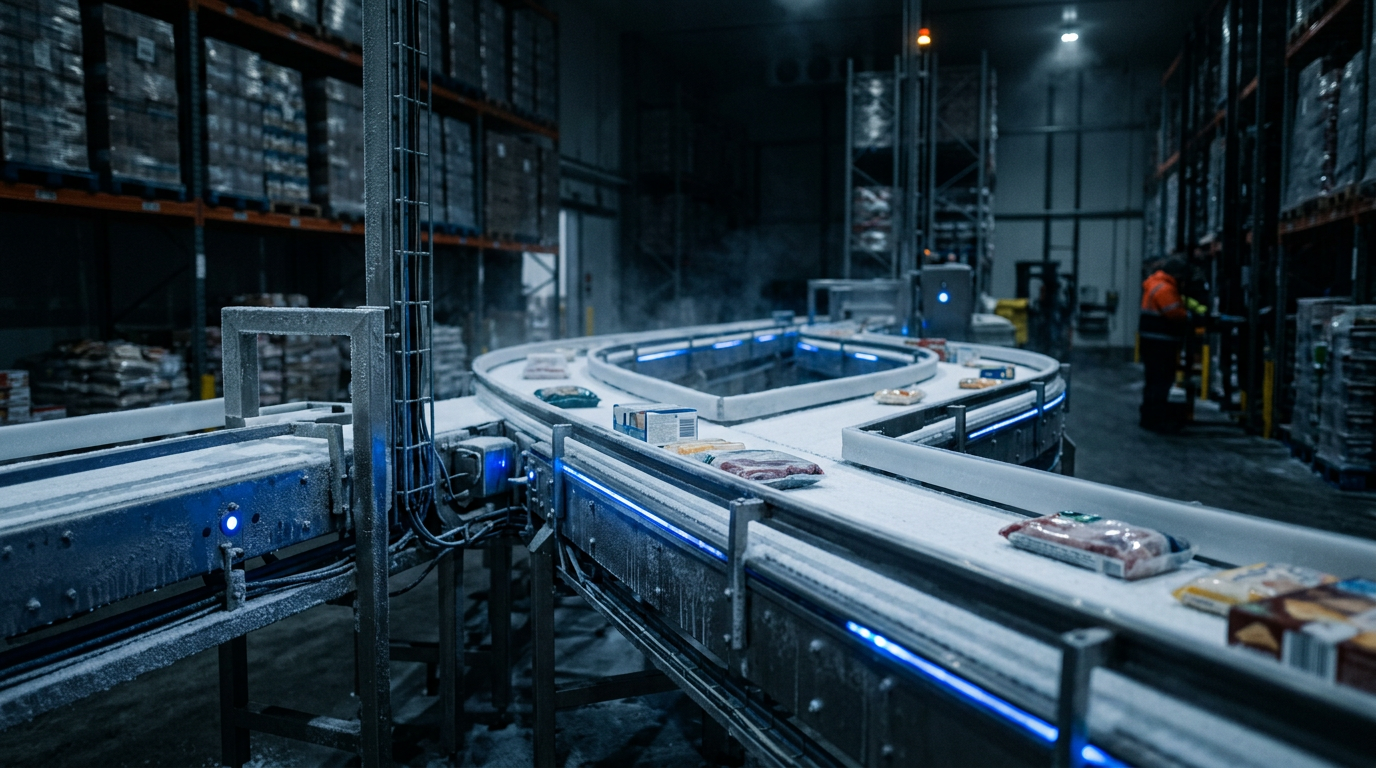
| Temp Range | +5°C to +105°C | -73°C to +66°C | -43°C to +95°C |
| Chemical Resistance | Excellent (Acids/Bases) | Superior | Good (Oils/Solvents) |
| Impact Strength | Moderate | High (Low Temp) | Very High |
| Coefficient of Friction | High | Low | Low |
| Typical Use Case | Blanching, Hot Filling | Spiral Freezers | Heavy Loads, Packaging |
Hygienic Design Principles for Modular Systems
The transition to modular systems in high-care zones is driven by the ISO 14159 standard, which dictates the safety of machinery regarding hygiene requirements. A high-care modular conveyor is not just about the belt; it is about the entire frame and drive architecture.
Open Frame Construction
Modular systems must feature an open-frame design, typically constructed from 304 or 316L stainless steel. By minimizing horizontal surfaces where water can pool and utilizing "diamond-grade" tubing (profiles rotated 45 degrees), engineers ensure that fluids drain away instantly. Standardized modular systems, such as those designed by Easy Conveyors, prioritize these clean-in-place (CIP) features to reduce the "Cleaning Time Out of Production" (CTOP).
Sprocket and Drive Engagement
Unlike friction-driven fabric belts, modular belts are positively driven by sprockets. This eliminates tracking issues and allows for low-tension operation. In high-care zones, square-bore shafts are preferred over keyed shafts because they are easier to clean and prevent the accumulation of organic matter behind the drive gears.
Advanced Features for High-Care Environments
Blue Belting and Visual Detection
In modern food processing, "Signal Blue" (RAL 5017) has become the industry standard for modular belts. This color does not occur naturally in food products, making any plastic fragment instantly detectable by vision systems or manual inspection.
Antimicrobial Additives
Some modular belts incorporate silver-ion technology directly into the polymer matrix. While not a replacement for cleaning, these additives inhibit the growth of mold and bacteria like Listeria and Salmonella on the belt surface between shifts.
Active Integrated Cleaning
To further enhance food safety, many modular systems now include "Belt Washers" located on the return path. These units use spray bars to apply sanitizers to both the top and bottom of the modules while the line is running, a process often integrated with VFD soft-start tuning to ensure smooth transitions and prevent "surge" which can lead to product misalignment.
Easy Conveyors stocks the modular systems discussed here — ready to ship across Europe.
Technical Challenges: Thermal Expansion and Elongation
A common failure mode in modular belts is "tenting" or surging caused by thermal expansion. Because plastic expands significantly more than steel, a 50-meter conveyor in a steam-cooking application can expand by several centimeters. Engineers must calculate the "catenary sag"—the loose section of the belt on the return side—to absorb this expansion without losing sprocket engagement.
Proper modular conveyor belt tensioning is not about making the belt tight; it is about managing the slack. Over-tensioning leads to premature sprocket wear and increased load on the motor, often requiring an upgrade to IE3 efficiency class motors to maintain energy targets.
Integration and Automation
Modular systems are the backbone of modern food automation. Their ability to handle tight-radius curves and inclines with "grippy" modules allows for compact factory footprints. Integrating these conveyors with high-speed sortation requires precise control. Specialists often look toward drum motor selection to provide a compact, oil-free drive solution that fits within the conveyor frame, further reducing the number of external components that require cleaning.
For complex layouts, using a modular conveyor system design guide helps in calculating the correct pull strength. If the calculated load exceeds the belt's rated strength, engineers may opt for a "heavy-duty" link style or increase the sprocket diameter to distribute the load across more teeth.
Summary of Maintenance and ROI
The initial capital expenditure for a modular plastic belt system is typically 20-30% higher than a basic fabric belt conveyor. However, the Total Cost of Ownership (TCO) is significantly lower due to:
- Reduced Water Usage: Open-link designs require less water and chemical volume to reach a "clean" swab test result.
- Modular Repair: If a single link is damaged by a dropped tool, only that link needs replacement, rather than the entire belt.
- No Tracking Time: The positive drive system eliminates the hours maintenance teams spend "tracking" fabric belts to prevent edge fraying.
In the context of modern food safety audits (BRCGS or IFS), the traceability and hygienic reliability of modular systems provide a level of risk mitigation that traditional conveying methods simply cannot match. High-care production demands a "zero-failure" approach to contamination, and the modular plastic belt remains the most effective tool in the engineer's arsenal to achieve this.
Frequently Asked Questions
Which plastic material is best for high-care food belts?
In high-care zones, Polypropylene (PP) is preferred for high-temperature washdowns, while Polyacetal (POM) is used for high-impact or heavy-load areas. Polyethylene (PE) is the standard for freezing environments due to its low-temperature flexibility.
How do you tension a modular plastic belt?
Unlike fabric belts, modular belts use a 'catenary sag' on the return side to manage tension. They are driven by sprockets, so the belt should remain relatively loose to allow for thermal expansion and reduce wear on the drive components.
Are modular belts more hygienic than fabric belts?
Modular belts are significantly easier to clean due to their 'hinge-driven' design which allows water to penetrate the underside of the belt. They also eliminate the risk of edge fraying, a common source of physical contamination in fabric belts.
Can I use a drum motor with modular belts in food zones?
Yes, but it is critical to use 'oil-free' or 'food-grade' lubricants within the drum motor. Many high-care facilities prefer drum motors because they eliminate external gearboxes and chains where debris can accumulate.