Modular Curve Conveyors: Optimizing Tight-Radius Layouts for Efficiency
Modular curve conveyors enable turn radii as tight as 1.5x belt width. Learn how to optimize tight-radius layouts using side-flexing belts for high-density automation.
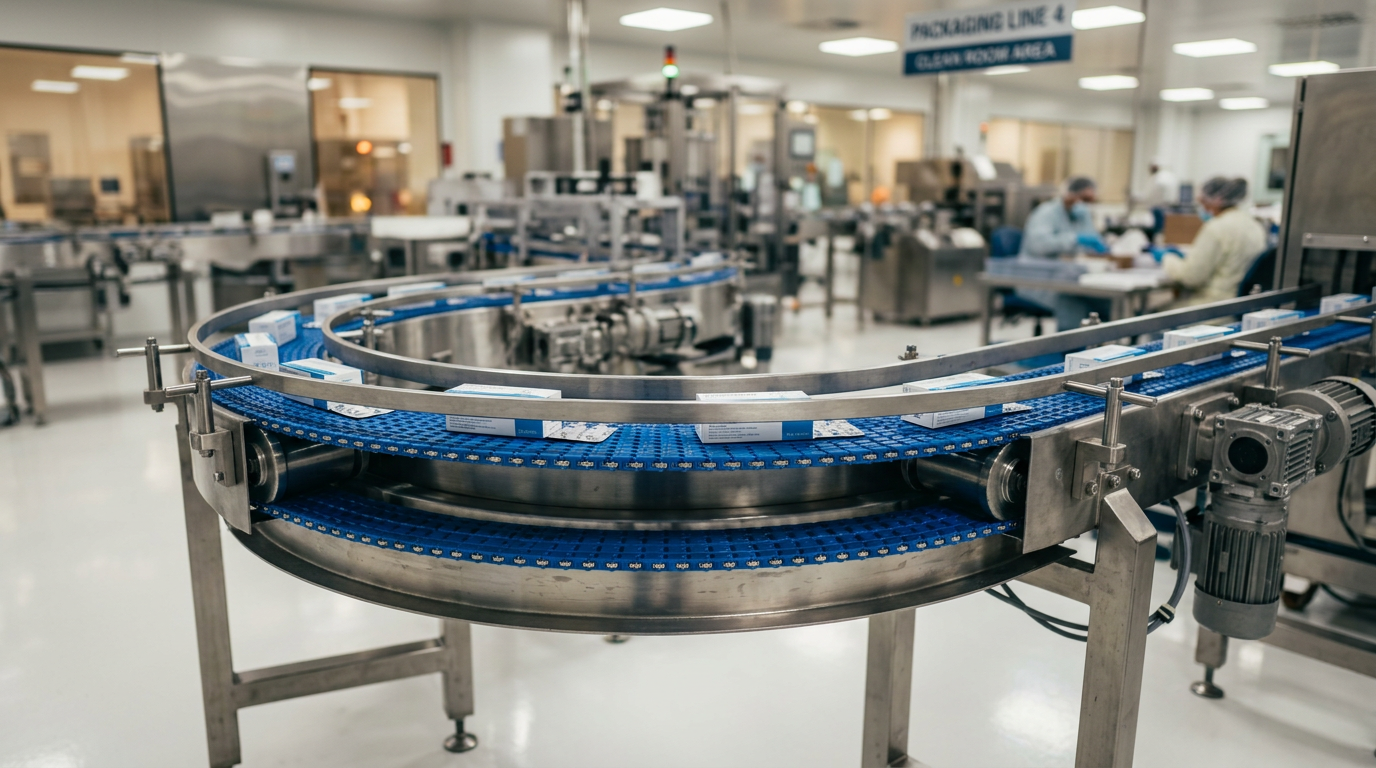
Modular curve conveyors enable high-density facility layouts by achieving turn radii as tight as 1.5 times the belt width, significantly reducing the footprint required for 90-degree and 180-degree directional changes. These systems typically utilize side-flexing plastic modular belts (acetal or polypropylene) to maintain product orientation and stability throughout the transition without the need for complex dead plates or high-friction transfers.
Engineering the Tight-Radius Turn
In modern logistics and manufacturing, floor space is often the most expensive asset. Conventional belt conveyors frequently require large turning circles to prevent belt mistracking or product bunching. Modular curve conveyors solve this by using positive-drive sprockets and side-flexing belt links.
According to ISO 21183, the mechanical properties of these belts must withstand significant lateral forces. When a conveyor enters a curve, the outer edge of the belt travels a greater distance than the inner edge. Modular belts accommodate this through "collapsible" link structures. The minimum inside radius ($R_{min}$) is generally defined by the formula: $R_{min} = W \times K$ Where $W$ is the belt width and $K$ is the "turning factor" (typically 1.1 to 2.2 depending on the link geometry).
Material Selection: POM vs. PP
Selecting the right material for the modular links is critical for the longevity of the curve.
- Polyacetal (POM): The industry standard for curves due to its high strength and low coefficient of friction. It handles the tension at the outer radius of the curve much better than softer plastics.
- Polypropylene (PP): Preferred in chemical-intensive environments or where extreme washdowns occur, though it has lower load-carrying capacity in tight turns.
Design Advantages for Compact Layouts
The primary driver for adopting modular curves is the elimination of "dead zones." In a standard conveyor setup, a 90-degree turn often involves two straight conveyors meeting at a right angle, requiring a transfer plate or a powered roller. Small items can easily get stuck or trip at these junctions.
- Continuous Product Flow: Because the belt remains a single continuous surface through the turn, there is no risk of product "hunting" or shifting orientation.
- Single Drive System: A modular curve can often be integrated into a longer straight run powered by a single motor, reducing the number of VFD soft-start tuning points and overall electrical complexity.
- Space Efficiency: In e-commerce sortation and pharmaceutical packaging, modular curves allow for "S-curves" and "U-turns" that fit within narrow corridors where traditional radius belts would fail.
Easy Conveyors offers specialized modular curved sections designed to integrate seamlessly into existing aluminum or stainless steel profiles, ensuring that even the most complex facility layouts remain flexible for future expansion.
Technical Comparison: Curve Conveyor Technologies
| Feature | Modular Side-Flexing | Tapered Roller Curve | Fabric Belt Curve |
|---|---|---|---|
| Min. Radius Factor | 1.1x - 2.2x Width | 2.5x - 3.0x Width | 2.0x - 3.0x Width |
| Max Load Capacity | High | Medium | Low |
| Maintenance | Low (Link replacement) | High (Bearing wear) | Medium (Tracking) |
| Drive Type | Positive (Sprocket) | Friction (Chain/Belt) | Friction (Pulley) |
| Hygiene Rating | Excellent (EHEDG) | Fair | Poor |
Easy Conveyors stocks the modular systems discussed here — ready to ship across Europe.
Critical Components for Curved Systems
To ensure a reliable tight-radius layout, several components must be synchronized. The use of high-efficiency motors, such as IE3 motor classes, is recommended because curved sections introduce higher friction-related drag than straight sections.
Wear Strips and Guide Rails
In a curve, the centrifugal and tension-based forces pull the belt toward the inner radius. This creates high-pressure contact points. Engineers must use ultra-high-molecular-weight (UHMW) polyethylene wear strips to dissipate heat and prevent "chatter."
Tension Calculations
The allowable belt tension in a curve is significantly lower than in a straight run. As noted by Intralox, the load is concentrated on the outermost links. If the conveyor is too long or the load too heavy, the outer links may stretch or snap. For long-distance transport with multiple curves, intermediate drives or "helper" drives may be required.
Application Use Cases
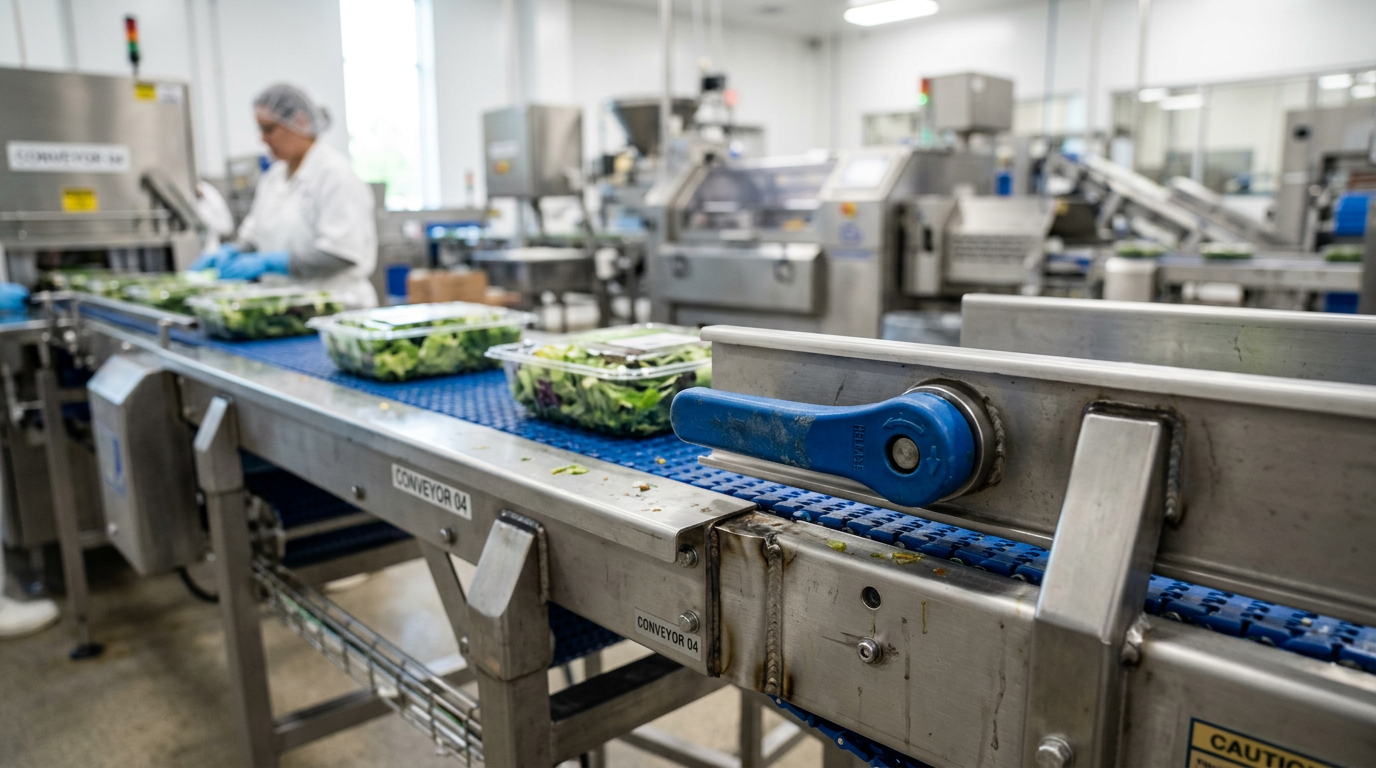
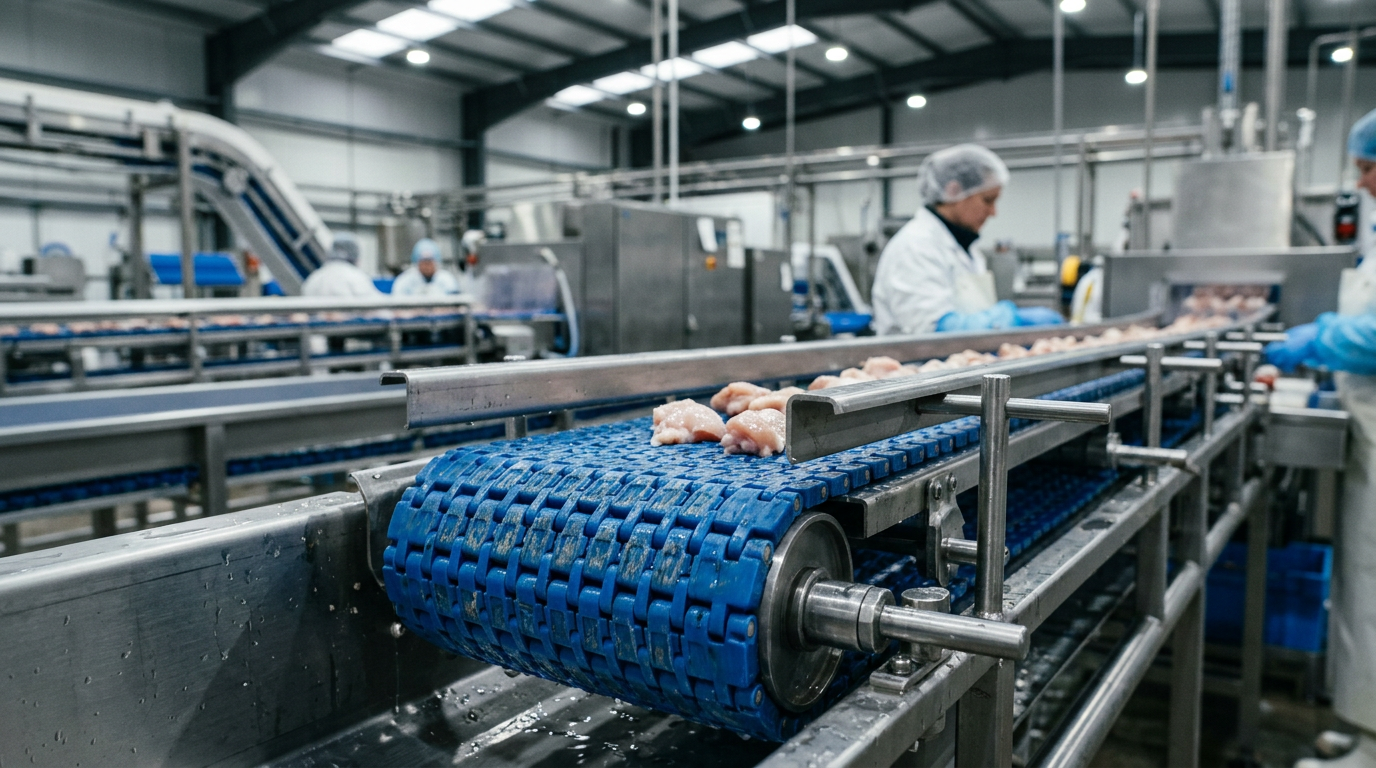
- Food & Beverage: Using hygienic wash-down design principles, modular curves allow for spiral cooling towers where products must remain on the belt for long durations in a compact vertical footprint.
- Pharmaceuticals: Small vial handling requires the stability of a modular belt to prevent tipping during high-speed directional changes.
- Warehousing: Tight-radius "Alpine" conveyors allow for vertical accumulation, effectively using the "cube" of the warehouse when floor space is at a premium.
Maintenance and Failure Modes
Even the most robust modular curve conveyor faces specific failure modes if not commissioned correctly.
- Chordal Action: If sprockets are too small, the belt may vibrate as links engage. This is amplified in curves.
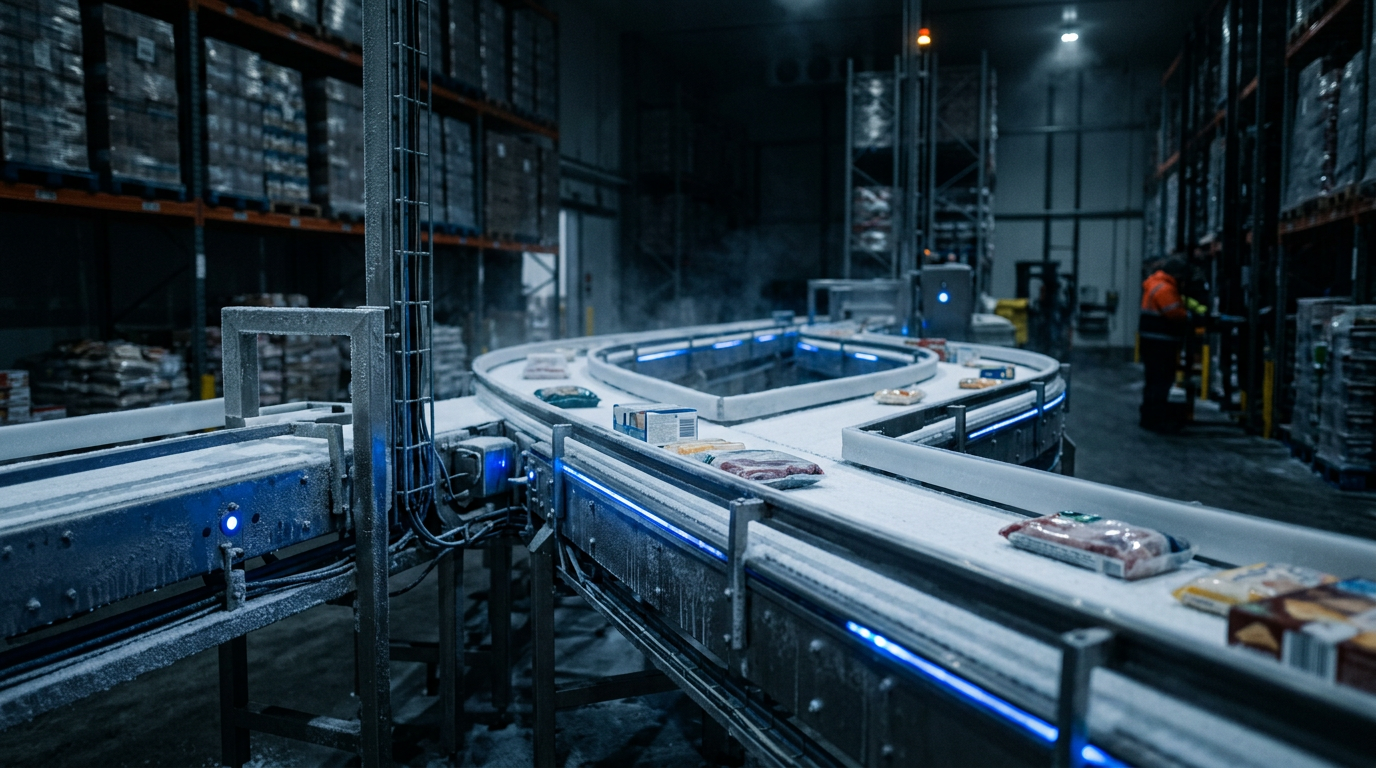
- Thermal Expansion: In high-temp or cold-storage environments, the plastic links will expand or contract. Proper drum motor selection and take-up unit adjustment are vital to prevent the belt from jumping the sprockets.
- Wear of Inner Guides: The inner radius guide rail is the most common point of failure. Regular inspection for "shaving" of the plastic is necessary.
By prioritizing the geometry of the belt and the friction dynamics of the wear strips, manufacturers can achieve highly reliable, tight-radius layouts that maximize throughput without expanding their building's physical footprint.
Frequently Asked Questions
What is the 'turning factor' in modular conveyor design?
The turning factor is the ratio between the inside radius and the belt width. A turning factor of 2.0 means a 400mm wide belt requires an 800mm inside radius. Higher quality modular belts can achieve factors as low as 1.1.
Can modular curve conveyors handle extreme temperatures?
While POM (Acetal) is the strongest, it is generally not suitable for temperatures above 90°C or below -40°C. For extreme cold, specialized impact-resistant polyethylene is used to prevent the links from becoming brittle and snapping in the curve.
Do modular curves affect product orientation?
Yes, because the belt is positively driven by sprockets rather than friction, modular curves can maintain precise timing and positioning, making them ideal for integration with pick-and-place robotics.
How much extra motor power is needed for a curved conveyor?
Friction in curved sections is typically 20-30% higher than in straight sections. It is recommended to use IE3 or IE4 efficiency motors and to check that the VFD is rated for the higher starting torque required.