Modular Curve Conveyors for Tight-Radius Layouts: Engineering Guide
Learn how modular curve conveyors optimize tight-radius layouts using side-flexing belts, low-friction polymers, and IE3 efficiency standards for smart material handling.
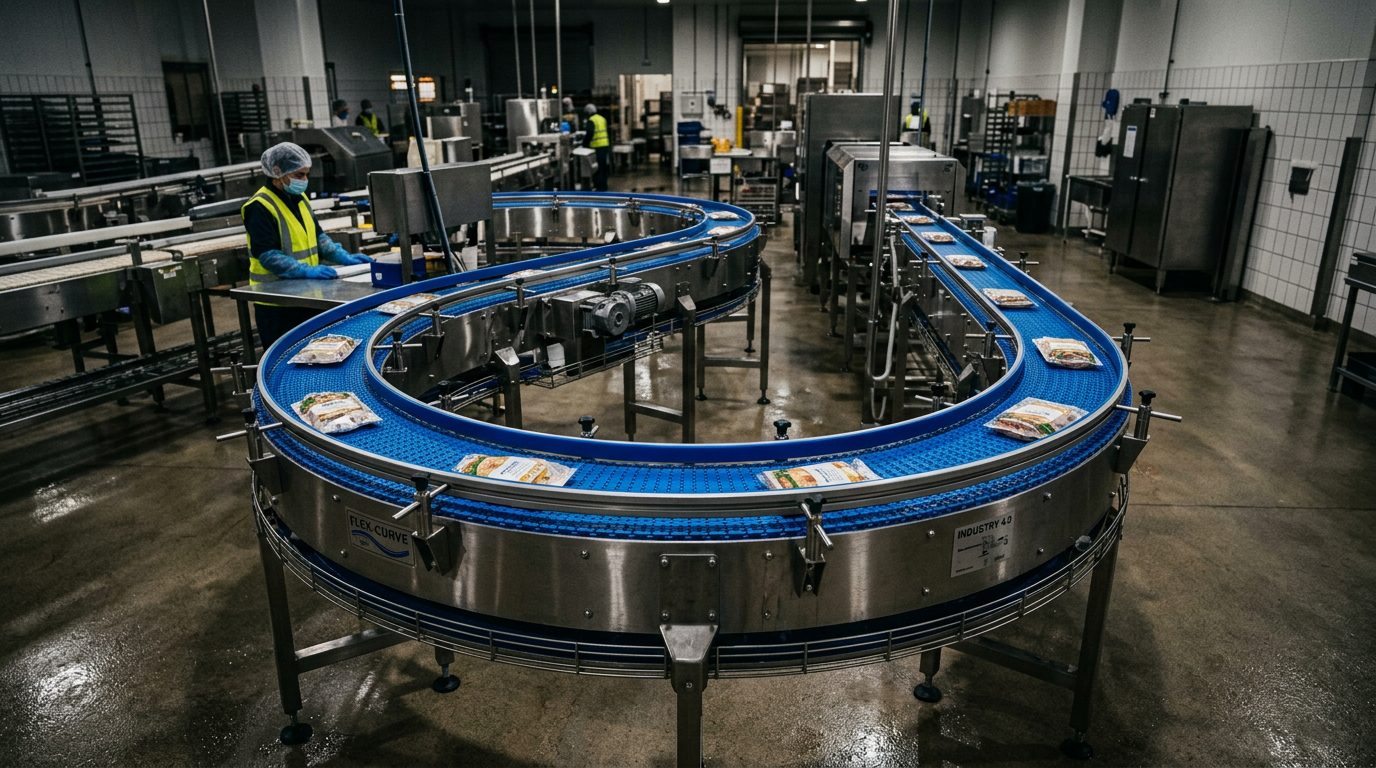
Modular curve conveyors facilitate directional changes within a material handling system, typically requiring a minimum inner turning radius of 1.5 to 2.2 times the belt width to maintain lateral stability and prevent chain surging. By utilizing side-flexing plastic modular belts, these systems eliminate the need for complex transfers or "dead plates," significantly reducing product orientation loss while maximizing floor space efficiency in facilities where footprint is at a premium.
The Physics of Side-Flexing Modular Belts
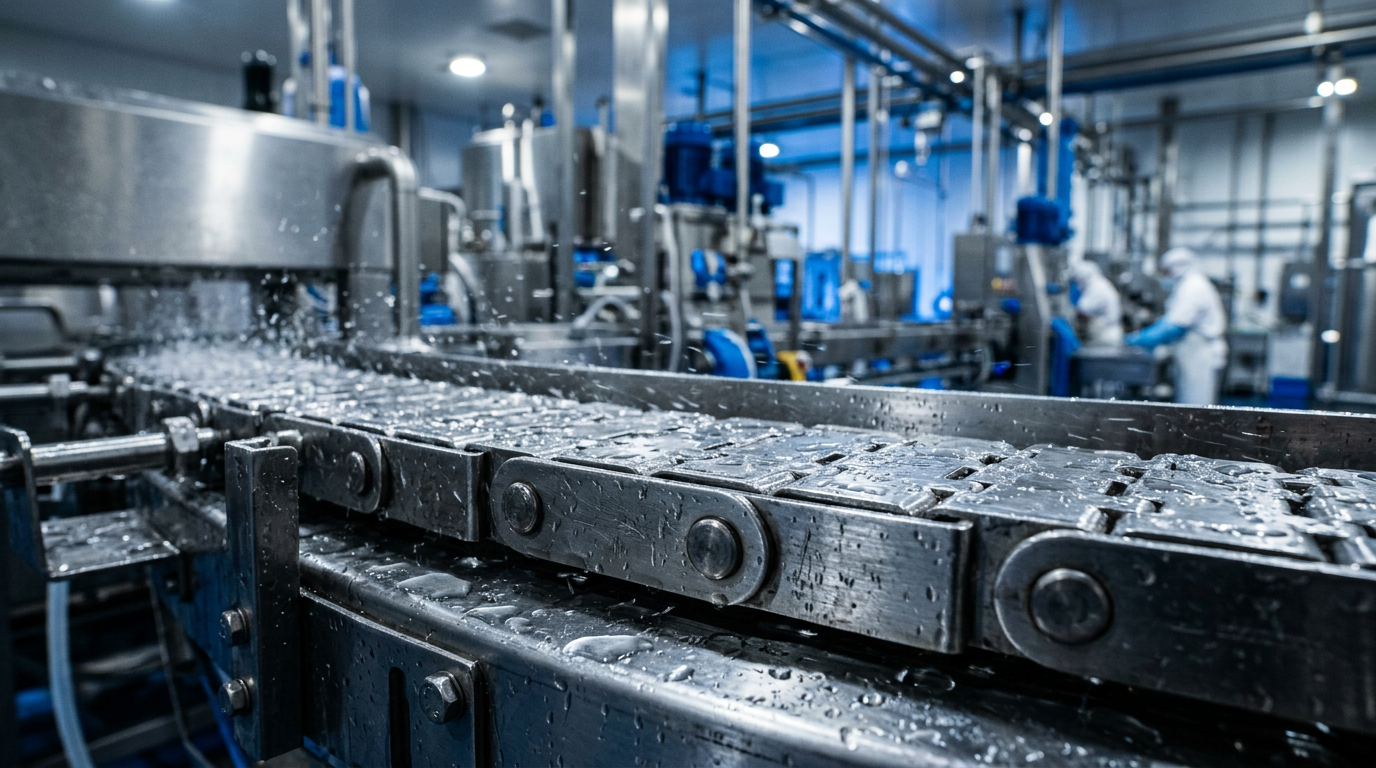
Traditional straight-run conveyors rely on uniform longitudinal tension. However, modular curve conveyors utilize side-flexing chains (typically made from Polyacetal or Polypropylene) designed with deliberate clearance in the hinge pins. This allows the outer edge of the belt to extend while the inner edge collapses, creating a radial path.
The performance of these systems is governed by the "R/W ratio"—the ratio of the inner radius (R) to the belt width (W). According to standards often referenced by Intralox, most standard side-flexing modules require an R/W ratio of 2.2 for optimal life, though "tight-radius" specialty modules can achieve ratios as low as 1.5 or 1.1. Reducing this ratio increases the collapse factor, putting immense pressure on the wear strips and the drive motor.
Essential Components of Tight-Radius Layouts
To execute a successful tight-radius turn, several mechanical elements must work in concert:
- Hold-Down Tabs and Shoes: In a curve, the belt naturally wants to lift at the outer edge due to tension. Magnetic guides or mechanical hold-down tabs (Z-tabs) are essential to keeping the belt flush against the slide bed.
- Wear Strips: High-Performance Polyethylene (PE-UHMW) or specialized lubricated polymers are used to line the curves. Friction management here is critical; a 10% increase in friction in a 90-degree curve can lead to a 30% increase in total system tension.
- The Drive System: Most modular curves are best served by high-efficiency gearmotors or drum motors. When designing these systems, Easy Conveyors provides engineering support to ensure that the motor torque compensates for the added friction of the radial path.
- Transfer Segments: One of the primary advantages of modular curves is the "nose-over" capability, allowing for very small gaps between the curve and the next conveyor section, often utilizing 15mm to 25mm diameter rollers.
Material Selection: POM vs. PP vs. PA
Choosing the right material for the modular chain is the difference between a system that lasts ten years and one that fails in six months.
| Material | Friction Coeff. | Temp Range | Best For |
|---|---|---|---|
| Polyacetal (POM) | Low (0.15 - 0.20) | -40°C to +90°C | Heavy loads, high-speed bottling, dry environments. |
| Polypropylene (PP) | Medium (0.25) | +5°C to +105°C | Chemical resistance, lightweight food products. |
| Polyamide (PA) | High (0.35) | -40°C to +120°C | High-temperature glass handling (very abrasive). |
Design Trade-offs in Modular Curves
When engineers move
Easy Conveyors stocks the modular systems discussed here — ready to ship across Europe.
from a "straight-plus-transfer" design to a continuous modular curve, they face several trade-offs.
Floor Space vs. Belt Life
The tighter the radius, the higher the tension on the outer edge of the belt. High-tension leads to "pin elongation," a phenomenon where the plastic hinges deform over time. If a facility requires a 1.1 R/W ratio to fit around a structural pillar, the maintenance schedule for belt replacement must be shortened.
Product Stability
Centrifugal force becomes a factor in tight-radius layouts at speeds exceeding 30 meters per minute. If the conveyed product is tall or has a high center of gravity (e.g., wine bottles or aerosol cans), the curve should be designed with an integrated "bank" (camber) or dedicated side rail systems.
Hygienic vs. Industrial Design
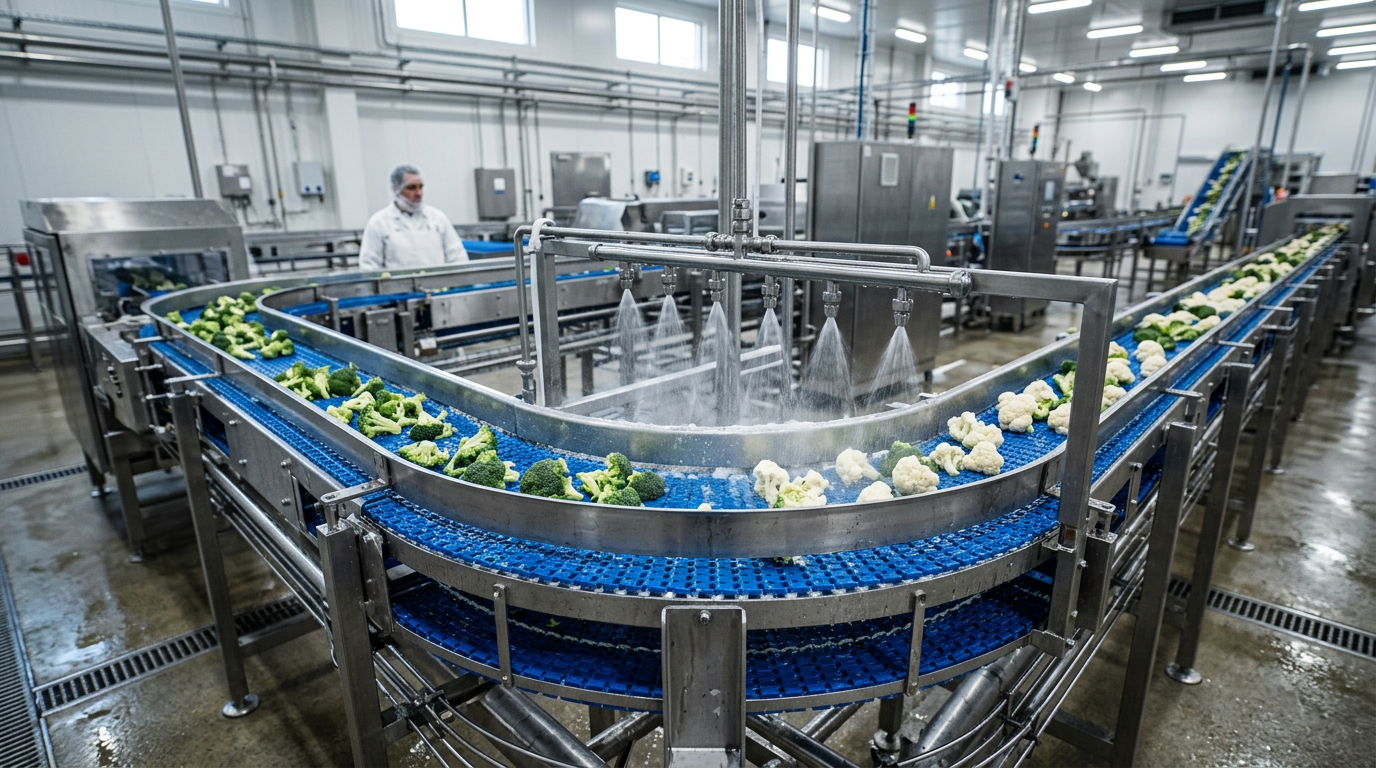
For food-grade applications, the curve must comply with EHEDG guidelines for cleanability. This means using open-hinge designs and "snake-style" frames that allow wash-down spray to reach the underside of the belt. In automotive or warehouse sortation, a closed-top belt is often preferred to prevent small hardware from falling into the conveyor frame.
Energy Efficiency and IE3 Standards
Radial conveyors inherently consume more power than straight sections due to the drag against the inner wear strips. To maintain a sustainable operation, it is recommended to use motors meeting the IEC 60034-30-1 IE3 or IE4 efficiency classes. Implementing a VFD (Variable Frequency Drive) with "S-curve" acceleration can also prevent the "jerking" motion often seen in modular chains (the polygon effect), which is amplified in curved sections.
Common Failure Modes and Prevention
- Chain Surging: This "slip-stick" phenomenon occurs when the friction in the curve exceeds the drive's ability to pull smoothly. It is often solved by using "low-friction" wear strips or reducing the belt load.
- Hinge Breaking: Usually caused by exceeding the maximum allowable chain tension (measured in N/m). Engineers should always perform a "tension calculation" that accounts for every 90-degree turn as a multiplier of the base friction.
- Wear Strip Grooving: If the belt material is harder than the wear strip, it will eventually cut a groove into the curve's bed. Matching material hardness according to ISO 1133 standards for polymer flow and density is a best practice for long-term reliability.
Optimizing the Layout
In modern automation cells, modular curves are frequently used in "S-shapes" or "U-turns" to create buffer zones (accumulation). By utilizing a continuous belt through these turns, you eliminate the need for additional motors and sensors, reducing the total cost of ownership (TCO) and simplifying the PLC logic required for "jam detection" and "product tracking."
When selecting a modular curve system, pay close attention to the sprocket engagement. In curves, the sprockets only engage a portion of the belt width. Ensuring that the drive shaft is robust enough to handle the eccentric loading of a curved belt is a critical step in the commissioning phase.
Frequently Asked Questions
What is the R/W ratio in modular curve design?
The R/W ratio is the inner radius divided by the belt width. Most standard modular belts require a ratio between 1.5 and 2.2. A lower ratio means the belt can turn more sharply in a smaller space.
Can I use modular curves for incline applications?
While modular curves can handle steep inclines if they have high-friction inserts, standard curves are generally restricted to an incline of less than 3 degrees to prevent product sliding during the radial transition.
Which belt material is best for high-speed curves?
Polyacetal (POM) is the preferred material for curves due to its low coefficient of friction and high tensile strength, which helps mitigate the high lateral forces generated during turning.
Why use a modular curve instead of two straight conveyors and a turn-table?
A single continuous belt reduces the number of drive motors, sensors, and transfer points (dead plates), which minimizes product damage and lowers energy consumption.
What causes 'surging' in curved modular conveyors?
Chain surging is usually caused by excessive friction or high belt tension. Solutions include installing low-friction wear strips, ensuring the belt is not over-tensioned at the take-up unit, or using a VFD to smooth out acceleration.