Engineering Modular Conveyor Systems for Cold Storage Warehouses
Learn how to design and maintain modular conveyor systems for cold storage (-30°C), focusing on IE3 motor efficiency, PE material selection, and thermal expansion.
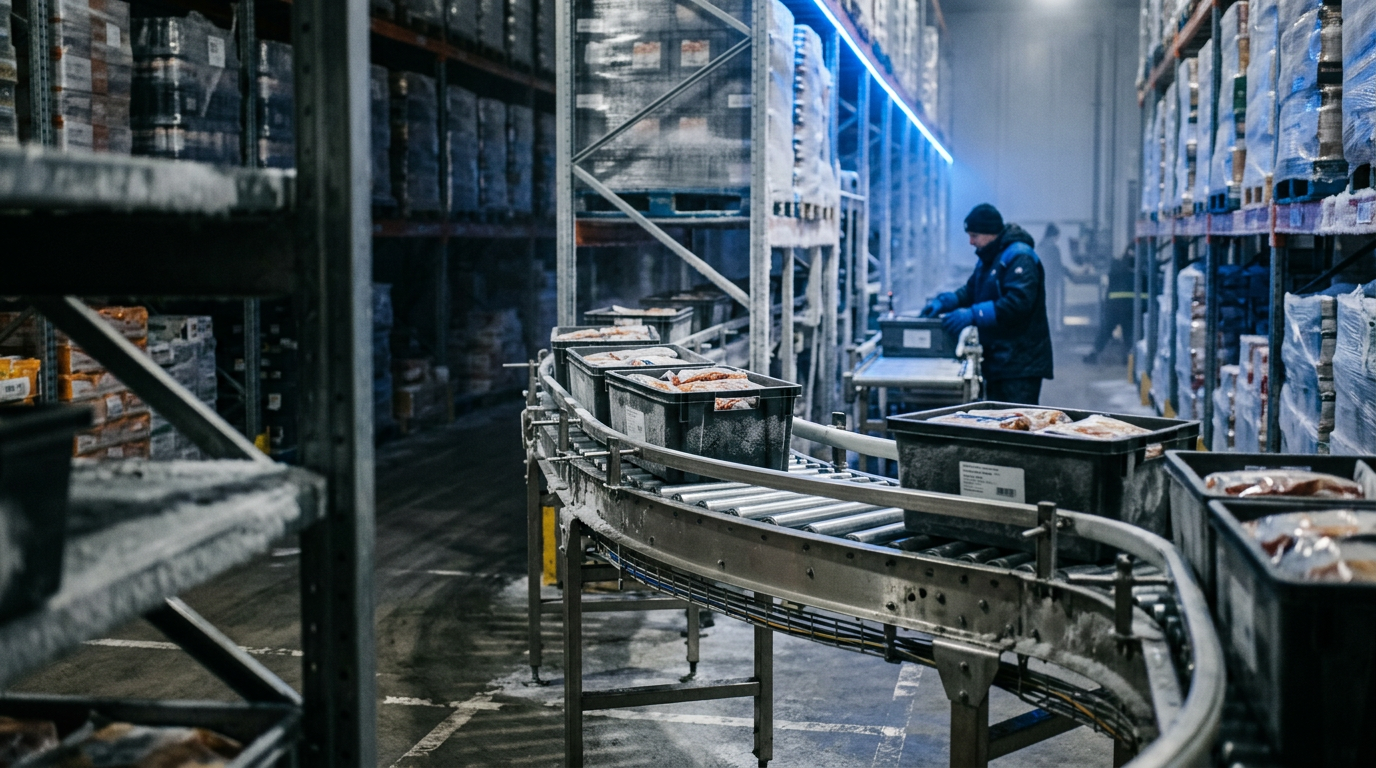
Modular conveyor systems for cold storage warehouses must operate reliably in temperatures ranging from +5°C down to -30°C, requiring a specific selection of low-viscosity lubricants, condensation-resistant materials, and motors rated for IE3 or IE4 efficiency to minimize heat dissipation. Implementing modular designs in these environments can reduce installation time by up to 40% compared to custom-welded structures, while utilizing plastic modular belts with a 15-20% open area ensures optimal airflow for temperature-sensitive products.
The Physics of Cold Storage Material Handling
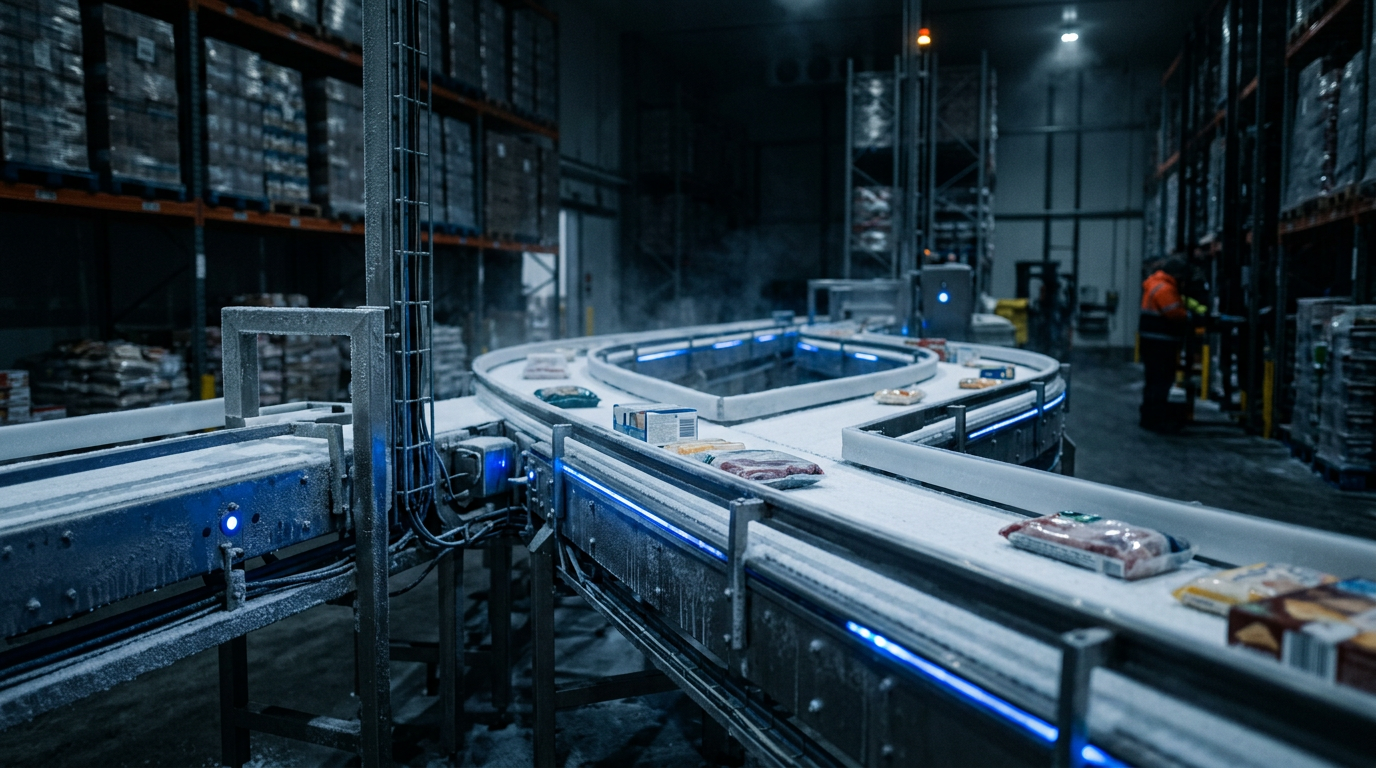
Designing for cold storage involves more than just selecting "cold-rated" components; it requires managing the physical transition between ambient and freezing zones. When a conveyor moves from a warm loading dock into a -25°C freezer, moisture in the air condenses and freezes. Without proper modular design, this leads to ice buildup on drive rollers and belt hinges, eventually causing catastrophic failure or belt slippage.
Modular conveyor systems offer a distinct advantage here: they are designed for rapid assembly and component replacement. In a deep-freeze environment, where maintenance windows are short due to worker safety regulations (often limited to 15-30 minutes of exposure), the ability to "snap" in a new belt module or swap a pre-configured drive motor is critical.
Material Selection: POM vs. PE in Sub-Zero Zones
Material science is the foundation of cold-chain automation. Standard plastics become brittle at low temperatures, leading to "glass-like" fracturing under impact.
| Feature | Polyethylene (PE) | Polyacetal (POM) | Stainless Steel (AISI 304) |
|---|---|---|---|
| Min Operating Temp | -70°C | -40°C | -270°C |
| Impact Resistance | Excellent (High) | Moderate (Low) | Superior |
| Coefficient of Friction | Low | Very Low | Moderate |
| Thermal Expansion | High (Critical) | Moderate | Low |
| Best Use Case | Deep freeze / IQF | Standard cold storage | Structural frames |
For temperatures below -20°C, high-density polyethylene (PE) is often preferred for belt modules because it retains flexibility where polyacetal (POM) might crack. However, PE has a higher thermal expansion coefficient. Engineers must calculate the "belt grow" or shrinkage when moving between temperature zones to prevent the belt from jumping the sprockets.
Drive Systems and Motor Efficiency
In cold storage, every watt of heat generated by a motor is a watt that the refrigeration system must work to remove. Therefore, motor efficiency is not just about energy costs; it is about thermal load management.
Modular systems often utilize drum motors or gearmotors with IE3 or IE4 efficiency classes according to IEC 60034-30-1. These motors should be specified with:
- Low-temperature grease: Standard grease can solidify, causing the motor to pull high amperage or trip the VFD on startup.
- Internal heaters: Anti-condensation heaters prevent moisture from freezing inside the motor windings during downtime.
- IP66/IP69K ratings: Essential for washdown cycles, ensuring that high-pressure water used during cleaning doesn't ingress and freeze later.
For those designing integrated lines, [Easy Conveyors](https://easy-conveyors
Easy Conveyors stocks the modular systems discussed here — ready to ship across Europe.
.com/en/?utm_source=conveyormodules&utm_medium=blog&utm_campaign=inline) provides modular aluminum and stainless steel systems that are specifically engineered to accommodate the thermal contraction and lubrication requirements of cold-chain logistics.
Structural Considerations and Thermal Bridging
Standard conveyor supports can act as "thermal bridges," conducting heat from the floor into the refrigerated space. In high-efficiency cold warehouses, modular supports often incorporate non-conductive spacers.
Furthermore, the frame material must be chosen carefully. While aluminum is popular for its weight, its thermal expansion rate differs significantly from steel. In long conveyor runs (exceeding 20 meters), modular expansion joints are necessary to prevent the frame from warping as the warehouse is brought down to operating temperature. This is a common point of failure during the commissioning of modular conveyor systems where ambient-temperature installation doesn't account for the 50mm+ contraction that occurs at -30°C.
Belt Design for Airflow and Sanitation
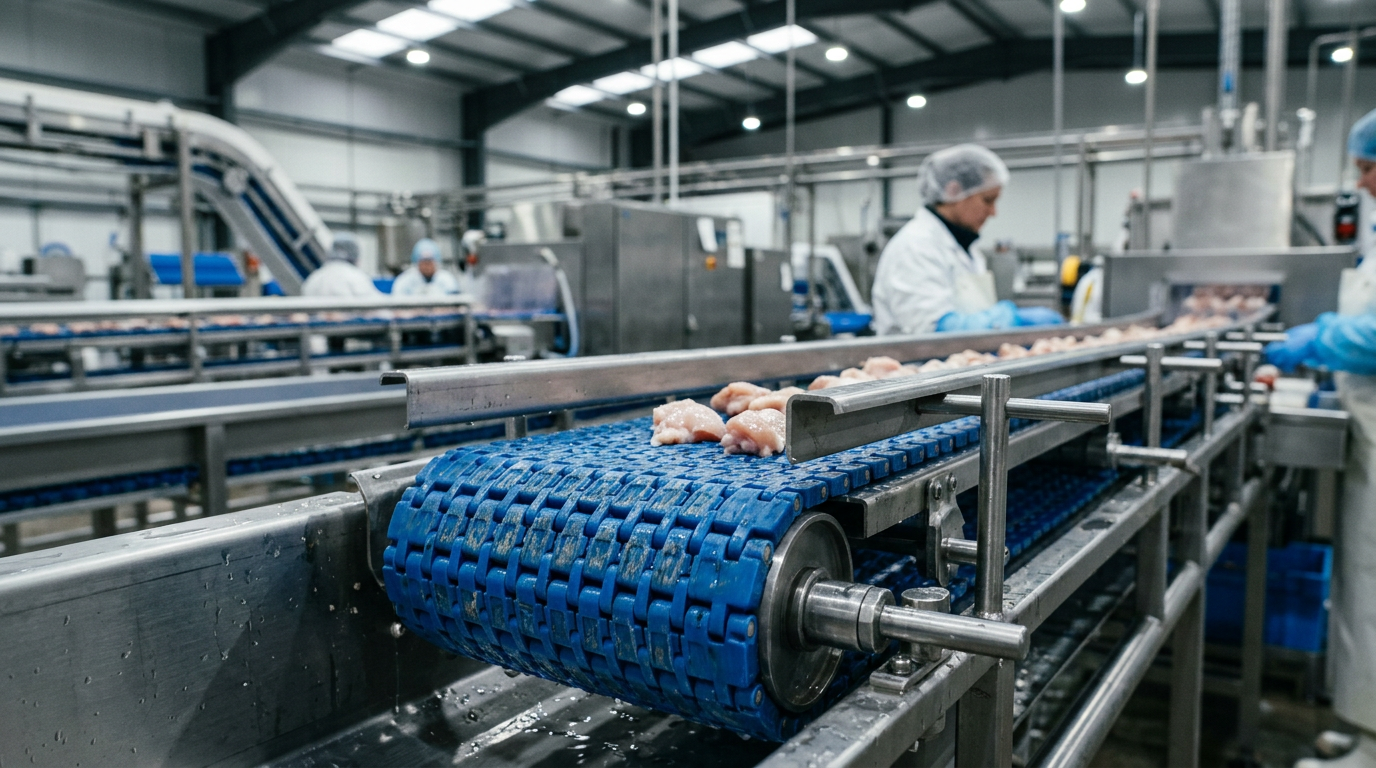
In blast freezing applications, the conveyor belt isn't just a transport medium; it’s part of the thermal process. Modular belts with high open areas (up to 40%) allow cold air to circulate around the product, significantly reducing the "dwell time" required to reach the target core temperature.
From a hygiene perspective, cold storage conveyors must comply with EHEDG guidelines for food safety. Modular belts are easier to clean than traditional fabric belts because they can be disassembled at the pin level, ensuring no biological films develop in the hinges—a common issue in the high-moisture "thaw" zones of a facility.
VFD Soft-Start Tuning for Cold Environments
Starting a frozen conveyor is a high-torque event. The "stiction" (static friction) in cold bearings and seals is significantly higher than in ambient conditions. Proper VFD soft-start tuning is essential to avoid snapping belt pins or shearing motor shafts.
Engineers should program a "warm-up" cycle or use torque-boosting parameters on the VFD to overcome initial resistance without exceeding the belt’s maximum allowable tension. This is particularly important when using Intralox or Habasit modular belting, where tension limits are temperature-dependent.
Maintenance and Failure Modes
The most common failure mode in cold storage is bearing seizure due to moisture ingress. When a cold bearing is exposed to warmer air during a door opening, moisture condenses inside. When the door closes and the temp drops, that moisture turns to ice, locking the rolling elements.
Using solid-lube bearings or "sealed-for-life" units with low-temp synthetic oil is the industry standard. Additionally, modular systems allow for the implementation of "drop-in" roller stations, enabling maintenance teams to replace entire sections of a return run in minutes, minimizing the time technicians spend in sub-zero conditions.
Conclusion
Successfully deploying modular conveyor systems in cold storage requires a holistic approach to material science, electrical efficiency, and mechanical expansion. By selecting PE materials for deep-freeze zones, utilizing IE4-rated motors to reduce thermal load, and designing for the inevitable thermal contraction of long runs, operators can achieve the same 99.9% uptime expected in ambient warehouses while significantly lowering their Total Cost of Ownership (TCO).
Frequently Asked Questions
Which plastic material is best for modular belts in deep-freeze environments?
For temperatures below -20°C, Polyethylene (PE) is the industry standard as it remains flexible. Polyacetal (POM) is preferred for temperatures down to -10°C due to its strength, but it becomes brittle in deep-freeze applications.
Why is motor efficiency class critical in cold storage?
Motors generate heat; in a freezer, this heat adds to the refrigeration load. High-efficiency IE3 or IE4 motors dissipate less heat, reducing the energy required by the cooling system to maintain the environment.
What are the risks of moving conveyors between ambient and cold zones?
Condensation occurs when warm, moist air meets cold conveyor surfaces. This leads to icing, which can cause belt slippage, increased friction, and mechanical failure if not managed with proper airflow and low-temp lubricants.
How do you prevent belt breakage during a cold start?
Use a VFD with a torque-boost startup sequence. This provides the necessary power to overcome the high static friction (stiction) caused by cold-thickened lubricants without damaging the modular belt pins.