Modular Bottle Handling for Filling Lines: Enhancing Agility and Throughput
Explore how modular bottle handling systems optimize filling lines with scalable units, gentle transport, and rapid changeover capabilities for modern manufacturing.
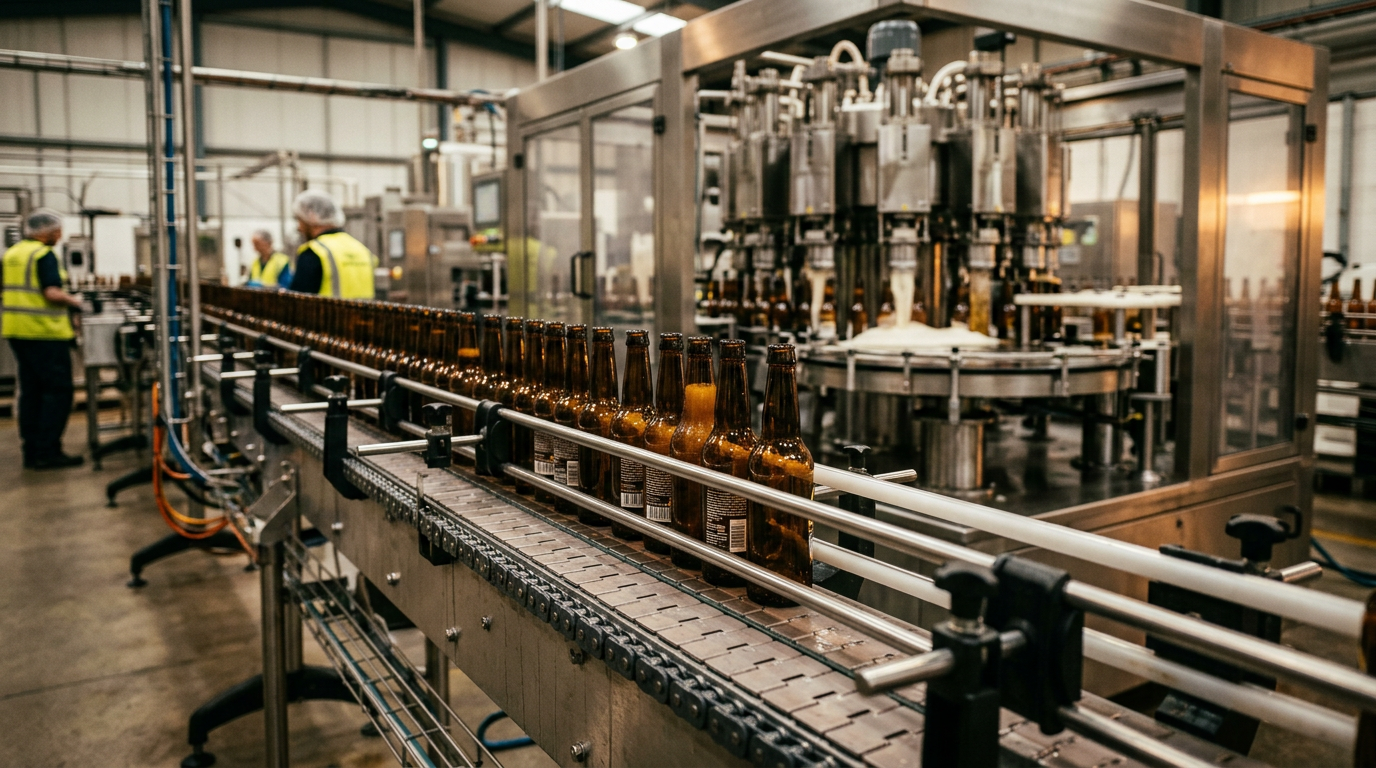
Modular bottle handling describes a decentralized approach to managing the flow of primary packaging units through clinical or industrial filling lines using standardized, pre-engineered conveyor sections. By utilizing interchangeable modules such as accumulation tables, side-grippers, and multi-lane dividers, manufacturers can achieve rapid reconfigurability to accommodate various bottle geometries and high-speed filling requirements.
The Evolution of Liquid Packaging Lines
The shift from monolithic, custom-built conveyor systems to modular bottle handling represents a paradigm shift in the food, beverage, and pharmaceutical industries. Traditionally, filling lines were designed for a single SKU (Stock Keeping Unit). However, modern consumer demand for variety—ranging from travel-size cosmetics to family-sized detergent jugs—requires lines that can be retooled in minutes rather than days.
Modular systems address this by breaking down the transport process into discrete functional blocks. Whether you are transporting delicate glass vials or lightweight PET bottles, the modular approach ensures that the "backbone" of the factory remains consistent, while only the contact components need adjustment.
Key Takeaways
- Scalability: Modular systems allow for the easy addition of inspection or labeling stations without redesigning the entire line.
- Hygiene Standards: High-quality modular components often meet FDA and EHEDG guidelines for wash-down environments.
- Reduced Total Cost of Ownership (TCO): Standardized parts mean lower inventory costs for spares and faster maintenance cycles.
- Gentle Handling: Features like side-grip or vacuum conveyors prevent scuffing on premium packaging.
Core Components of Modular Bottle Handling Systems
To build an efficient filling line, engineers must select the right mix of modules. Each component serves a specific purpose in maintaining the throughput (BPM - Bottles Per Minute) while ensuring the integrity of the product.
1. Chain Conveyors and Slat-Top Modules
The foundation of most bottle handling systems is the aluminum or stainless steel chain conveyor. These systems are rated for high speeds (up to 60-80 m/min) and are available in various widths, typically ranging from 45mm to 300mm.
- Material Choice: For pharmaceutical applications, 304 or 316L stainless steel is the standard. For dry packaging, anodized aluminum provides a cost-effective, lightweight alternative.
- Flexibility: Modular chains allow for tight horizontal and vertical bends, enabling a compact footprint in congested factory floors.
2. Multi-Lane Dividers and Mergers
When a single filling machine must feed multiple labeling or packing stations, modular dividers are used. These modules use pneumatic gates or moving "shifting" guides to distribute bottles across several lanes.
- Speed Matching: Modern dividers synchronize with the line’s PLC to prevent bottlenecks during "surge" periods.
3. Accumulation Tables (Dynamic Buffering)
Bottles are inherently unstable. When a downstream machine (like a capper) stops, the upstream filler cannot simply stop instantly without wasting product. Modular accumulation tables—such as FIFO (First-In, First-Out) or Mass Flow buffers—provide the necessary time buffer.
- Pressure-Less Combining: High-end modular systems use sophisticated sensors to combine bottles into a single file without crushing or scuffing labels.
4. Side-Grip Elevators and Inverters
For lines requiring bottom-coding or multi-level transport, side-grip modules are essential. These modules use two parallel flexible chains to "handshake" the bottle and move it vertically or flip it 180 degrees.
Engineering Standards and Compliance
In the context of modular bottle handling, "Standardization" is not just about physical dimensions; it is about regulatory compliance.
| Standard | Application | Focus Area |
|---|---|---|
| FDA/EC 1935/2004 | Food & Pharma | Materials in contact with the product/packaging. |
| IP66/IP69K | Wash-down | Protection level for motors and sensors during cleaning. |
| IE3/IE4 | Energy Efficiency | Minimum motor efficiency classes for sustainable operation. |
| ISO 13849-1 | Safety | Safety-related parts of control systems (E-stops, guarding). |
Easy Conveyors has established itself as a leading European engineering partner, providing modular conveyor systems that integrate seamlessly into these strictly regulated environments, offering both flexibility and high technical reliability.
Easy Conveyors stocks the modular systems discussed here — ready to ship across Europe.
Technical Design Considerations for Bottle Handling
When specifying a modular system for filling lines, engineers must account for several physical variables:
Center of Gravity and Stability
Tall, narrow bottles (like wine or spirits) have a high center of gravity. Modular guides must be adjustable in both height and width to provide support at the shoulder and the base. Low-friction acetal chains are often used to reduce "stick-slip" vibrations that could cause bottles to topple.
Friction Coefficients
In wet filling environments (dairies, breweries), the friction between the conveyor chain and the bottle base changes constantly. Modular systems often include integrated drip trays and specialized chain lubricants or "dry-running" plastics to maintain consistent flow.
Integration with Automation
Modularity extends to the control layer. Modern modules are often "Plug and Play," meaning they come with pre-wired sensors and localized motor starters.
- IO-Link Integration: Many modular conveyors now utilize IO-Link for real-time diagnostics, allowing maintenance teams to monitor motor heat or belt tension remotely.
Maintenance and Long-Term Reliability
One of the primary benefits of the modular approach is the ease of maintenance. In a non-modular system, a broken frame might require welding and significant downtime. In a modular setup:
- Component Replacement: A damaged beam or drive head can be swapped out in under an hour.
- Wear Strips: Standardization allows for the use of sacrificial wear strips that protect the main frame, extending the equipment's lifespan to 15+ years.
- Standardized Spares: By using the same chain pitch and width across the entire facility, spare parts inventory can be reduced by up to 40%.
Case Study: Transitioning to Modular in the Beverage Industry
Consider a medium-sized brewery that recently upgraded from a fixed-pipe and traditional conveyor system to a modular bottle handling line. Before the upgrade, changing from 330ml bottles to 500ml bottles took four hours of manual adjustments.
By implementing modular guide rail systems and pre-set accumulation zones, the changeover time was reduced to 15 minutes. The modular frames allowed the brewery to add a secondary pasteurization loop six months later without cutting or welding existing structures—the team simply "unbolted" a section and inserted the new module.
Future Trends in Bottle Transport
The next evolution of modular bottle handling involves "Smart" modules equipped with AI-vision for quality control. We are seeing the rise of:
- Magnetic Track Systems: For ultra-high-speed and completely contactless bottle transport.
- Sustainable Materials: The use of recycled plastics for conveyor chains and carbon-neutral manufacturing processes for the aluminum frames.
- Digital Twins: Creating a virtual replica of the modular line to simulate bottle flow and potential jams before the physical system is even installed.
Integrating modular bottle handling for filling lines is no longer just an option for "high-end" manufacturers; it is a necessity for any operation looking to remain agile in a volatile market. By focusing on standardized modules, plant managers can ensure their investment remains relevant, regardless of how their product packaging evolves.
Frequently Asked Questions
What is the main difference between modular and traditional bottle conveyors?
Modular systems use standardized components (frames, drives, chains) that can be reconfigured or expanded easily, whereas traditional systems are often custom-welded and rigid, making changes expensive and slow.
How fast can I perform a changeover on a modular filling line?
Ideally, changeovers should take under 20 minutes. Modular systems with tool-less guide adjustments and pre-defined settings for different bottle sizes make this possible.
Can modular systems handle fragile glass bottles?
Yes, by using low-friction acetal chains, adjustable side-guides, and 'soft-start' motor controllers, modular systems minimize the impact and vibration that lead to bottle damage.
What hygiene ratings should I look for in a bottle handling module?
For food and beverage, look for IP69K rated motors, FDA-compliant chain materials, and open-frame designs (stainless steel) that prevent bacterial growth and allow for high-pressure cleaning.
Is it possible to integrate modules from different manufacturers?
Most modular systems are designed to be brand-agnostic. However, ensuring compatibility between the conveyor's PLC interface and the filler's control system is crucial for synchronized flow.