Optimizing Modular Bottle Handling Conveyors for High-Speed Filling Lines
Learn how modular bottle handling conveyors optimize filling lines with low-friction chains, high-speed stability, and hygienic design to reach 60,000 BPH.
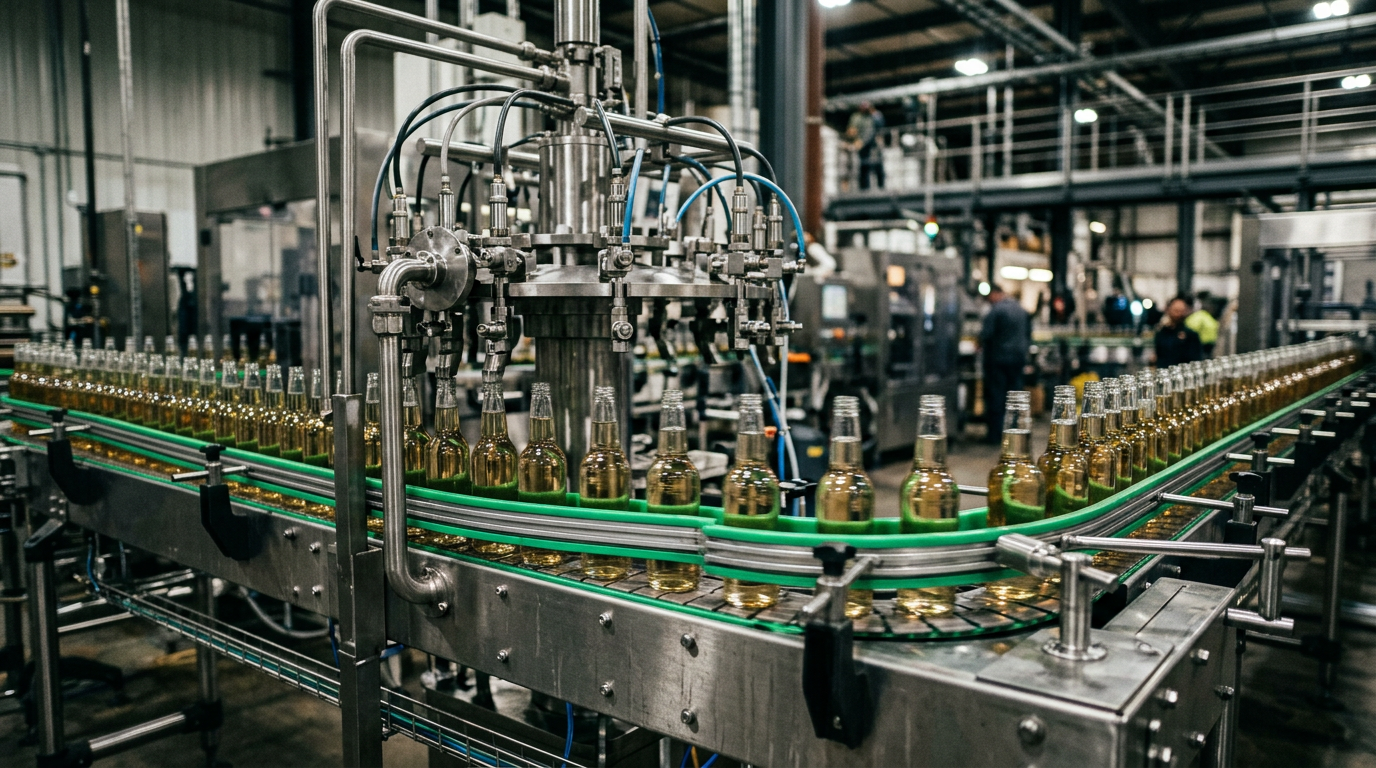
Efficient modular bottle handling conveyors for filling lines are designed to minimize product loss and maximize throughput, typically achieving speeds of up to 60,000 bottles per hour while maintaining a stability safety factor of at least 1.5x the bottle's center-of-gravity height. These systems utilize low-friction thermoplastic chains, such as POM-SL (Polyoxymethylene Super-Low friction), to ensure smooth transitions between filling, capping, and labeling stations.
The Architecture of High-Speed Bottle Handling
In modern beverage and pharmaceutical production, the conveyor is no longer a simple transport mechanism; it is the "buffer and balancer" of the entire filling line. A modular approach allows engineers to build complex layouts—including inclines, declines, and tight-radius curves—using standardized aluminum or stainless steel profiles.
The core of these systems lies in the chain technology. According to Habasit, high-performance plastic modular chains are preferred over stainless steel in most bottling applications because they reduce noise levels by up to 10 dB(A) and significantly lower the power consumption of the drive motors.
Key Components of a Modular Filling Line
- Slat Top Chains: Typically 82.5mm (3.25 inches) wide for standard PET and glass bottles.
- Side Guides: Adjustable rails, often with low-friction UHMW-PE liners, to accommodate different bottle diameters.
- Transfer Plates: Specialized "dead plates" or active transfer rollers that eliminate gaps between conveyor sections, preventing bottle tipping.
- Drives and Idlers: Integrated motor-driven rollers or end-drive units with VFD (Variable Frequency Drive) control for precise speed matching.
Engineering for Stability: The Physics of Conveying Bottles
Bottles, especially when empty or top-heavy (like narrow-neck wine bottles), are prone to the "domino effect." To prevent line stoppages, modular systems must address three critical zones:
The Infeed and Accumulation Zone
Filling lines rarely run at a constant speed. The filler might stop for a reel change, while the depalletizer keeps running. Modular conveyors solve this through Pressure-less Combiners and Accumulation Tables. By using multiple parallel chains running at differential speeds, bottles are gently guided from a mass flow into a single file without high back-pressure that could crush thin-walled PET bottles.
The Filling Station Transition
Precise positioning is mandatory at the filler. Here, the conveyor must integrate with the filler’s starwheel. The use of Easy Conveyors modular components allows for the fine-tuning of pitch and height, ensuring that the bottle neck aligns perfectly with the filling valve.
The Discharge and Labeling Zone
After filling, the bottle's center of gravity shifts. Conveyors must provide a vibration-free surface. Any oscillation can lead to misaligned labels or, in the case of carbonated drinks, excessive foaming.
Material Selection: POM vs. Stainless Steel Chains
| Feature | POM (Acetal) Modular Chain | Stainless Steel Slat Chain |
|---|---|---|
| Speed Limit | Up to 100 m/min | Up to 120 m/min |
| Noise Level | Low (<75 dB) | High (>85 dB) |
| Maintenance | Low (self-lubricating) | High (requires lubrication) |
| Chemical Resistance | Good (pH 4-9) | Excellent (pH 1-14) |
| Typical Application | PET, HDPE, lightweight glass | Heavy glass, returnable crates |
| Hygiene Standard | FDA compliant | EHEDG compliant |
Easy Conveyors stocks the modular systems discussed here — ready to ship across Europe.
Automation and Control Integration
Modern filling lines rely on "Line Control Science." This involves a network of sensors (photoelectric and ultrasonic) that monitor "backlog" and "gap" conditions.
- VFD Soft-Start Tuning: To prevent bottles from tipping during startup, VFDs must be programmed with S-curve acceleration profiles. Rapid jerks are the primary cause of breakage in glass bottling lines.
- Energy Efficiency: By utilizing IE3 or IE4 class motors (IEC 60034-30-1), plants can reduce the total cost of ownership. Modular systems are particularly suited for decentralized drive architectures, where small, high-efficiency motors power individual 3-meter to 6-meter segments.
- Smart Sensors: Inductive sensors monitor chain stretch, while optical sensors at the labeling station ensure the conveyor speed perfectly matches the applicator speed to within ±0.1%.
Hygienic Design and Wash-down Requirements
In the food and beverage industry, modular bottle handling conveyors must adhere to strict sanitary standards. Hygienic wash-down design is not just about using stainless steel; it’s about eliminating "dead zones" where bacteria can grow.
- Open Frames: Modular aluminum or stainless frames should be designed with an open structure to allow water and cleaning agents to reach all surfaces.
- Drainage: Horizontal surfaces should be minimized or sloped at a 3-degree angle to prevent water pooling, consistent with EHEDG guidelines.
- Chain Washers: Integrated spray bars can be installed under the conveyor return to continuously clean the chain during operation, reducing the risk of sugar buildup from spills.
Troubleshooting Common Bottle Handling Issues
1. Bottle Tipping at Transfers
This is usually caused by a "speed jump" or a gap that is too wide. The rule of thumb is that the gap between two conveyor surfaces should not exceed 50% of the bottle's diameter. Use of nose-over transfers or active transfer rollers is the standard fix.
2. Excessive Chain Wear
If a POM chain shows premature wear, check the PV limit (Pressure-Velocity). High speeds combined with high accumulation pressure generate heat that melts the plastic. Reducing the number of bottles in accumulation or using "Low Back Pressure" (LBP) rollers within the modular chain links can mitigate this.
3. Static Electricity Buildup
In dry environments, plastic chains conveying plastic bottles can generate significant static. This can interfere with electronic sensors or cause small shocks to operators. Using anti-static (carbon-filled) materials for the chain and ensuring the conveyor frame is properly grounded to IEC standards is essential.
Future Trends: Digital Twins and Modular Flexibility
The next generation of modular bottle handling systems will incorporate digital twin technology. Before a single piece of aluminum is cut, the entire filling line is simulated to identify potential bottlenecks. This modularity allows for "Plug-and-Produce" layouts where a conveyor section can be swapped out in minutes to accommodate a new bottle shape or a different packaging format, such as moving from rounds to squares or ovals.
By selecting the right modular components and focusing on the physics of bottle stability, manufacturers can achieve OEE (Overall Equipment Effectiveness) rates above 90%, ensuring that the filling line remains the most productive asset in the plant.
Frequently Asked Questions
What is the standard chain width for bottle conveyors?
Standard filling lines typically use 82.5mm (3.25 inch) wide POM slat chains, which accommodate the majority of beverage and pharmaceutical bottle diameters.
How do you prevent bottle crushing during accumulation?
High back pressure occurs during accumulation. It is prevented by using Low Back Pressure (LBP) chains with integrated rollers or by using multi-lane differential speed zones.
Which is better: plastic or stainless steel conveyor chains?
For PET and plastic bottles, POM (Acetal) is ideal due to low friction. For heavy glass or high-temperature wash-down, stainless steel slat chains are preferred.
How do you ensure smooth bottle transfer between conveyor sections?
Transfers should use dead plates or roller transfers, ensuring the gap is less than 50% of the smallest bottle's diameter to prevent tipping.