Engineering High-Efficiency Modular Bottle Handling Conveyors for Filling Lines
Modular bottle handling conveyors optimize filling lines with speeds over 60,000 BPH. Learn about material selection, stability engineering, and hygienic design standards.
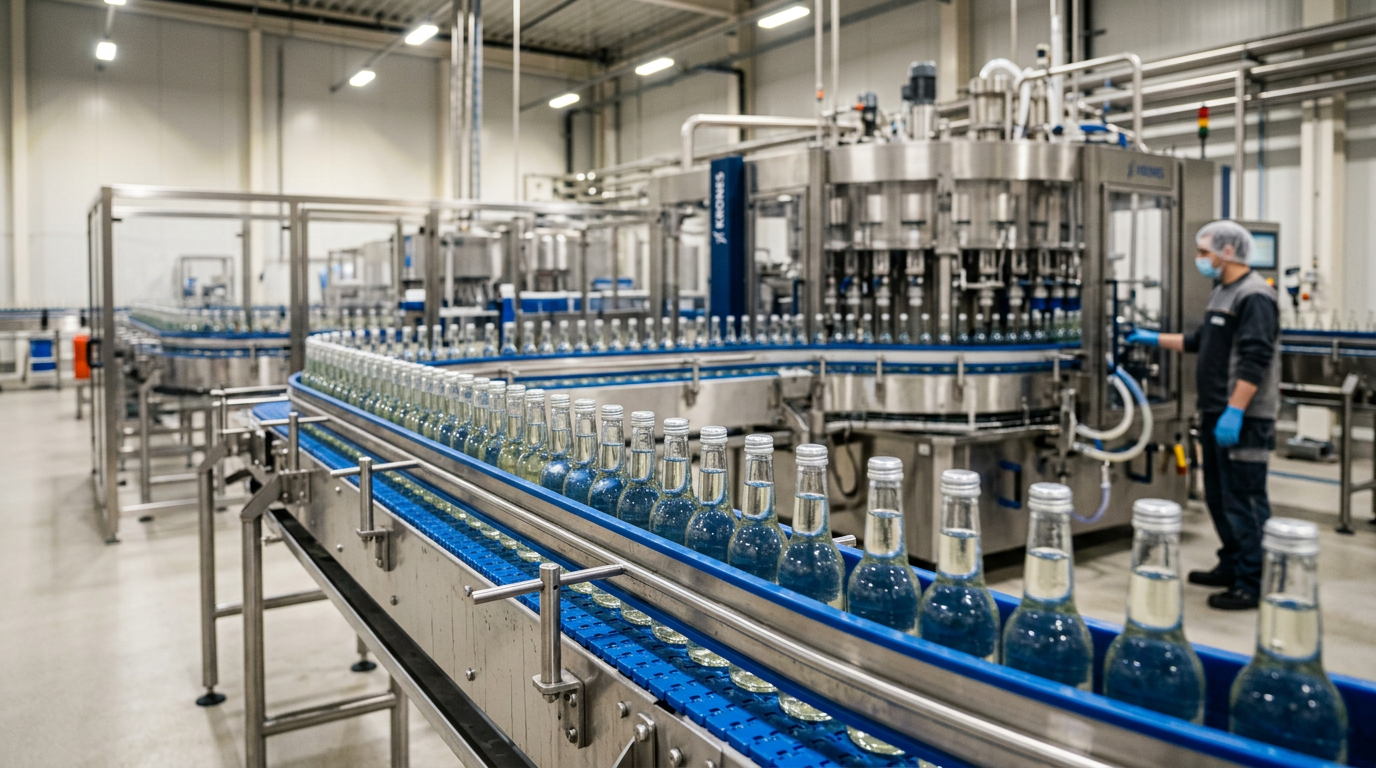
Modular bottle handling conveyors for filling lines utilize standardized plastic chain modules to achieve throughput rates exceeding 60,000 bottles per hour while maintaining noise levels below 85 dB(A). These systems rely on high-performance materials like Low Friction (LF) Acetal and specialized geometry to manage the high center of gravity inherent in narrow containers, ensuring stable transport through cleaning, filling, capping, and labeling stations.
The Architecture of Modern Filling Line Conveyors
The transition from traditional fixed-frame conveyors to modular systems has been driven by the need for rapid line changeovers and hygienic compliance. Modern filling lines for beverages, pharmaceuticals, and chemicals require a transport medium that can handle varying bottle geometries—from round PET containers to elliptical HDPE flasks—without significant downtime.
Modular systems utilize a "building block" approach, where aluminum or stainless steel side profiles are combined with standardized curves, drives, and return units. This modularity allows engineers to reconfigure layouts within hours rather than days, a critical factor in high-mix, low-volume production environments. Easy Conveyors specializes in these flexible configurations, providing the necessary precision in chain tracking and structural integrity required for high-speed bottle handling.
Material Selection: POM vs. PP vs. PBT
The choice of chain material is the most significant factor in conveyor longevity and bottle stability. In bottle handling, the coefficient of friction (COF) dictates how much "back-pressure" is generated when bottles accumulate.
| Feature | POM (Acetal) | PP (Polypropylene) | PBT (Polyester) |
|---|---|---|---|
| Tensile Strength | High (80 MPa) | Medium (35 MPa) | High (60 MPa) |
| COF vs. Steel | 0.15 - 0.20 | 0.25 - 0.30 | 0.12 - 0.18 |
| Max Temp | 90°C | 105°C | 120°C |
| Chemical Resistance | Good (Oils/Alcohols) | Excellent (Acids) | Excellent (Solvents) |
| Primary Use | General Bottling | Hot-fill / Washdown | Aseptic / High-temp |
For most filling applications, Low-Friction Acetal (POM) is the industry standard due to its dimensional stability and wear resistance. However, in "hot-fill" applications where liquids are bottled at temperatures exceeding 85°C, Polypropylene or specialized PBT chains are required to prevent thermal expansion issues.
Engineering for Stability: Managing the High Center of Gravity
Bottles are inherently unstable during acceleration and deceleration due to their high center of gravity. To mitigate tip-overs, modular bottle conveyors employ several design strategies:
- Vacuum Chains: For lightweight empty PET bottles, modular chains with micro-perforations allow a vacuum blower to "suck" the bottle onto the chain surface, providing stability even at speeds of 2.0 m/s.
- Side Guide Precision: Adjustable guide rails, often lined with ultra-high-molecular-weight polyethylene (UHMW-PE), must be positioned at the "shoulder" and "base" of the bottle to prevent tilting.
- Dead Plate Minimization: The transition between conveyor segments is a primary failure point. Modular systems use "finger plates" or "nose-over" transfers to ensure a continuous support surface, reducing the gap to less than 3mm.
When designing these systems, hygienic wash-down design is paramount. In the food and beverage industry, systems must adhere to EHEDG Guidelines to ensure that no biological hazards accumulate in the conveyor frame. This involves using open-profile stainless steel frames and sloped surfaces to facilitate drainage.
Dynamic Accumulation and Pressure Control
Filling lines rarely run at a perfectly synchronized speed. The filler might stop for a label roll change, while the blow-molder continues to produce bottles. Modular accumulation tables act as a buffer.
- Mass Flow Conveyors: These involve wide modular belts where bottles move in a multi-lane "mass." The challenge here is the transition back to a single file (denesting).
- Zero-Pressure Accumulation: By using electronic sensors and segmented drives, conveyors can stop specific zones to prevent bottles from touching, which is essential for glass containers to prevent breakage and noise.
Proper drum motor selection or the use of high-efficiency geared motors is vital for these high-torque accumulation zones. Using IE3 efficiency class motors ensures that energy consumption remains low even during frequent start-stop cycles.
Easy Conveyors stocks the modular systems discussed here — ready to ship across Europe.
Control Integration and Automation
A modular bottle handling system is only as effective as its control logic. Variable Frequency Drives (VFDs) are used to match the speed of the conveyor to the instantaneous output of the filler.
- Soft-Start Tuning: To prevent bottles from tipping during startup, VFDs are programmed with S-curve acceleration profiles. This prevents the "jerk" associated with linear acceleration.
- Sensor Placement: Photoelectric sensors with background suppression are used to detect clear glass or PET bottles, providing the PLC with data on "back-log" levels to trigger speed adjustments.
Safety is governed by international standards such as ISO 13849-1, which defines the Safety Integrity Level (SIL) for conveyor control systems, ensuring that emergency stops and guard interlocks function reliably.
Maintenance and Failure Modes in Bottling Lines
The most common failure mode in modular bottle conveyors is "pulsing" or "chordal action." This occurs when the chain pitch is too large for the sprocket diameter, leading to rhythmic speed variations that can tip narrow bottles. Using smaller pitch chains (e.g., 25.4mm or 12.7mm) significantly reduces this effect.
Regular inspection of the modular conveyor components is necessary. Wear strips (the plastic rails the chain slides on) should be checked for "tracking grooves." If the wear strip is worn unevenly, it can cause the chain to tilt, leading to catastrophic line jams at the filler inlet.
For environments requiring frequent cleaning, the use of IP69K rated components is mandatory. This rating ensures the equipment can withstand high-pressure, high-temperature washdowns (up to 100 bar at 80°C) without water ingress into motors or sensors.
Future Trends: Sustainability and Digital Twins
The industry is moving toward "dry running" conveyors to reduce water and lubricant consumption. Specialized "self-lubricating" plastic chains impregnated with solid lubricants (like PTFE) allow lines to run at high speeds without the traditional soap-and-water lubrication, significantly reducing wastewater treatment costs.
Furthermore, the implementation of Digital Twins allows engineers to simulate bottle flow and accumulation dynamics before the physical hardware is installed. This ensures that the modular layout is optimized for the specific footprint of the plant, preventing costly field modifications. By adhering to NEMA standards for electrical enclosures and FDA regulations for food-contact materials, manufacturers can ensure their modular filling lines are both high-performing and compliant with global safety standards.
Frequently Asked Questions
What is the best material for modular conveyor chains in bottling?
For high-speed filling lines, Low-Friction (LF) Acetal (POM) is preferred due to its low coefficient of friction (0.15-0.20) and high tensile strength, which minimizes back-pressure and wear.
How do you prevent bottles from tipping on a conveyor?
Stability is managed through vacuum chains for lightweight PET, precise side-guide positioning at the bottle's shoulder, and the use of small-pitch chains to reduce chordal action and vibration.
What is 'dry running' in bottle handling?
Dry running refers to using self-lubricating modular chains that do not require liquid soap/water lubrication. This reduces water waste, prevents biological growth, and lowers maintenance costs.
Why use modular conveyors instead of traditional custom-built lines?
Modular systems allow for faster line changeovers, easier sanitation due to open frames, and the ability to reconfigure the layout as production needs evolve, unlike fixed-welded systems.