Modular Bottle Handling Conveyors for High-Speed Filling Lines: Engineering for Stability
Optimize your filling line with high-speed modular bottle conveyors. Learn about stability ratios, material selection, and hygienic design for PET and glass containers.
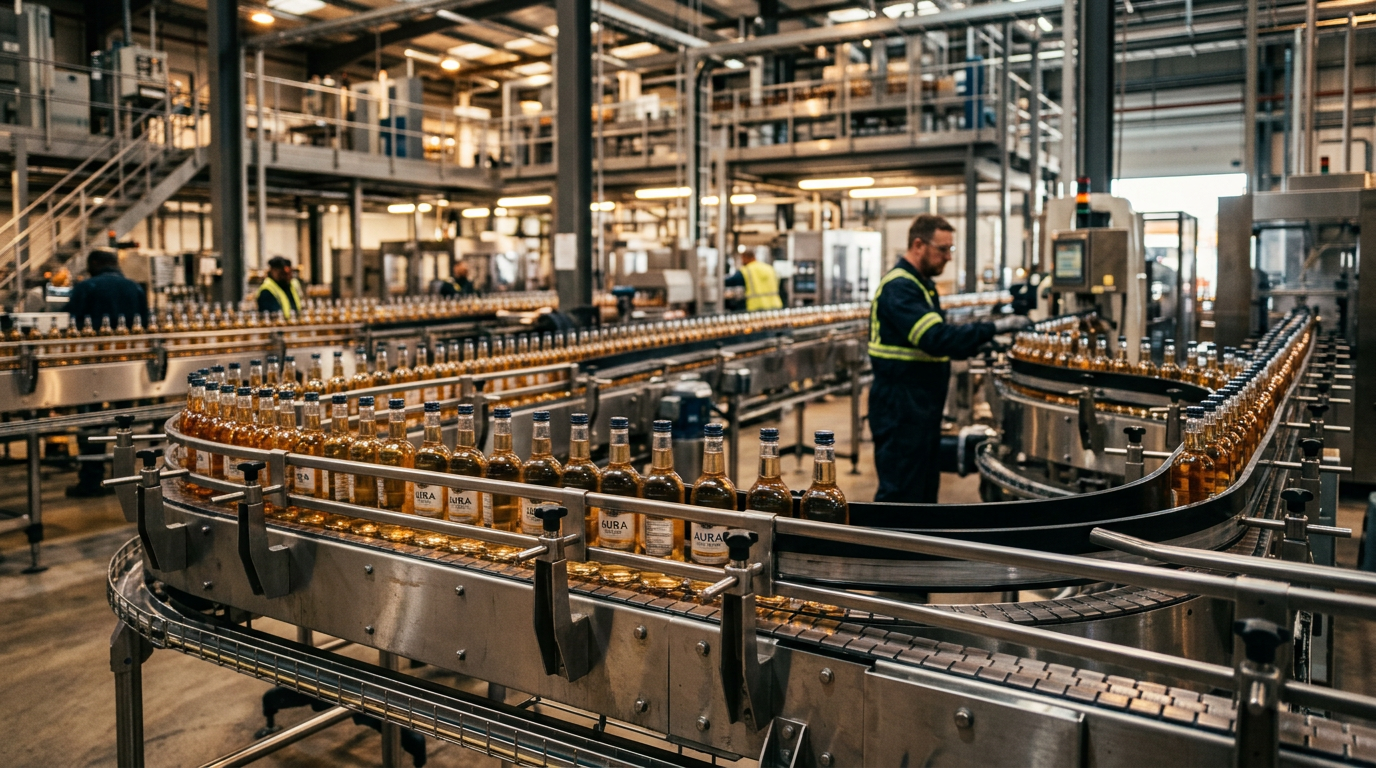
In high-speed beverage and pharmaceutical filling lines, modular bottle handling conveyors must maintain a stability-to-throughput ratio where line speeds of up to 60,000 bottles per hour (BPH) are achieved while maintaining a vertical tilt variance of less than 0.5 degrees. These systems rely on low-friction acetal (POM) chains and precise lateral guidance to prevent the "fallen bottle" syndrome that accounts for up to 15% of unplanned downtime in glass and PET packaging facilities.
The Physics of High-Speed Bottle Conveying
Modern filling lines are ecosystems of synchronized movements. The transition from the depalletizer to the rinser, filler, capper, and labeler requires a conveyor system that can handle rapid acceleration and deceleration without compromising container integrity.
The primary challenge in bottle handling is the high center of gravity relative to the small footprint of the container. According to VDMA standards for packaging machinery, the conveyor's surface must provide a consistent coefficient of friction (COF). If the COF is too high, bottles will tip during accumulation; if it is too low, they will slide during acceleration. Engineers typically aim for a COF between 0.15 and 0.25 for standard PET-on-POM applications.
Key Components of Modular Bottle Systems
To achieve high-efficiency ratings, modular bottle handling conveyors utilize several specialized components:
- Side-Flexing Chains: These allow for continuous flow around corners without the need for dead plates or transfer points, which are common locations for bottle tipping.
- Adjustable Guide Rails: Since many lines run multiple Stock Keeping Units (SKUs), quick-changeover guide rails are essential. Digital position indicators can reduce changeover times by 70% compared to manual adjustments.
- Vacuum Units: For lightweight empty plastic bottles, vacuum conveyors pull the containers onto the belt surface, ensuring they remain upright even at speeds exceeding 2.0 m/s.
- Accumulation Tables: These act as buffers between machines. If the labeler stops, the filler can continue running for several minutes, depositing bottles into a mass-flow accumulation area.
Material Selection: POM vs. Stainless Steel
The choice of chain material is dictated by the environment (wash-down vs. dry) and the container material (glass vs. plastic).
| Feature | Acetal (POM) Chain | Stainless Steel Chain |
|---|---|---|
| Noise Level | Low (< 75 dB) | High (> 85 dB) |
| Corrosion Resistance | Excellent (Chemical resistant) | Excellent (Wash-down) |
| Max Load Capacity | Moderate | Very High |
| Coefficient of Friction | Low & Consistent | Variable (needs lubrication) |
| Application | PET, HDPE, Small Glass | Heavy Glass, Abrasive environments |
| Hygiene Standard | FDA compliant | EHEDG compliant |
Engineering for Efficiency: The Role of D
Easy Conveyors stocks the modular systems discussed here — ready to ship across Europe.
rive Systems In the context of modular conveyor systems, the drive architecture is critical. Most modern systems utilize decentralized drives or drum motors to maximize floor space.
When selecting a drive, efficiency is paramount. Utilizing IE3 or IE4 efficiency class motors ensures that the high duty cycles of 24/7 filling lines do not lead to excessive energy costs. Integration with Variable Frequency Drives (VFDs) allows for soft-starts and precise speed matching between conveyor sections, which is vital for maintaining the "product gap" required by inspection cameras and X-ray fill-level detectors.
Hygiene and Wash-down Requirements
For the food and beverage industry, conveyors must adhere to strict sanitary design principles. This includes:
- Open Frame Design: Allowing for easy debris removal and drainage.
- Minimal Horizontal Surfaces: Preventing the pooling of liquids or cleaning agents.
- High IP Ratings: Motors and sensors should be rated at IP66 or IP69K to withstand high-pressure, high-temperature cleaning cycles.
The European specialist Easy Conveyors offers modular solutions that emphasize these hygienic requirements, providing stainless steel modules that integrate seamlessly with existing filling line infrastructures.
Common Failure Modes and Prevention
- Chain Elongation: All plastic chains stretch over time. Implementing automatic tensioners and monitoring "catenary sag" can prevent the chain from jumping the drive sprockets.
- Guide Rail Wear: In glass conveying, glass fines act as an abrasive. Frequent inspection of high-molecular-weight polyethylene (HMWPE) wear strips is necessary.
- Transfer Point Tipping: The transition from one conveyor to another is the most common point of failure. Using "finger plates" or small-diameter nose-over rollers helps bridge the gap.
Integration with Automation
The modern filling line is increasingly "smart." Sensors positioned along the conveyor track provide real-time data to the PLC (Programmable Logic Controller). For instance, if a "backlog" sensor is triggered before the capper, the upstream filler can automatically ramp down its speed. This prevents the "harmonica effect" where bottles crash into each other, potentially causing damage or micro-fractures in glass containers.
Advanced systems now incorporate IO-Link technology for sensors, allowing maintenance teams to monitor the health of the conveyor remotely, identifying issues like motor overheating or belt slippage before they cause a line stoppage. Proper VFD soft-start tuning and modular system integration are the cornerstones of a resilient, high-speed filling operation.
Frequently Asked Questions
Why is acetal (POM) the standard material for bottle conveyor chains?
Acetal (POM) is preferred for its low coefficient of friction, high tensile strength, and excellent wear resistance against plastic and glass containers. It is also FDA-compliant for food contact.
What is the maximum speed for a standard modular bottle conveyor?
The maximum speed for unassisted bottle conveying is typically around 2.0 to 2.5 meters per second. Beyond this, vacuum systems or specialized side-grippers are required to maintain stability.
How do accumulation tables improve filling line efficiency?
Accumulation tables act as a buffer, decoupling machines in a line. They prevent a minor stop on one machine (like a labeler) from causing an immediate shutdown of the entire line (like the filler).
What are the benefits of side-flexing modular chains?
Side-flexing chains allow for 90 and 180-degree turns without the need for transfer plates, reducing the risk of bottle tipping and simplifying the overall line layout.
What IP rating is required for conveyor motors in wash-down environments?
IP69K is the highest rating, indicating the equipment can withstand close-range, high-pressure, and high-temperature spray-downs common in beverage and dairy facilities.