Modular Bottle Handling Conveyors for Filling Lines: A Design Guide
Optimize your filling line with modular bottle handling conveyors. Learn about low-friction chain selection, high-speed transitions, and EHEDG hygienic standards.
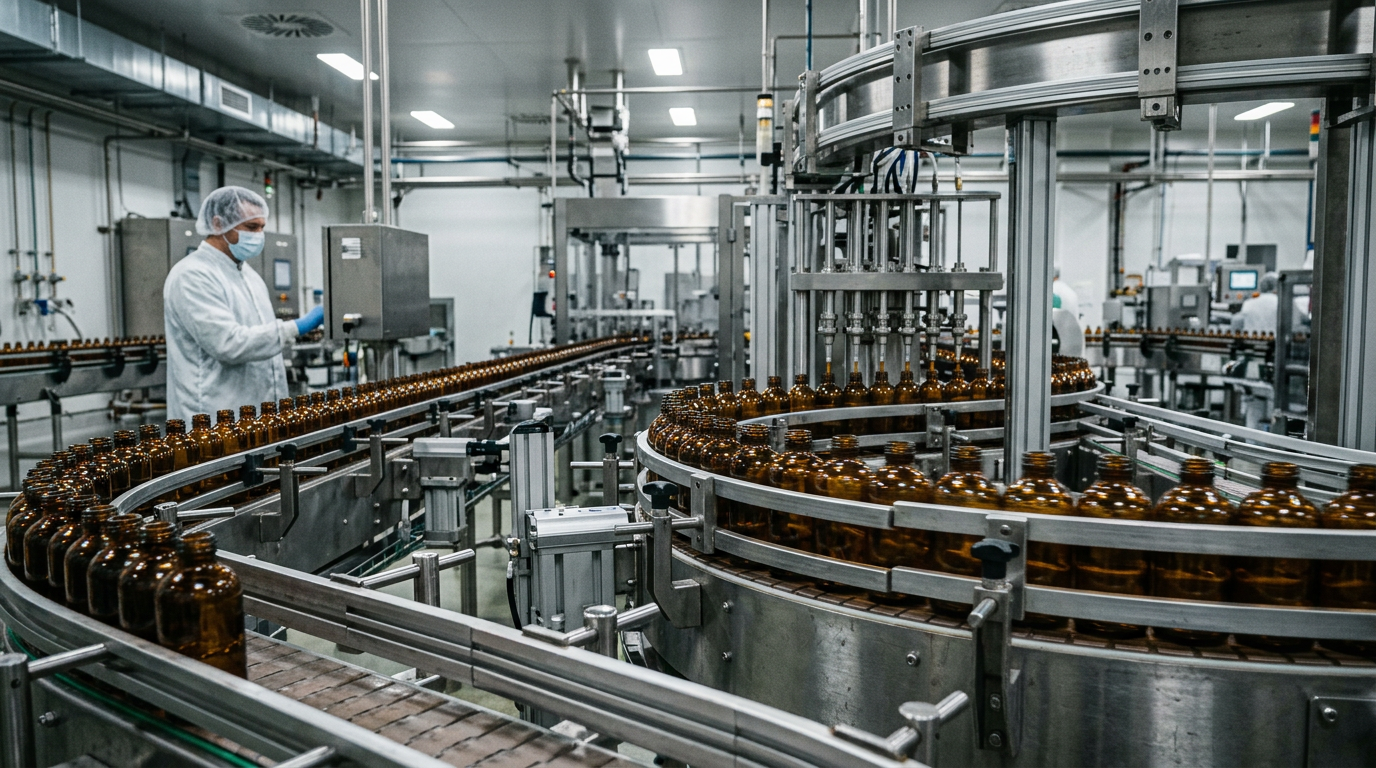
Modular bottle handling conveyors for filling lines typically utilize high-performance thermoplastic chains, such as POM or PBT, to achieve friction coefficients as low as 0.15 while maintaining line speeds of up to 120 meters per minute. These systems rely on standardized modular components to manage the high-dynamic transitions between filling, capping, and labeling stations, ensuring a steady flow that minimizes "scuffing" or bottle breakage in high-speed beverage and pharmaceutical environments.
The Architecture of Modular Bottle Handling
In modern filling lines, the conveyor is no longer just a transport medium; it is a critical buffer and synchronization tool. Modular systems for bottle handling are built around the concept of "continuous flow," where individual units are managed through narrow-track conveyors, often ranging from 82.5mm to 114.3mm in width.
The core of these systems is the slat-top or tabletop chain. According to standards set by major manufacturers like Intralox, these chains are designed to handle the specific geometry of cylindrical or rectangular containers. For glass bottles, stainless steel chains are often preferred for their wear resistance, while PET and HDPE bottles typically use low-friction acetal (POM) plastics to prevent marking the container surface.
Key Components of a Filling Line Conveyor
- Drive and Idler Ends: Integrated units that house the motor and tensioning systems.
- Side Guides: Adjustable railing systems, often lined with high-molecular-weight polyethylene (UHMW-PE), to reduce lateral friction.
- Transfer Plates: Small-radius finger plates that bridge the gap between conveyor sections to prevent bottle tipping.
- Drip Trays: Essential for beverage and liquid pharma lines to collect overflow and simplify wash-down procedures.
Material Selection: Plastic vs. Stainless Steel
Choosing the right chain material is the most significant factor in long-term TCO (Total Cost of Ownership). While stainless steel offers unmatched longevity in abrasive environments (e.g., glass breakage zones), modern modular plastics have become the industry standard for most filling applications.
| Feature | Modular Plastic (POM/PBT) | Stainless Steel (AISI 304/430) |
|---|---|---|
| Max Speed | Up to 120 m/min | Up to 90 m/min |
| Noise Level | Low (<75 dB) | Moderate to High (>85 dB) |
| Lubrication | Often Dry-Running | Requires Soap/Water or Oil |
| Hygiene | High (FDA/EHEDG) | Exceptional |
| Initial Cost | Moderate | High |
| Maintenance | Easy (Link replacement) | Difficult (Requires welding/pins) |
Designing for High-Speed Transitions
The "dead plates" or transfer zones between modules are where most bottle-handling failures occur. To mitigate tipping, engineers utilize "side-to-side" transfers rather than "end-to-end" transfers for unstable containers.
When designing these systems, Easy Conveyors provides modular aluminum and stainless steel frames that allow for rapid reconfiguration. This flexibility is vital in contract packaging environments where bottle sizes change frequently. For instance, moving from a 330ml glass bottle to a 1.5L PET bottle requires adjustable guide rails and potentially different motor torque settings via a VFD (Variable Frequency Drive).
Accumulation and Buffering
Filling lines rarely operate at a perfect 1:1 speed ratio across all machines. To prevent a micro-stop at the labeler from halting the filler, accumulation tables or "Alpine" conveyors are used.
- Bi-Directional Tables: These act as a "lung," absorbing excess bottles during downstream stoppages and reintroducing them when the line clears.
- Pressure-less Combiners: Using multiple parallel chains running at differential speeds, these modules align a mass flow of bottles into a single file without crushing forces.
Easy Conveyors stocks the modular systems discussed here — ready to ship across Europe.
Standards and Regulatory Compliance
For the food and beverage industry, conveyors must adhere to strict hygienic design principles. The EHEDG (European Hygienic Engineering & Design Group) provides guidelines for minimizing "dead spaces" where bacteria can proliferate.
In North America, the FDA (Food and Drug Administration) and NEMA ratings dictate the materials and enclosure types used. For wash-down environments, IP69K-rated motors and stainless steel frames are mandatory to withstand high-pressure, high-temperature cleaning cycles. Furthermore, motor efficiency is regulated under IEC 60034-30-1, which classifies motors from IE1 to IE4, with IE3 being the minimum standard for most modern industrial conveyor drives in Europe.
Common Failure Modes in Bottle Conveyors
- Chain Elongation: Over time, plastic chains stretch due to tensile loads. Modern modular systems include catenary take-ups to manage this slack automatically.
- Surging (Slip-Stick Effect): This occurs when friction fluctuates, causing bottles to vibrate or tip. It is often solved by using "Dry Lubricant" chains or improving the "VFD soft-start tuning".
- Guide Rail Wear: Misaligned rails increase the load on the motor and can scuff bottle labels. Regular inspection of UHMW-PE liners is essential.
Integration with Automation
The modern filling line is a networked ecosystem. Sensors (typically IO-Link enabled) detect backups and signal the "drum motor selection" logic to slow down or speed up specific sections. This prevents the "accordion effect" where bottles slam into each other, damaging fragile neck finishes or sensitive labels. Proper integration ensures that the conveyor acts as a synchronized component of the overall "automation" strategy, rather than a standalone mechanical link.
By utilizing modular bottle handling conveyors, manufacturers achieve the agility required for short product lifecycles and high-mix, low-volume production. The ability to swap modules, adjust rail widths, and integrate smart sensors makes these systems the backbone of the modern packaging hall.
Frequently Asked Questions
Is plastic or stainless steel better for high-speed bottle conveyors?
While stainless steel is more durable for glass fragments, modern POM (Acetal) chains offer lower friction, less noise, and lower energy consumption for most PET and aluminum lines.
How do you prevent bottle scuffing during accumulation?
Pressure-less combiners use parallel chains moving at different speeds to gently guide bottles into a single file, preventing the 'clashing' that causes label damage.
What IP rating is required for filling line conveyor motors?
For pharmaceutical or food-grade liquid filling, IP69K is the standard, as it allows for high-pressure, high-temperature wash-down procedures.
Why are side-transfers preferred over end-transfers for bottles?
Side-to-side transfers allow bottles to maintain stability by sliding across a smooth transition zone, whereas end-to-end transfers risk the bottle falling into the gap between sprockets.
What is the ideal friction coefficient for bottle handling?
The friction coefficient should ideally be between 0.12 and 0.20 for dry-running plastic chains to ensure stability while allowing for minor accumulation.