Optimizing Modular Bottle Handling Conveyors for High-Speed Filling Lines
Maximize throughput in filling lines with modular bottle handling conveyors. Learn about low-friction chains, accumulation strategies, and hygienic design standards.
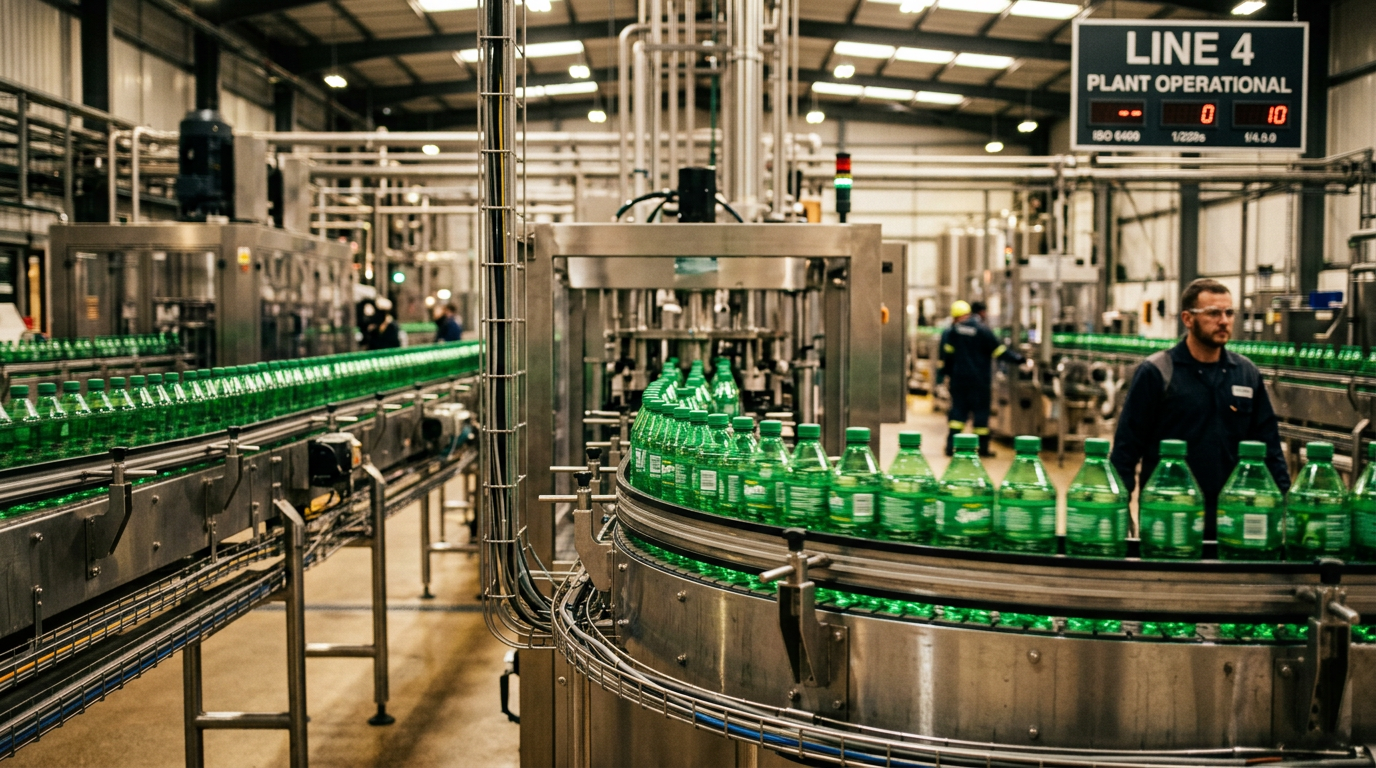
Modular bottle handling conveyors for filling lines achieve throughput increases of up to 25% by utilizing low-friction acetal chains and distributed drive architectures that minimize product back-pressure. These systems are typically designed to handle container stability through a 1:3 height-to-width center-of-gravity ratio, ensuring seamless transitions between rinsing, filling, capping, and labeling stations.
The Engineering of Bottle Handling Stability
In high-speed beverage and pharmaceutical filling lines, the conveyor system is the nervous system of the production floor. Modular bottle handling conveyors are specifically engineered to address the "unstable container" problem—where tall, narrow bottles are prone to tipping during acceleration or accumulation.
The core of these systems lies in the chain selection. Most modern filling lines utilize side-flexing plastic chains made from Polyoxymethylene (POM), often referred to as Acetal. These chains provide a low coefficient of friction (typically $\mu \approx 0.15$ to 0.25 on steel), which is critical for pressure-less accumulation. For glass bottle lines where abrasive wear is a concern, stainless steel slat-top chains are preferred, though they require more robust lubrication protocols to prevent "shuddering" during start-stop cycles.
Key Components of High-Efficiency Filling Loops
To maintain a continuous flow, modular systems rely on several specialized components:
- Transfer Plates: To prevent bottles from "stalling" at the gap between two conveyor sections, dead plates or active transfer modules are used. Active transfers use small-diameter rollers to bridge the gap, ensuring even lightweight PET bottles move smoothly.
- Side Guides: Adjustable railing systems are essential for multi-format lines. Tool-less adjustment handles allow operators to switch between a 500ml bottle and a 2L bottle in minutes.
- Drip Trays and Sloped Surfaces: In liquid filling, spills are inevitable. Modular frames for these lines are often constructed from 304 or 316L stainless steel (EHEDG standards) with open profiles to facilitate easy cleaning.
Comparison: Chain Materials for Bottle Conveying
Choosing the right material impacts both the longevity of the system and the "scuffing" rate of the bottles.
| Feature | Acetal (POM) | Low-Friction Acetal | Stainless Steel (AISI 430) |
|---|---|---|---|
| Coefficient of Friction | 0.20 - 0.25 | 0.13 - 0.18 | 0.30+ |
| Max Speed | 60 m/min | 90 m/min | 120 m/min |
| Washdown Suitability | High | High | Excellent |
| Typical Application | PET/Plastic Bottles | High-speed Beverage | Glass/Heavy Containers |
| Noise Level | Low | Very Low | Moderate |
Throughput Optimization via Accumulation
The primary bottleneck in any filling line is usually the filler itself. However, downstream failures (e.g., a labeler jam)
Easy Conveyors stocks the modular systems discussed here — ready to ship across Europe.
should not force the filler to stop immediately. This is where modular accumulation tables come into play.
By using "First-In-First-Out" (FIFO) or "Last-In-First-Out" (LIFO) accumulation loops, a modular system can buffer 3–5 minutes of production. This provides a critical window for operators to clear minor jams without stopping the upstream process. Using a distributed drive system with VFD soft-start tuning prevents the "accordion effect," where bottles slam into each other as the belt restarts.
Integration with Automation
Modern filling lines integrate the conveyor control directly into the PLC of the filler. Optical sensors (often IP69K rated for washdown) detect "back-log" and "starvation" conditions. If the discharge conveyor is full, the system automatically slows the conveyor speeds to increase bottle density without increasing pressure.
For facilities seeking European precision in their layouts, Easy Conveyors offers modular solutions that are specifically designed for rapid integration with existing filling, capping, and labeling machinery. Their systems emphasize a "plug-and-play" approach to side-flexing chains, allowing for complex "S" curves and "U" turns in tight footprint environments.
Hygienic Design and Material Choice
In pharmaceutical and dairy applications, the conveyor must meet strict FDA and EU 10/2011 requirements. This implies:
- No horizontal surfaces: Frames are often diamond-shaped or sloped to ensure water runoff.
- Minimized thread exposure: Bolted joints are kept to a minimum to prevent bacterial growth.
- Material Certification: All plastic components must be food-contact safe (FDA 21 CFR).
Maintenance and Common Failure Modes
The most common failure point in bottle conveyors is "pin wear" in the modular chain. As the chain stretches, it can skip on the drive sprockets, leading to jerky movements that tip bottles. Regular inspection of the catenary sag—the portion of the chain hanging underneath the return side—is the most effective way to monitor wear. If the sag exceeds manufacturer limits (Habasit), links must be removed or the chain replaced.
Drive motor selection is equally vital. Moving from standard induction motors to IE3 efficiency class or IE4 permanent magnet motors can reduce energy consumption by up to 15% in 24/7 bottling operations. When combined with proper gearmotor sizing, these modular systems become the most efficient part of the production line.
Frequently Asked Questions
What is the best chain material for plastic bottle conveyors?
Acetal (POM) is the industry standard due to its high strength and low coefficient of friction, which allows bottles to slide easily during accumulation.
How do I prevent tall bottles from tipping on a conveyor?
A height-to-width ratio of 3:1 is a common engineering limit; containers taller than this require specialized side-gripping conveyors or lower acceleration profiles to remain stable.
What is the role of an accumulation table in a filling line?
Accumulation tables act as a buffer between machines. If one machine stops, the table 'absorbs' the product flow for several minutes, preventing a total line shutdown.
What are the hygiene requirements for beverage conveyors?
For food and pharma filling, 304 or 316L stainless steel with a 'wash-down' design (sloped surfaces and no hidden pockets) is required to meet EHEDG standards.