Optimizing Filling Lines with Modular Bottle Handling Conveyors
Optimize filling line efficiency with modular bottle handling conveyors. Learn about chain selection, accumulation strategies, and high-speed synchronization.
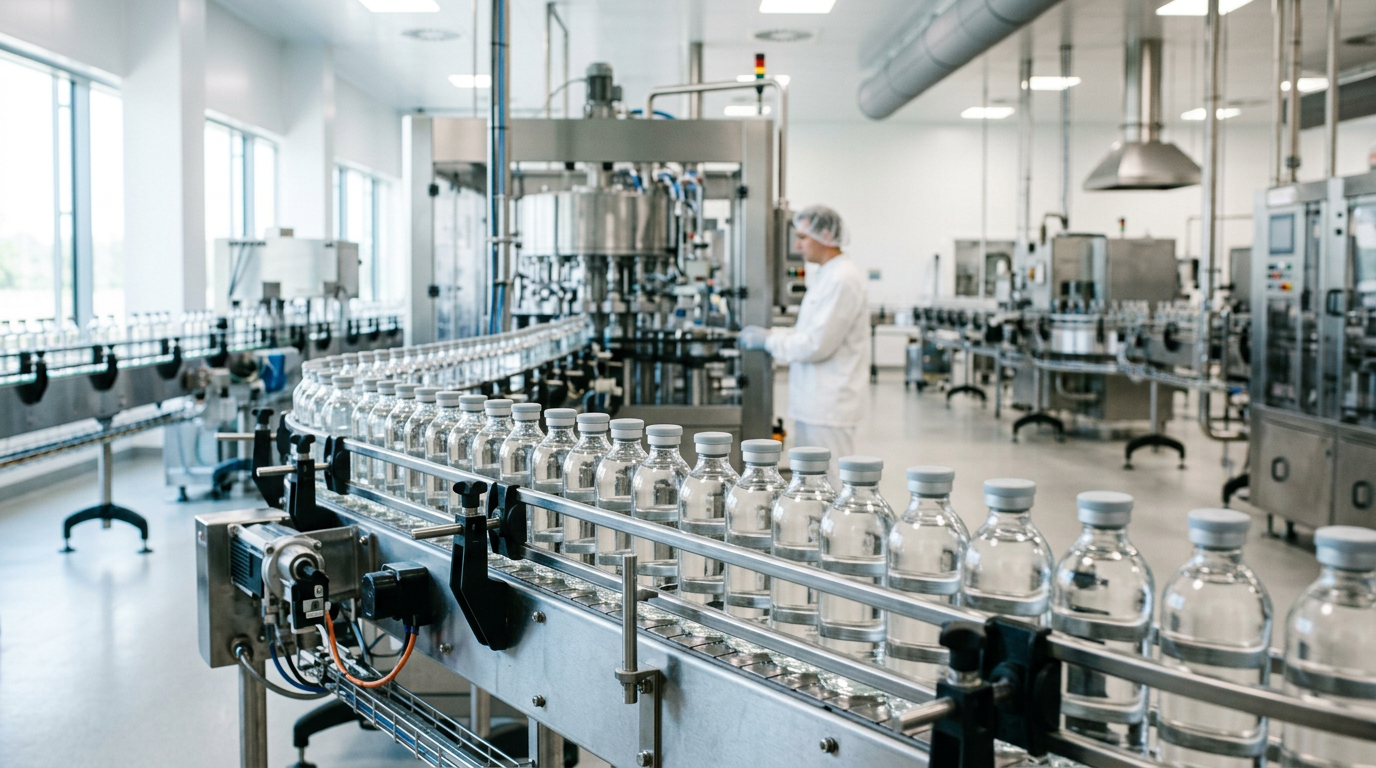
Modular bottle handling conveyors for filling lines typically achieve throughput rates of 10,000 to 60,000 units per hour (UPH) while maintaining container stability through high-friction modular belts or side-flexing chains. These systems rely on a 3-zone architecture—accumulation, pitch control, and synchronization—to ensure consistent product flow into rotary fillers or labeling stations.
The Architecture of Modern Filling Lines
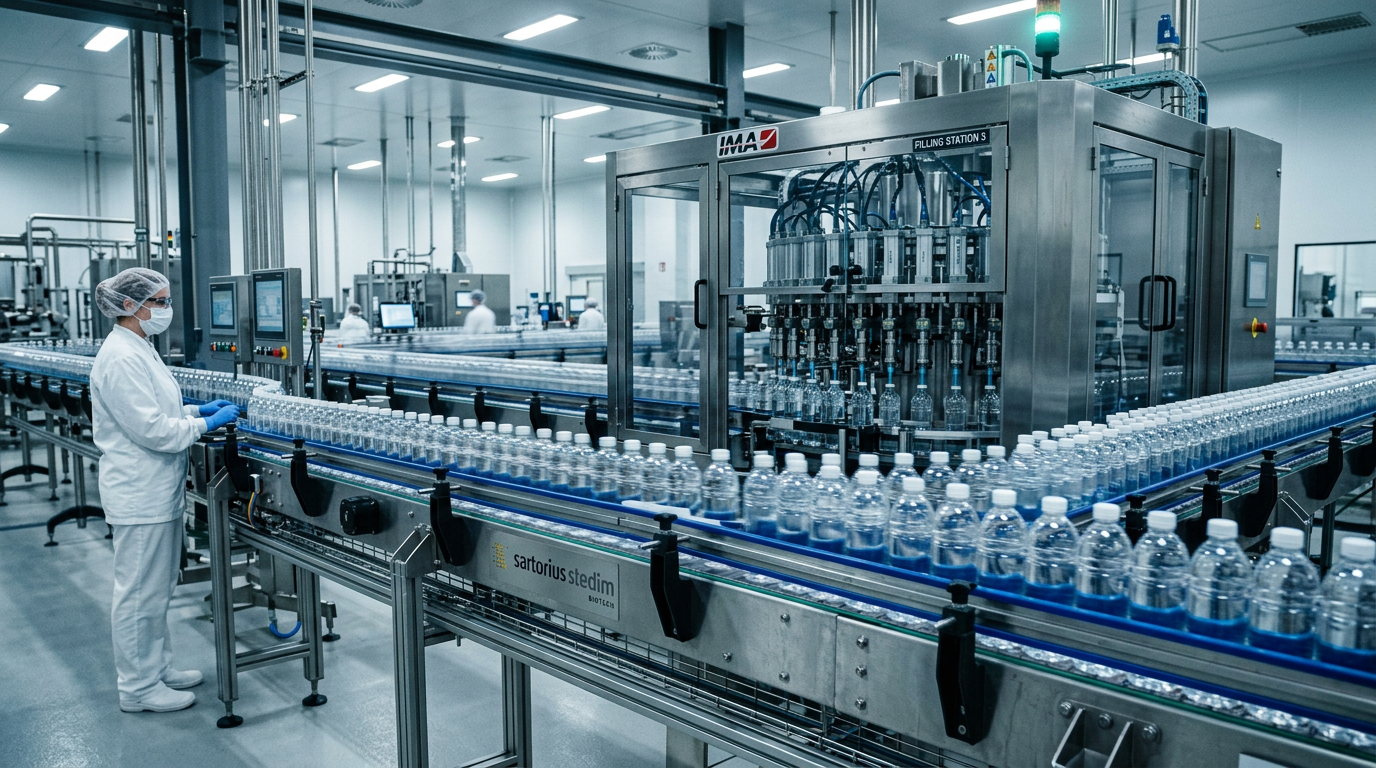
In the high-stakes environment of liquid packaging, the conveyor system is the "circulatory system" of the plant. Whether handling glass beer bottles, PET soda containers, or HDPE pharmaceutical vials, the modularity of the conveyor determines the line's overall equipment effectiveness (OEE).
Traditional fixed conveyors often struggle with format changes and line reconfigurations. In contrast, modular bottle handling conveyors utilize standardized components—extruded aluminum or stainless steel profiles, plastic chain modules, and universal side guides—to allow for rapid scaling. By using standardized Easy Conveyors components, engineers can create complex layouts featuring 90-degree turns, alpine accumulators, and vertical inclines without custom fabrication costs.
Critical Components in Bottle Handling
1. Chain Selection: POM vs. Low Friction
The choice of chain material is the primary driver of belt life and bottle stability. Standard Acetal (POM) is the industry workhorse, providing a low coefficient of friction (COF). However, in high-speed dry lines, specialized PBT or low-friction POM-based materials are used to prevent "pulsation" or the slip-stick effect.
2. Side Guide Engineering
Bottles, especially lightweight PET, are prone to toppling during acceleration. Modular systems utilize adjustable side guides with bead-style liners or low-friction polyethylene (PE) inserts. Sophisticated lines employ "quick-change" guide systems where a single handle can adjust the width of an entire line section to accommodate a different bottle diameter.
3. Drive Systems and Inverters
Modern bottle lines favor decentralized drive technology. Instead of one massive motor, the line is broken into shorter, independently controlled zones. This allows for precise VFD soft-start tuning to prevent the "clinking" and breakage of glass bottles during startup.
Performance Comparison: Modular Chain Types
| Specification | Standard POM Chain | Low-Friction (LF) POM | Anti-Static (AS) | Reinforced Glass Fiber |
|---|---|---|---|---|
| Max Speed | 50 m/min | 80 m/min | 40 m/min | 60 m/min |
| Coefficient of Friction | 0.20 - 0.25 | 0.13 - 0.15 | 0.22 | 0.30 |
| Operating Temp | -40°C to +90°C | -40°C to +80°C | 0°C to +60°C | -40°C to +120°C |
| Application | General Packaging | High-speed Filling | Electronics/Dry Powders | Heavy Glass/Hot Fill |
| Hygiene Rating | Standard | High | Medium | Industrial |
Integration with Filling Stations: The Synchronization Zone
Easy Conveyors stocks the modular systems discussed here — ready to ship across Europe.
The interface between the modular conveyor and the rotary filler is the most critical point of the line. This area typically employs a "timing screw" or "infeed worm" that captures bottles from the conveyor and accelerates them to match the pitch of the filler’s star wheels.
To ensure success, the conveyor must provide a constant head pressure. If the pressure is too low, the timing screw may "miss" a bottle, leading to a down-stream error. If the pressure is too high, bottles may scuff or deform. This is where hygienic wash-down design becomes paramount, as any spillage from the filler must be quickly drained to prevent residue buildup on the belt, which would alter the friction dynamics.
Solving the Accumulation Challenge
Filling lines are rarely perfectly balanced. A minor hiccup at the labeler shouldn't force the entire filler to stop. Modular systems solve this through accumulation zones:
- FIFO (First-In, First-Out) Tables: These use wide modular belts to create a buffer.
- Alpine Conveyors: Used for vertical accumulation when floor space is limited, providing 2-5 minutes of buffer time in a compact footprint.
- Pressure-less Combiners: These use varying belt speeds across parallel lanes to merge multiple rows of bottles into a single file without crushing them.
Maintenance and Failure Modes in Bottle Conveying
Even the best-designed modular system faces wear. Common failure modes include:
- Chain Elongation: As the plastic pins wear, the chain pitch increases. Most modular systems include a catenary sag area to take up this slack, but eventually, links must be removed.
- Sprocket Wear: Misalignment between the drive shaft and the chain path leads to uneven sprocket wear, causing the chain to "jump" or vibrate.
- Debris Build-up: In beverage lines, sugar-based spills can crystallize, effectively "gluing" the chain to the wear strips. Regular cleaning protocols, often involving CIP (Clean-In-Place) spray bars under the conveyor, are essential.
When selecting components, engineers should also consider drum motor selection for tight spaces where external gearmotors might interfere with operator access or present a safety hazard. Proper motor sizing ensures that the conveyor can handle the combined weight of a full accumulation table during a cold start.
Future Trends: Smart Bottle Handling
The next generation of modular bottle conveyors is moving toward "digitized flow." By integrating IO-Link sensors along the conveyor path, the system can monitor bottle density in real-time. This data allows the PLC to adjust motor speeds dynamically, ensuring that the pressure at the filler inlet remains constant regardless of upstream surges. Furthermore, the shift toward sustainable packaging (thinner PET and rPET) requires even gentler handling, pushing manufacturers to adopt vacuum-assisted modular belts to keep unstable bottles upright at high speeds.
By focusing on modularity, manufacturers gain the flexibility to pivot between product types—from 250ml energy drinks to 2-liter family bottles—with minimal downtime and maximum throughput.
Frequently Asked Questions
What is the best chain material for PET bottle filling?
For high-speed filling (above 30,000 UPH), Low-Friction (LF) Acetal is the industry standard due to its heat dissipation and smooth surface.
How does an alpine conveyor improve OEE?
An alpine conveyor provides vertical buffer space, allowing the filler to continue running for several minutes if a downstream machine (like a labeler) stops.
When should I replace a modular plastic chain?
Most modular chains require replacement when they have elongated by approximately 2-3% of their original length, or when sprocket engagement becomes noisy.
Are modular conveyors suitable for hygienic food environments?
Yes, by using 'clean-out' holes in the frame and specialized wash-down motors (IP69K), modular conveyors are ideal for FDA and EHEDG-regulated environments.