Modular Bottle Handling Conveyors for High-Speed Filling Lines
Discover how modular bottle handling conveyors optimize filling lines with high-speed stability, low-friction chains, and rapid changeover capabilities for beverage & pharma.
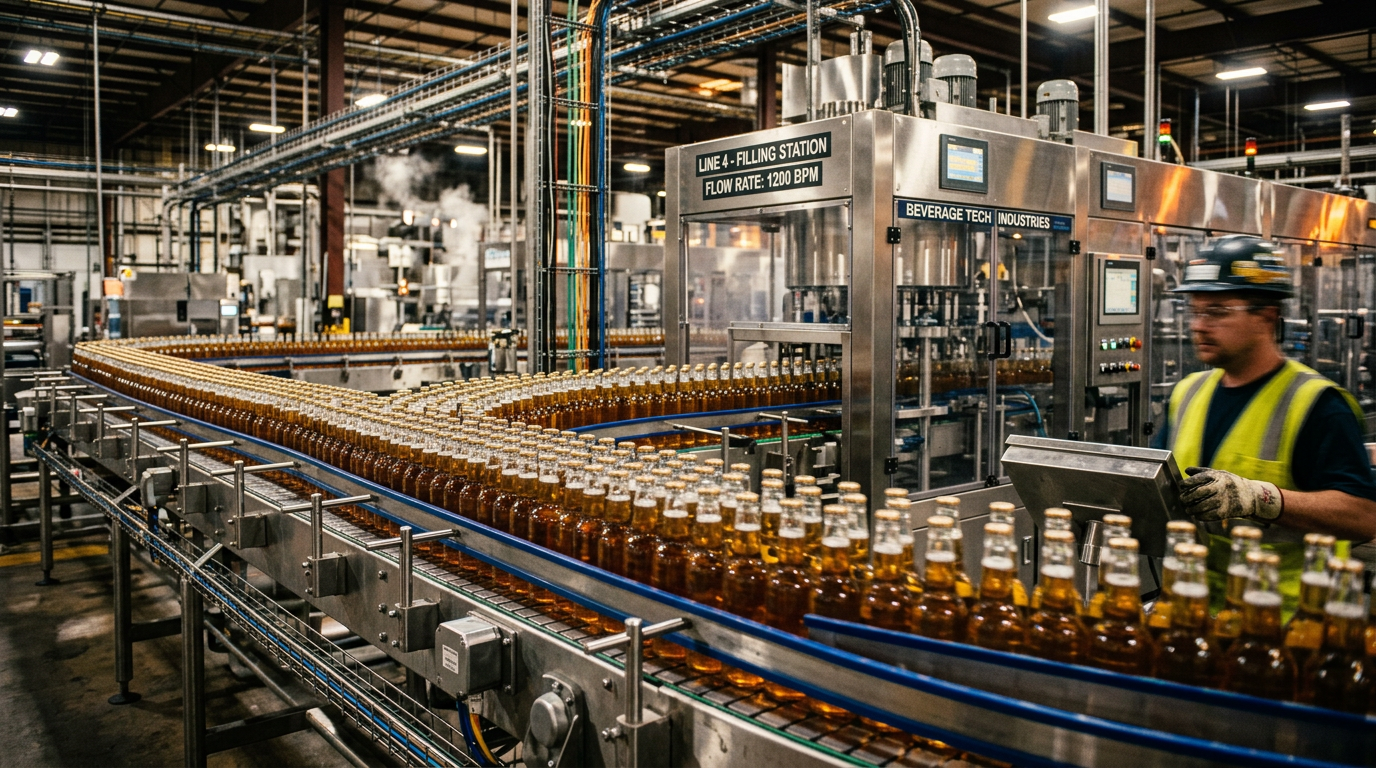
Modular bottle handling conveyors for filling lines typically utilize narrow-slat plastic chains (POM) and adjustable side guides to achieve throughput speeds of 30,000 to 60,000 bottles per hour while maintaining a pitch accuracy of within +/- 0.5mm. These systems prioritize laminar flow and vibration damping to prevent container toppling and liquid foaming in high-speed beverage, pharmaceutical, and cosmetic production environments.
The Role of Modular Conveyors in High-Speed Filling
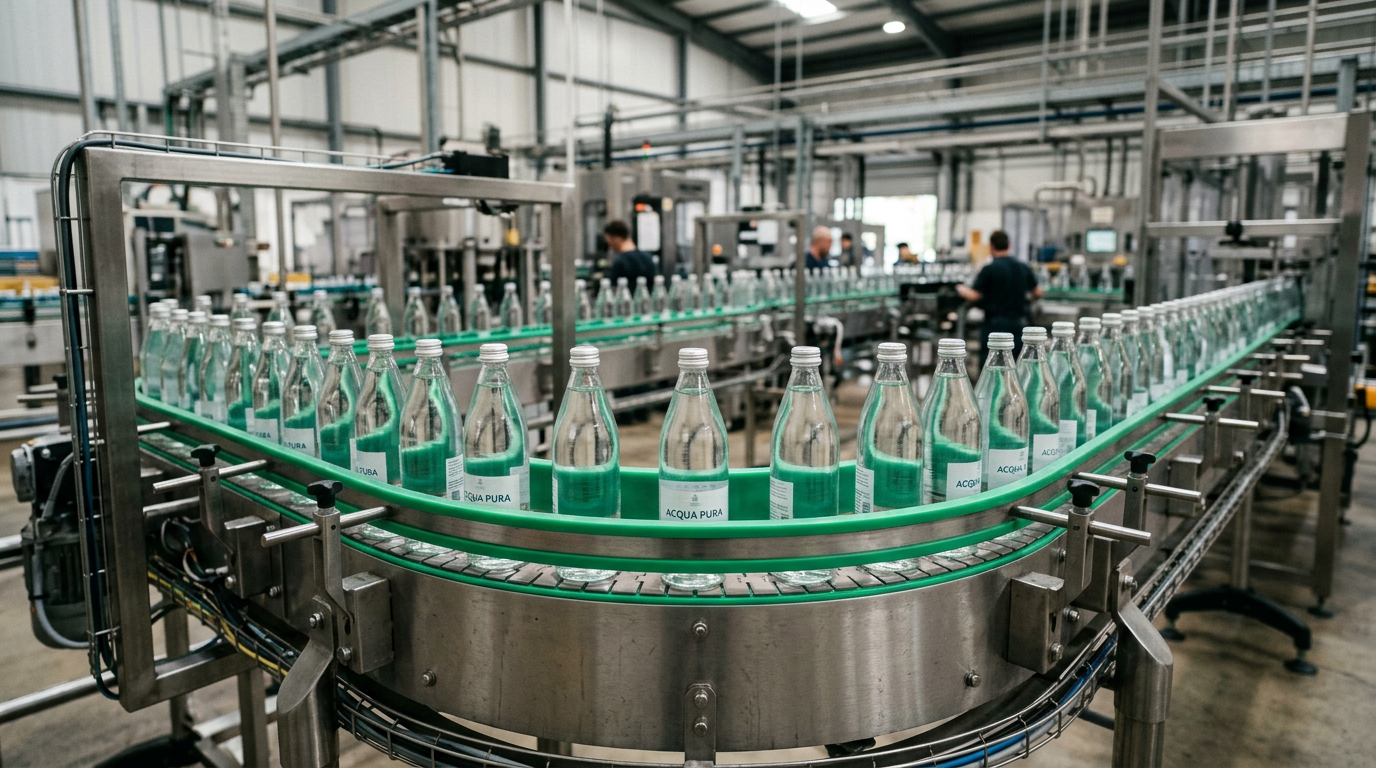
Bottle handling is a specialized subset of material handling where the primary challenge is stability. Whether you are transporting empty PET bottles, which are prone to static and wind-driven instability, or heavy glass wine bottles with high centers of gravity, the conveyor is the backbone of the entire filling line.
Modern filling lines have moved away from bespoke, welded frames toward modular systems. This shift is driven by the need for rapid reconfiguration; a line producing 500ml water bottles today may need to switch to 1.5L carafes tomorrow. Modular bottle handling conveyors utilize standardized aluminum or stainless steel profiles and a variety of chain types—most commonly 82.5mm (3.25 inch) or 114.3mm (4.5 inch) wide—to create a "plug-and-play" infrastructure.
Material Selection: POM vs. Stainless Steel Chains
The choice of chain material is the most critical decision in "modular bottle handling conveyors for filling lines." Low-friction Acetal (POM) is the industry standard due to its balance of durability and gentle handling.
| Feature | Acetal (POM) Chain | Stainless Steel Chain |
|---|---|---|
| Coefficient of Friction | Very Low (Dry or Wet) | Moderate (Usually requires lubrication) |
| Max Speed | Up to 80-90 m/min | Up to 120 m/min |
| Noise Level | Low (< 75 dB) | High (> 85 dB) |
| Chemical Resistance | Good (pH 4-9) | Excellent (Washdown ready) |
| Typical Application | PET, HDPE, lightweight glass | Heavy glass, returnable crates |
For most high-speed filling applications, Easy Conveyors recommends POM chains with specialized low-friction additives. These reduce the "pulsation" or "stick-slip" effect that can cause bottles to chatter or tip at the infeed of a filler.
Essential Components for Filling Line Stability
To maintain the integrity of the product and the efficiency of the line, several modular components are integrated into the conveyor design:
1. Adjustable Side Guiding
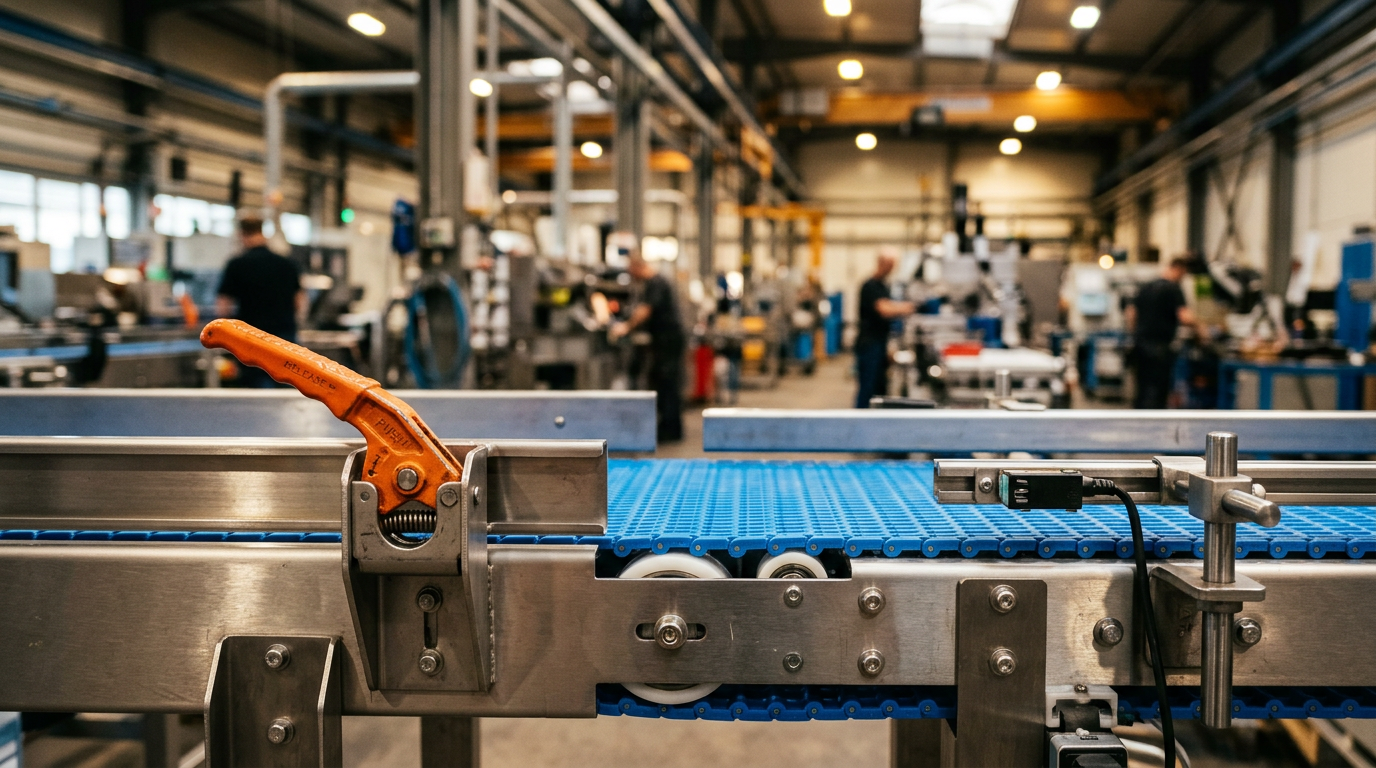
Side guides are no longer just static rails. In modular bottling systems, "Easy-Adjust" rails allow operators to change the width of the entire conveyor line in minutes using handwheels or pneumatic actuators. This is vital for maintaining a centered flow into the filling valves, which is critical for hygienic wash-down design and preventing spillages.
2. Drip Trays and Fluid Management
Filling is inherently messy. Modular systems for this sector must include integrated drip trays with drainage ports (typically 1-inch or 2-inch BSP fittings). In carbonated beverage lines, the buildup of sticky fluids can increase chain drag and motor load. Ensuring that the conveyor frame has "open" geometry allows for easy cleaning without resid
Easy Conveyors stocks the modular systems discussed here — ready to ship across Europe.
ue traps.
3. Transition Plates and Dead Plates
The point where a bottle moves from a conveyor to a rotary filler is a high-risk zone. Dead plates (small bridge plates) must be kept as short as possible. High-performance systems often use "rolling transfers"—small diameter roller bridges that prevent bottles from stalling between driven sections.
Overcoming Common Challenges: Accumulation and Speed Syncing
Filling lines rarely run at a constant speed. The filler is usually the "master" machine, while the labeler or packer might lag behind. This necessitates accumulation zones.
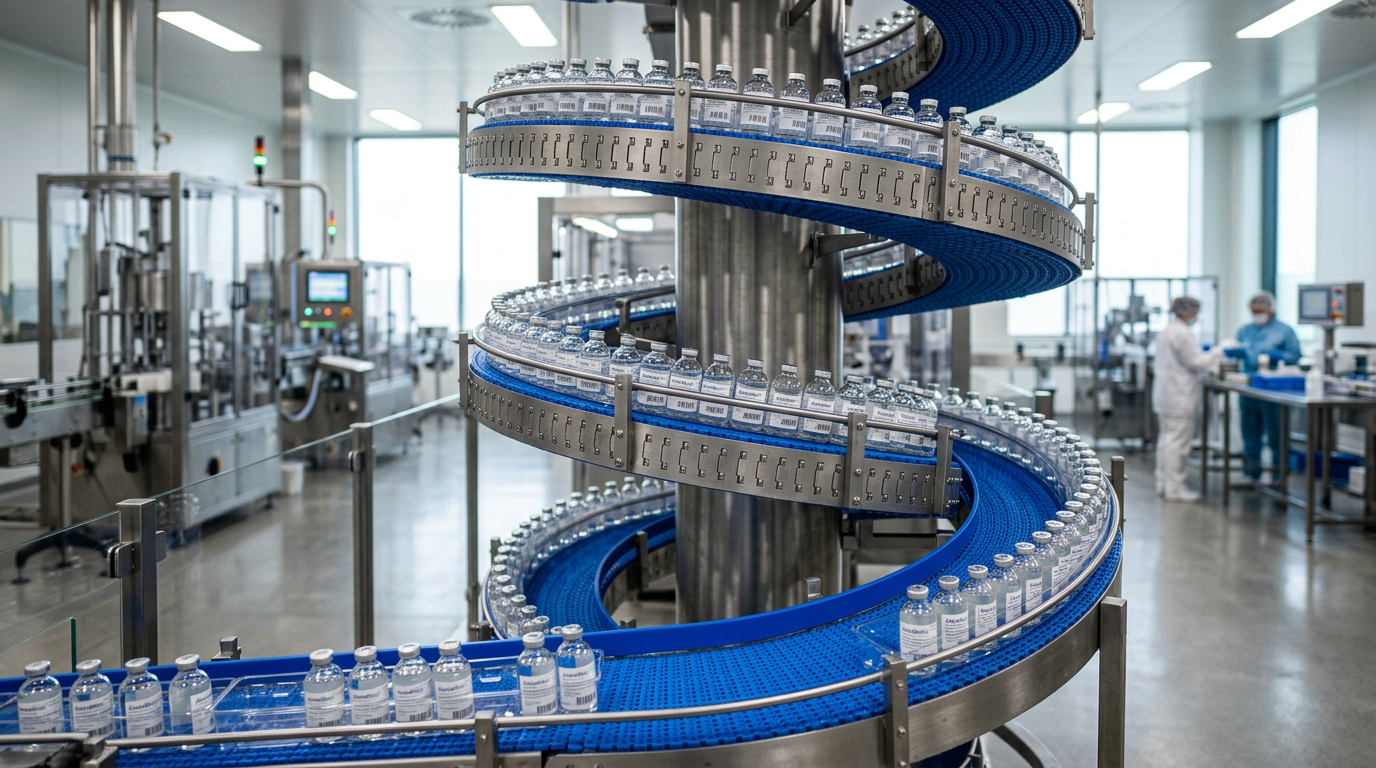
- Pressure-less Accumulation: Using a multi-strand modular conveyor, bottles can be diverted into a "buffer" area. By using low-back-pressure (LBP) chains—which feature small rollers embedded in the surface—bottles can accumulate without the chain scratching the bottom or creating excessive "shunting" forces that could break glass.
- VFD Soft-Start Tuning: To prevent bottles from falling over during start/stop cycles, the VFD soft-start tuning must be precise. Ramp times of 1.5 to 3.0 seconds are standard to ensure smooth acceleration.
Integration with Automation: Sensors and Control
Modular bottle conveyors for filling lines rely heavily on sensor arrays to manage "back-log."
- Full-Line Sensors: Ultrasonic or laser sensors detect if the conveyor is full, signaling the filler to slow down.
- Gap Control: Some modular systems include "timing screws" or specific high-friction modules to create precise gaps between bottles before they enter a labeler or inspection station.
When considering drum motor selection for these lines, engineers often choose stainless steel units with high IP ratings (IP66 or IP69K). Unlike traditional gearmotors, drum motors are internally cooled and have no external fans, preventing the spread of airborne contaminants in a clean filling environment.
Design Standards and Hygiene
In the European and North American markets, modular bottle conveyors are governed by strict standards.
- EHEDG/FDA Compliance: Plastic chains must be FDA-approved for food contact.
- ISO 21102: Specifies the design and calculation for light conveyor belts.
- Noise Regulations: Modern modular systems aim for noise levels below 80 dB to comply with workplace safety regulations, often achieved by using plastic-on-plastic wear strips (UHMW-PE) rather than metal guides.
Future Resilience: The Move Toward "Green" Bottling
Energy efficiency is the next frontier. By utilizing IE3 or IE4 efficiency class motors and low-friction wear strips, manufacturers can reduce the energy consumption of a 100-meter conveyor line by up to 15%. Modular systems facilitate this by allowing for the retrofitting of high-efficiency drive components without replacing the entire structural frame. Admission of digital twins in the design phase also allows engineers to simulate bottle flow and identify "dead zones" before a single piece of aluminum is cut.
By focusing on modularity, manufacturers gain the flexibility to adapt to changing consumer trends—such as the shift from plastic to glass or the rise of aluminum cans—while ensuring that the core filling process remains sterile, stable, and highly productive.
Frequently Asked Questions
What is the best chain material for bottle conveyors?
Low-friction POM (Acetal) is preferred for its stability and low noise, while Stainless Steel is used for heavy-duty glass or high-temperature washdown environments.
How does accumulation work in bottling lines?
Pressure-less accumulation uses chains with integrated rollers (LBP) to allow bottles to group together without friction-based damage or bottle toppling.
Can modular conveyors handle different bottle sizes?
By using adjustable side guides and modular rail systems, operators can change the line width for different bottle diameters in under 10 minutes.
What is the max throughput for modular bottle conveyors?
Standard modular bottle conveyors can handle between 30,000 and 60,000 bottles per hour, depending on bottle material and stability.