Optimizing Filling Lines with Modular Bottle Handling Conveyors
Learn how modular bottle handling conveyors optimize filling lines using POM chains, ergonomic transfers, and hygienic designs to maximize throughput and stability.
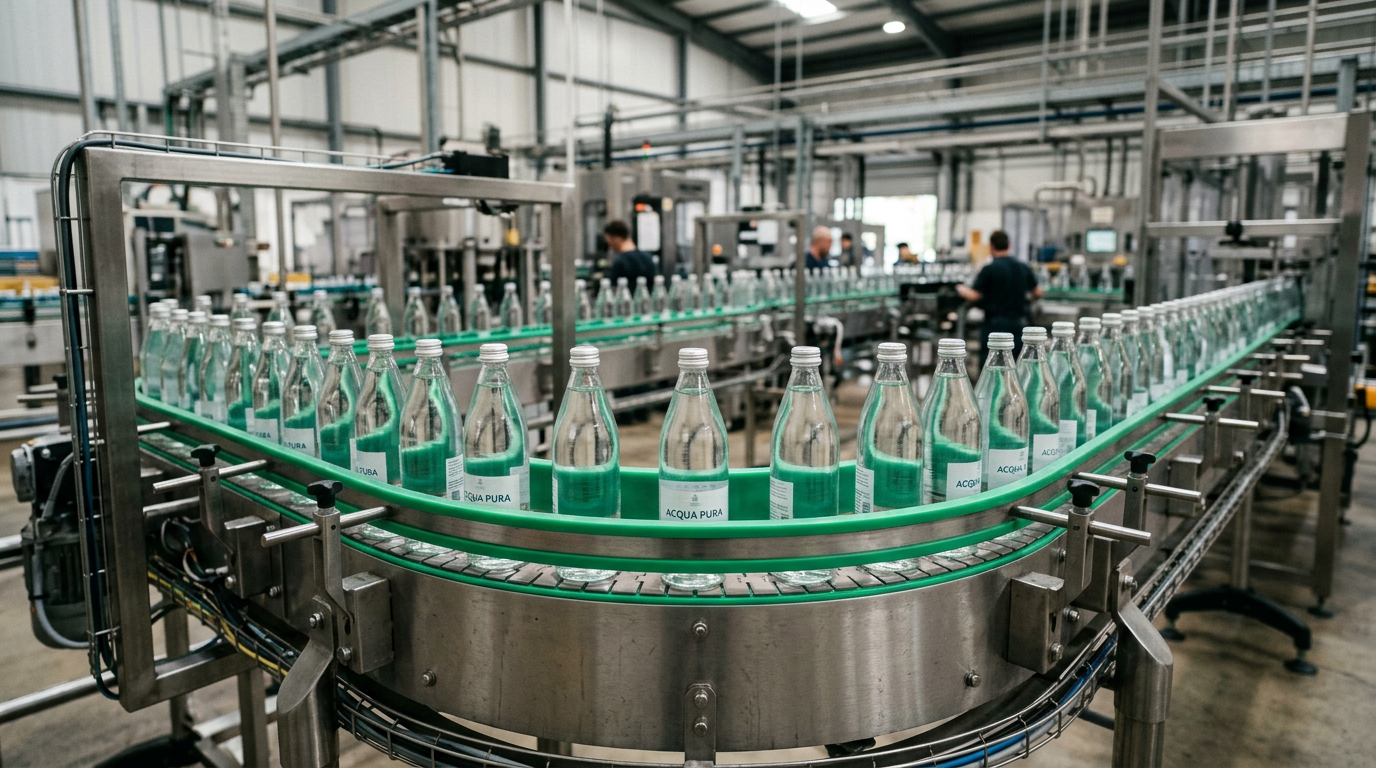
Modular bottle handling conveyors for filling lines utilize standardized chain widths of 82.5mm or 114.3mm to transport glass and plastic containers with a stability-to-speed ratio that minimizes product loss. Modern modular systems designed for high-speed filling lines prioritize low-friction acetal (POM) chains and adjustable lateral guides to accommodate container diameters ranging from 15mm to 120mm while maintaining line speeds of up to 60,000 bottles per hour.
The Architecture of Modular Bottle Handling
In the context of modern beverage, pharmaceutical, and personal care production, the conveyors are the "circulatory system" of the filling line. Unlike traditional custom-fabricated frames, modular systems utilize standardized aluminum or stainless steel profiles. This modularity allows for rapid reconfiguration—a critical requirement in a market where SKU proliferation leads to frequent changeovers.
High-performance filling lines rely on a series of specialized modules:
- Infeed Modules: Often using magnetic curves to maintain product pitch.
- Straight Sections: Built for high-speed stability and low vibration.
- Accumulation Tables: Utilizing bi-directional modular belts to buffer flow between the filler and the labeler.
- Transfer Modules: Bridging the gap between the conveyor and machine infeed stars with minimal "dead-plate" gaps.
Material Selection: POM vs. Stainless Steel vs. PE
The choice of chain material directly impacts the Total Cost of Ownership (TCO) and the noise levels within the facility. For most bottle handling applications, low-friction Acetal (POM) is the industry standard due to its dimensional stability and resistance to cleaning agents.
| Feature | POM (Acetal) Chain | Stainless Steel Chain | PE (Polyethylene) |
|---|---|---|---|
| Friction Coeff. | 0.15 - 0.20 | 0.30 - 0.45 | 0.25 - 0.35 |
| Max Load | Medium | Very High | Low |
| Noise Level | Low (<75 dB) | High (>85 dB) | Very Low |
| Washdown Suitability | Excellent (pH 4-9) | Superior (pH 1-14) | Good |
| Primary Use Case | PET/Glass Filling | Heavy Glass/Abrasive | Lightweight Pharma |
When designing or upgrading a system, working with a specialist like Easy Conveyors ensures that the specific friction requirements of your container (whether it’s a lightweight PET bottle or a heavy glass wine bottle) are matched with the correct drive technology.
Solving the Tip-Over Quality Issue
The primary failure mode in bottle handling is the "tip-over." This usually occurs at transfer points or during rapid acceleration/deceleration. To mitigate this, modular systems employ several design strategies:
- Small Pitch Chains: Using 1-inch or smaller pitch chains reduces the "chordal effect" at the drive sprockets, leading to smoother product flow.
- Side-Flexing Curves: Modular side-flexing chains allow for continuous runs through curves, eliminating the need for intermediate transfers where bottles are most vulnerable.
- Active Side Transfers: Utilizing "raised rib" modular belts and finger-comb transfer plates ensures that even unstable, small-diameter bottles transition from one conveyor to another without snagging.
In pharmaceutical environments, where precision is paramount, engineers often integrate vfd soft-start tuning to prevent the jerky movements that cause glass-on-glass impacts. This not only reduces breakage but also lowers the noise floor of the production hall.
Easy Conveyors stocks the modular systems discussed here — ready to ship across Europe.
Integration with Filling and Capping Equipment
A modular conveyor is only as good as its integration. Filling lines require precise synchronization between the conveyor speed and the filler’s timing screw.
Accumulation and Buffering
Filling machines are sensitive. A minor jam at the packer should not stop the filler. Modular accumulation systems, such as "Alpine" conveyors or "Spiral" elevators, provide the necessary dwell time. For high-speed lines, "FIFO" (First-In, First-Out) accumulation tables are preferred to maintain product traceability and prevent bottle scuffing.
Proper Hygienic Design
For food and beverage applications, the conveyor must meet EHEDG or FDA guidelines. This involves using open-frame designs that eliminate "catch pits" where spilled liquids (like sugary soda or milk) can ferment. Modules should be specified with high IP-rated motors—typically IP66 or IP69K for wash-down environments—to withstand high-pressure cleaning cycles.
Energy Efficiency and Motor Selection
Modern filling lines are moving away from traditional AC motors toward IE3 and IE4 efficiency class drives. In many modular bottle handling setups, the transition to drum motor selection or direct-drive PM (Permanent Magnet) motors is gaining traction. These systems eliminate external gearboxes and drive chains, reducing maintenance requirements and improving the overall sanitary profile of the line.
Furthermore, implementing "Green Logic" in the PLC code—where conveyor sections automatically sleep when no product is detected by photocells—can reduce energy consumption by up to 30% on multi-shift operations.
Maintenance and Long-term Reliability
The longevity of a modular conveyor depends on chain tension and wear strip health. Most modular systems utilize UHMW-PE (Ultra-High Molecular Weight Polyethylene) wear strips. If these are allowed to wear down to the frame, the friction increases exponentially, leading to motor burnout and chain elongation. Regular inspection of the "catenary sag"—the unsupported section of the chain used to take up slack—is a fundamental part of the maintenance routine.
By checking for pin protrusion and sprocket alignment every 2,000 operating hours, plant managers can extend the life of their modular chains from 2 years to over 5 years, even in high-demand filling environments. When selecting components, prioritize hygienic wash-down design features to ensure that cleaning does not inadvertently damage the structural integrity of the modular plastic components.
Frequently Asked Questions
Why is POM (Acetal) the preferred chain material for bottle filling lines?
Acetal (POM) is preferred for bottle handling because it offers a low coefficient of friction, high tensile strength, and excellent chemical resistance to common line lubricants and cleaning agents.
How do modular conveyors prevent bottles from tipping over at high speeds?
Infilling lines, bottle stability is maintained by using side-flexing chains to eliminate transfers, installing adjustable low-friction guide rails, and utilizing VFDs for smooth acceleration.
Can modular conveyors handle non-cylindrical or unstable bottle shapes?
Yes, modular systems can be configured with 'neck-handling' guides or specialized wide chains (up to 600mm) to accommodate various container shapes from round to oval and rectangular.
What is the best frame material for a hygienic filling line?
For filling lines, stainless steel frames with an open design are recommended to allow for easy cleaning and to meet FDA/EHEDG standards for food and beverage safety.
What are the typical speed limits for modular bottle conveyors?
Modern modular bottle conveyors can reach speeds of 60 to 90 meters per minute, though actual line speed is often governed by the stability of the container and the pitch of the filling machine.
Sources & references
- [1]ISO 4347:2015 - Leaf chains, clevises and sheaves -- Dimensions, measuring forces and tensile strengths
- [2]EHEDG Guideline No. 43: Hygienic Design Principles for Belt Conveyors for the Food Industry
- [3]Conveyor Systems: Bottle and Can Handling Solutions
- [4]Intralox FoodSafe Modular Plastic Belts for Beverage and Bottling
- [5]Conveyor System - Wikipedia