Modular Bottle Handling Conveyors for Filling Lines: High-Speed Precision Guide
Optimize your filling line with high-speed modular bottle handling conveyors. Learn about stability ratios, low-friction chains, and pressureless combiners for peak efficiency.
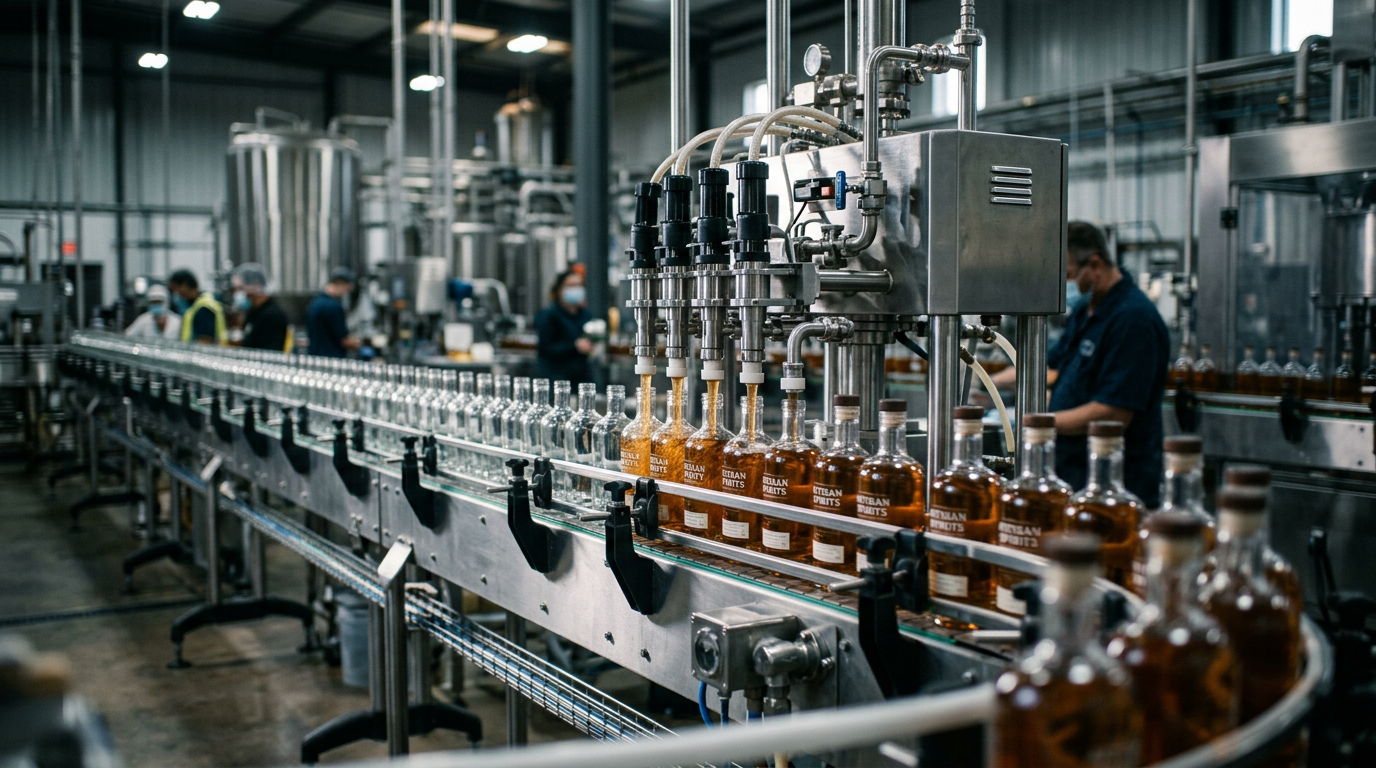
To optimize filling line efficiency, modular bottle handling conveyors must maintain a stability ratio where the base diameter of the container is at least 30% of its total height, while utilizing low-friction acetal chains to minimize back-pressure and prevent tip-overs. These systems are engineered to handle high-speed throughput—often exceeding 60,000 units per hour (uph)—by integrating specialized side-guide geometries and variable frequency drives (VFDs) that eliminate the mechanical shocks common in traditional fixed-speed lines.
The Architecture of High-Speed Bottle Handling
The modern filling line is a complex ecosystem where the conveyor acts as the cardiovascular system. Unlike general material handling, bottle transport requires extreme precision in speed control and transition management. Whether glass, PET, or HDPE, the modular nature of these systems allows for rapid reconfiguration as packaging designs evolve.
Modular bottle handling systems are typically built on aluminum or stainless steel profiles, utilizing slat-top chains (often 82.5mm or 114.3mm wide). These systems are preferred because they enable small-radius curves and tight transfers. For unstable containers, such as light-weighted PET bottles, vacuum-assisted modular belts are often employed in the transition zones to ensure the center of gravity remains centered over the carry-way.
Material Selection: POM vs. Stainless Steel
The selection of chain material is critical for line longevity and product integrity. Acetal (POM) is the industry standard due to its low coefficient of friction (typically 0.15 to 0.20 against steel). However, in specific applications like glass bottling or high-temperature filling, stainless steel slats are required to resist abrasive wear and thermal expansion.
| Feature | Acetal (POM) | Stainless Steel (AISI 430/304) |
|---|---|---|
| Max Speed | Up to 90 m/min | Up to 60 m/min |
| Noise Level | Low (<75 dB) | High (>85 dB) |
| Chemical Resistance | High (pH 4-9) | Excellent (Full CIP) |
| Friction Coeff. | 0.15 - 0.22 | 0.30 - 0.50 |
| Typical Application | PET, HDPE, Polypropylene | Glass, Aerosol, Heavy Cans |
Key Components for Filling Line Stability
Filling lines are only as efficient as their most unstable bottle transport section. To prevent "downed" bottles, which lead to costly downtime in the filler or labeler, several modular components are essential:
- Adjustable Side Guides: Modern systems use tool-less, "quick-change" side guides with digital indicators. This allows operators to switch between 330ml cans and 1.5L bottles in minutes rather than hours.
- Transfer Plates: Small-diameter nose bars and dead plates are used to bridge the gap between conveyor sections. For maximum stability, powered transfers or "side-to-side" transfers are preferred over "end-to-end" configurations.
- Accumulation Tables: To decouple the filler from the downstream packager, modular accumulation systems (such as FIFO tables) buffer the product flow, allowing the filler to continue running during minor downstream stops.
When designing these complex layouts, partnering with a specialist like Easy Conveyors ensures that the modular components are pre-engineered to integrate seamlessly with standard filling automation protocols.
Optimizing Transitions and "Dead Zones"
A common failure point in filling lines is the transition between the modular conveyor and a secondary machine, such as a capper or a checkweigher. To eliminate these "dead zones," engineers often employ active transfers.
Active transfers involve a small motorized belt or a series of rollers that drive the bottle through the gap between two conveyor modules. Without this, bottles rely on the pressure of the bottles behind them (back-pressure) to move forward. High back-pressure is the primary cause of scuffing on premium labels and can even crush lightweight primary packaging.
Implementing Pressureless Combiners
In high-speed operations, bottles often arrive on a mass-flow conveyor but must be channeled into a single file for the filler. A modular pressureless combiner uses a series of parallel chains running at progressively faster speeds. This delta in velocity gently pulls the bottles forward into a single lane without the crushing force of a standard diverging guide. This is a critical element of hygienic wash-down design in dairy and juice applications, where product spillage must be channeled away from the drive motors.
Easy Conveyors stocks the modular systems discussed here — ready to ship across Europe.
Automation and Control: VFDs and Sensors
The integration of Variable Frequency Drives (VFDs) is mandatory for filling line conveyors. Soft-start and soft-stop functionality prevents the "domino effect" of bottles tipping over during a line halt. Furthermore, "VFD soft-start tuning" is essential to synchronize the speed of the conveyor with the infeed screw of the filling machine.
Standard sensors used in modular bottle handling include:
- Back-log sensors: Photoelectric eyes that detect when a downstream machine is full, signaling the upstream conveyor to slow down or enter accumulation mode.
- Downed-bottle sensors: Specialized ultrasonic or laser sensors that detect bottles that have tipped over, triggering an air-rejection arm to remove the item before it reaches the star-wheel of the filler.
- Speed encoders: Provide real-time feedback to the PLC to maintain a constant gap between containers, which is vital for high-speed labeling accuracy.
Maintenance and Hygiene Standards
In the food and beverage sector, adherence to ISO 14159 and EHEDG guidelines is non-negotiable. Modular conveyors for filling lines are designed with "open-frame" architecture to allow for easy cleaning.
Lubrication Requirements
While many modern acetal chains are "dry-running," high-speed glass lines still frequently use "wet" lubrication (soap and water or synthetic lubes). The lubricant reduces the friction between the chain and the wear strips, extending the life of the drum motor selection and reducing the energy consumption of the entire line. However, the transition toward "Dry-PTFE" infused chains is gaining momentum as manufacturers seek to reduce water usage and improve floor safety in the plant.
Wear Strip Management
The wear strips (usually UHMW-PE) located under the modular chain are sacrificial components. In a typical 24/7 filling operation, these should be inspected every six months. If the wear strips are worn down by more than 2mm, the chain may begin to vibrate, which increases the risk of bottle instability. Replacement of these strips is a standard part of modular conveyor maintenance and should be factored into the total cost of ownership.
Future Trends: Smart Slat Chains
The next generation of bottle handling involves the integration of IoT sensors directly into the conveyor chain or the drive units. Predictive maintenance algorithms can now monitor the "amperage draw" of the conveyor motor. A gradual increase in amperage over several weeks often indicates that a modular chain is stretching or that a bearing is beginning to fail, allowing for "planned intervention" rather than "emergency repair."
Additionally, the rise of e-commerce has led to more frequent pack-size changes. Modular systems that incorporate "plug-and-play" digital actuators for rail adjustment are becoming the standard for facilities that run more than five different SKUs per day.
Frequently Asked Questions
What is the best chain material for bottle conveyors?
For PET bottles, use low-friction acetal chains. For glass or heavy metal containers, stainless steel slat-top chains are preferred due to their durability and abrasion resistance.
How does a pressureless combiner work?
A pressureless combiner uses multiple parallel chain lanes running at increasing speeds to transition mass-flow products into a single lane without mechanical squeezing.
How do I prevent bottles from tipping on a conveyor?
The base diameter should be at least 30-35% of the total height. For bottles with a higher center of gravity, use side guides that contact the container at two points: the base and the shoulder.
What are the benefits of modular conveyors for SKU variety?
Modular systems use tool-less side guides and digital position indicators, allowing for 5-10 minute changeovers compared to hours with traditional bolted systems.
How often should I replace conveyor wear strips?
UHMW-PE wear strips should be inspected every 6 months and replaced if wear exceeds 2mm to prevent chain vibration and instability.