Line Balancing and OEE Improvement in Conveyor-Based Material Flow
Optimize OEE by mastering line balancing in conveyor systems. Learn how accumulation, VFD synchronization, and bottleneck management eliminate starvation and blockage.
Effective line balancing in conveyor-based material flow can improve Overall Equipment Effectiveness (OEE) by up to 20% by eliminating starvation and blockage, which are responsible for the majority of "Availability" losses in automated assembly. Achieving a balanced flow requires synchronizing the throughput rate of individual conveyor segments with the cycle time of the slowest workstation (the bottleneck), typically maintaining a buffer capacity of 1.5 to 2.0 times the variation in cycle time to ensure continuous operation.
The Relationship Between Line Balancing and OEE
Overall Equipment Effectiveness (OEE) is the gold standard for measuring manufacturing productivity, calculated as the product of Availability, Performance, and Quality. In a conveyor-driven environment, these three metrics are inextricably linked to how well the material flow is balanced.
When a line is unbalanced, the system suffers from two primary mechanical states:
- Starvation: Downstream modules have idle capacity because the upstream conveyor or process is too slow.
- Blockage (Backpressure): Upstream modules must stop because the downstream buffer is full or the subsequent process is slower than the inflow.
According to industry standards for automated systems, such as those defined by VDMA, optimizing the flow transition points is the most cost-effective way to recover lost "Performance" percentages. By focusing on the conveyor's role as the "circulatory system" of the factory, engineers can move beyond individual machine optimization toward systemic throughput maximization.
Identifying the Bottleneck in Conveyor Systems
The first step in line balancing is identifying the constraint. In a modular conveyor setup, the bottleneck is rarely the conveyor itself but rather the interface between the conveyor and the process tool (e.g., a filling machine, a robotic palletizer, or a CNC station).
Calculating Takt Time and Cycle Time
To balance the line, you must align the Takt Time (the rate at which a finished product must be completed to meet customer demand) with the Cycle Time of each module. If the Takt Time is 10 seconds, every segment of the conveyor system must be capable of delivering a unit every 10 seconds, including the time required for acceleration, deceleration, and stabilization.
| Metric | Definition | Impact on OEE |
|---|---|---|
| Takt Time | Available Production Time / Customer Demand | Sets the target for "Performance" |
| Cycle Time | Actual time to complete one operation | Determines the physical bottleneck |
| Buffer Capacity | Units held between workstations | Mitigates "Availability" losses during micro-stops |
| Transfer Speed | Linear velocity of the conveyor (m/s) | Influences "Performance" and product stability |
Strategies for Improving Flow and OEE
1. Dynamic Buffering and Accumulation
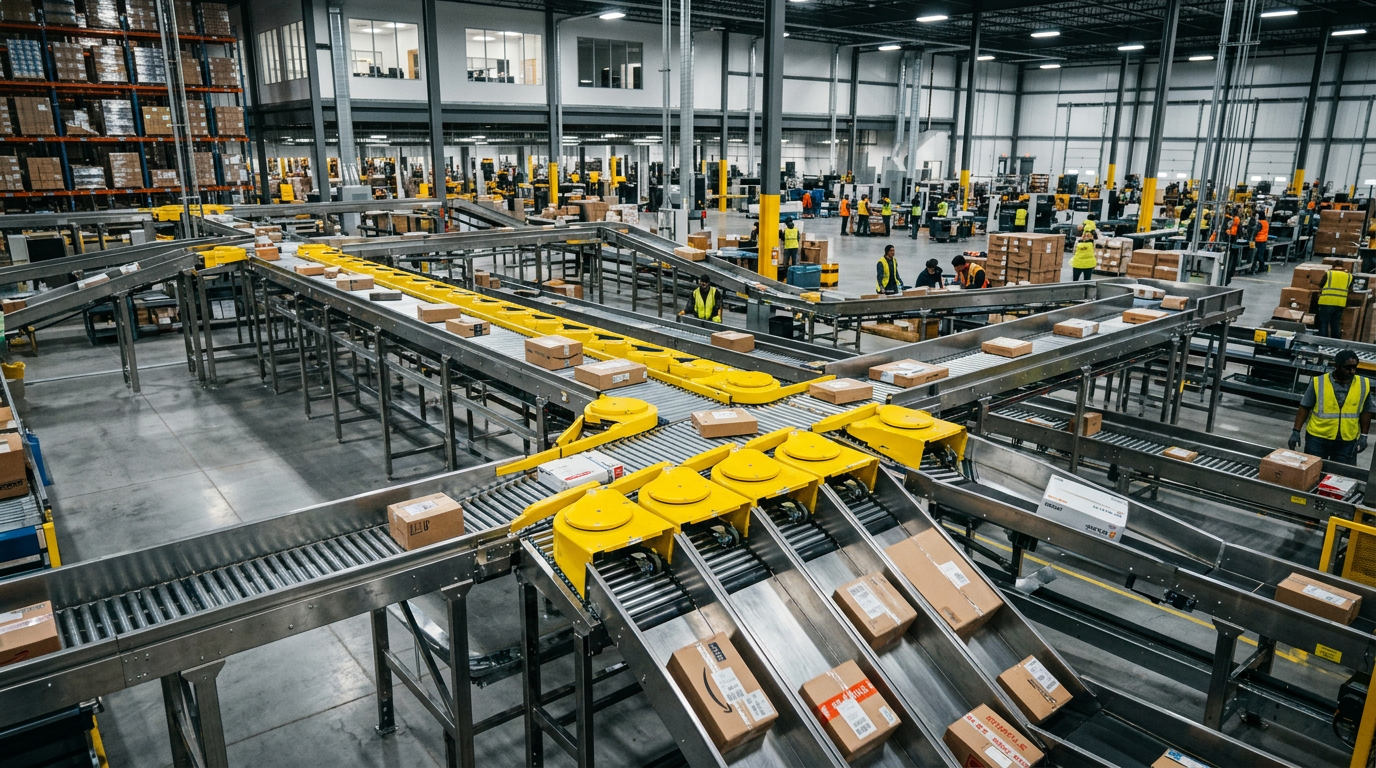
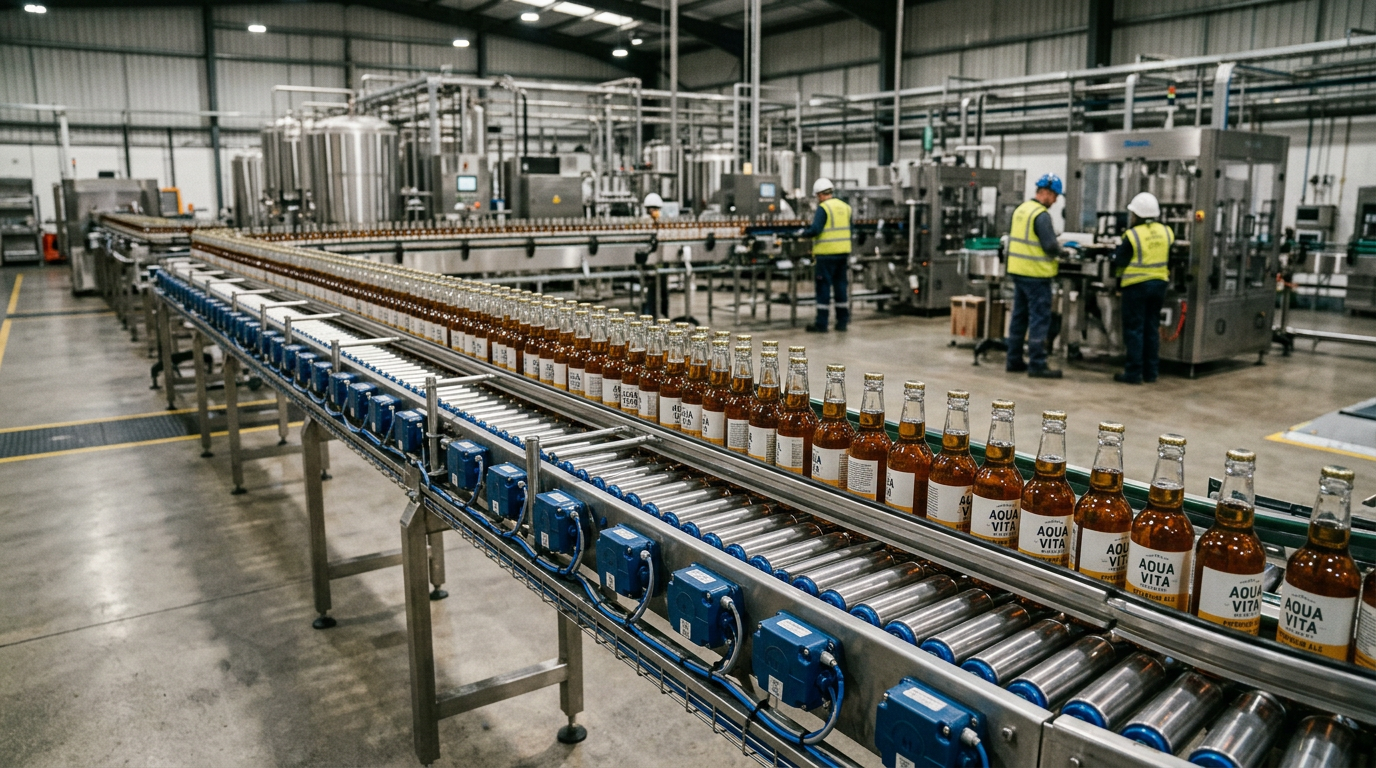
In many high-speed packaging lines, a micro-stop on a downstream labeler shouldn't force the upstream filler to stop. This is where accumulation conveyors become critical. By utilizing low-back-pressure (LBP) chains or zero-pressure accumulation (ZPA) modules, plants can decouple processes.
Easy Conveyors specializes in modular systems that allow for easy integration of these buffer zones, providing the mechanical flexibility needed to adjust line lengths as production requirements evolve.
2. Variable Frequency Drive (VFD) Synchronization
A common mistake in material handling is running all conveyors at a single constant speed. To balance a line, conveyors should be programmed with "speed cascading." Upstream conveyors should generally run slightly slower than downstream conveyors to create gaps, or slightly faster if the goal is to create a "slug" of product for a high-capacity machine.
Implementing VFD soft-start tuning reduces mechanical wear and prevents product toppling, which directly improves the "Quality" component of OEE by reducing scrap and rework.
3. Modular Layout Reconfiguration
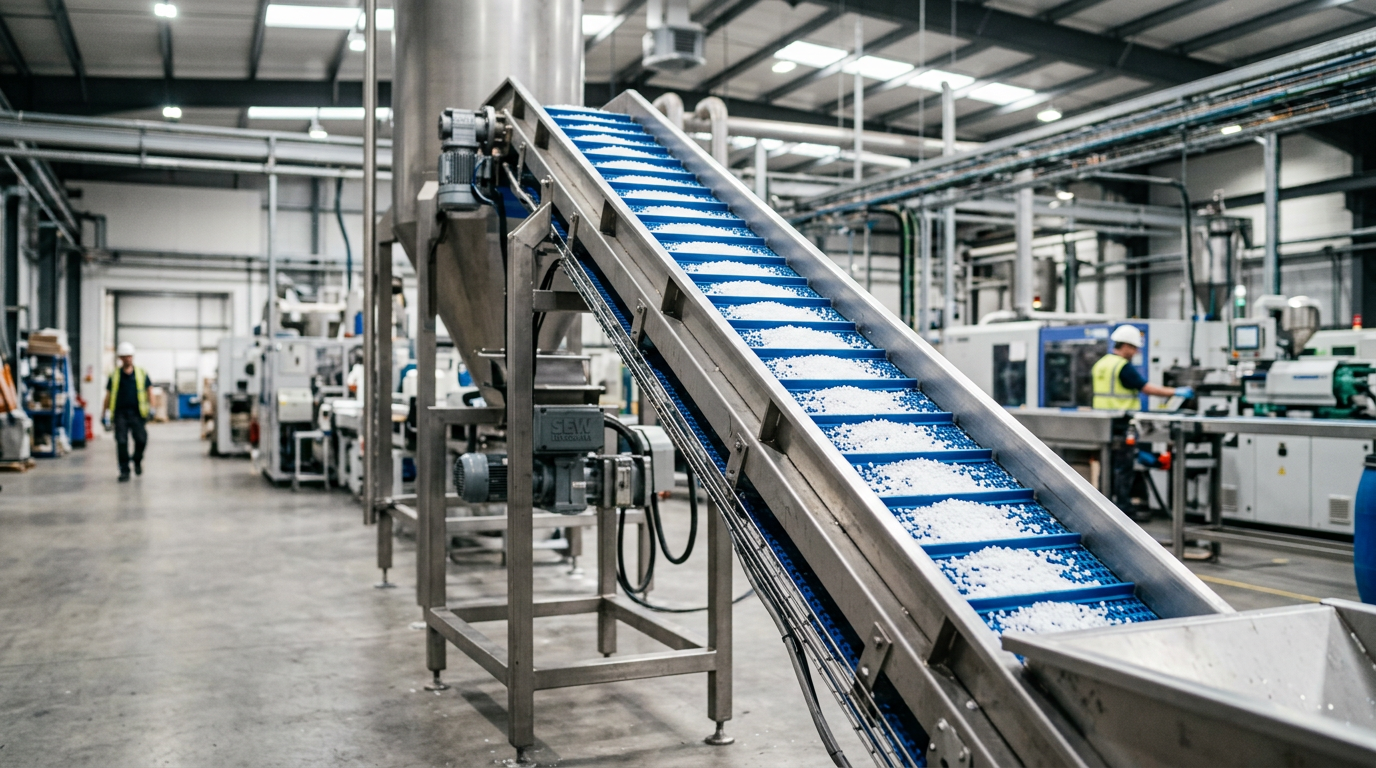
Standardization is key to balancing. Using modular aluminum or stainless steel profiles allows engineers to lengthen or shorten buffer sections without extensive welding or downtime. This "Lego-like" approach is essential for modern "High-Mix, Low-Volume" production environments where the bottleneck may shift depending on the product being run.
Easy Conveyors stocks the material handling discussed here — ready to ship across Europe.
Technical Standards for Efficient Flow
To ensure high OEE, the components must meet specific efficiency and reliability standards. For example, using motors that meet the IE3 Premium Efficiency class (IEC 60034-30-1) ensures that the system can handle continuous start-stop cycles without overheating, which preserves "Availability."
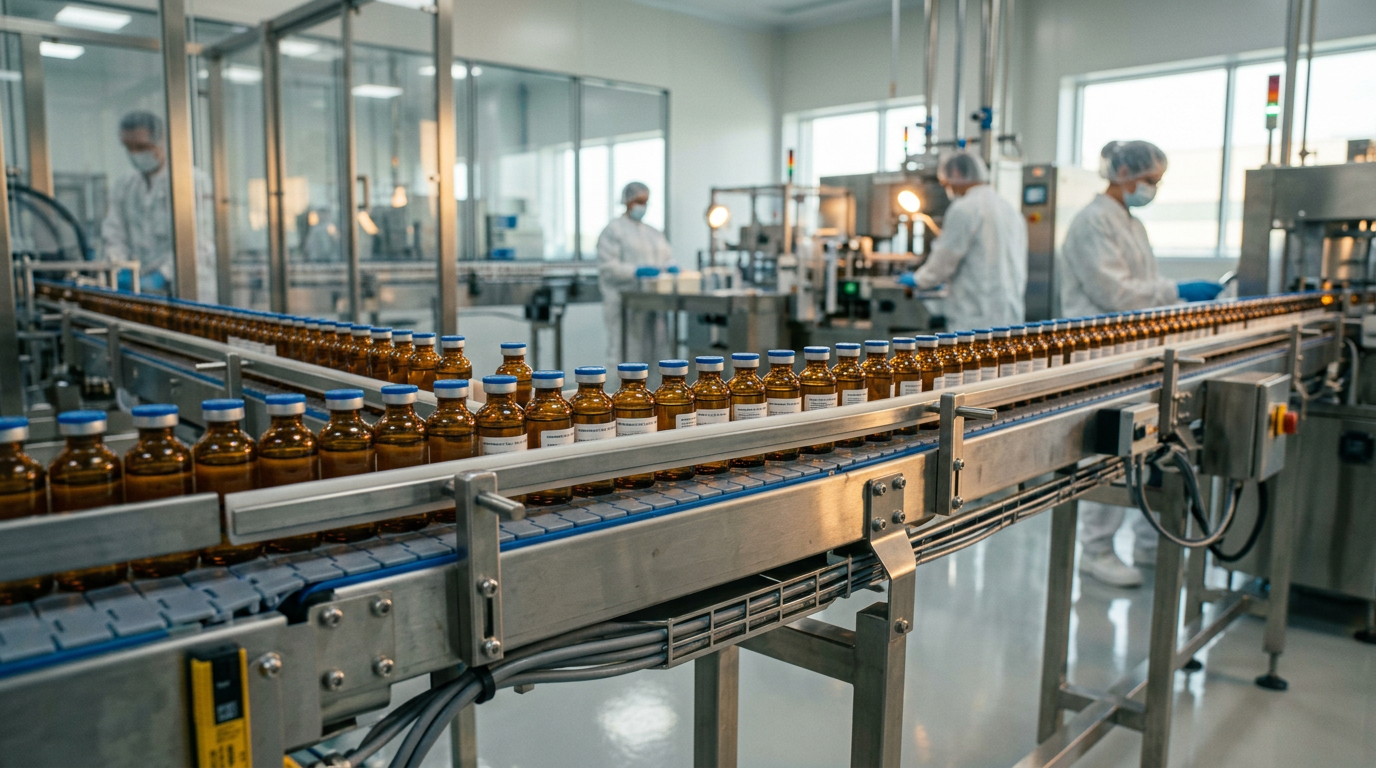
In hygienic environments, such as food and pharma, line balancing must also account for cleaning cycles. If a conveyor design doesn't meet EHEDG guidelines, the time lost to sanitation (a "Downage" loss) will severely handicap the OEE, regardless of how well the line is balanced during operation.
Common Failure Modes in Line Balancing
- Excessive Chain Tension: Often a result of trying to "over-speed" a line to compensate for poor balancing, leading to premature motor failure.
- Sensor Misalignment: If the photo-eyes responsible for ZPA logic are misaligned, the system may create artificial blockages, lowering "Performance."
- Inadequate Pitch Calculation: In modular belt selection, failing to account for the chordal action of the belt can lead to vibration, causing product orientation issues and "Quality" losses.
Using Simulation for OEE Prediction
Before physically moving conveyors, modern plants use "Digital Twin" simulations. By inputting the Mean Time Between Failures (MTBF) and Mean Time To Repair (MTTR) for each machine, software can predict where a conveyor line will bottle up. This allows for the precise sizing of accumulation zones—ensuring they are long enough to absorb common micro-stops but not so long that they waste floor space and increase "Work in Progress" (WIP) levels.
By integrating smart sensors and IO-Link communication, conveyors can provide real-time data back to SCADA systems, allowing for predictive line balancing where conveyor speeds adjust autonomously based on the current OEE of the bottleneck machine. High-speed sortation and diverting modules can then be used to reroute flow to secondary packaging lines if a primary line goes down, maintaining system-wide Availability.
Conclusion
Line balancing is not a "set and forget" task. It is a continuous optimization process that sits at the intersection of mechanical design and digital control. By utilizing modular conveyor components, adhering to international motor efficiency standards, and implementing smart accumulation strategies, manufacturers can transform their conveyor systems from simple transport mechanisms into powerful drivers of OEE improvement. Utilizing the right engineering partner and modular hardware ensures that as your production needs change, your material flow remains perfectly balanced.
Frequently Asked Questions
How do I identify a bottleneck in a conveyor line?
A bottleneck is the station with the longest cycle time. In a conveyor line, you identify it by looking for the point where products consistently back up (upstream) while the downstream conveyor is empty (starvation).
What is the ideal length for an accumulation conveyor?
Ideally, an accumulation buffer should hold enough product to cover the Mean Time To Repair (MTTR) of the most frequent micro-stops, typically 2–5 minutes of production at Takt time.
How does Zero Pressure Accumulation (ZPA) improve OEE?
ZPA is a control logic where conveyor zones only run if the next zone is clear. This prevents products from touching and eliminates backpressure, which reduces product damage and motor wear.
Can poor line balancing damage my conveyor hardware?
Unbalanced lines cause frequent starts and stops. This leads to higher mechanical fatigue on chains, higher energy consumption during peak torque at startup, and potential motor overheating.
What is the difference between line balancing and OEE?
OEE measures the efficiency of a single machine or line. Line balancing is the process of aligning all units so the line achieves the highest possible OEE by minimizing idle time and speed losses.