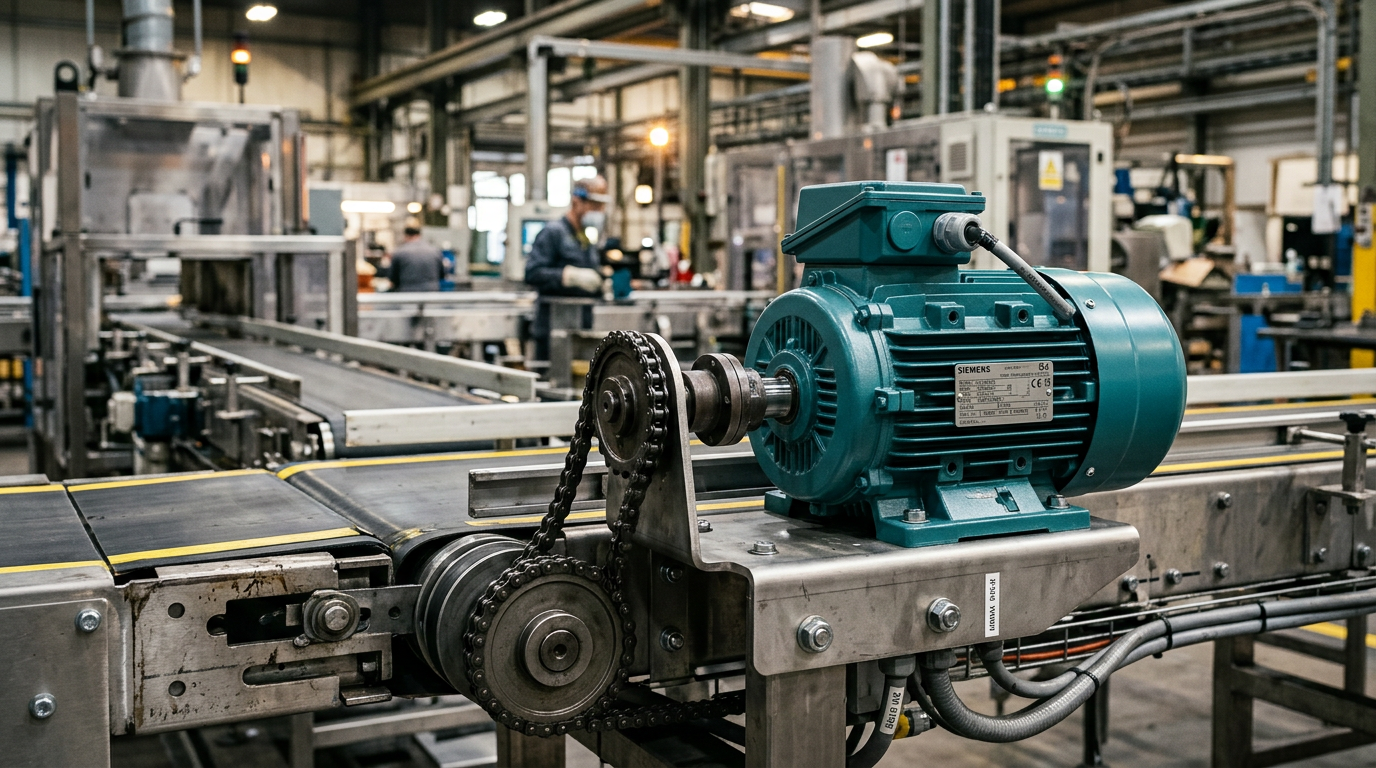
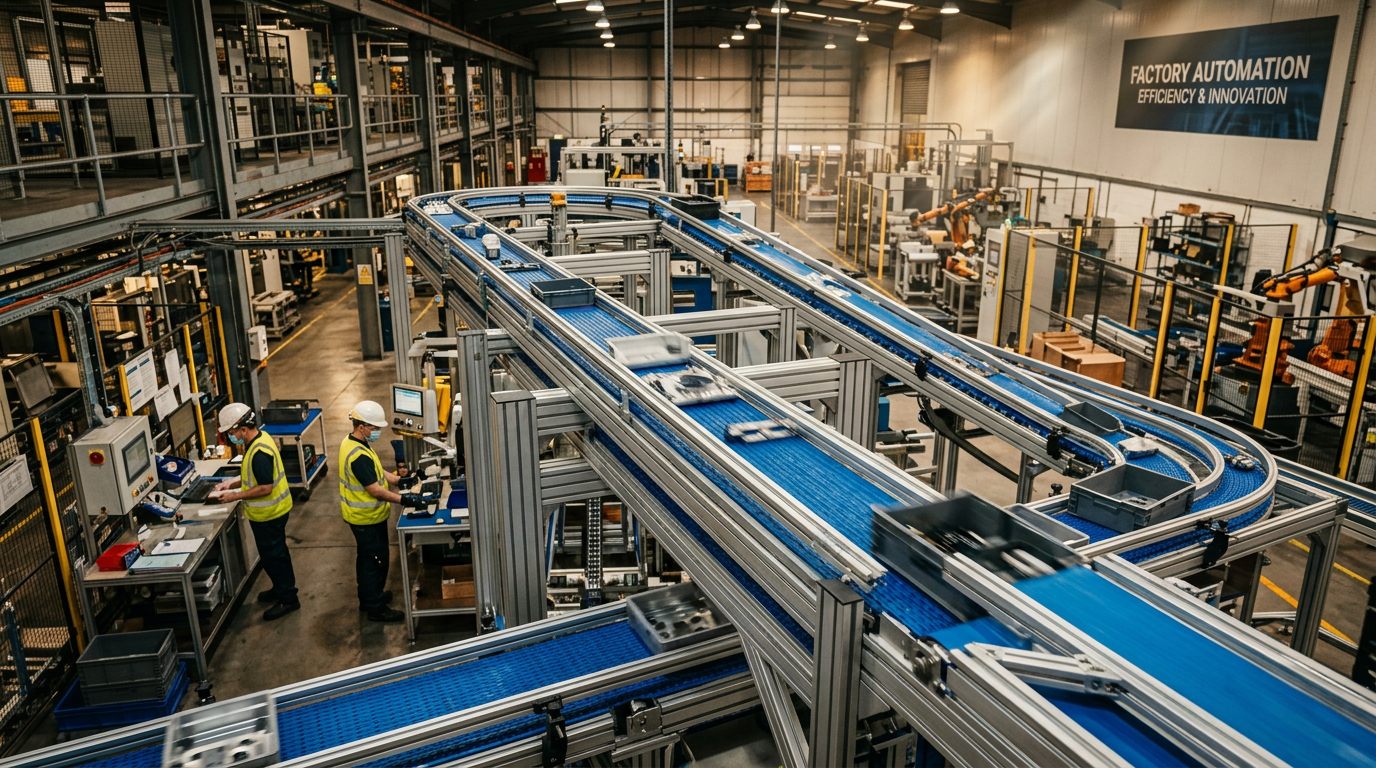
Maximizing Energy Efficiency: A Guide to IE3 and IE4 Motors on Conveyor Drives
Upgrade conveyor efficiency with IE3 and IE4 motors. Learn how Super Premium efficiency reduces TCO, heat generation, and carbon footprint in industrial drives.
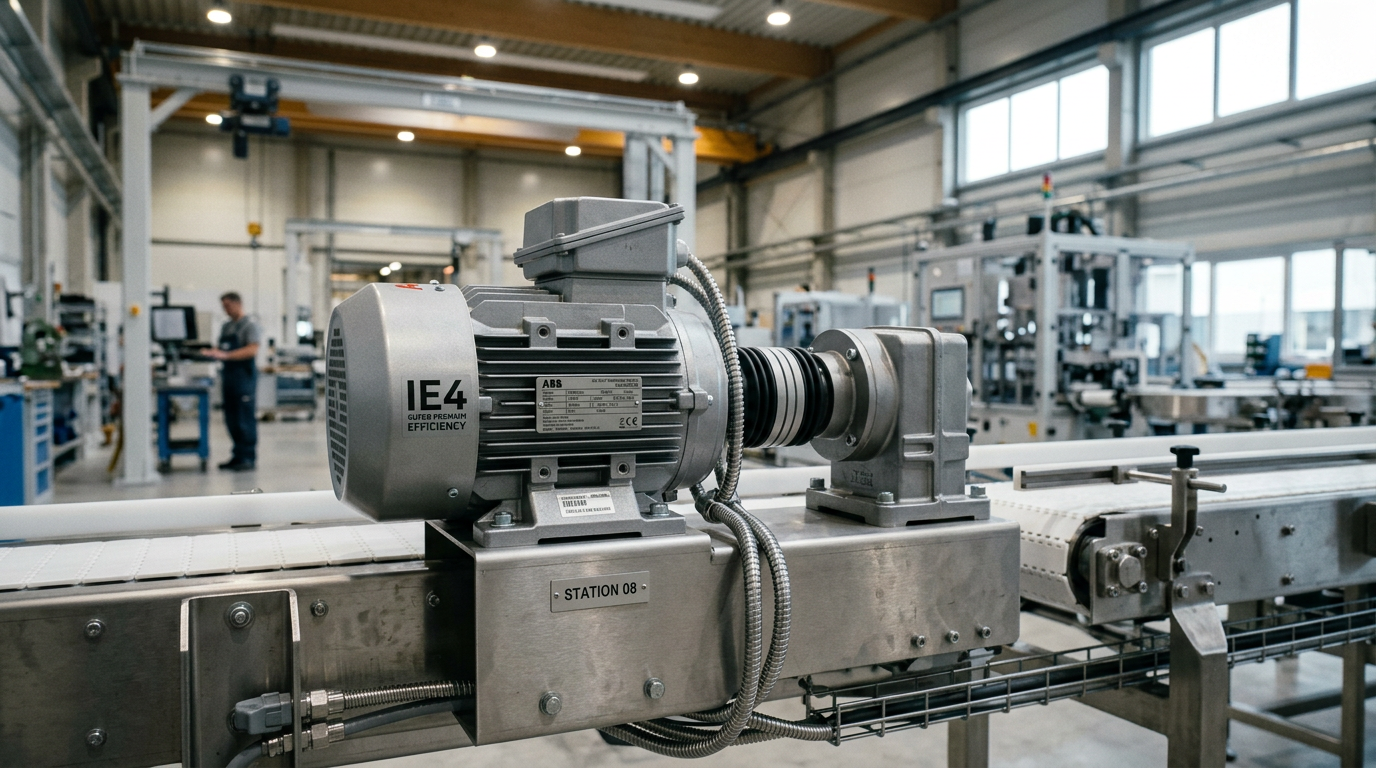
Transitioning to energy-efficient IE3 and IE4 motors on conveyor drives can reduce electrical consumption by 10% to 15% and lower heat generation by up to 20°C compared to legacy IE1 units. Under the current Ecodesign Regulation (EU) 2019/1781, most three-phase motors from 0.75 kW to 1000 kW must meet the IE3 Premium Efficiency standard, while larger units and certain configurations now require IE4 Super Premium performance.
Understanding IE Efficiency Classes
Efficiency classes for industrial motors are defined by the IEC 60034-30-1 standard. This standard classifies motors based on their ability to convert electrical energy into mechanical energy, with losses primarily attributed to heat, friction, and electromagnetic resistance.
- IE1 (Standard Efficiency): Now largely obsolete in the EU and North America for new installations.
- IE2 (High Efficiency): Generally used with Variable Frequency Drives (VFDs) where allowed, but being phased out.
- IE3 (Premium Efficiency): The current baseline for most industrial conveyor applications.
- IE4 (Super Premium Efficiency): Utilizes advanced materials like permanent magnets or optimized copper rotors to achieve ultra-high efficiency.
For a conveyor system running 16 hours a day, the difference between an IE1 and an IE4 motor can represent thousands of euros in annual savings. For example, a 7.5 kW motor operating at 90% efficiency (IE3) vs. 92.5% (IE4) may seem like a small jump, but when multiplied across a facility with 200 conveyor segments, the cumulative impact on the carbon footprint is massive.
The Business Case for IE4 in Material Handling
While the initial purchase price of an IE4 motor can be 20% to 30% higher than an IE3 equivalent, the Total Cost of Ownership (TCO) paints a different picture. Energy costs typically account for over 90% of a motor's lifetime cost, with purchase price and maintenance making up less than 10%.
Comparative Efficiency at a Glance
The following table illustrates the typical efficiency values across different frames according to SEW-EURODRIVE standards.
| Motor Rating (4-pole) | IE1 Efficiency | IE2 Efficiency | IE3 Efficiency | IE4 Efficiency |
|---|---|---|---|---|
| 0.75 kW | 72.1% | 79.6% | 82.5% | 85.7% |
| 1.5 kW | 77.2% | 82.8% | 85.3% | 88.2% |
| 7.5 kW | 86.0% | 88.1% | 90.4% | 92.6% |
| 15 kW | 88.7% | 90.6% | 92.1% | 94.1% |
| 30 kW | 90.7% | 92.3% | 93.6% | 94.9% |
Thermal Stability and Longevity
Waste energy in a motor is converted into heat. An IE4 motor runs significantly cooler than an IE2 or IE3 motor because it loses less energy through resistance. Lower operating temperatures directly correlate to the lifespan of the motor windings and the lubricant in the connected gearbox. For every 10°C reduction in operating temperature, the life of the insulation materials in the motor effectively doubles.
Integrating IE3 and IE4 Motors into Modular Systems
When designing a modular conveyor system, the motor is only one part of the efficiency equation. Selecting high-efficiency gearboxes—such as helical or bevel gears rather than low-efficiency worm gears—is critical to ensure the gains from an IE4 motor aren't lost in the transmission.
Easy Conveyors provides modular setups that are pre-engineered to accommodate standard IEC frame sizes, making it straightforward to specify IE3 or IE4 drives during the initial build or as a retrofit. This modularity ensures that as regulations tighten, facilities can upgrade their drive units without replacing the entire conveyor chassis.
VFD Compatibility and Sizing
To maximize the benefits of IE4 motors, specifically Permanent Magnet (PM) or Synchronous Reluctance (SynRM) designs, a compatible Variable Frequency Drive is required. Unlike standard induction motors, these high-efficiency motors often cannot be started "across the line" (direct online).
- Control Strategy: Synchronous motors require the VFD to know the rotor position to start under load.
- Partial Load Efficiency: One of the greatest advantages of IE4 motors on conveyors is their ability to maintain high efficiency even when the conveyor is not fully loaded. While a standard induction motor's efficiency clips significantly at 50% load, many IE4 designs remain near peak performance.
Easy Conveyors stocks the conveyor components discussed here — ready to ship across Europe.
Common Pitfalls in High-Efficiency Upgrades
- Mechanical Compatibility: High-efficiency motors sometimes have slightly larger frames or longer housings due to increased active material (more copper and steel) needed to reduce losses. Always verify clearance in compact modular designs.
- Inrush Current: IE3 and IE4 motors often have higher starting currents (LRC) than older motors. This may require upgrading contactors or adjusting circuit breaker trip settings to prevent nuisance tripping during startup.
- Over-motoring: It is common for engineers to "size up" a motor for safety. However, motors are most efficient when running near their rated load. Oversizing an IE4 motor can lead to it running in a less efficient zone, negating the premium paid for the technology.
Sustainability and Regulatory Compliance
Global standards are rapidly converging. In the United States, NEMA Premium standards align closely with IE3, while federal regulations continue to push toward IE4 levels for specific industrial categories. Implementing these motors is no longer just a "green" initiative; it is a regulatory requirement for most European and North American manufacturers.
By reducing the energy demand per diverted package or transported pallet, manufacturers can significantly lower their Scope 2 emissions. This data is increasingly required for corporate sustainability reporting and helps in achieving ISO 50001 (Energy Management) certification.
Selecting the Right Drive for Your Application
For intermittent duty, where a conveyor stops and starts frequently, the high torque-to-inertia ratio of IE4 permanent magnet motors is ideal. For long-running, continuous lines like airport baggage handling or large-scale distribution centers, the pure energy savings of IE4 induction or SynRM motors offer the fastest ROI.
When planning a layout, consider the "System Efficiency" which includes the VFD, motor, gearbox, and the conveyor belt itself. A high-efficiency drive path is the backbone of a reliable, cost-effective industrial automation environment. High-efficiency components also reduce the load on the facility's electrical infrastructure, potentially allowing for more equipment to be added to existing power drops.
In conclusion, while IE3 is the current legal minimum for most, IE4 represents the gold standard for future-proofing material handling operations. The combination of legislative pressure, rising electricity costs, and the need for higher reliability makes the adoption of IE4 motors a logical step for any modern production facility. Additionally, exploring topics such as "VFD soft-start tuning" and "hygienic wash-down design" can further enhance the performance and longevity of these advanced drive systems.
Frequently Asked Questions
What is the main difference between IE3 and IE4 motors?
IE3 is 'Premium Efficiency' and is the standard requirement in many regions. IE4 is 'Super Premium Efficiency,' offering approximately a 15-20% reduction in energy losses compared to IE3 units.
How long is the typical ROI for an IE4 motor upgrade?
Most IE4 motors pay for themselves within 12 to 24 months in continuous duty applications, such as distribution centers or 24/7 food processing lines, depending on local energy prices.
Do I need a new VFD to run an IE4 motor?
Yes, IE4 induction motors are usually drop-in replacements. However, IE4 Permanent Magnet (PM) or Synchronous Reluctance motors (SynRM) always require a VFD and cannot run directly from the mains.
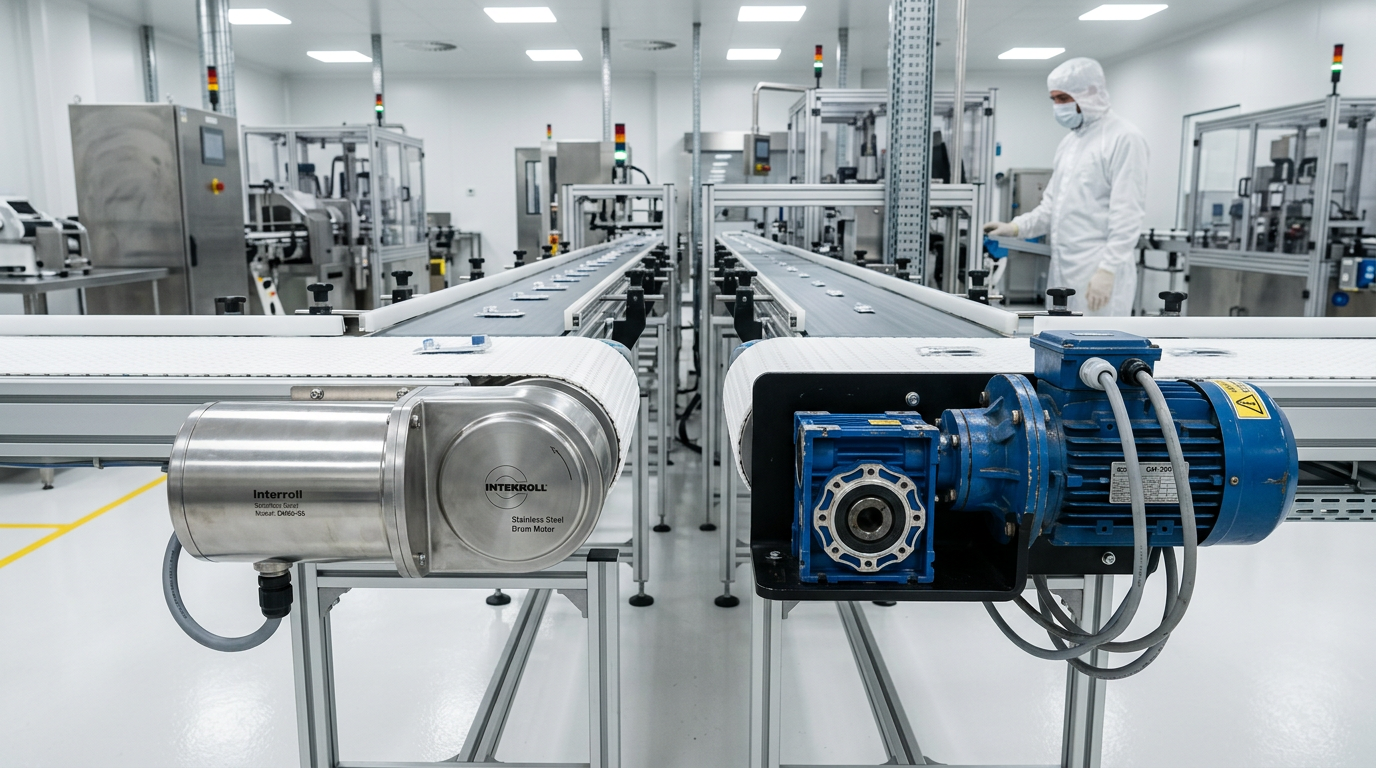
Can I use IE4 motors in hygienic washdown environments?
While a standard IE4 motor may be more energy-efficient, food-grade applications often require specific stainless steel housings or IP69K ratings for washdown, which may limit the availability of IE4 options compared to IE3.