Essential Guide to Conveyor Bearings and Shaft Seals for Hygienic Applications
Hygienic conveyor bearings and shaft seals must meet IP69K standards. Learn about 316 stainless steel, solid lubrication, and washdown-ready sealing technologies.
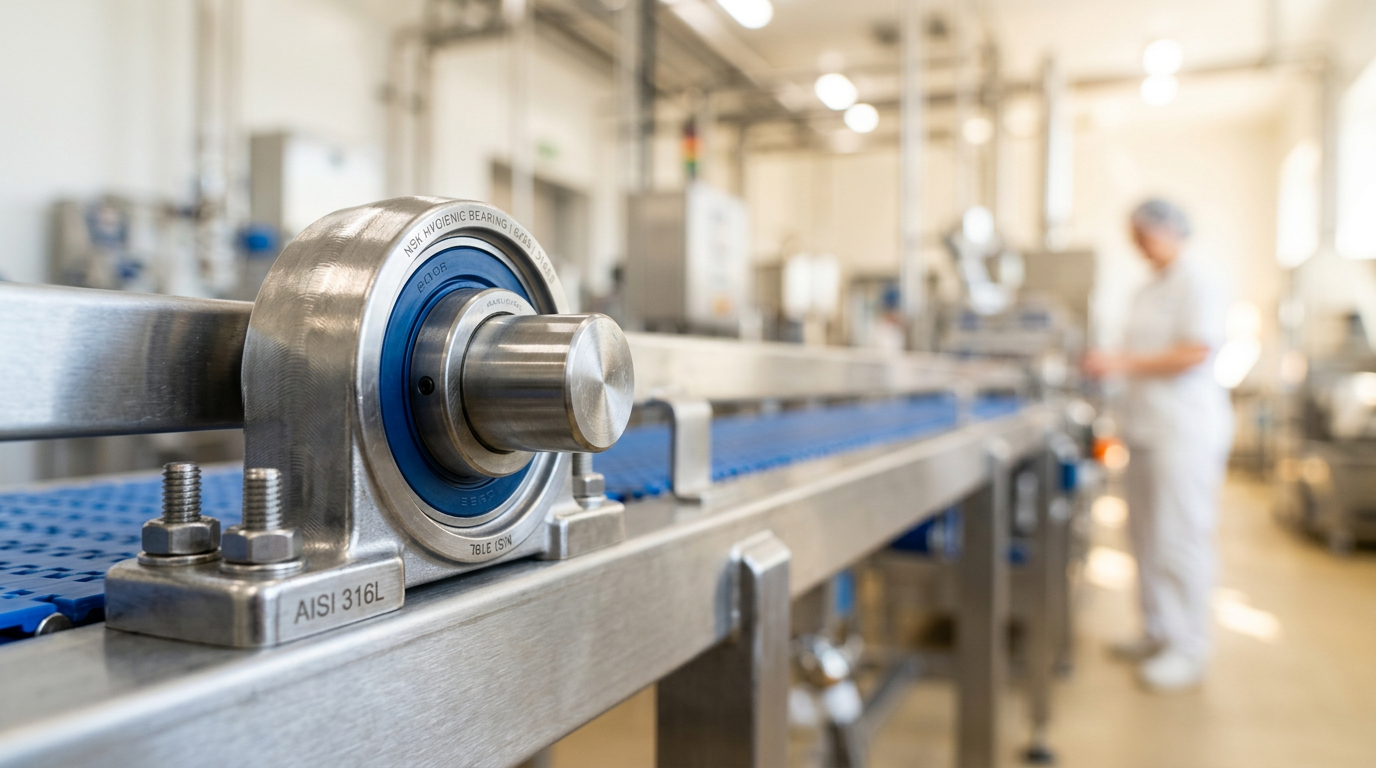
Hygienic conveyor systems require bearings and shaft seals that provide 100% ingress protection (IP69K) and use food-grade materials that resist corrosion from aggressive cleaning agents with a pH range of 2 to 12. In high-risk food or pharmaceutical environments, standard chrome steel bearings fail within weeks due to "washout" and bacterial colonization, necessitating the use of solid-lubricated high-performance polymers or 316-grade stainless steel housings.
The Critical Role of Ingress Protection in Hygienic Design
In food processing, the conveyor is often the primary point of contact or proximity to open product. Bearings and shaft seals are the most vulnerable mechanical components because they contain lubricants and moving parts that can harbor pathogens like Listeria if not properly sealed.
The primary standard for these components is the IP69K rating, which ensures the assembly can withstand high-pressure (up to 100 bar) and high-temperature (up to 80°C) washdown procedures. While a standard IP65 bearing might resist dust, it will succumb to the pressurized water used in daily sanitation cycles. When water penetrates the seal, it displaces the grease, leading to rapid oxidation of the raceways and premature catastrophic failure.
Materials for Hygienic Bearing Housings
Material selection is the first line of defense. In hygienic applications, materials must be non-porous, corrosion-resistant, and chemically inert.
1. 316 Stainless Steel (AISI 316)
Stainless steel is the industry standard for high-load applications. Unlike 304 stainless, 316 contains molybdenum, which significantly increases resistance to chloride pitting—a common issue when using chlorine-based sanitizers.
2. High-Performance Polymers (Thermoplastics)
For light to medium loads, reinforced polymer housings (often PBT or polypropylene) offer several advantages:
- Total Corrosion Resistance: They cannot rust, regardless of chemical exposure.
- Antimicrobial Additives: Some modern housings include silver-ion technology to inhibit microbial growth on the surface.
- Cost-Efficiency: They are typically 30-50% less expensive than 316 stainless steel alternatives.
| Feature | 316 Stainless steel | Engineered Polymer (PBT) | Chrome Steel (Standard) |
|---|---|---|---|
| Corrosion Resistance | Excellent | Superior (Chemical) | Poor |
| Max Load Capacity | Very High | Moderate | High |
| Cleaning pH Range | 2 - 12 | 1 - 13 | 6 - 8 |
| Hygienic Rating | EHEDG / FDA | FDA / USDA | None |
| Typical Lifespan | 5-8 Years | 3-5 Years | <6 Months (Washdown) |
Advanced Shaft Sealing Technologies
The shaft seal is the gatekeeper of the bearing. In a modular conveyor environment, Easy Conveyors emphasizes the importance of selecting seal profiles that prevent "shadow zones"—areas where bacteria can hide during a clean-in-place (CIP) cycle.
Multi-Lip Flinger Seals
These seals utilize a series of rubber lips (often NBR or FKM) combined with a "flinger" or slinger ring. As the shaft rotates, centrifugal force throws water and contaminants away from the bearing entry point.
End Caps and Back Seals
To achieve true hygienic compliance, the bearing housing should be fully enclosed. This involves:
- Closed End Caps: A snap-on cover that completely shields the bearing from the outboard side.
- Back Seals: A secondary seal on the mounting side of the housing that prevents liquids from seeping behind the bearing and pooling against the conveyor frame.
Easy Conveyors stocks the conveyor components discussed here — ready to ship across Europe.
Solid Lubrication vs. Manual Regreasing
Traditional bearings require periodic regreasing, which presents a "grease-out" risk—where excess lubricant can drip onto the conveyor belt or product. To eliminate this risk, engineers are increasingly specifying Solid Lubricants.
Solid lubrication consists of a polymer matrix saturated with oil that fills the entire internal cavity of the bearing. This technology offers two massive benefits for hygienic lines:
- Zero Void Space: Because the bearing is 100% filled, there is no room for condensation or washdown water to enter.
- Maintenance-Free: The oil is released from the polymer matrix as the bearing generates heat during operation, providing consistent lubrication for the life of the component without manual intervention.
Installation and Maintenance Best Practices
Even the best-engineered bearing will fail if installed incorrectly. For hygienic applications, the "stand-off" mounting method is preferred. This involves using spacers to create a 25mm to 50mm gap between the bearing housing and the conveyor frame. This gap allows for 360-degree cleaning access, preventing the "biofilm trap" that occurs when two flat surfaces are bolted together.
When troubleshooting, look for "weeping" from the seals. If you notice a brownish discharge, it indicates that internal corrosion has already begun. For more on optimizing these mechanical interfaces, refer to our guides on "hygienic wash-down design" and "material handling system maintenance".
Selecting the Right Component for Your Industry
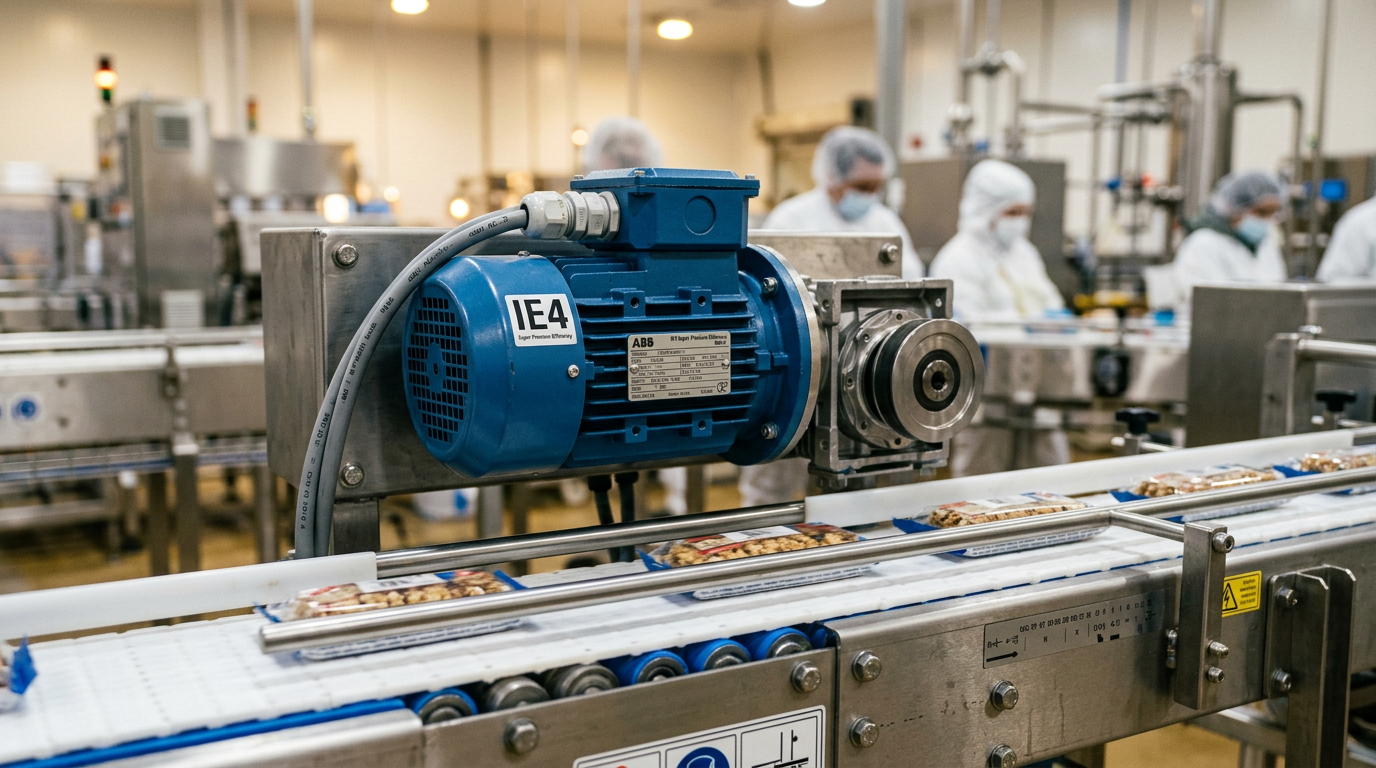
The requirements for a bakery conveyor (dry, abrasive flour dust) differ significantly from a poultry processing line (wet, fatty acids, high-pressure chemicals). In dry environments, focus on dust exclusion and low-friction seals to minimize energy consumption. In wet environments, prioritize IE3 motor classes integration with IP69K stainless steel bearings to ensure long-term reliability.
When integrating these components into larger systems, ensure your "VFD soft-start tuning" accounts for the slightly higher starting torque required by multi-lip seals and solid-lubricated bearings, as these provide more mechanical resistance than open, lightly-greased standard bearings.
Failure Modes and Prevention
- Chemical Embrittlement: Caused by using non-compatible plastics with strong caustic cleaners. Always check the chemical compatibility chart for the housing material.
- Shaft Fretting: Occurs when the bearing inner ring is loose on the shaft. In hygienic lines, use stainless steel shafts with h6 tolerances to ensure a precise fit.
- Thermal Shock: When a cold conveyor is cleaned with hot water, the internal air contracts, creating a vacuum that can suck water past the seals. Solid lubrication is the best defense against this phenomenon.
Frequently Asked Questions
What does IP69K mean for conveyor bearings?
The IP69K rating is the highest level of ingress protection, signifying the component can withstand high-pressure water jets (100 bar) and high temperatures (80°C), which is essential for food-safe washdown cycles.
How does solid lubrication improve bearing hygiene?
Solid lubrication is a polymer matrix filled with oil that occupies 100% of the bearing's internal volume. It eliminates the need for regreasing and prevents water or contaminants from entering the housing.
Is 304 stainless steel sufficient for hygienic bearing housings?
No. While 304 is stainless, 316 contains molybdenum, making it significantly more resistant to 'pitting' corrosion caused by the chlorine-based cleaning agents common in food processing.
What is stand-off mounting in hygienic design?
Stand-off mounting uses spacers to create a gap (usually 25mm+) between the bearing housing and the frame, allowing cleaning agents to reach all surfaces and preventing bacterial growth in 'hidden' spots.
How can I tell if my hygienic bearing seal has failed?
Typical signs include red-brown discharge (rust), increased operating noise, or heat buildup. In hygienic lines, any sign of seal leakage should prompt immediate replacement to prevent product contamination.