Essential Guide to Conveyor Bearings and Shaft Seals for Hygienic Applications
Expert guide on selecting hygienic conveyor bearings and IP69K shaft seals for food and pharma. Learn about solid lubricants, 316 stainless, and washdown design.
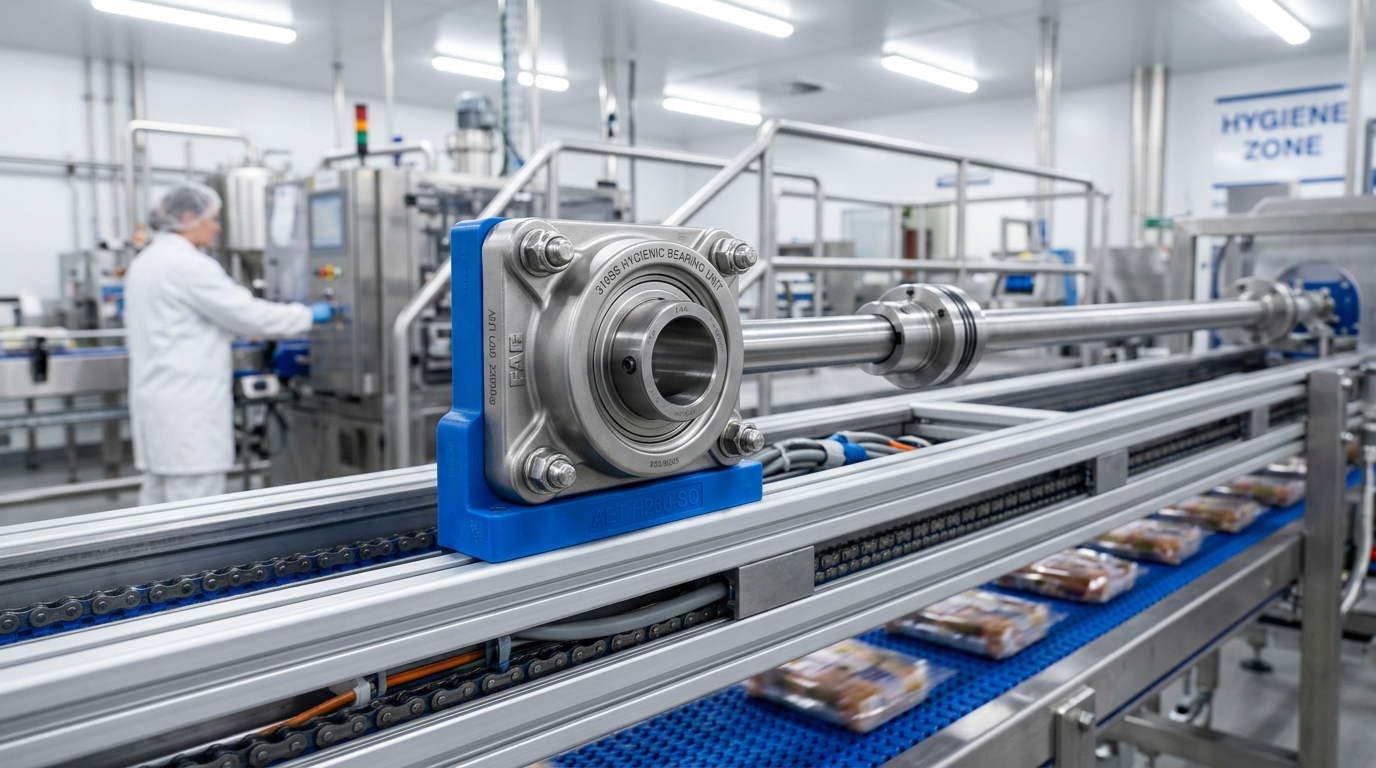
Hygienic conveyor bearings and shaft seals are specialized mechanical components designed to support rotating loads while preventing bacterial ingress and lubricant leakage in food, beverage, and pharmaceutical processing environments. These components must adhere to strict sanitary standards, such as EHEDG and FDA guidelines, to ensure they can withstand high-pressure washdowns and aggressive chemical sanitization without compromising product safety.
In modern automated production lines, the interface between the rotating shaft and the static conveyor frame is a critical control point for hygiene. Standard industrial bearings often feature deep crevices, non-food-grade lubricants, and permeable seals that can harbor pathogens like Listeria or Salmonella. For engineers designing systems for the "High Care" zone, selecting the right combination of housing materials, seal geometries, and lubrication strategies is essential to maximizing Mean Time Between Failure (MTBF) while maintaining regulatory compliance.
Key Takeaways
- Hygienic bearings use non-porous housings (typically AISI 304 or 316 stainless steel) to eliminate bacterial harborages.
- Effective shaft seals for washdown environments must be rated to at least IP69K to resist high-pressure, high-temperature water jets.
- Solid lubricant technologies eliminate the risk of oil leakage and are resistant to most CIP (Clean-in-Place) chemicals.
- Proper installation requires a "stand-off" distance between the bearing housing and the frame to allow 360-degree cleaning access.
Material Selection for Sanitary Environments
The foundation of any hygienic bearing assembly is the material. In food-grade environments, the standard cast-iron housing is replaced by materials that do not rust and are not affected by caustic cleaning agents.
Stainless Steel (AISI 304/316)
Stainless steel is the gold standard for durability. It offers excellent resistance to impact and the thermal cycling common in flash-freezing or steam-cleaning applications. Manufacturers often elect for 316-grade stainless in environments with high salinity (brine) or acidity, as the added molybdenum provides superior pitting resistance.
Thermoplastic Housings
High-performance thermoplastics (typically PBT or reinforced polypropylene) offer a cost-effective alternative to stainless steel. These housings are often molded with smooth, rounded surfaces to ensure water sheds easily. When selecting a thermoplastic housing, ensure it is "solid base" rather than hollow; hollow-back housings create recessed cavities that are impossible to sanitize and can become "bacterial bombs" over time.
Advanced Shaft Seal Technologies
While the bearing sustains the load, the seal protects the internal rolling elements from the environment and keeps the lubricant contained. In hygienic applications, the seal is the first line of defense.
Multi-Lip and Labyrinth Seals
Traditional single-lip seals often fail under the 100-bar pressure of a washdown nozzle. Hygienic seals frequently utilize a multi-lip design (triple-lip) or a combined labyrinth and contact seal. This staggered approach ensures that even if moisture bypasses the outer deflector, it is trapped and expelled before reaching the bearing race.
End Covers and Back-Seals
To achieve a truly "dead-zone free" installation, manufacturers use bolt-on end covers and specialized back-seals. The back-seal sits between the bearing housing and the shaft on the "dry" side, preventing product buildup behind the bearing.
| Feature | Standard Industrial Bearing | Hygienic/Sanitary Bearing |
|---|---|---|
| Housing Material | Cast Iron (Painted) | AISI 304/316 or PBT Plastic |
| Lubrication | Mineral Grease (NLGI 2) | Food-grade H1 Grease or Solid Oil |
| Seal Rating | IP65 / IP66 | IP69K (Washdown Rated) |
| Design Geometry | Sharp angles, recessed bolts | Smooth radii, standing-off mounts |
| Temperature Range | -20°C to +100°C | -40°C to +150°C (Application specific) |
The Role of Lubrication in Food Safety
One of the greatest risks in food processing is the accidental contamination of product with industrial lubricant. For this reason, all hygienic bearings must use FDA-approved H1 lubricants.
However, even H1 grease can be "washed out" during intensive cleaning cycles. This leads to premature bearing failure and potential metallic contamination. To solve this, many engineering leads are moving toward Solid Oil or Solid Lubricant technology. This involves a polymer matrix saturated with food-grade oil that fills the entire internal cavity of the bearing. Because there is no free-flowing grease, it cannot leak out, and water cannot get in.
When designing complex systems, working with an experienced partner like Easy Conveyors can help ensure that these critical component choices align with the overall modular design of your line, balancing initial capital expenditure with long-term maintenance savings.
Easy Conveyors stocks the conveyor components discussed here — ready to ship across Europe.
Design Trade-offs: Open vs. Closed Systems
There is an ongoing debate among plant engineers regarding "sealed-for-life" bearings versus "re-greasable" units.
- Re-greasable Units: These allow operators to purge contaminants by pumping in fresh grease. The downside is the risk of over-greasing, which can blow out seals and create a mess that attracts pests.
- Sealed-for-Life Units: These are preferred in high-hygiene zones. They rely on superior sealing (IP69K) to keep the initial factory fill of lubricant pristine for the life of the bearing. This reduces maintenance labor and eliminates the human error associated with manual lubrication.
For those overseeing "hygienic wash-down design" projects, the trend is heavily favoring sealed-for-life units with solid lubrication, as they align with the principles of HACCP (Hazard Analysis and Critical Control Points).
Installation Best Practices: Avoiding the "Shadow Effect"
Even the best hygienic bearing will fail a microbial swab test if it is installed incorrectly. A common mistake is mounting the bearing housing flush against the conveyor frame. This creates a microscopic gap where moisture travels via capillary action but cannot be reached by cleaners—a phenomenon known as the "shadow effect."
To prevent this, engineers should use spacer bushings or "stand-offs." By providing a 15mm to 25mm gap between the housing and the frame, cleaning crews can spray behind the bearing, ensuring total sanitization. Furthermore, ensure that all mounting bolts are "hygienic bolts"—meaning they have smooth, rounded heads without external hex-heads or slots where food particles can collect.
Maintenance and Failure Modes
Typical failure modes for hygienic bearings differ from standard industrial ones. Rather than fatigue-driven spalling, most sanitary bearings fail due to:
- Chemical Attack: Harsh sanitizers (chlorine-based) etching the bearing surfaces or embrittling plastic housings.
- Thermal Shock: Rapidly moving a conveyor from a cold-room to a hot washdown area without allowing for material expansion, leading to seal distortion.
- Improper High-Pressure Aim: Directly hitting a seal with a 1500 PSI nozzle at point-blank range can force water past even an IP69K seal.
Regular inspection of the shaft seals for hardening or cracking is a vital part of "conveyor preventive maintenance schedules", specifically in "pharma-grade material handling" where zero-tolerance for contamination is enforced.
Conclusion
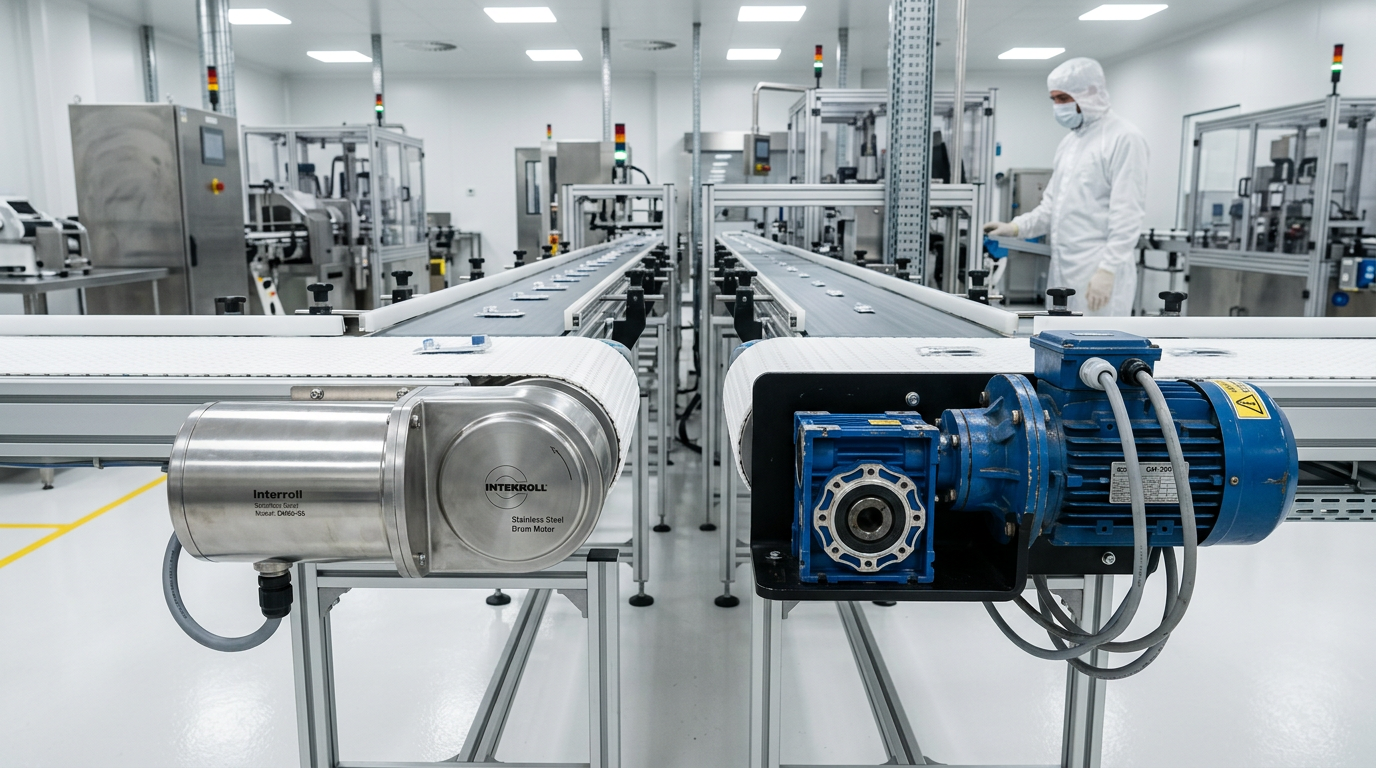
Selecting conveyor bearings and shaft seals for hygienic applications requires a holistic view of the production environment. By prioritizing stainless steel or solid-base plastic housings, IP69K-rated multi-lip seals, and solid lubricant technology, manufacturers can significantly reduce the risk of product recalls and mechanical downtime. As automation increases in food and pharma, these small components become the backbone of a safe and efficient global supply chain. Determining whether to use a standard "drum motor selection" or an external drive with hygienic bearings often comes down to the specific washdown protocols of your facility. Regardless of the drive choice, the integrity of the shaft interface remains the ultimate guardian of food safety.
Frequently Asked Questions
What does the IP69K rating mean for conveyor bearings?
IP69K is a protection rating that signifies a component is dust-tight and can withstand high-pressure (80-100 bar), high-temperature (80°C) water jets from multiple angles. It is the minimum standard for bearings in heavy washdown zones.
Why is 'Solid Oil' preferred over traditional grease in hygienic bearings?
Solid oil is a polymer matrix saturated with lubricant that fills the internal volume of the bearing. It prevents lubricant leakage and water ingress, making it ideal for food safety as it eliminates the risk of oil dripping onto products.
Can I use cast iron bearing housings if they are painted with epoxy?
Standard cast iron is porous and rusts easily. In hygienic environments, stainless steel (AISI 304/316) or high-grade thermoplastics are required because they are non-corrosive and non-porous.
What are 'stand-offs' in hygienic conveyor design?
Stand-offs are spacers used between the bearing housing and the conveyor frame. They create a gap (usually 15-25mm) that allows cleaning agents and water to reach behind the bearing, preventing bacterial growth in hidden crevices.
How can I reduce the maintenance cost of sanitary bearings?
Standardize your components to 316 stainless steel, use sealed-for-life units to eliminate manual greasing errors, and ensure all mounting hardware has rounded, crevice-free heads.