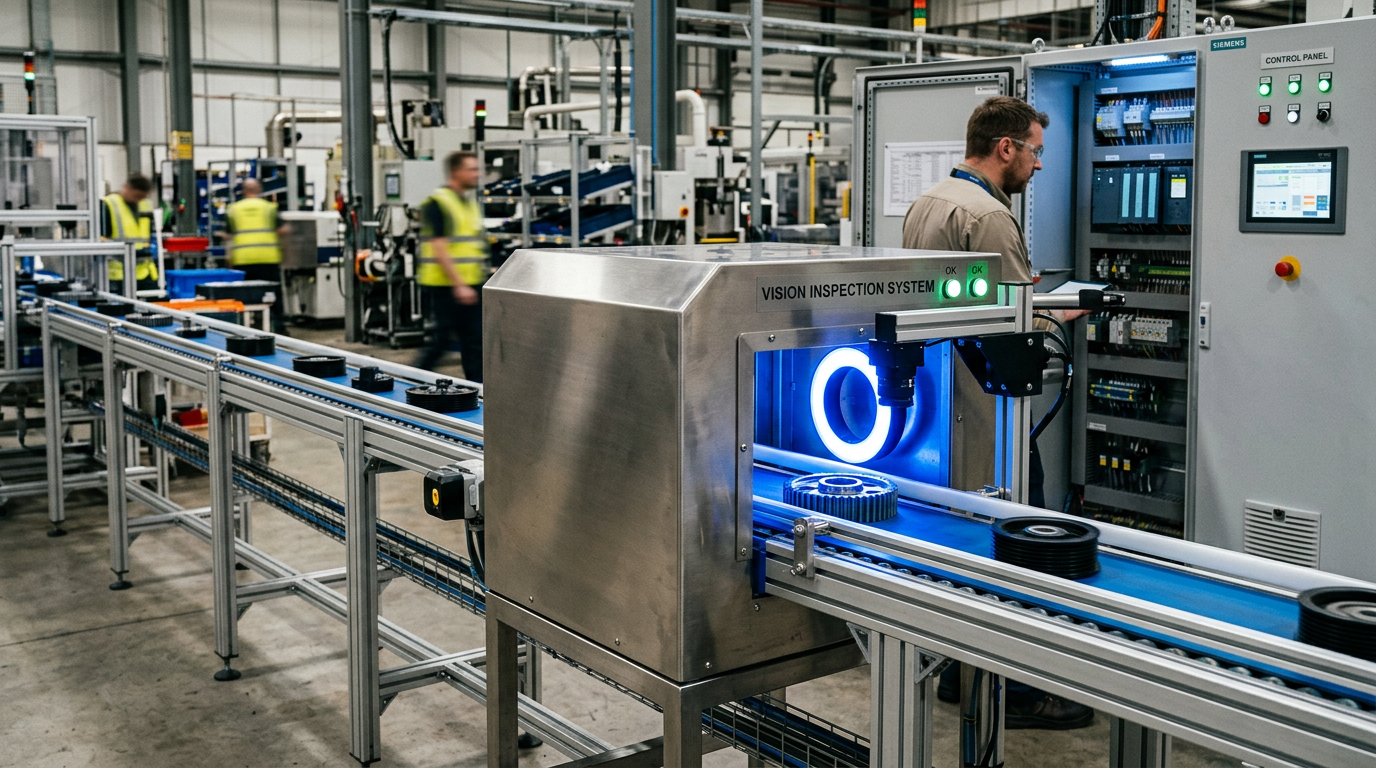
ESD-Safe Conveyor Automation for High-Precision Electronics Assembly
Protect sensitive electronics with ESD-safe conveyor automation. Learn how surface resistivity, grounding, and conductive materials prevent costly static damage in assembly.
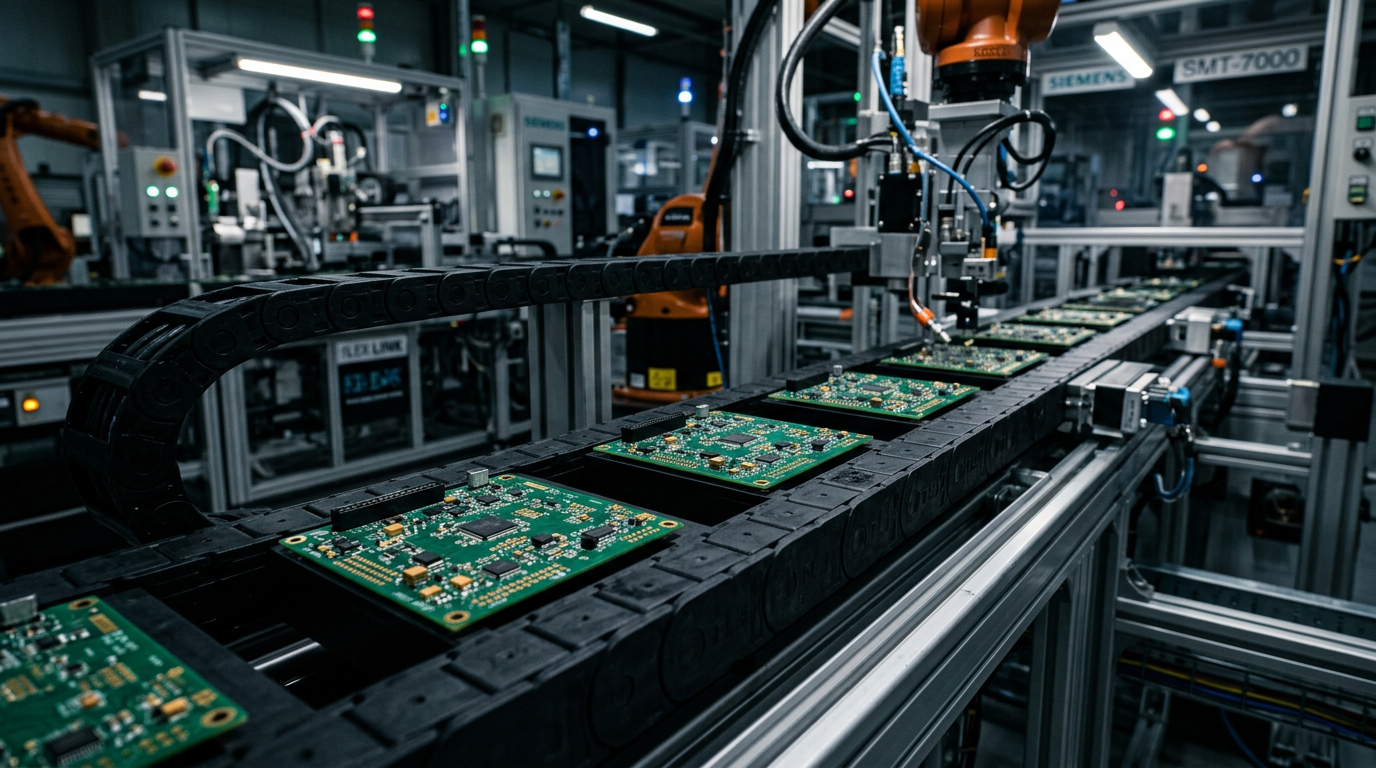
In modern electronics manufacturing, the prevention of Electrostatic Discharge (ESD) is a critical requirement, as voltages as low as 10V to 30V can irreparably damage sensitive micro-components. Standard conveyor systems often generate static through the "triboelectric effect"—the contact and separation of non-conductive materials—necessitating the use of ESD-safe conveyor automation that maintains a surface resistivity typically between 10^4 and 10^9 ohms per square.
The Physics of ESD in Material Handling
Electrostatic discharge occurs when two objects with different electrical potentials come into contact or close proximity. In a conveyor context, the primary source of static is the friction between the belt (or chain) and the slider bed or wear strips. Without proper grounding and conductive materials, this charge builds up until it finds a path to ground—often through a Printed Circuit Board (PCB) or a semi-finished electronic assembly.
According to the IEC 61340-5-1 standard, protection against ESD requires the creation of an Electrostatic Protected Area (EPA). Every component of the automation system within this area must be integrated into a common grounding point. For conveyor systems, this means ensuring that every module—from the motor housing to the smallest roller—is electrically dissipative.
Key Components of ESD-Safe Conveyor Systems
To achieve a continuous path to ground, engineers must select specific materials for every contact point.
1. Conductive Belting and Chains
Standard plastic modular chains are typically made of Polypropylene (PP) or Polyethylene (PE), which are natural insulators. ESD-safe chains utilize carbon-filled acetal or specialized polymers that provide controlled conductivity. These materials ensure that the static charge generated by the product moving on the belt is immediately bled off to the conveyor frame.
2. Dissipative Wear Strips and Guides
The interface between the chain and the frame is a frequent point of charge generation. Using dissipative Ultra-High-Molecular-Weight (UHMW) polyethylene wear strips prevents the "Van de Graaff generator" effect that occurs with standard plastics.
3. Grounded Drive Systems
The motor and gearbox must be integrated into the system's electrical grounding. High-efficiency motors, such as those meeting IE3 or IE4 efficiency classes, often feature specialized grounding brushes or conductive lubricants in the bearings to prevent discharge through the gearbox, which can lead to premature bearing failure (fluting).
Comparison: Standard vs. ESD-Safe Conveyor Specifications
| Feature | Standard Conveyor | ESD-Safe Conveyor |
|---|---|---|
| Surface Resistivity | > 10^12 Ω/sq (Insulative) | 10^4 to 10^9 Ω/sq (Dissipative) |
| Material Base | Standard POM / PVC | Carbon-filled Acetal / Conductive PU |
| Grounding Requirements | Equipment safety ground only | Systematic EPA grounding (IEC 61340) |
| Typical Application | Packaging, Food, Logistics | PCBA, Semiconductor, Sensors |
| Component Life | Standard | Potential for higher wear due to car |
Easy Conveyors stocks the industrial automation discussed here — ready to ship across Europe.
bon fill |
Integration with Automation Cells
In high-precision electronics assembly, conveyors do not act alone. They are often the backbone of robotic assembly cells. When a robotic arm interacts with a component on a conveyor, the potential difference between the robot gripper and the workpiece must be zero.
Modern automation strategies involve using Easy Conveyors modules that are pre-engineered for ESD compliance. These modular systems allow for rapid reconfiguration of assembly lines while maintaining a certified path to ground, which is essential for manufacturers adhering to ISO 9001 quality standards in high-tech environments.
Design Considerations for Electronics Assembly
When sizing an ESD-safe system, engineers must account for:
- System Resistance-to-Ground (Rg): The total resistance from the conveyor surface to the facility's primary ground should be less than 1 x 10^9 ohms.
- Humidity Control: Static generation increases in dry environments. While ESD materials help, maintaining factory humidity between 40-60% is a secondary defense.
- Accumulation Pressure: When products stop on a moving belt (accumulation), friction increases. In electronics, low-back-pressure (LBP) rollers made of conductive materials are required to prevent static spikes during accumulation.
Maintenance and Verification
The conductive properties of ESD-safe components can degrade over time due to wear, contamination by non-conductive oils, or cleaning agents. A critical part of "conveyor maintenance and safety" is the periodic testing of surface resistivity using a megohmmeter. If the carbon-filled surface wears down or becomes coated in insulating dust, the conveyor may lose its dissipative properties, turning into a liability rather than a safeguard.
Furthermore, when integrating "VFD soft-start tuning" for these systems, it is vital to ensure that the acceleration ramps do not cause excessive belt slippage, which is a primary driver of triboelectric charging. Gradual acceleration reduces the mechanical friction that leads to charge buildup.
Robotic Interfacing and Precision Positioning
In electronics assembly, conveyors often require high precision for component placement. This typically involves "indexing conveyor precision" techniques where the conveyor stops at exact intervals. For ESD-sensitive parts, the stopping mechanism (pneumatic pallets or magnetic stops) must also be dissipative. Any impact between a stopper and a pallet can generate a static pulse if the materials are not correctly matched.
Engineers should reference ANSI/ESD S20.20 for the development of an Electrostatic Discharge Control Program, which provides the administrative and technical requirements for designing and maintaining these automated environments. By following these guidelines, manufacturers can significantly reduce "Retuned Material Authorization" (RMA) rates caused by latent ESD defects—damage that isn't caught during initial testing but causes premature failure in the field.
Frequently Asked Questions
Why is 'dissipative' better than 'conductive' for ESD conveyors?
Dissipative materials allow static charges to flow to ground at a controlled, slower rate than conductive materials, preventing the sudden spark (discharge) that damages electronics. Surface resistivity for dissipative materials is typically 10^4 to 10^9 ohms.
Can I use a standard modular belt in an Electronics Protected Area (EPA)?
Standard plastic belts act as insulators and generate static via the triboelectric effect. In an EPA, these belts can charge components to thousands of volts, leading to immediate or latent failure of microchips.
How often should I test the ESD properties of my conveyor?
Testing should occur at least every six months using a surface resistivity meter and a point-to-ground resistance test to ensure wear or contamination hasn't compromised the conductive path.
Does a VFD affect the ESD safety of a conveyor system?
Yes, but only if the VFD and motor are properly grounded. VFDs can introduce high-frequency electrical noise; using shielded cables and grounding brushes ensures this noise doesn't interfere with sensitive assembly electronics.