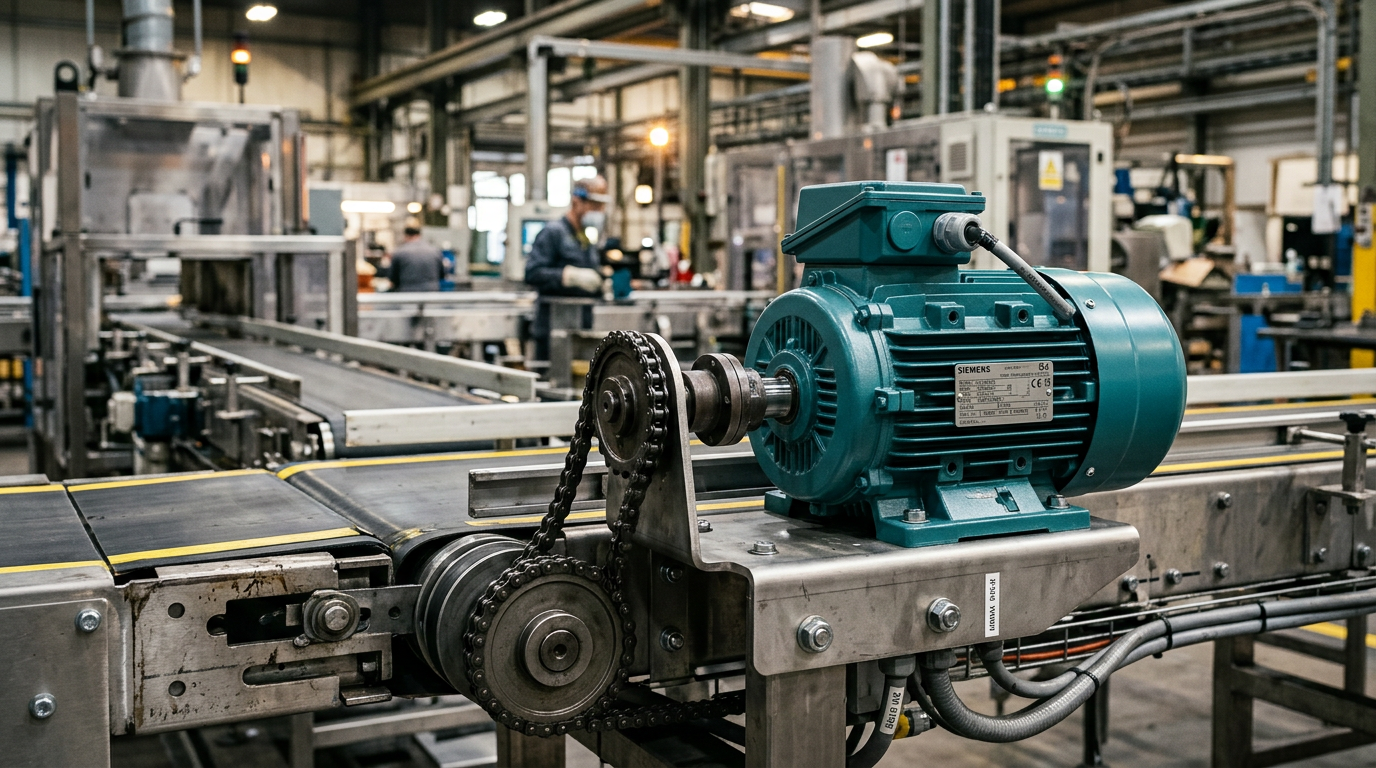
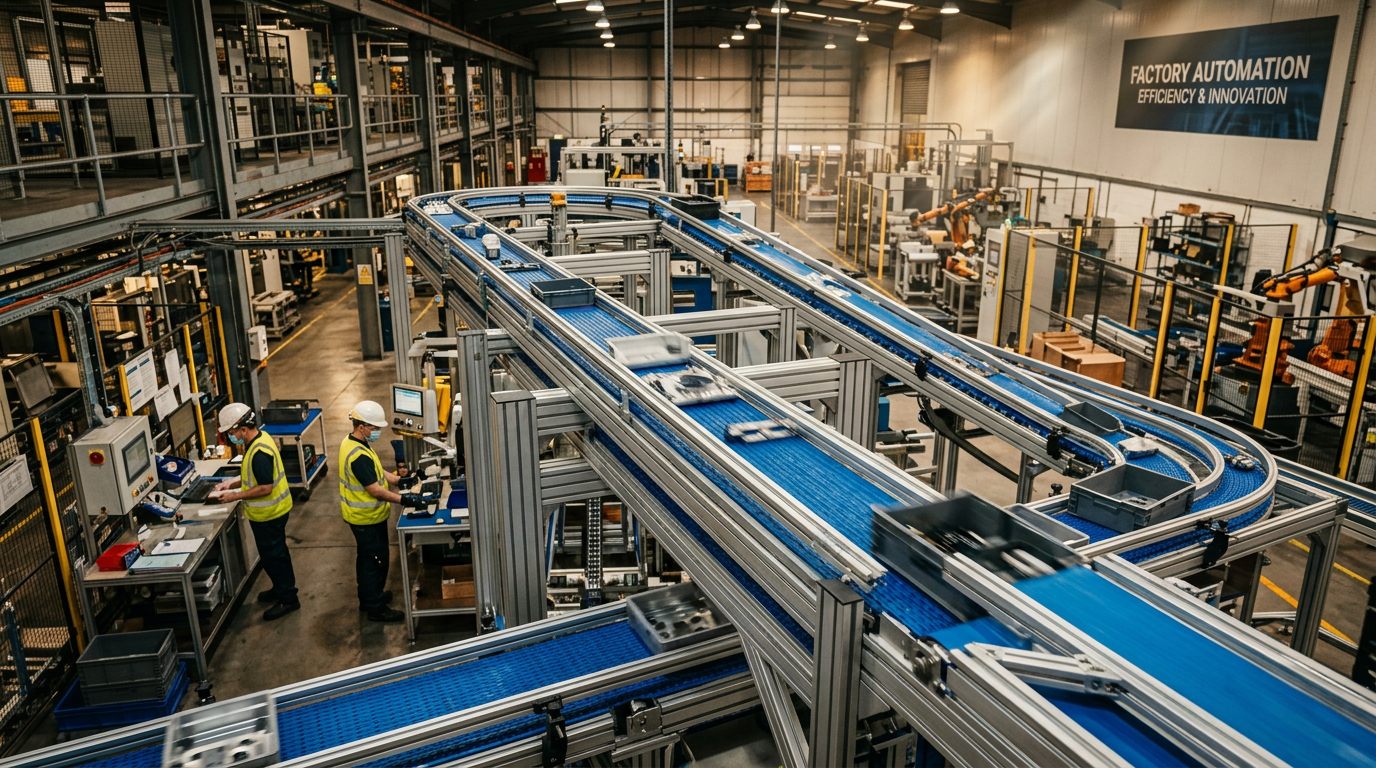
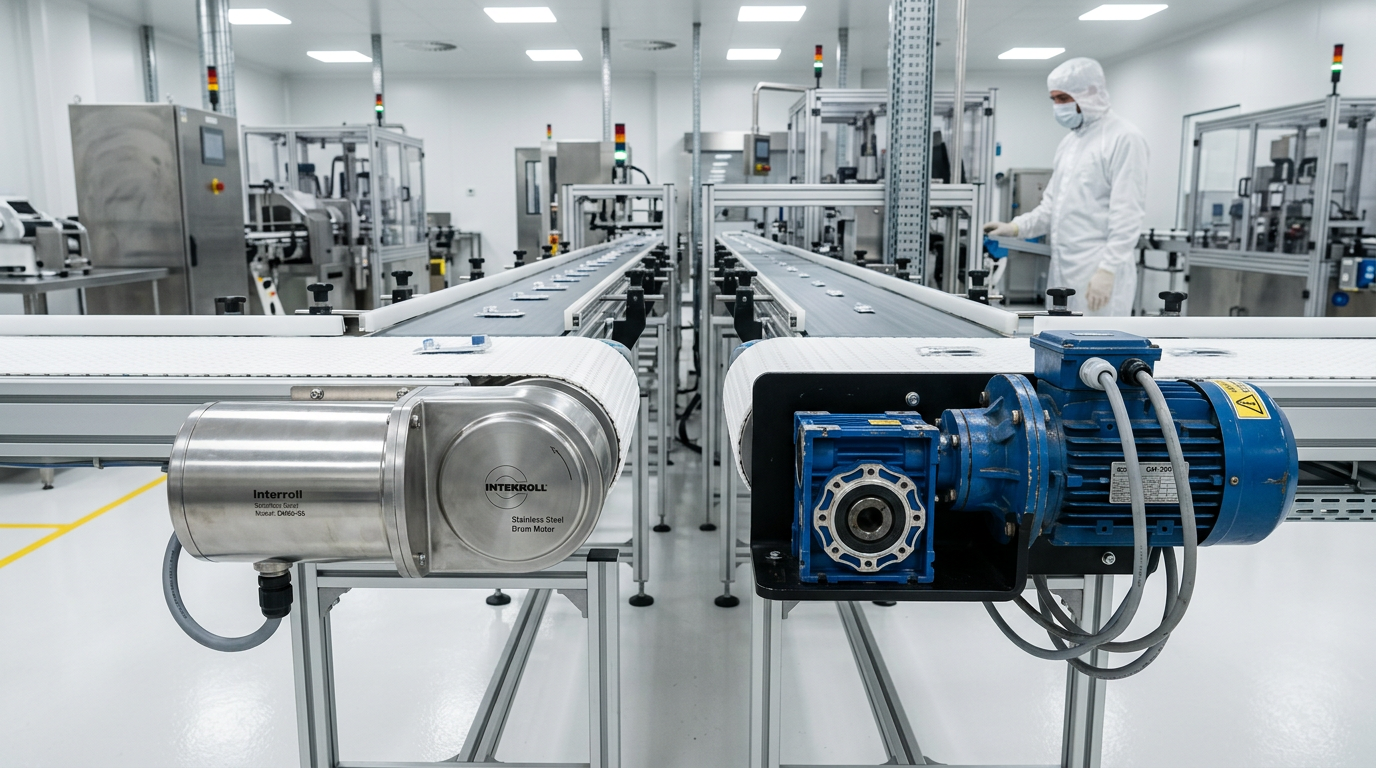
Maximizing Performance: Energy-Efficient IE3 and IE4 Motors on Conveyor Drives
Discover how IE3 and IE4 energy-efficient motors reduce conveyor TCO by up to 30%. Learn about IEC standards, PMSM technology, and drive selection strategies.
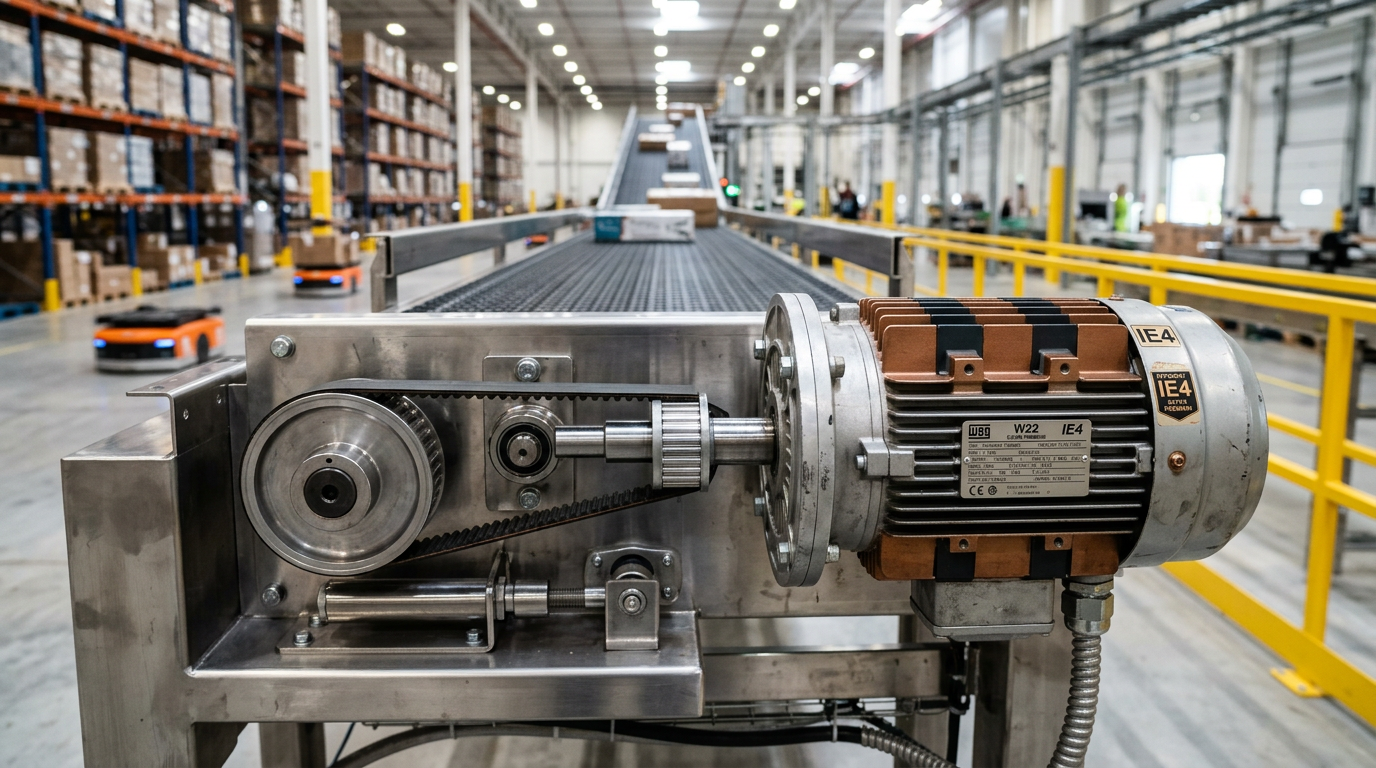
Transitioning to IE3 and IE4 efficiency classes for conveyor drives typically reduces energy consumption by 15% to 30% compared to legacy IE1 or IE2 motors, depending on load factors and duty cycles. Under the IEC 60034-30-1 standard, IE4 (Super Premium Efficiency) motors represent the current state-of-the-art for industrial induction and permanent magnet motors, significantly lowering the Total Cost of Ownership (TCO) in 24/7 continuous-duty applications like e-commerce sortation and food processing.
The Evolution of Motor Efficiency Standards
The European Union and international regulatory bodies have progressively tightened efficiency requirements for electric motors. The core of this regulation is the IEC 60034-30-1 standard, which defines four levels of energy efficiency:
- IE1: Standard Efficiency
- IE2: High Efficiency
- IE3: Premium Efficiency
- IE4: Super Premium Efficiency
For conveyor systems, the shift from IE3 to IE4 is not merely about compliance; it is a strategic investment. While an IE3 motor might offer 90% efficiency at a specific power rating, an IE4 equivalent often reaches 92-94%. While a 2-4% difference may seem marginal, when multiplied across hundreds of drives in a large-scale distribution center running 16 hours a day, the annual kilowatt-hour (kWh) savings are substantial.
Why IE3 and IE4 Matter for Conveyor Systems
Conveyors are unique because they often operate at partial loads. A modular plastic belt conveyor might be sized for a peak load of 50kg/meter but frequently runs with only 10kg/meter. Traditional induction motors lose efficiency rapidly when operating below 50% of their rated torque.
Modern IE4 motors, particularly Permanent Magnet Synchronous Motors (PMSM), maintain a flatter efficiency curve. This means they remain highly efficient even during periods of low throughput. For systems utilizing Easy Conveyors modular components, integrating high-efficiency drives ensures that the mechanical advantages of low-friction chains are matched by electrical efficiency at the drive head.
Key Technical Advantages
- Heat Reduction: Higher efficiency means less energy is wasted as heat. This extends the life of motor insulation and bearings, according to NEMA MG1 standards.
- Compact Design: IE4 PMSM motors often have a higher power density, allowing for smaller motor frames which are easier to integrate into tight modular conveyor frames.
- VFD Compatibility: IE3 and IE4 motors are designed to work seamlessly with Variable Frequency Drives (VFDs), which are essential for VFD soft-start tuning and dynamic speed control.
IE3 vs. IE4: A Comparative Analysis
When selecting a drive system, engineers must weigh the higher initial capital expenditure (CAPEX) of IE4 motors against the long-term operational expenditure (OPEX) savings.
| Feature | IE3 (Premium) | IE4 (Super Premium) |
|---|---|---|
| Typical Efficiency | 88% - 91% | 92% - 96% |
| Technology | Induction (AC) | Induction or PM Synchronous |
| Heat Loss | Moderate | Low |
| ROI Period | 12 - 24 Months | 18 - 36 Months |
| Low-Load Performance | Standard | Superior (with PMSM) |
| Standard Compliance | IEC 60034-30-1 | IEC 60034-30-1 |
Easy Conveyors stocks the conveyor components discussed here — ready to ship across Europe.
Implementation in Modular Conveyor Design
Integrating high-efficiency motors requires a holistic approach to the drivetrain. Replacing a motor while keeping an inefficient worm gearbox (which may only be 60% efficient) negates the gains of the IE4 motor.
1. Gearbox Matching
To maximize the benefits of an IE3/IE4 motor, it should be paired with helical or bevel-helical gearboxes, which typically offer >95% efficiency. In food-grade applications, hygienic wash-down design requires that both the motor and gearbox meet EHEDG recommendations to prevent bacterial growth while maintaining thermal dissipation.
2. Sizing and Duty Cycles
Over-sizing motors is a common pitfall. An IE3 motor running at 25% load is often less efficient than a smaller IE2 motor running at 80% load. Precise sizing based on the friction coefficients of the conveyor belt and the weight of the product is critical. Engineers should refer to drum motor selection guides when looking for integrated solutions where the IE4 motor is housed within the roller, providing maximum space savings and protection (IP66/IP69K).
3. Smart Control and Monitoring
Modern IE4 drives often include sensors for "Condition Monitoring." By monitoring the current draw and temperature, the system can predict bearing failure or belt misalignment before a breakdown occurs. This aligns with ISO 50001 energy management systems, allowing plants to track real-time carbon footprint data.
Failure Modes and Maintenance
While IE3 and IE4 motors are robust, they are sensitive to power quality. Harmonic distortion from VFDs can cause premature bearing failure through EDM (Electrical Discharge Machining) currents.
- Solution: Use insulated bearings or grounding rings, as recommended by SEW-Eurodrive for high-frequency VFD applications.
- Thermal Protection: Since IE4 motors run cooler, a sudden spike in temperature is a definitive indicator of mechanical binding in the conveyor chain or a failing gearbox.
The Economic Case for Upgrading
In the European market, where energy prices remain volatile, the "Break-Even" point for an IE4 motor upgrade has shortened significantly. A standard 1.5 kW motor running 6,000 hours per year can save approximately 450 kWh annually by moving from IE2 to IE4. In a facility with 200 drive units, this equates to 90,000 kWh per year, significantly impacting the bottom line and corporate sustainability targets.
Engineering teams should also consider the impact on the electrical infrastructure. Lower current draw from IE4 motors allows for smaller contactors, thinner cables, and less demand on the plant's main transformers. This "systemic efficiency" is a core component of modern industrial automation strategies.
Final Selection Checklist
- Verify if the application requires constant speed (Induction IE3/IE4) or variable speed (PMSM IE4).
- Ensure the motor frame is compatible with existing modular conveyor mounts.
- Check for FDA compliance if the motor is used in open-food zones.
- Evaluate the "Total Cost of Ownership" over a 10-year lifecycle rather than just the purchase price.
Frequently Asked Questions
What is the main difference between IE3 and IE4 motors?
IE3 is 'Premium Efficiency' and IE4 is 'Super Premium.' Technically, IE4 motors (often using permanent magnet technology) reduce energy losses by approximately 15-20% compared to IE3 motors.
Can I replace an IE3 motor with an IE4 motor on an existing conveyor?
Yes, but it requires checking the frame size. IE4 induction motors may be slightly larger than IE3, whereas IE4 PMSM motors are usually more compact. Always verify mounting compatibility with your conveyor frame.
Do IE4 motors require a VFD?
Most IE4 motors are designed for use with Variable Frequency Drives (VFDs) to maximize efficiency, especially Permanent Magnet Synchronous Motors (PMSM) which require a drive to run.
What is the typical ROI for upgrading to IE4 drives?
For 24/7 operations, the ROI typically ranges between 12 and 24 months, depending on local electricity rates and the duty cycle of the conveyor.