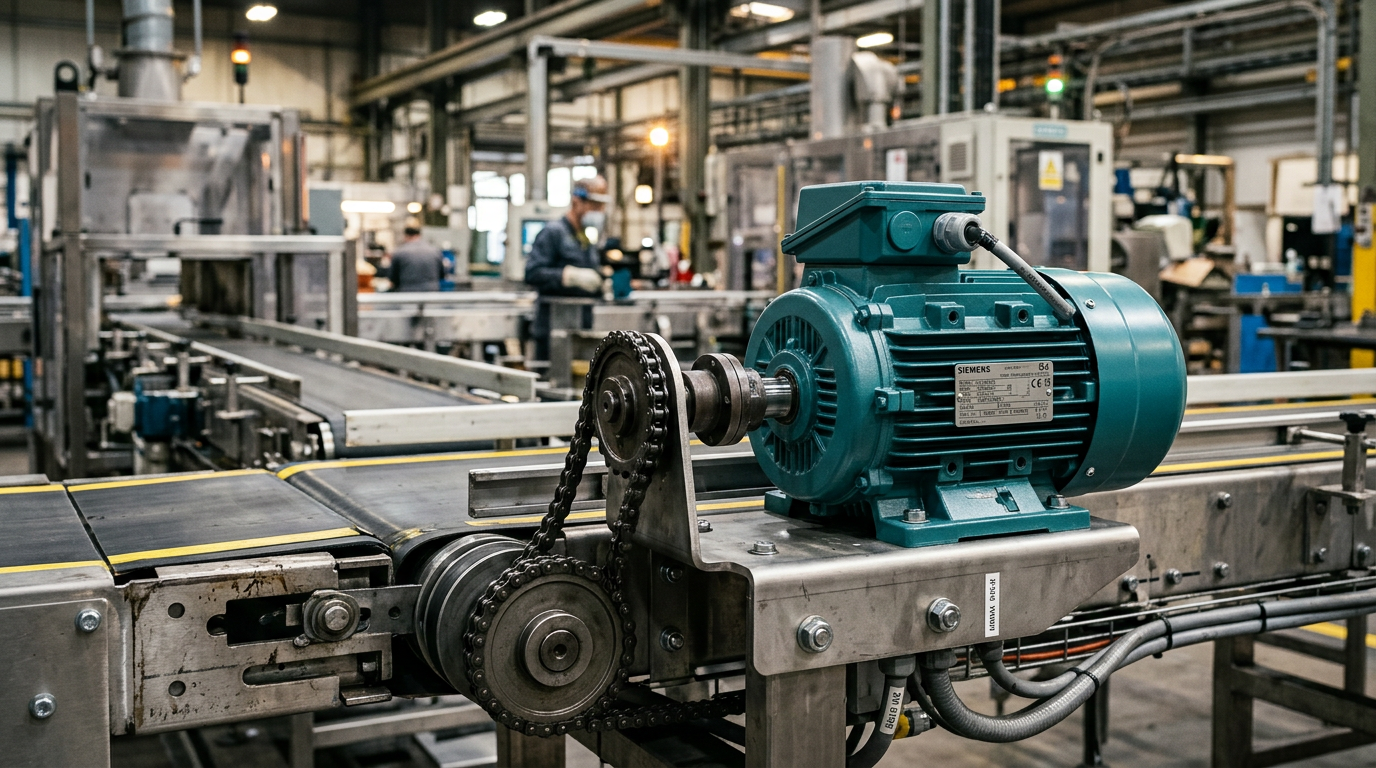
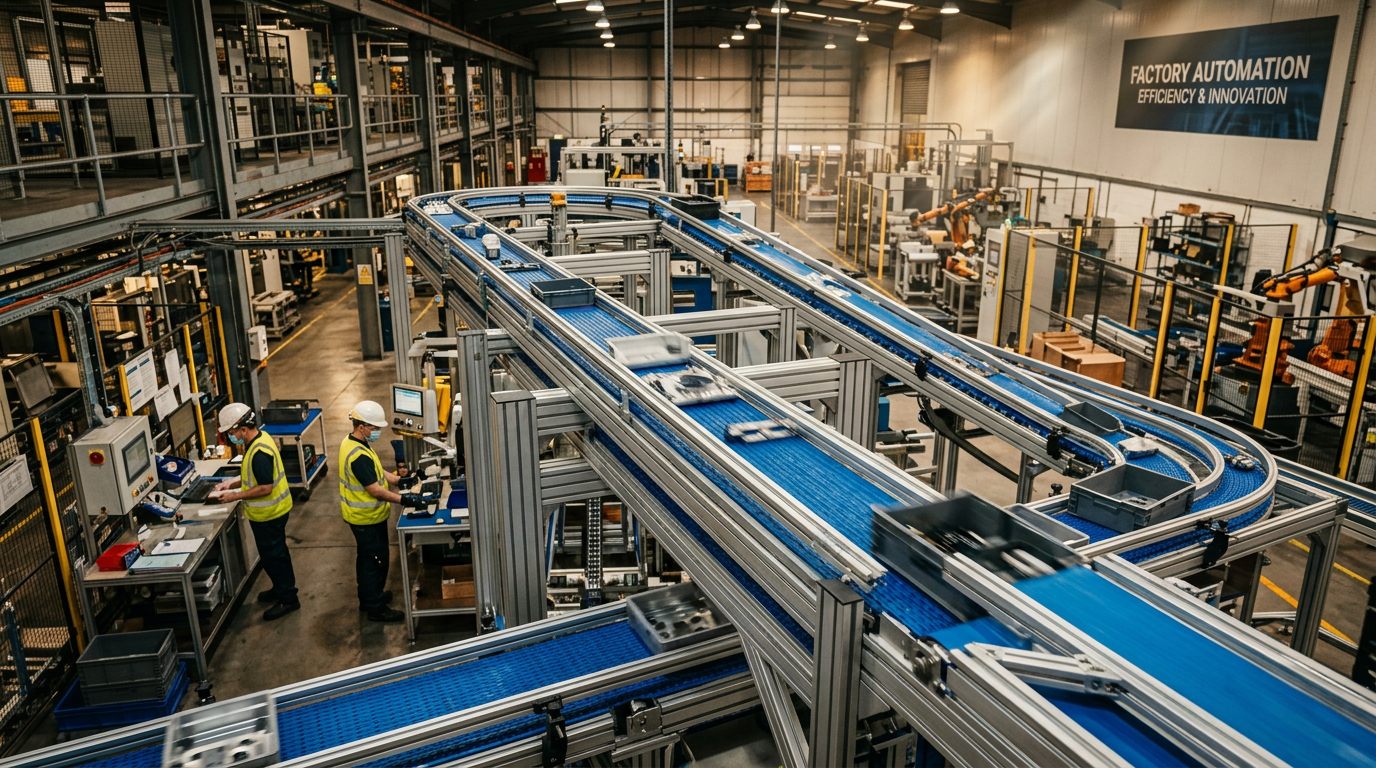
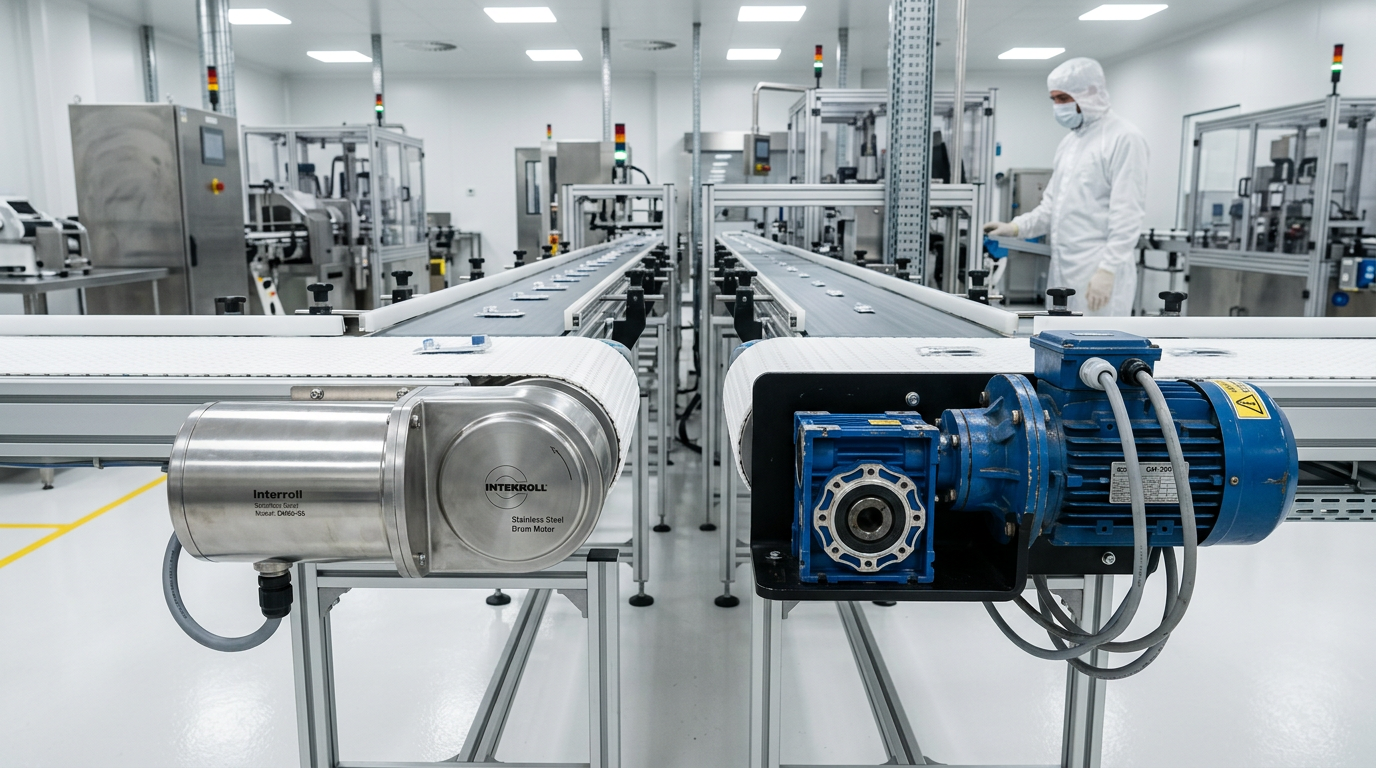
Maximizing Efficiency: The Shift to IE3 and IE4 Motors in Conveyor Drives
Upgrade your conveyor drives to IE3 and IE4 classes to reduce energy waste by up to 30%. Learn about TCO, VFD integration, and technical standards for modular systems.
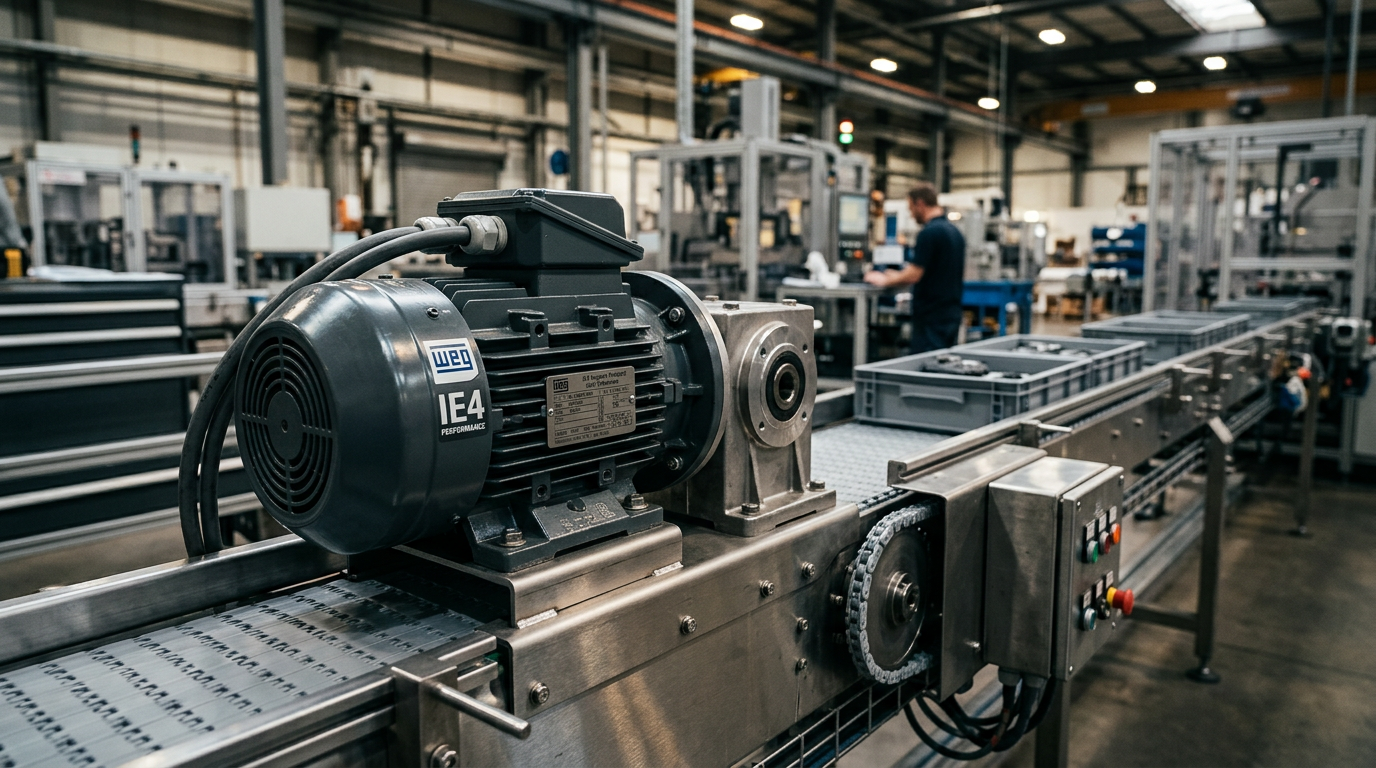
Transitioning to IE3 and IE4 efficiency classes for conveyor drives can reduce energy consumption by 15% to 30% compared to legacy IE1 motors, particularly in continuous-duty applications like logistics sortation and food processing. By 2026, the global shift toward premium and super-premium efficiency standards reflects both regulatory mandates, such as the IEC 60034-30-1 standard, and the industrial push for lower Total Cost of Ownership (TCO).
Understanding Efficiency Classes: From IE1 to IE4
The International Electrotechnical Commission (IEC) defines the efficiency of low-voltage three-phase cage-induction motors through the IE (International Efficiency) code. While IE1 (Standard Efficiency) and IE2 (High Efficiency) were once the industry bedrock, the modern conveyor landscape is now dominated by IE3 (Premium Efficiency) and IE4 (Super-Premium Efficiency).
For a typical 7.5 kW motor, the difference in efficiency between IE1 and IE4 can be as high as 8-10 percentage points. In a facility running 24/7, this translates to thousands of kilowatt-hours saved annually per drive. As energy costs fluctuate, the ROI on an IE4 motor often occurs within the first 18 to 24 months of operation.
The Impact of the Ecodesign Directive
In the European Union and many other global jurisdictions, regulations have tightened. Since July 2023, motors between 75 kW and 200 kW are required to meet IE4 standards. However, even for smaller conveyor systems where IE3 is the minimum legal requirement, plant engineers are increasingly specifying IE4 to future-proof their installations and meet corporate ESG (Environmental, Social, and Governance) targets.
Technical Advantages of Highly Efficient Drives
Beyond simple electricity savings, IE3 and IE4 motors offer mechanical and thermal benefits that enhance conveyor uptime:
- Lower Heat Dissipation: Higher efficiency means less energy is wasted as heat. This results in lower operating temperatures, which significantly extends the life of the bearing grease and the winding insulation according to the Arrhenius equation (where a 10°C decrease in temperature roughly doubles insulation life).
- Higher Precision in Automation: IE4 motors, particularly those utilizing Permanent Magnet (PM) or Synchronous Reluctance (SynRM) technology, offer better speed control and torque consistency across a wider frequency range when paired with a VFD (Variable Frequency Drive).
- Increased Overload Capacity: Because these motors run cooler under nominal loads, they often have a higher service factor, allowing them to handle momentary spikes in load—common in heavy-duty material handling—without tripping thermal protection.
| Feature | IE2 (High) | IE3 (Premium) | IE4 (Super-Premium) |
|---|---|---|---|
| Energy Loss Reduction | Base | ~15% vs IE2 | ~15% vs IE3 |
| Typical Motor Tech | Induction | Induction | PM or SynRM |
| Heat Generation | High | Moderate | Low |
| VFD Necessity | Recommended | Highly Recommended | Required (for PM/SynRM) |
| Cost Tier | Low | Medium | High |
| Hygienic Rating | Varies | Industrial/Washdown | Industrial/Washdown |
Designing for Efficiency in Modular Systems
When integrating these motors into modular conveyor systems, the drive geometry plays a critical role. For instance, Easy Conveyors designs their modular aluminum and stainless steel systems to accommodate the larger frame sizes sometimes associated with IE3/IE4 induction motors without compromising the compact footprint required in packaging lines.
Permanent Magnet vs. Induction Motors
The move to IE4 often involves a shift from traditional squirrel-cage induction motors to Permanent Magnet (PM) motors. While induction motors depend on slip to create torque, PM motors run synchronously with the magnetic field. This eliminates rotor losses, which account for a significant portion of energy waste in small-to-medium conveyor drives.
However, designers must account for the fact that PM motors almost always require a VFD for operation. In contrast, IE3 induction motors can still be started Direct-On-Line (DOL) if necessary, though this is rarely recommended for conveyor belt longevity due to the lack of ramp-up control.
Sizing and Selection Logic
One common pitfall in conveyor design is the "safety margin" trap. Engineers frequently oversize motors by 20% or 30%. While this seems safe, an oversized induction motor running at 40% load is significantly less efficient than a correctly sized motor running at 80-90% load.
When upgrading to IE4, use precise load calculations involving belt friction, product weight, and incline resistance. Modern IE3 and IE4 motors maintain a "flatter" efficiency curve, meaning they stay efficient over a broader load range, but "right-sizing" remains the most effective way to maximize energy savings.
Easy Conveyors stocks the conveyor components discussed here — ready to ship across Europe.
Integration with Automation and VFDs
For optimal performance, IE3/IE4 motors should be integrated into a wider "VFD soft-start tuning" strategy. Using a drive like the Siemens SINAMICS or SEW-EURODRIVE MOVIMOT allows for:
- Dynamic Torque Control: The motor only draws the current needed for the specific load.
- Eco-Modes: Many VFDs have energy-saving modes that automatically reduce the magnetization current during low-load periods.
- Preventative Maintenance: Modern drives can monitor the motor's power signature to detect early signs of conveyor belt wear or bearing failure.
For those in the food and beverage industry, "hygienic wash-down design" is another critical factor. Many IE4 SynRM motors are available in TENV (Totally Enclosed Non-Ventilated) configurations, which eliminate cooling fans—a notorious trap for bacteria and contaminants in cleanroom environments.
Total Cost of Ownership (TCO) Comparison
While the initial purchase price of an IE4 motor may be 20-40% higher than an IE3 equivalent, the energy cost typically represents over 90% of the motor's lifetime cost. According to data from SEW-EURODRIVE, the additional investment is often recovered through energy savings alone in less than two years in multi-shift operations.
Furthermore, the reduced heat output of IE4 motors reduces the load on facility HVAC systems, especially in refrigerated warehouses or cleanrooms, leading to secondary energy savings that are often overlooked during procurement.
Implementation Challenges
Despite the benefits, there are technical hurdles to consider:
- Inrush Current: Premium efficiency motors (IE3/IE4) typically have higher starting currents than legacy motors. If starting DOL, this may require upgrading circuit breakers or contactors to "Type D" or "Type E" ratings to handle the initial surge.
- Physical Size: Higher efficiency often requires more active material (copper and lamination steel). While NEMA and IEC standards maintain shaft height consistency, the physical length of the motor may increase, potentially interfering with adjacent machinery in tight modular conveyor layouts.
- Complexity: PM motors require specialized firmware in the VFD. If a VFD fails, it cannot be bypassed for DOL operation in an emergency, necessitating a more robust spare parts strategy.
Conclusion
The shift to IE3 and IE4 motors is no longer just a matter of environmental responsibility; it is a fundamental requirement for operational efficiency in modern manufacturing. By combining high-efficiency motor technology with precision-engineered modular conveyors and intelligent VFD control, facilities can achieve unprecedented levels of reliability and energy savings. Whether you are retrofitting existing lines or specifying new systems, the move to super-premium efficiency is the clearest path to lowering TCO and ensuring long-term competitiveness.
Frequently Asked Questions
What is the difference between IE3 and IE4 motors?
IE3 is 'Premium Efficiency' and IE4 is 'Super-Premium'. Technically, IE4 motors reduce energy losses by another 15% compared to IE3 models, often by using Permanent Magnet or Synchronous Reluctance technology instead of standard induction.
What is the typical ROI for upgrading to an IE4 motor?
The ROI typically ranges from 12 to 24 months for continuous-duty (S1) applications, depending on local energy prices and the number of operating hours per year.
Do high-efficiency motors improve conveyor reliability?
Yes, IE3 and IE4 motors tend to run much cooler. This reduces thermal stress on bearings and gearbox seals, leading to longer service intervals and a lower risk of unexpected downtime.
Can I use my existing motor starters with IE4 motors?
While many are compatible, IE4 motors (especially PM or SynRM types) almost always require a VFD for operation. Standard induction IE3 motors can run DOL but may require upgraded switchgear to handle higher inrush currents.
Is IE4 mandatory for conveyor systems?
By 2026, most industrial regions (EU, USA, UK) require IE3 as the minimum for motors from 0.75kW to 1000kW, while larger motors (75kW-200kW) in the EU must meet IE4. Check local directives like the Ecodesign Directive for specifics.