Efficiency in Motion: Sizing IE3 and IE4 Motors for Conveyor Drives
Upgrading to IE3 and IE4 motors on conveyor drives can reduce energy consumption by up to 30%. Learn about efficiency standards, ROI, and technical selection.
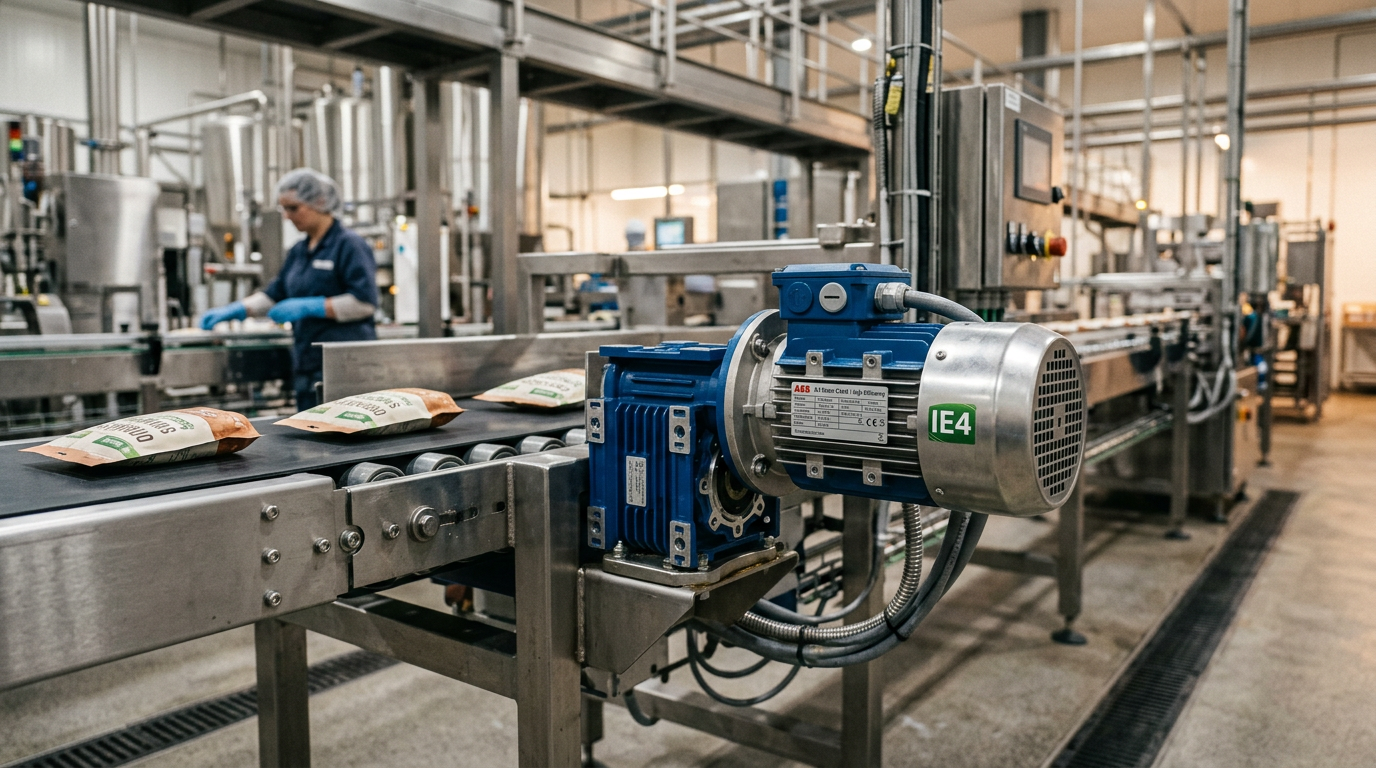
Upgrading to energy-efficient IE3 and IE4 motors on conveyor drives can reduce total energy consumption by 15% to 30% compared to legacy IE1 systems, while offering a typical Return on Investment (ROI) of 12 to 24 months in continuous duty applications. As industrial electricity costs rise and regulatory frameworks like the IEC 60034-30-1 standard tighten, selecting the correct motor efficiency class is no longer optional for modern material handling layouts.
Understanding IE Efficiency Classes in Conveyor Systems
The International Electrotechnical Commission (IEC) defines efficiency classes for single-speed, three-phase, cage-induction motors. The "IE" (International Efficiency) code represents a ladder of performance:
- IE1 (Standard Efficiency): Now largely phased out of the European and North American markets for new installations.
- IE2 (High Efficiency): Generally required to be paired with a Variable Frequency Drive (VFD) if used in the 0.75kW to 375kW range.
- IE3 (Premium Efficiency): The current baseline for most industrial applications.
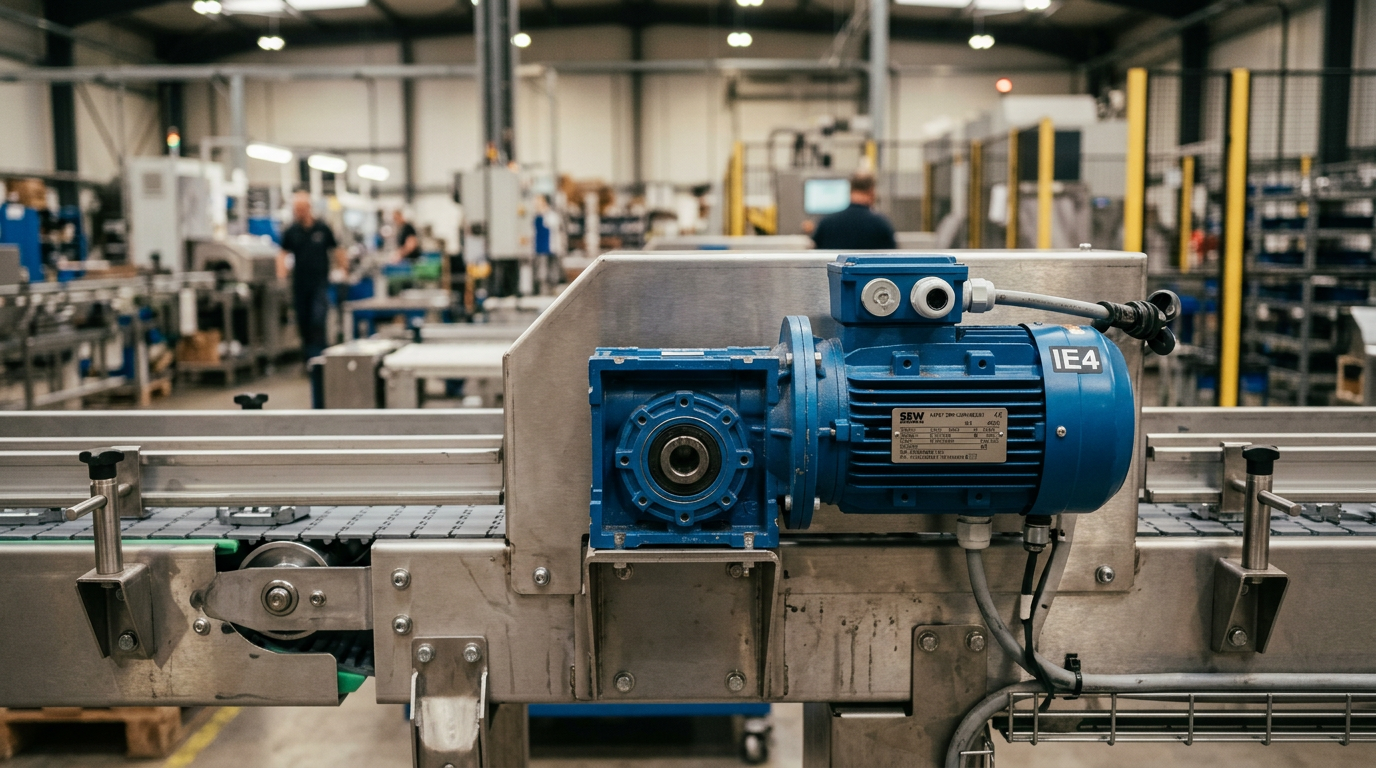
- IE4 (Super Premium Efficiency): Utilizes advanced materials and often permanent magnet (PM) or synchronous reluctance (SynRM) technology to minimize heat loss.
In the context of conveyor modules, the motor is part of a larger drivetrain that includes the gearbox, drive pulley, and the belt itself. While a motor might be 92% efficient (IE3), a poorly selected worm gearbox might only be 60% efficient, nullifying the electrical gains. Therefore, holistic drivetrain selection is critical.
IE3 vs. IE4: The Technical Trade-offs
When choosing between IE3 and IE4 for a distribution center or food processing plant, the decision often hinges on duty cycles. IE4 motors typically achieve higher efficiency by reducing "stator copper losses" and "rotor losses."
Comparison Table: IE3 vs. IE4 Drive Specifications
| Feature | IE3 (Premium) | IE4 (Super Premium) |
|---|---|---|
| Technology | Squirrel Cage Induction | Induction or Permanent Magnet |
| Typical Efficiency (7.5kW) | ~90.4% | ~92.6% |
| Thermal Profile | Standard heat dissipation | Significantly cooler operation |
| VFD Dependency | Optional (DOL compatible) | Often required (for PM/SynRM) |
| Service Life | 10–15 years | 15–20 years (lower bearing stress) |
| Price Premium | Base (1.0x) | 1.15x to 1.3x |
For systems running 24/7, such as airport baggage handling or high-volume e-commerce sortation, the IE4 premium is recovered rapidly through lower kilowatt-hour (kWh) consumption. Furthermore, IE4 motors generate less waste heat, which reduces the cooling load on the HVAC systems in climate-controlled facilities.
Implementation in Modular Conveyor Design
Modern modular systems benefit from the compact power density of IE3 and IE4 motors. European specialist Easy Conveyors emphasizes the integration of these high-efficiency drives within standardized aluminum and stainless steel frames to minimize the footprint of the drive station.
When integrating these motors, engineers should consider:
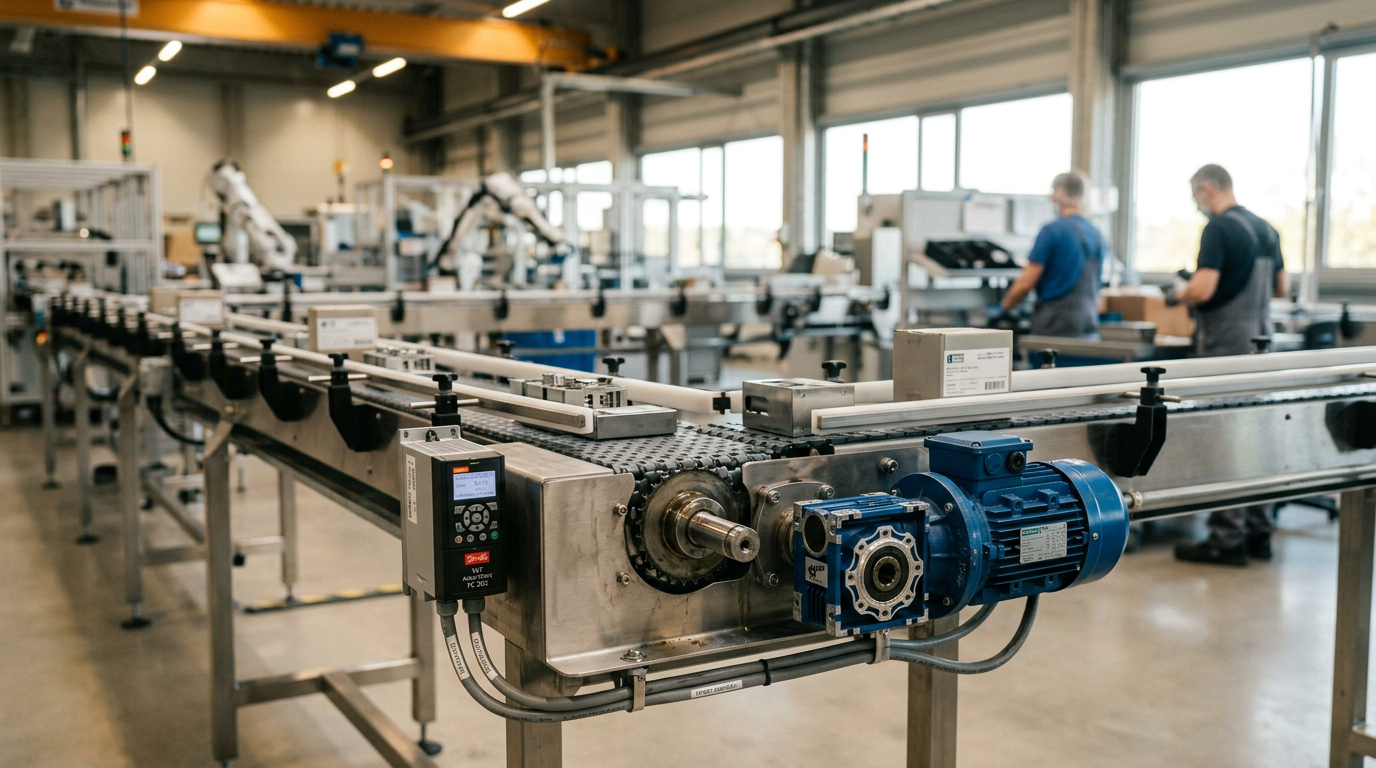
- Direct-on-Line (DOL) vs. VFD: While IE3 induction motors can start directly on the line, IE4 permanent magnet motors require a VFD to synchronize the magnetic fields during startup. Using a VFD also allows for "VFD soft-start tuning," which reduces mechanical shock on the conveyor belt and modular links.
- Motor Sizing: A common mistake is "over-motoring"—using a 5.5kW motor for a load that only requires 3kW. Induction motors (IE3) are most efficient when loaded between 75% and 100%. Operating a motor at 25% load significantly drops its power factor and efficiency.
- Gearbox Synergy: To maximize the benefits of an IE4 motor, it should be paired with a helical or bevel-helical gearbox. According to SEW-Eurodrive, these gear types offer 94-98% mechanical efficiency, compared to the 50-90% range of standard worm gears.
Easy Conveyors stocks the conveyor components discussed here — ready to ship across Europe.
Regulatory Landscape and Standards
The transition to higher efficiency is driven by both economics and law. In the European Union, Commission Regulation (EU) 2019/1781 established strict timelines for motor efficiency. As of July 2023, many motors in the 75kW to 200kW range must meet IE4 requirements. In the United States, NEMA (National Electrical Manufacturers Association) aligns closely with these standards, ensuring that global manufacturers can standardize their conveyor designs across continents.
Adhering to these standards is essential for ISO 50001 energy management certification, a common goal for blue-chip manufacturers looking to reduce their carbon footprint.
Thermal Benefits and Reliability
A major advantage of IE4 technology often overlooked in "drum motor selection" guides is thermal management. Because IE4 motors are more efficient, they convert more electrical energy into torque and less into heat.
Lower operating temperatures lead to:
- Extended Bearing Life: Standard grease degrades faster at high temperatures; a 10°C drop in operating temperature can double the life of the bearing lubricant.
- Insulation Integrity: High heat is the primary cause of motor winding failure. IE4 motors stay well within their thermal class limits, even in demanding "stop-go" applications.
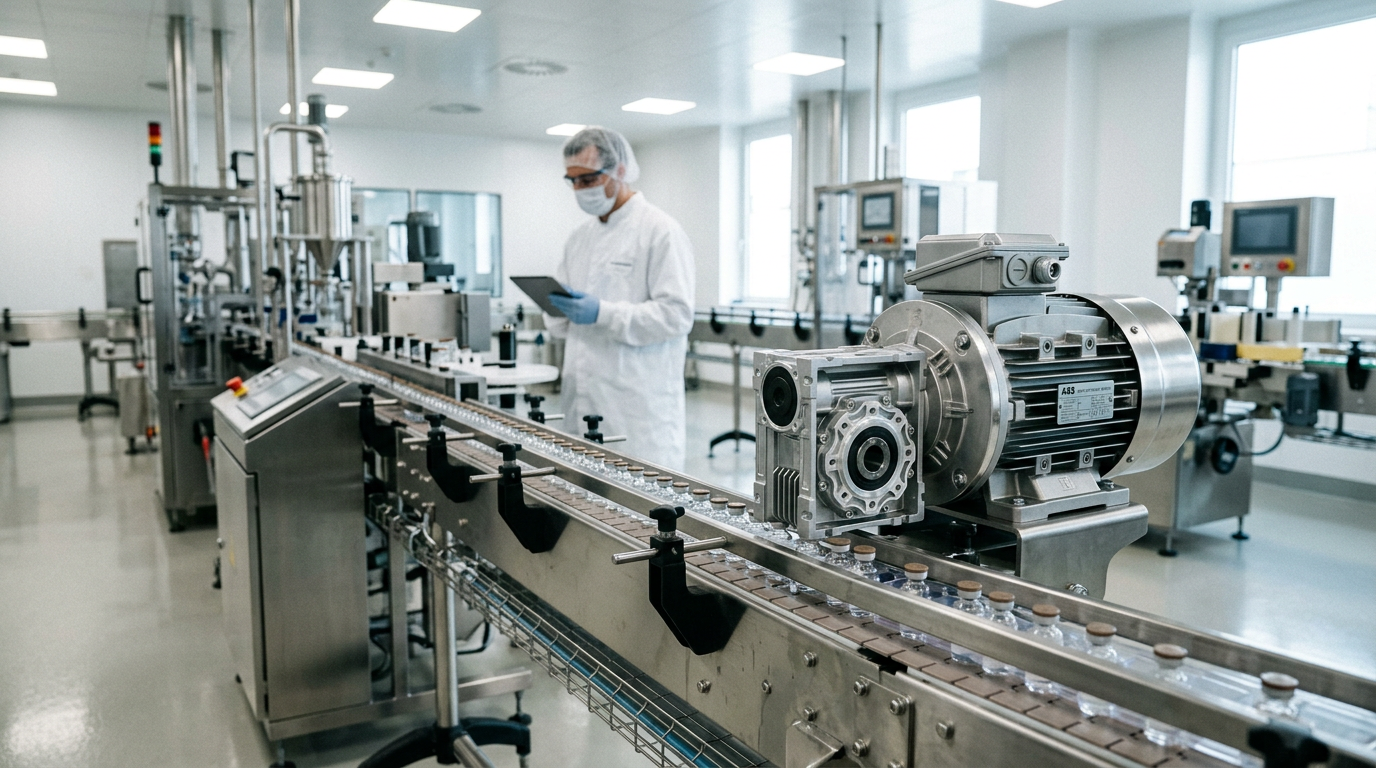
- Safety: Cooler motor surfaces reduce the risk of burns for maintenance staff and lower the ignition risk in environments handling sensitive powders or dust.
The Future: IE5 and Beyond
While IE4 is currently the "super premium" choice, the industry is already looking toward IE5 (Ultra-Premium). These motors usually employ synchronous reluctance technology without permanent magnets, avoiding the use of rare-earth metals while pushing efficiency even closer to the theoretical limit. For now, IE3 remains the versatile workhorse, while IE4 is the optimal choice for high-duty cycle "hygienic wash-down design" environments where the reduced heat helps prevent bacterial growth on conveyor surfaces.
By selecting the right efficiency class and pairing it with smart automation, plant managers can ensure their material handling assets are both sustainable and cost-effective over a 20-year lifecycle.
Frequently Asked Questions
What is the main difference between IE3 and IE4 motors?
IE3 (Premium Efficiency) is the current standard for most industrial motors, while IE4 (Super Premium) offers approximately 2-3% higher efficiency and often requires a VFD for optimal performance.
How long is the ROI for an IE4 motor upgrade?
In a 24/7 industrial environment, the ROI for an IE4 motor typically ranges from 12 to 24 months, depending on local electricity rates and the efficiency of the motor it replaces.
Do IE4 motors always require a Variable Frequency Drive (VFD)?
While some IE4 induction motors can work with DOL starters, many IE4 designs (like permanent magnet motors) require a VFD to manage current and synchronization during start-up.
Are high-efficiency motors more reliable than standard motors?
Yes, IE4 motors operate cooler because they waste less energy as heat. This extends the life of internal bearings and winding insulation.