Maximizing Efficiency: A Guide to IE3 and IE4 Motors on Conveyor Drives
IE3 and IE4 motors reduce conveyor energy consumption by up to 15%. Learn how to calculate ROI, handle frame size changes, and optimize TCO in automated systems.
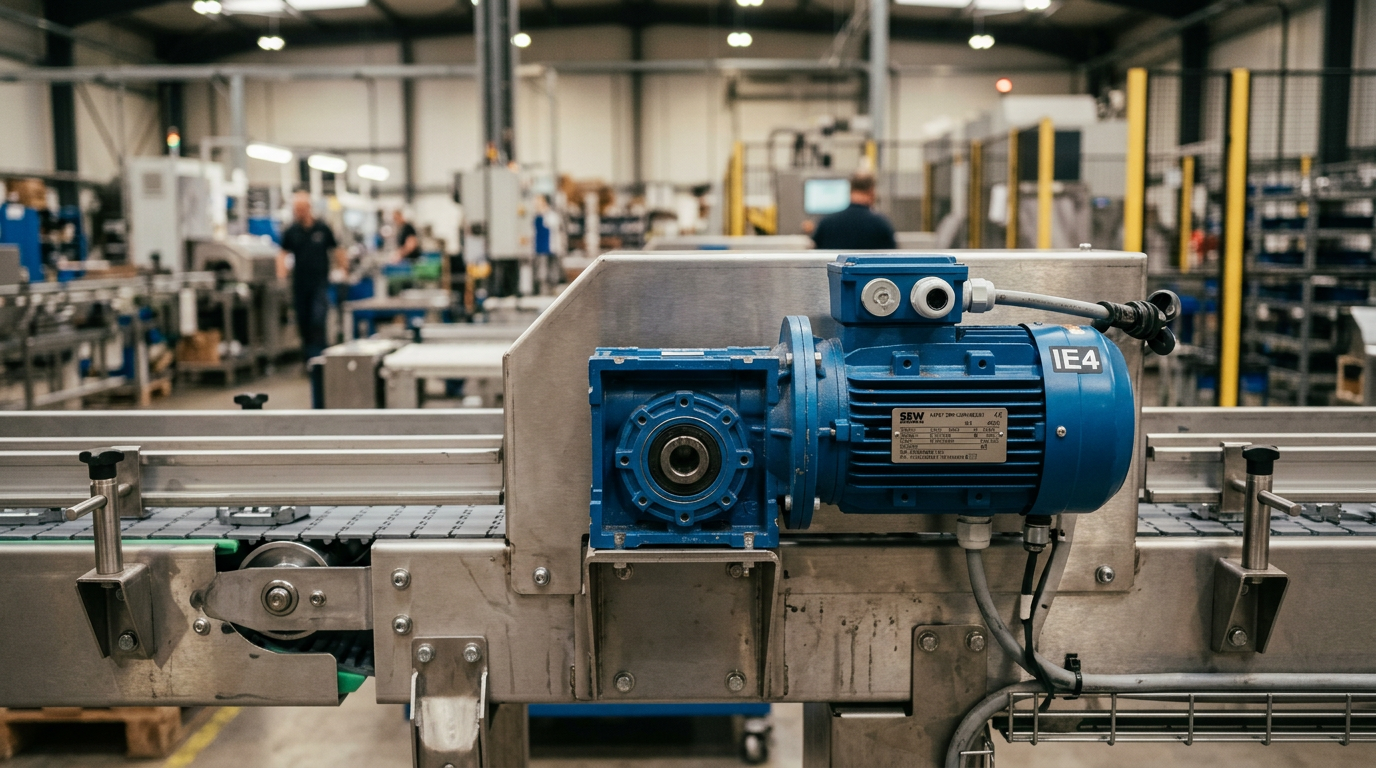
The implementation of IE3 and IE4 motors on conveyor drives can reduce energy consumption by up to 15% compared to standard IE2 units, providing a typical Return on Investment (ROI) of 12 to 24 months in continuous 24/7 manufacturing environments. Under the current eco-design requirements of the IEC 60034-30-1 standard, IE3 (premium efficiency) and IE4 (super-premium efficiency) motor classes have become the mandatory benchmark for industrial automation to meet global carbon reduction targets and minimize Total Cost of Ownership (TCO).
The Evolution of Induction Motor Efficiency Classes
The transition from standard efficiency to "Super-Premium" efficiency is driven by the European Ecodesign Directive and similar international standards by NEMA. To understand the impact on conveyor systems, one must first distinguish between the various efficiency classifications defined by the International Electrotechnical Commission.
Efficiency is defined as the ratio of mechanical output power to electrical input power. For a standard 7.5 kW motor, the difference between an IE1 and an IE4 motor represents several hundred watts of energy saved per hour of operation.
| Efficiency Class | Designation | Approx. Efficiency (7.5kW at 50Hz) | Typical Energy Losses |
|---|---|---|---|
| IE1 | Standard Efficiency | ~86.0% | Baseline |
| IE2 | High Efficiency | ~88.1% | -15% loss reduction |
| IE3 | Premium Efficiency | ~90.4% | -30% loss reduction |
| IE4 | Super-Premium Efficiency | ~92.6% | -45% loss reduction |
| IE5 | Ultra-Premium Efficiency | ~94.0% | Permanent Magnet Tech |
Why Conveyor Systems are Prime Candidates for IE4 Upgrades
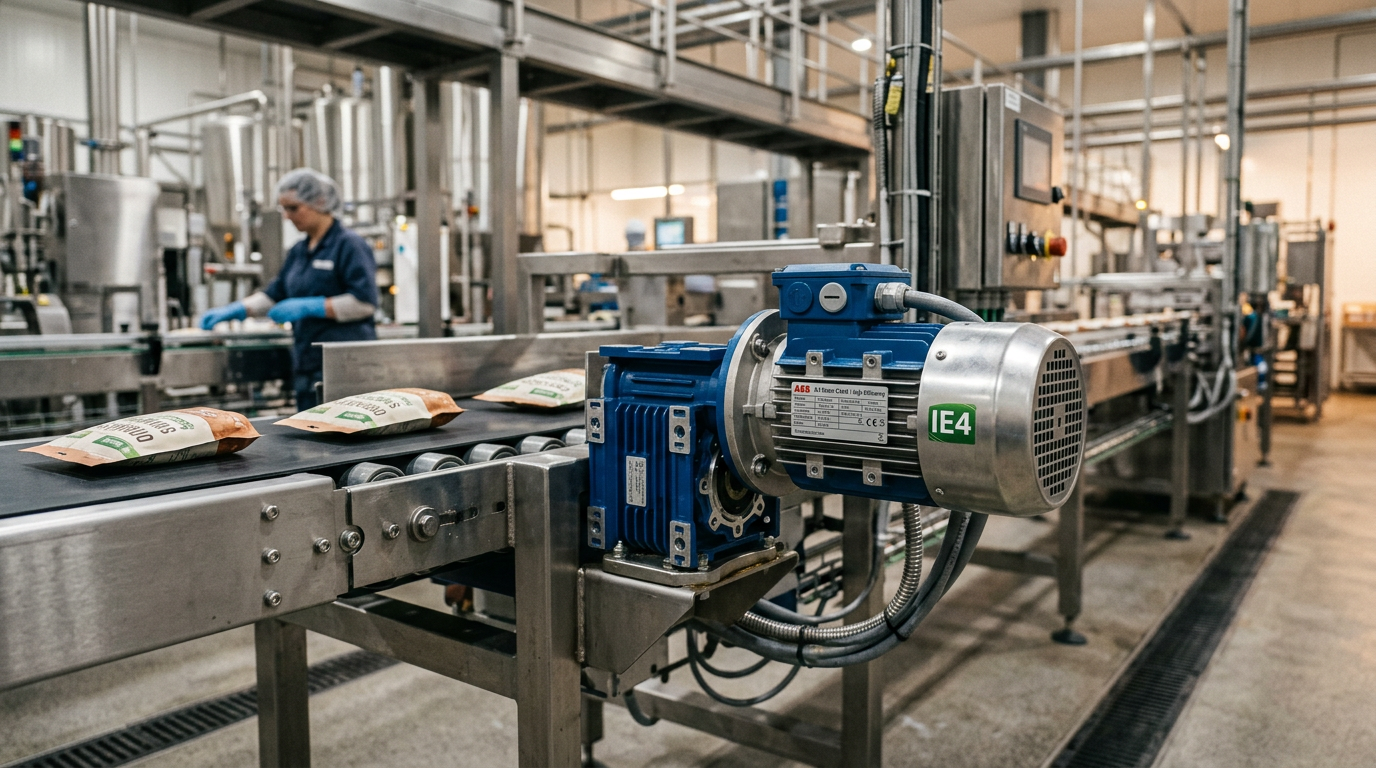
Conveyor systems in distribution centers and food processing facilities often run for 16 to 24 hours a day. Unlike a machine tool that might only consume peak power during a specific cut, a conveyor drive operates under a relatively constant load for extended durations. This duty cycle (S1 duty) is where the efficiency delta of an IE4 motor generates the most significant financial impact.
Furthermore, premium motors like those utilized by Easy Conveyors are engineered with superior laminations and optimized copper windings, which reduce the heat generated during operation. Lower heat translates to longer bearing life and reduced stress on the gearbox lubricant, increasing the Mean Time Between Failures (MTBF).
Technical Drivers of IE3 and IE4 Performance
To achieve IE4 levels, manufacturers have moved beyond simple design tweaks. The improvements are found in three primary areas:
- Reduced Stator Losses: By using higher-quality electrical steel and increasing the cross-sectional area of the copper windings, "I-squared-R" losses are significantly minimized.
- Optimized Rotor Construction: Many IE4 motors now utilize permanent magnet (PM) technology or synchronous reluctance (SynRM) designs instead of traditional squirrel-cage induction rotors. This eliminates rotor slip and the associated heat losses.
- Aerodynamics and Cooling: Improved fan designs and housing geometry reduce "windage" losses—the energy spent simply moving air to cool the motor.
Impact on Inverter-Driven Systems (VFDs)
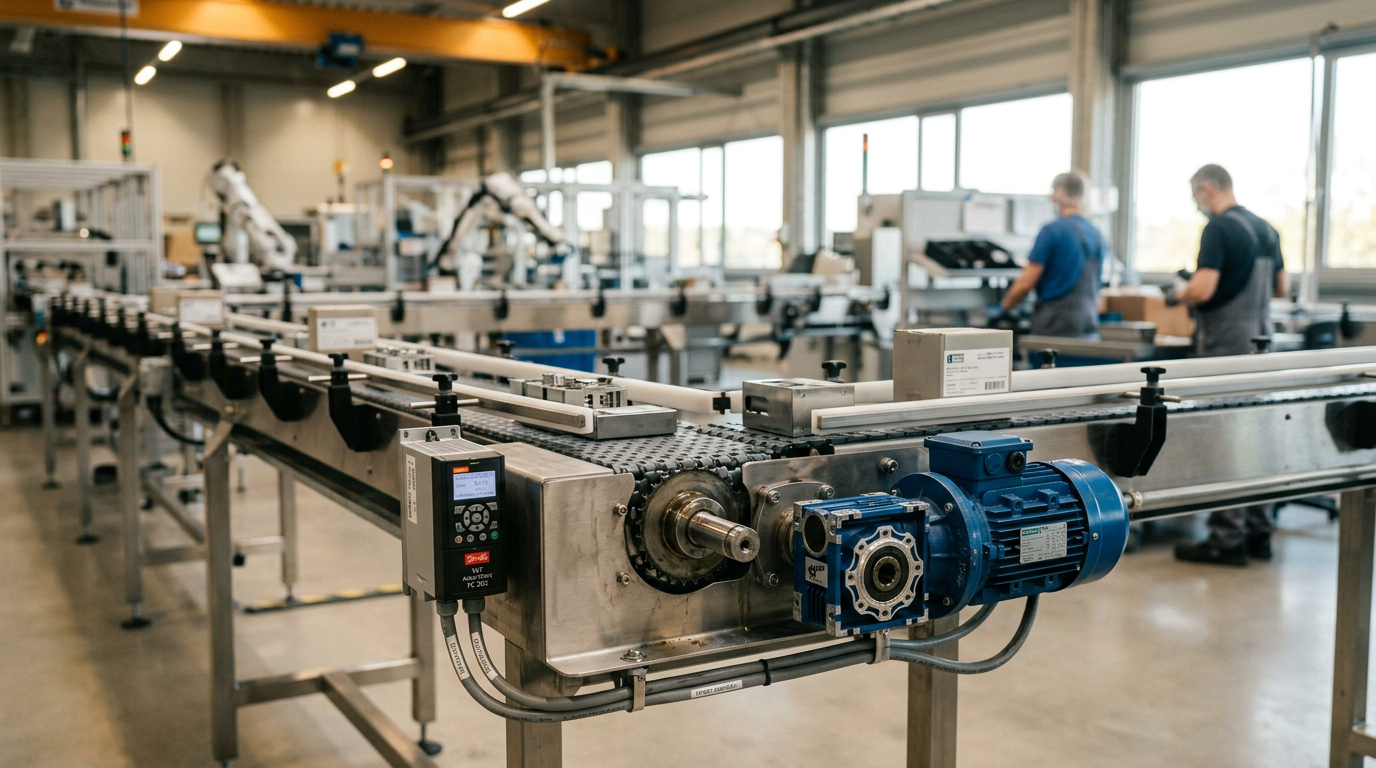
While an IE3 motor is highly efficient at its nominal speed, most modern conveyors use Variable Frequency Drives (VFDs) for soft-start tuning and speed control. It is a common misconception that a VFD alone makes a system efficient. In reality, the VFD introduces its own small losses (typically 2-4%). Combining a high-efficiency IE4 motor with a high-performance VFD ensures that the motor remains in its "efficiency sweet spot" even when running at 30Hz or 40Hz.
When selecting components, engineers should reference SEW-EURODRIVE's energy saving guidelines to ensure the motor-inverter pairing is optimized for the specific conveyor torque profile.
Easy Conveyors stocks the conveyor components discussed here — ready to ship across Europe.
Calculating ROI and Total Cost of Ownership (TCO)
The purchase price of an IE4 motor is typically 20% to 30% higher than an IE3 equivalent. However, in the context of a 10-year lifespan, the purchase price represents less than 5% of the motor's TCO. The remaining 95% is the cost of electricity.
Consider a 15 kW conveyor drive running 6,000 hours per year:
- IE2 Motor: Total annual energy consumption ~95,000 kWh.
- IE4 Motor: Total annual energy consumption ~89,000 kWh.
- Savings: 6,000 kWh per year. At an industrial rate of €0.20/kWh, this saves €1,200 annually per drive.
Across a facility with 50 conveyor modules, the annual savings exceed €60,000, while also significantly reducing the facility’s carbon footprint in line with ISO 50001 energy management standards.
Design Considerations for Integration
Upgrading to IE4 is not always a localized "drop-in" replacement. Higher efficiency motors often have different physical characteristics that engineers must account for during the design phase:
Frame Size and Weight
Because IE3 and IE4 motors often require more active material (copper and steel) to reduce internal resistance, they can occasionally be one frame size larger than the IE1 or IE2 motors they replace. When designing modular systems, verify that the mounting brackets and drive tensioning systems can accommodate the potential increase in motor length or diameter.
Starting Torque and Inrush Current
Premium efficiency motors typically exhibit higher starting currents (LRC) and lower slip. This can lead to more aggressive mechanical "jerking" during a direct-on-line (DOL) start. To prevent damage to conveyor belts or fragile products, the use of a VFD or a soft-starter is highly recommended for all IE3 and IE4 installations.
Thermal Management in Wash-down Environments
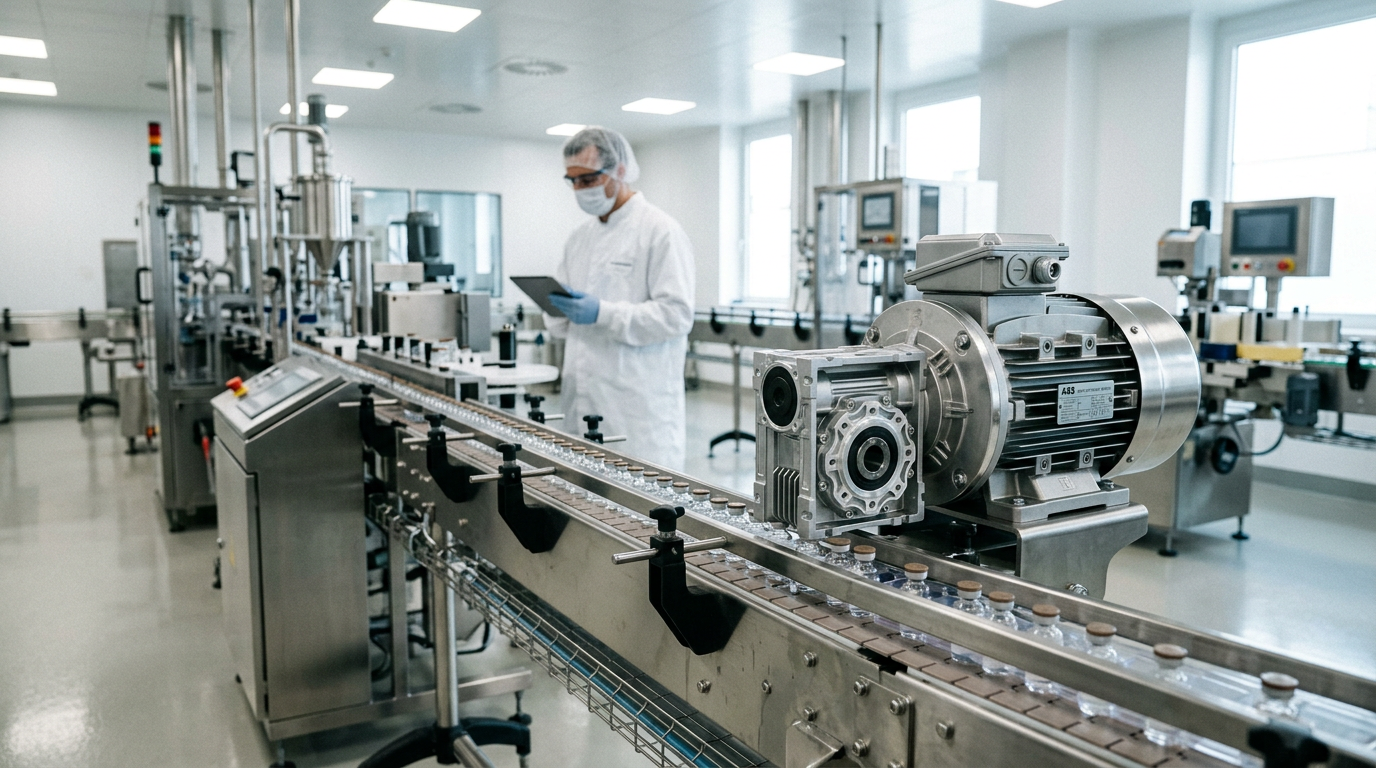
In food and pharma applications, motors must meet EHEDG or FDA requirements for hygiene. Standard IE4 motors often rely on external fins for cooling. However, in "wash-down" areas, these fins can trap bacteria. Specialist "smooth-bodied" IE3 motors are often selected for these zones, even if they sacrifice a fraction of efficiency for the sake of food safety.
Conclusion: The Mandatory Path to IE4
As energy prices remain volatile and regulatory pressure from the EU Ecodesign Directive increases, the adoption of IE4 motors is no longer an optional "green" initiative—it is a competitive necessity. By integrating high-efficiency drives into modular conveyor architectures, manufacturers can achieve lower utility costs, improved system reliability, and a future-proofed automation infrastructure.
When evaluating new conveyor investments, prioritizing motor efficiency class alongside belt-tracking precision and modular flexibility is the key to long-term operational success. Areas like drum motor selection and hygienic wash-down design are essential supplementary topics for any engineer looking to optimize the full drive-train efficiency.
Frequently Asked Questions
What is the difference between IE3 and IE4 motors?
IE3 is 'Premium Efficiency' and IE4 is 'Super-Premium'. Technically, IE4 motors reduce energy losses by an additional 15-20% compared to IE3 units, often by utilizing permanent magnet or synchronous reluctance technology.
Do IE4 motors require bigger mounting brackets?
Yes, IE4 motors often have more copper and steel, which can lead to larger frame sizes or longer motor bodies. Always check the CAD dimensions before replacing an older IE1 or IE2 motor on an existing drive mount.
Can I use a VFD with an IE4 motor?
Most IE3 and IE4 motors are optimized for VFD use. Using a VFD is actually recommended because these motors have high starting currents; a VFD manages this inrush and provides a smoother start-up for the conveyor belt.
What is the typical ROI for switching to IE4 motors?
For a standard conveyor running 16+ hours a day, the ROI for an IE4 motor over an IE3 is typically between 12 and 24 months, depending on local electricity costs and subsidies.
Are there any applications where IE4 is not recommended?
In very small systems (under 0.12 kW), the efficiency gains may be negligible compared to the increased cost. Also, if a conveyor runs less than 2 hours a day, the energy savings may never recover the initial capital expenditure.