The Impact of Energy-Efficient IE3 and IE4 Motors on Conveyor Drives
Discover how IE3 and IE4 motors transform conveyor efficiency, reducing energy use by 15% and extending component life through superior thermal management.
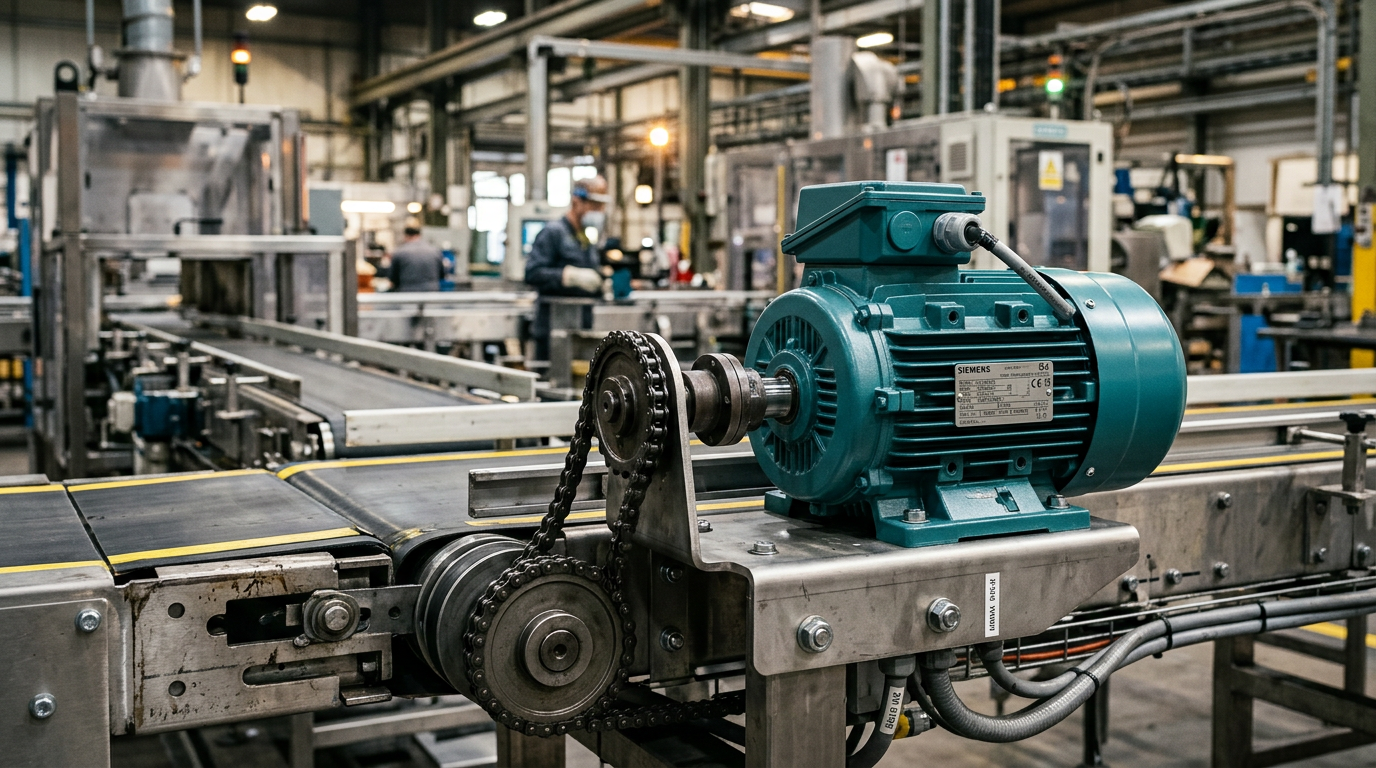
The implementation of IE3 (Premium Efficiency) and IE4 (Super Premium Efficiency) motors on conveyor drives can reduce energy consumption by up to 15% compared to IE2 standards, directly aligning with the Ecodesign Directive (EU) 2019/1781 which mandates higher efficiency for 0.75kW to 1000kW motors. Transitioning to IE4 permanent magnet or synchronous reluctance technology typically provides a return on investment (ROI) within 18 to 24 months in continuous-duty material handling environments.
The Evolution of Efficiency Standards: IE3 vs. IE4
The International Electrotechnical Commission (IEC) standardized motor efficiency classes under IEC 60034-30-1. While IE3 "Premium Efficiency" has been the industrial benchmark for several years, the shift toward IE4 "Super Premium Efficiency" represents a significant leap in power density and heat management.
For conveyor designers, the primary difference lies in the internal architecture. IE3 motors are typically induction-based (squirrel-cage), whereas IE4 motors often utilize Permanent Magnet (PM) or Synchronous Reluctance (SynRM) technology. These IE4 variants eliminate rotor slip losses, which are a major source of heat and inefficiency in traditional induction motors.
| Specification | IE2 (High) | IE3 (Premium) | IE4 (Super Premium) |
|---|---|---|---|
| Efficiency at 7.5kW | ~88.1% | ~90.4% | ~92.6% |
| Technology | Induction | Induction | PM / SynRM / Advanced Induction |
| Heat Dissipation | High | Moderate | Low |
| VFD Necessity | Optional | Highly Recommended | Essential (for PM/SynRM) |
| Typical Payback | N/A | 12–15 Months | 18–24 Months |
Technical Impact on Conveyor Systems
In material handling, motors rarely run at 100% load. This is where IE4 technology shines. Traditional induction motors see a sharp drop-off in efficiency when operating at partial loads (e.g., a conveyor running empty or half-full). In contrast, IE4 permanent magnet motors maintain a flat efficiency curve across a wider speed and load range.
Thermal Management and Bearing Life
One of the most overlooked benefits of IE3 and IE4 motors is thermal reduction. Because these motors are more efficient, less electrical energy is converted into waste heat. A motor running 10°C cooler can effectively double the lifespan of its insulation and significantly extend the intervals for bearing lubrication. In high-density sortation centers or enclosed food processing facilities, reducing the heat signature of dozens of drive units also lowers the load on HVAC systems.
Torque and Starting Characteristics
When selecting a drive for a modular conveyor, one must consider start-stop frequency. IE4 motors, particularly when paired with a high-performance Variable Frequency Drive (VFD), offer superior starting torque. This is critical for "soft-start tuning" where a fully loaded belt must be brought to speed without slipping or damaging the belt's flighting.
Integration with Modular Conveyor Systems
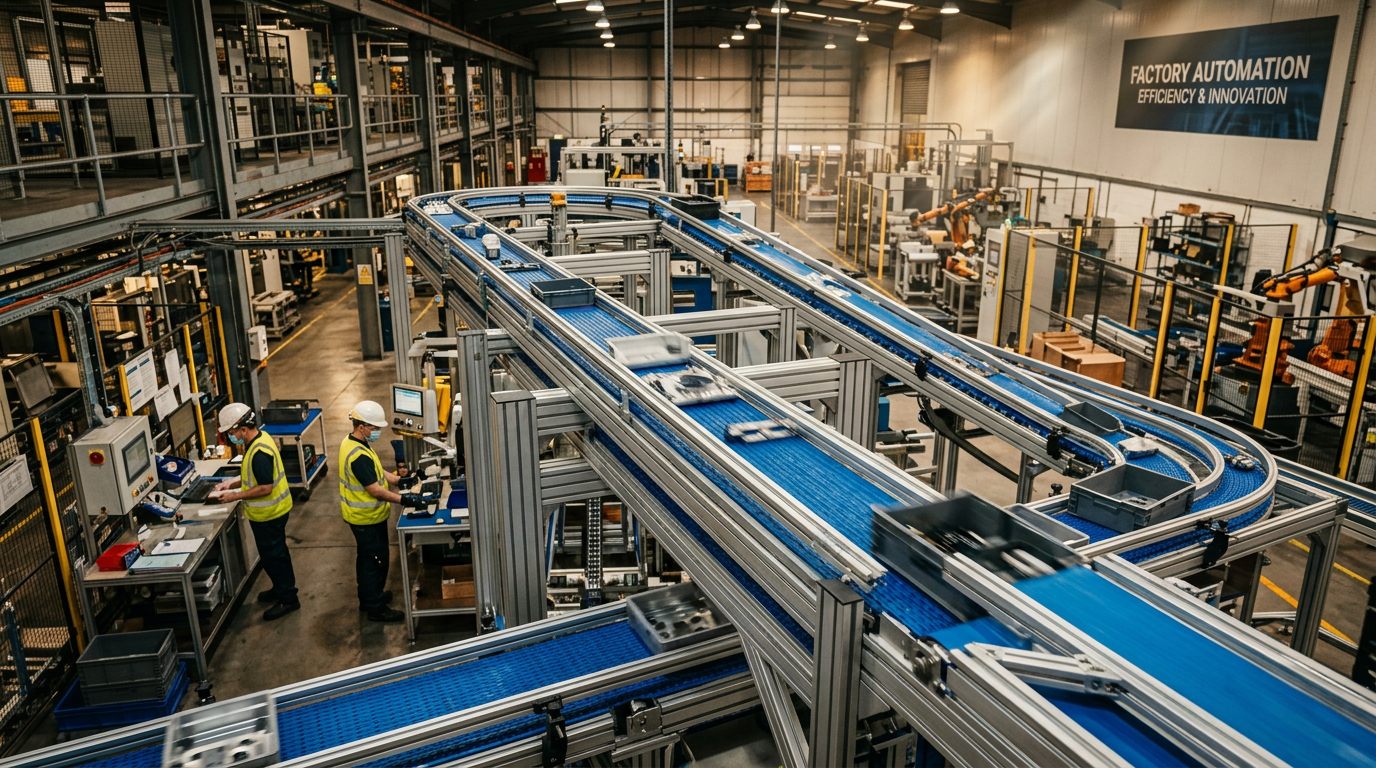
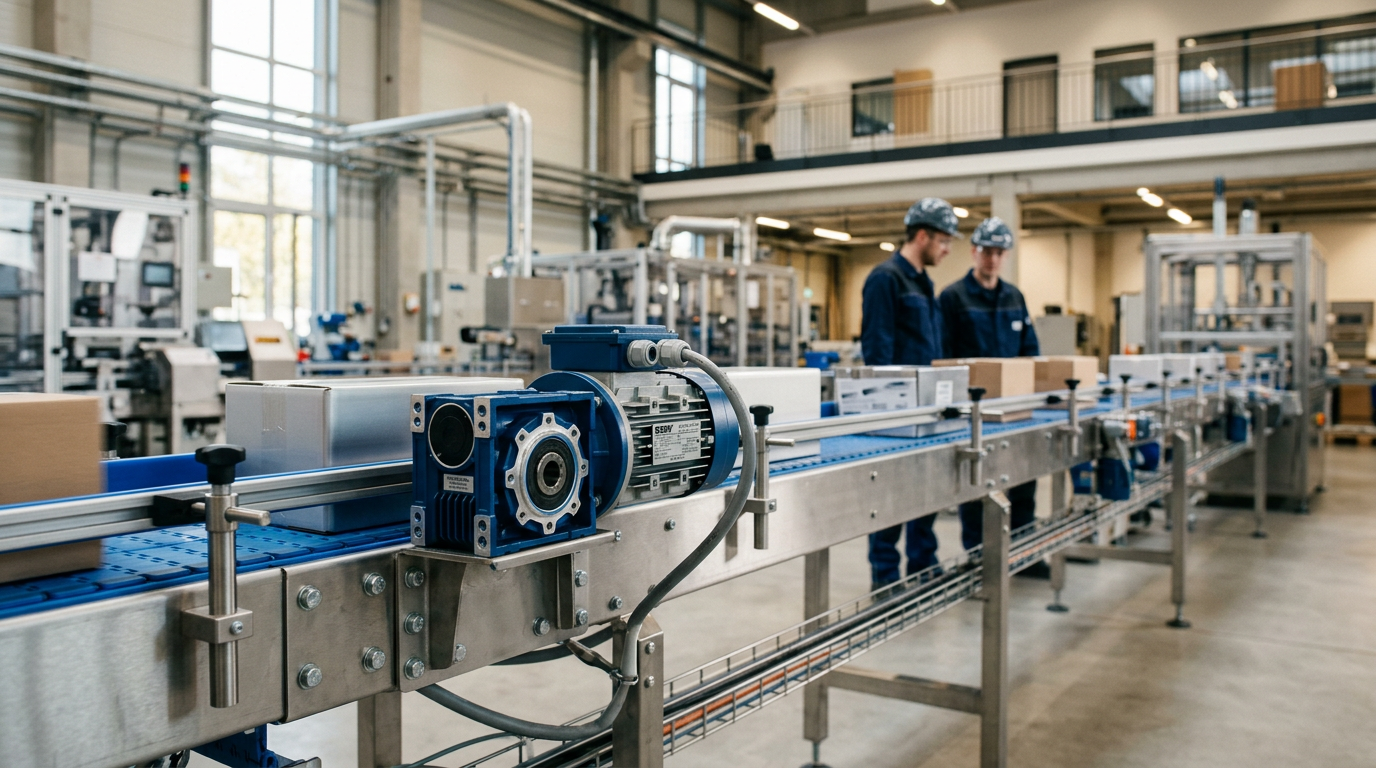
For engineers designing complex layouts, the physical footprint of the motor is a key constraint. IE4 motors often provide higher power density, allowing for a smaller frame size to deliver the same torque as a larger IE2 motor. This facilitates cleaner integration into tight spaces.
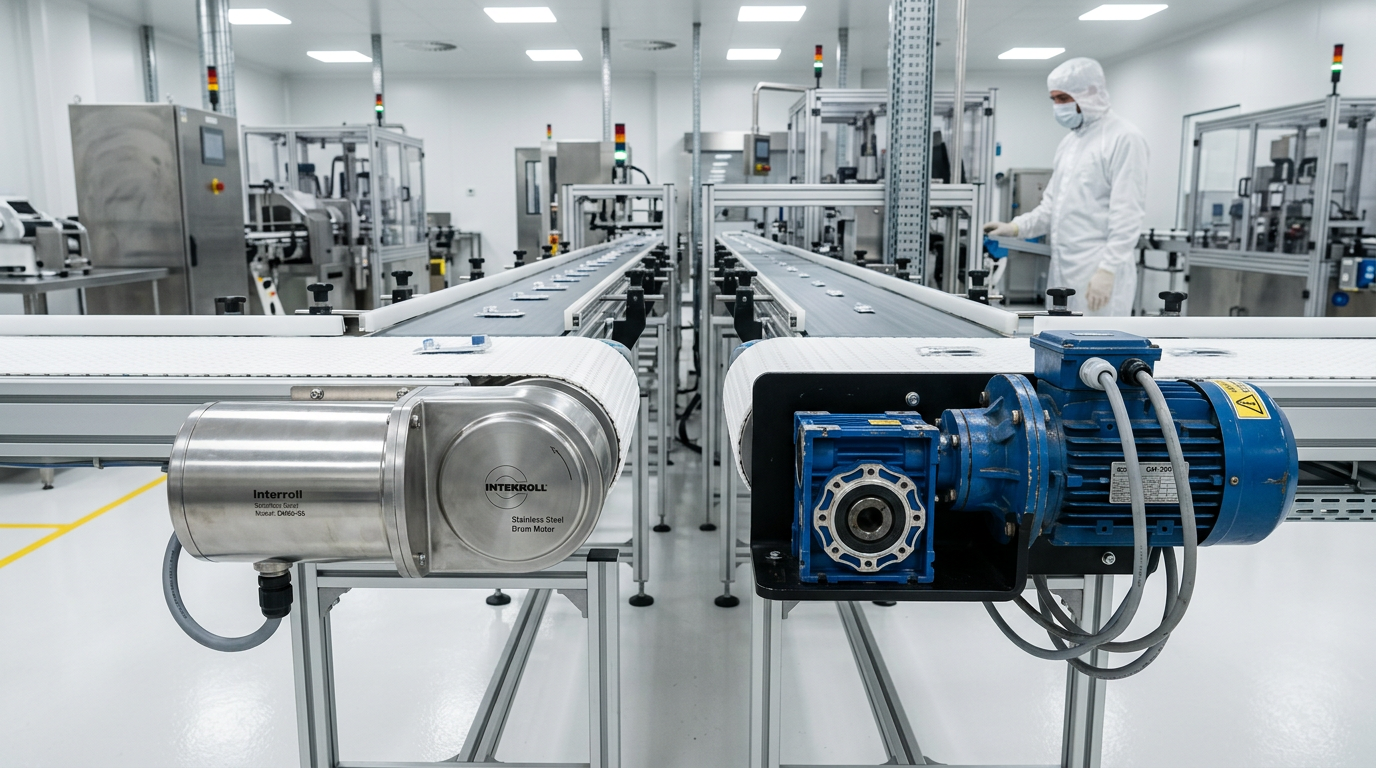
When sourcing components for these high-efficiency lines, working with an engineering partner like Easy Conveyors ensures that the drive selection—whether it be a drum motor or a geared motor—is optimized for both the mechanical load and the long-term energy profile of the facility. Their modular approach allows for the easy swapping of drive units as efficiency regulations evolve.
Easy Conveyors stocks the conveyor components discussed here — ready to ship across Europe.
The Role of VFDs and System-Level Efficiency
A common mistake in procurement is focusing solely on the motor. Total system efficiency includes the VFD, the gearbox, and the mechanical transmission (belts, rollers, or chains).
- VFD Soft-Start Tuning: Using a VFD with an IE4 motor allows for precise control over acceleration ramps. This prevents peak current spikes that contribute to high "demand charges" on utility bills.
- Gearbox Matching: An IE4 motor is wasted if paired with an inefficient worm gearbox (which may lose 20-30% of power to friction). Using helical or bevel gears is essential to maintain the efficiency gains of the motor.
- Hygienic Wash-down Design: In food and pharma, IE4 synchronous motors are often available in TENV (Totally Enclosed Non-Ventilated) configurations. Because they generate less heat, they don't require cooling fans, which are notorious for harboring bacteria and spreading contaminants.
Economic Justification and ROI
The "sticker price" of an IE4 motor can be 30% to 50% higher than an IE3 equivalent. However, in a 24/7 industrial environment, energy represents over 95% of a motor's total lifecycle cost.
For a typical 1.5kW conveyor drive running 6,000 hours per year:
- An IE3 motor might save €120 per year over an IE2.
- An IE4 motor might save an additional €60–€80 over the IE3.
- When multiplied across a facility with 200 drive units, the annual savings exceed €35,000.
Furthermore, many regions offer subsidies or tax credits for "green" technology upgrades that meet IE4 standards, effectively shortening the payback period to under 12 months in some jurisdictions.
Future-Proofing: Beyond IE4
As the industry looks toward IE5 (Ultra-Premium Efficiency), the focus is shifting toward "Power Drive Systems" (PDS). This means evaluating the motor and drive as a single, laboratory-tested unit. For conveyor manufacturers, this simplifies the "drum motor selection" process, as performance curves are guaranteed for the entire integrated package.
Engineers should prioritize IE4 today not just for the energy savings, but for the increased reliability and the ability to meet tightening carbon-reporting requirements. As electricity prices fluctuate, the most efficient motor is the best hedge against operational cost volatility.
Frequently Asked Questions
What is the main difference between IE3 and IE4 motors?
IE3 is 'Premium Efficiency,' while IE4 is 'Super Premium.' IE4 motors generally reduce energy losses by another 15-20% compared to IE3, often utilizing permanent magnet technology.
Do I need a VFD to run an IE4 motor?
Most IE4 permanent magnet and synchronous reluctance motors require a VFD to operate because they must be synchronized with the frequency of the power supply to start and run.
What is the typical ROI for IE4 motors?
In continuous 24/7 operations, the ROI for upgrading from IE3 to IE4 is typically between 18 and 24 months based on energy savings alone.
Do high-efficiency motors last longer?
Yes, because IE4 motors are more efficient, they generate less waste heat. This leads to longer bearing life and less stress on the motor's internal insulation.
Are IE4 motors effective for partial load conveyor applications?
Absolutely. IE4 motors maintain higher efficiency levels than IE2 or IE3 motors when running at 25% to 50% of their rated load, which is common in variable-speed conveyor applications.
Sources & references
- [1]Efficiency classes of line operated AC motors (IE-code) - IEC 60034-30-1:2014
- [2]Energy-efficient motors: IE3, IE4 and beyond
- [3]Premium Efficiency Motor (IE3) vs. Super Premium Efficiency (IE4) Standards
- [4]SIMOTICS GP/SD IE3/IE4 Low-Voltage Motors Energy Saving Solutions
- [5]OSHA Technical Manual: Energy Conservation through Motor Efficiency