Maximum Efficiency: Implementing IE3 and IE4 Motors on Conveyor Drives
Discover how IE3 and IE4 motors reduce conveyor energy loss by up to 40%. Learn about IEC 60034-30-1 standards, TCO benefits, and VFD integration for modular systems.
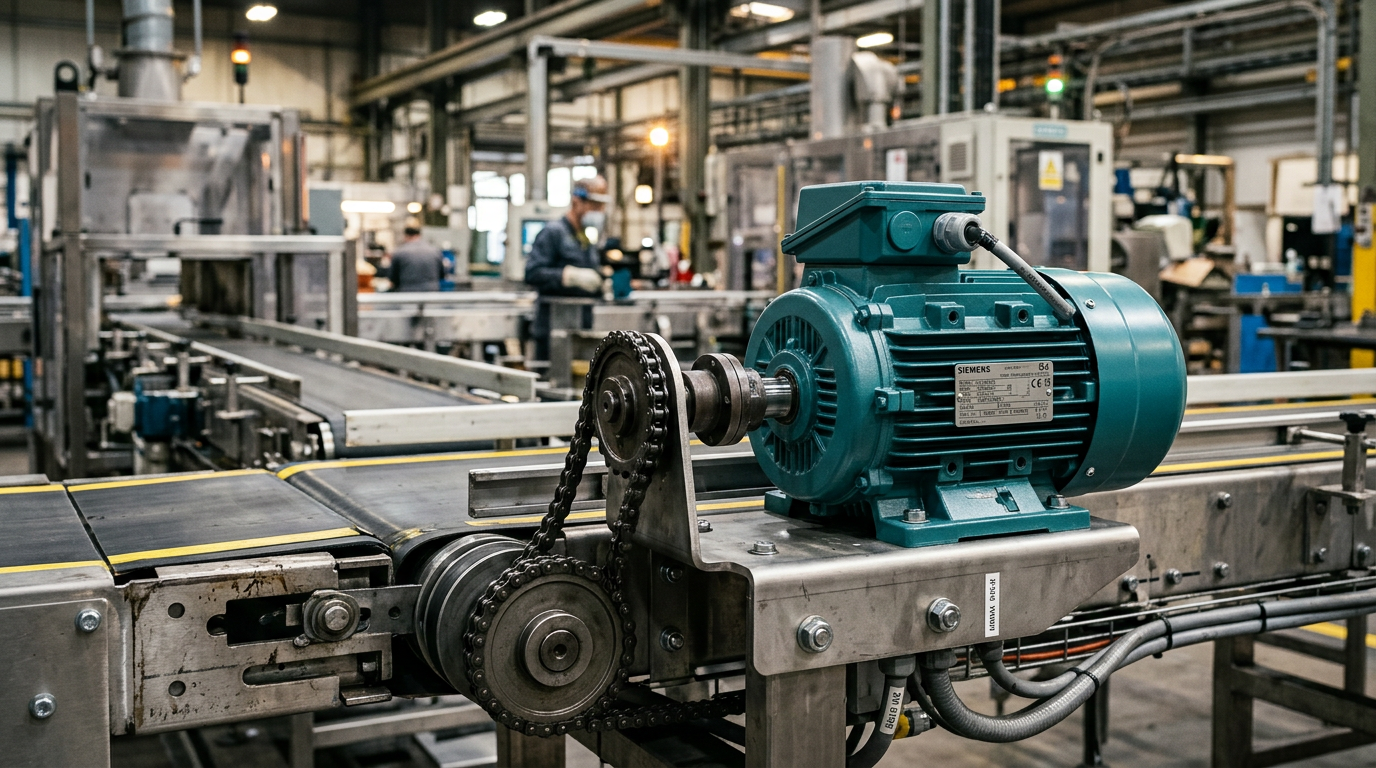
Upgrading to IE3 or IE4 efficiency class motors on conveyor drives typically reduces energy consumption by 15% to 30% compared to legacy IE1 or IE2 installations, specifically when integrated with Variable Frequency Drives (VFDs) for dynamic load management. In a standard continuous-duty industrial environment, the transition from an IE3 to an IE4 motor represents an additional 15-20% reduction in thermal energy loss, which directly extends bearing life and reduces maintenance overhead.
The Regulatory Landscape: IEC 60034-30-1
Modern material handling systems are governed by the international standard IEC 60034-30-1, which defines the energy-efficiency classes for single-speed, three-phase, cage-induction motors. As of 2023, the European Union and several North American jurisdictions have mandated IE3 as the minimum requirement for motors between 0.75 kW and 1000 kW, with IE4 requirements becoming the benchmark for larger installations and high-duty cycle applications.
- IE3 (Premium Efficiency): The current standard for most industrial conveyor drives.
- IE4 (Super Premium Efficiency): Often utilizing Permanent Magnet (PM) or Synchronous Reluctance (SynRM) technology to achieve ultra-low losses.
Why Motor Efficiency Matters in Modular Conveyors
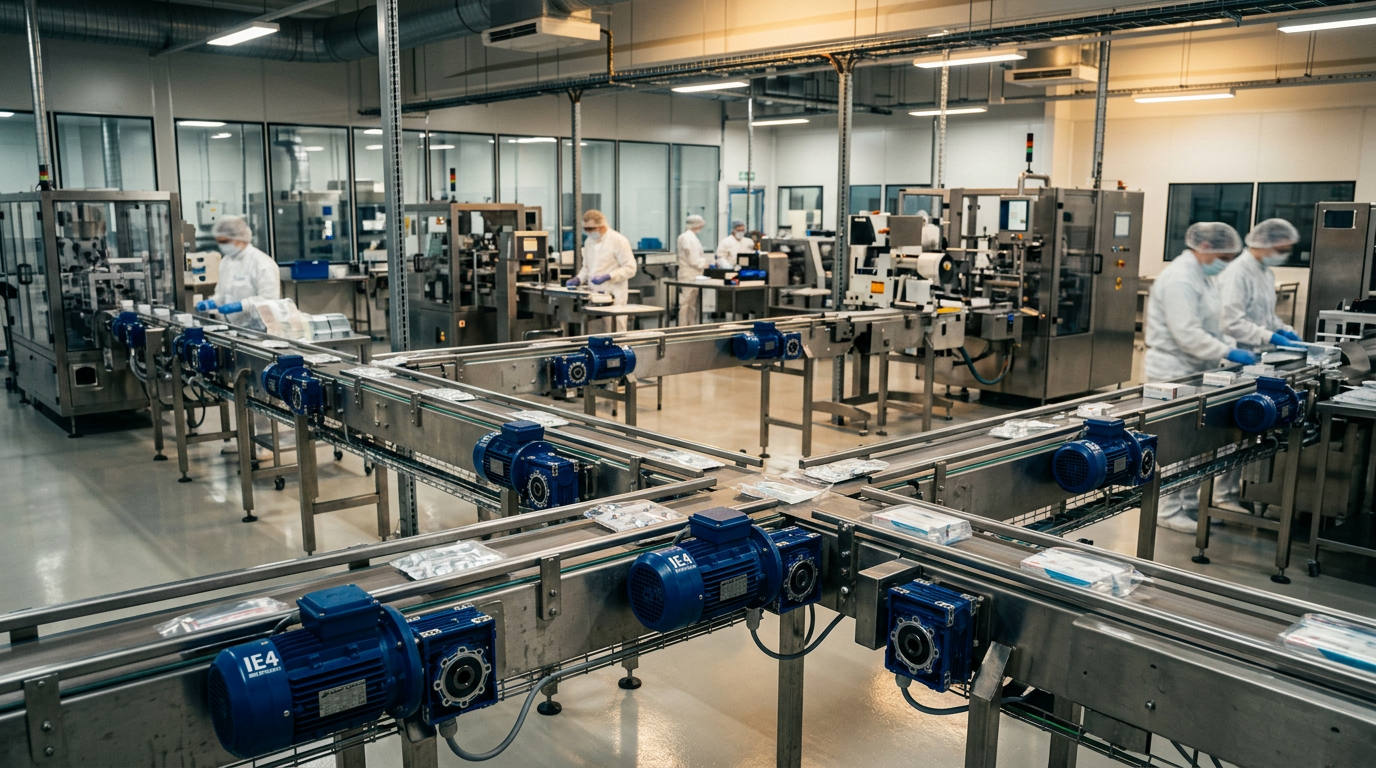
In a large-scale distribution center or food processing plant, hundreds of small-to-medium motors operate simultaneously. While a single 1.5 kW motor might seem insignificant, the aggregate energy draw is substantial. For modular conveyor systems, the efficiency gains are not just about the electricity bill; they are about thermal management and system longevity.
Higher efficiency motors generate less waste heat. In enclosed packaging environments or temperature-controlled pharmaceutical facilities, excessive heat from IE1/IE2 motors forces HVAC systems to work harder, creating a "double penalty" on energy costs. Furthermore, lower operating temperatures significantly extend the service life of lubricants and insulation.
Comparing Efficiency Classes
The following table illustrates the performance gap between motor generations based on a standard 7.5 kW 4-pole motor operating at 50 Hz.
| Feature | IE2 (High) | IE3 (Premium) | IE4 (Super Premium) |
|---|---|---|---|
| Typical Efficiency | ~88.1% | ~90.4% | ~92.6% |
| Energy Loss Reduction | Base | 20% vs IE2 | 40% vs IE2 |
| Motor Technology | Induction | Induction | PM or SynRM |
| Heat Dissipation | High | Moderate | Very Low |
| Typical ROI (Years) | N/A | 1.2 - 2.0 | 2.5 - 4.0 |
| VFD Compatibility | Required for efficiency | Recommended | Mandatory for PM |
Implementation Challenges and Solutions
Transitioning to IE4 motors, particularly Permanent Magnet variants, requires a shift in how engineers approach "drum motor selection" and "VFD soft-start tuning." Unlike standard induction motors, IE4 PM motors require a drive that can handle permanent magnet rotor dynamics.
- Inrush Current and Torque: IE3 motors often exhibit higher starting currents and higher locked-rotor torque than their IE1 predecessors. This can cause mechanical stress on modular belts and chains if not managed. Using a VFD to ramp up speed is critical to protect the mechanical integrity of the conveyor.
- Physical Dimensions: In some cases, the increased amount of active material (copper and steel) required to reach IE3/IE4 levels results in a larger frame size. When designing modular systems, engineers must verify that the motor housing does not interfere with the conveyor's side frames or adjacent equipment.
- Part-Load Efficiency: One of the greatest advantages of IE4 SynRM motors is their ability to maintain high efficiency even when running at 25% or 50% load. In e-commerce sortation, where throughput fluctuates hourly, this "flat" efficiency curve provides massive savings over standard induction motors that lose significant efficiency when under-loaded.
For those designing complex layouts, Easy Conveyors provides modular solutions that are fully compatible with the latest IE3 and IE4 drive technologies, ensuring that the mechanical interface matches the high-performance electrical specifications of modern motors.
Easy Conveyors stocks the conveyor components discussed here — ready to ship across Europe.
Technical Deep Dive: Permanent Magnet vs. Induction
While IE3 is primarily achieved through optimized induction motor designs (better laminations, more copper), IE4 often pushes the boundaries of physics.
Synchronous Reluctance (SynRM)
SynRM motors are a robust alternative for IE4 requirements. They do not use magnets (avoiding rare-earth metal costs) but instead use a rotor designed to "prefer" certain magnetic paths. This eliminates rotor cage losses. According to ABB/VME, SynRM motors can run up to 30 degrees Celsius cooler than induction motors, which translates to a doubling of bearing regreasing intervals.
Permanent Magnet (PM) Motors
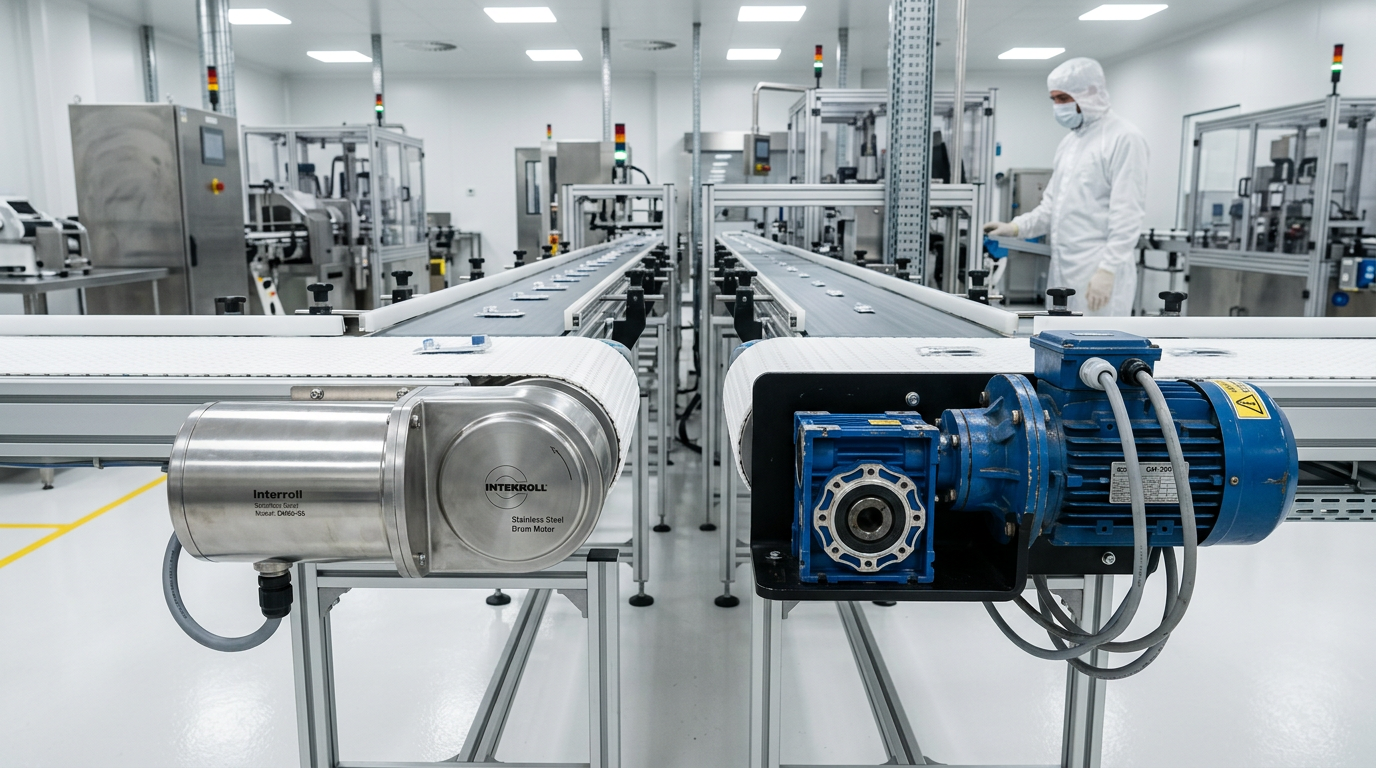
PM motors use high-energy magnets on the rotor. This creates a synchronous speed, meaning there is no "slip." For conveyor applications requiring high-precision positioning or constant torque across a wide speed range, PM motors are the gold standard. They are also more compact, which is a major benefit in "hygienic wash-down design" where small footprints are preferred to minimize bacterial harbor points.
Total Cost of Ownership (TCO) Calculation
When justifying the higher CAPEX of an IE4 motor to procurement, focus on the TCO over a 10-year lifecycle.
- Energy Costs: Typically represent 90% of a motor's lifetime cost.
- Maintenance: IE4 motors have lower thermal stress, leading to fewer winding failures.
- Productivity: Reduced downtime from motor failure is the hidden "killer app" for high-efficiency drives.
Integrating these motors with modern "VFD soft-start tuning" ensures that the mechanical components—like rollers, sprockets, and modular belts—are not subjected to the aggressive torque spikes characteristic of high-efficiency across-the-line starts.
Conclusion: Future-Proofing Your Facility
Adopting IE3 and IE4 standards is no longer just a matter of environmental social governance (ESG) goals; it is a technical necessity for competitive manufacturing. As energy prices remain volatile and regulations like the Ecodesign Directive tighten, the shift toward super-premium efficiency is the only path forward for material handling. By pairing these motors with optimized modular components, manufacturers can achieve a system that is not only faster and more reliable but significantly cheaper to operate over its functional life.
Frequently Asked Questions
How much energy can I save by switching from IE2 to IE4?
IE3 motors typically reduce energy losses by 20% compared to IE2, while IE4 (Super Premium) reduces losses by an additional 15-20% beyond IE3. In total, an IE4 motor can use 30-40% less energy than an older IE1/IE2 motor.
Do IE4 motors require a special Variable Frequency Drive?
Yes, IE4 Permanent Magnet (PM) and Synchronous Reluctance (SynRM) motors require a compatible VFD for operation. Unlike standard induction motors, they cannot be started 'across the line' (DOL).
Do high-efficiency motors affect maintenance schedules?
Because IE3/IE4 motors are more efficient, they generate significantly less internal heat. This leads to longer winding insulation life and extends the service intervals for bearing lubrication.
What is the typical payback period for an IE4 motor?
In a 24/7 industrial environment, the ROI for an IE3 motor is often under 18 months. For IE4, it typically ranges between 2 to 4 years, depending on local electricity rates and the duty cycle.