Drum Motor vs Gearmotor: Selection Guide for Belt Conveyor Drives
Compare drum motors vs gearmotors for conveyor drives. Learn about hygiene (IP69K), space efficiency, and thermal management in this 2026 engineering guide.
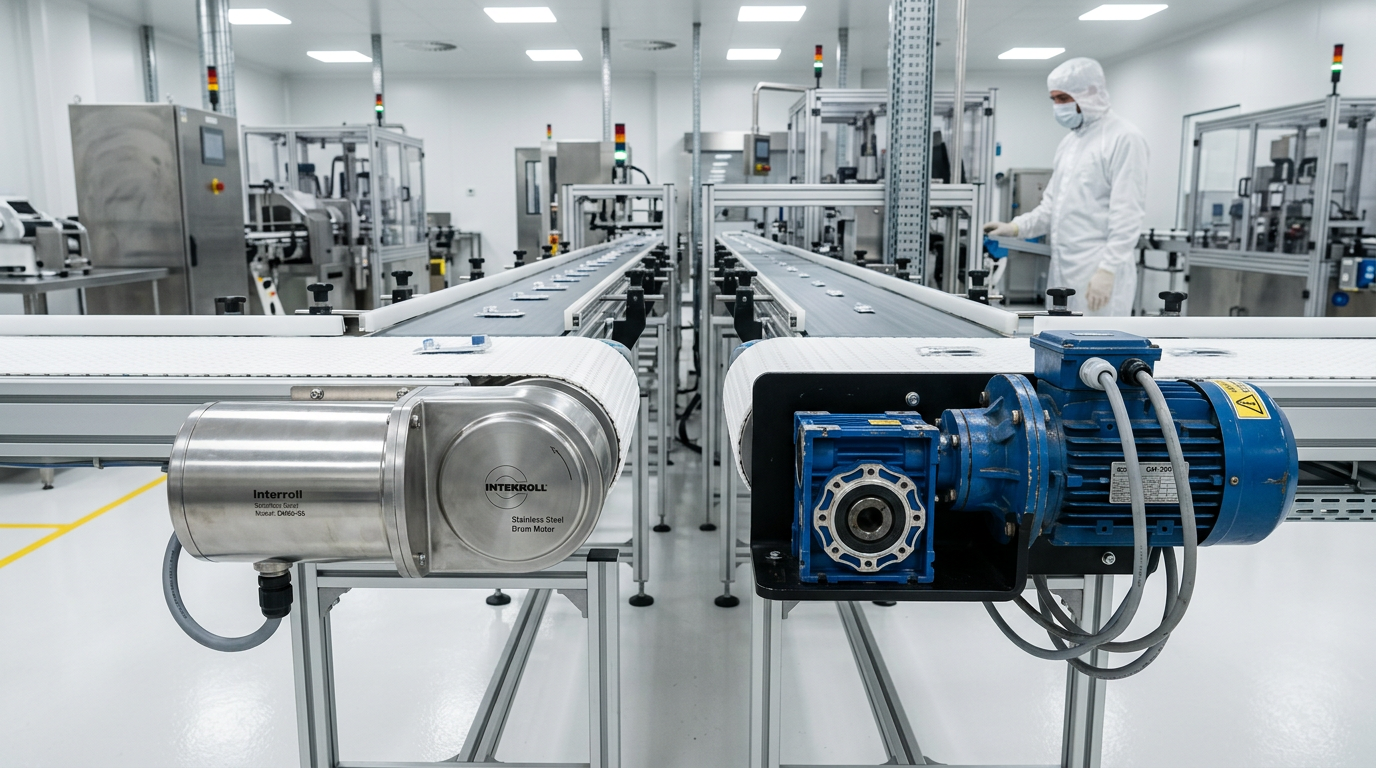
The primary difference between a drum motor and a gearmotor lies in their physical architecture: a drum motor houses the motor, gearbox, and bearings inside a hermetically sealed cylinder that acts as the drive pulley, while a traditional gearmotor is an external assembly consisting of an electric motor coupled to a reduction gearbox via a shaft or flange. Choosing between them typically involves a trade-off where drum motors offer up to 30% space savings and IP69K hygiene ratings (EHEDG), whereas gearmotors provide superior heat dissipation and easier maintenance access for heavy-duty industrial applications.
Architectural Overview: Internal vs. External Drives
When designing a belt conveyor system, the drive configuration dictates the machine's footprint, maintenance schedule, and environmental resilience.
What is a Drum Motor?
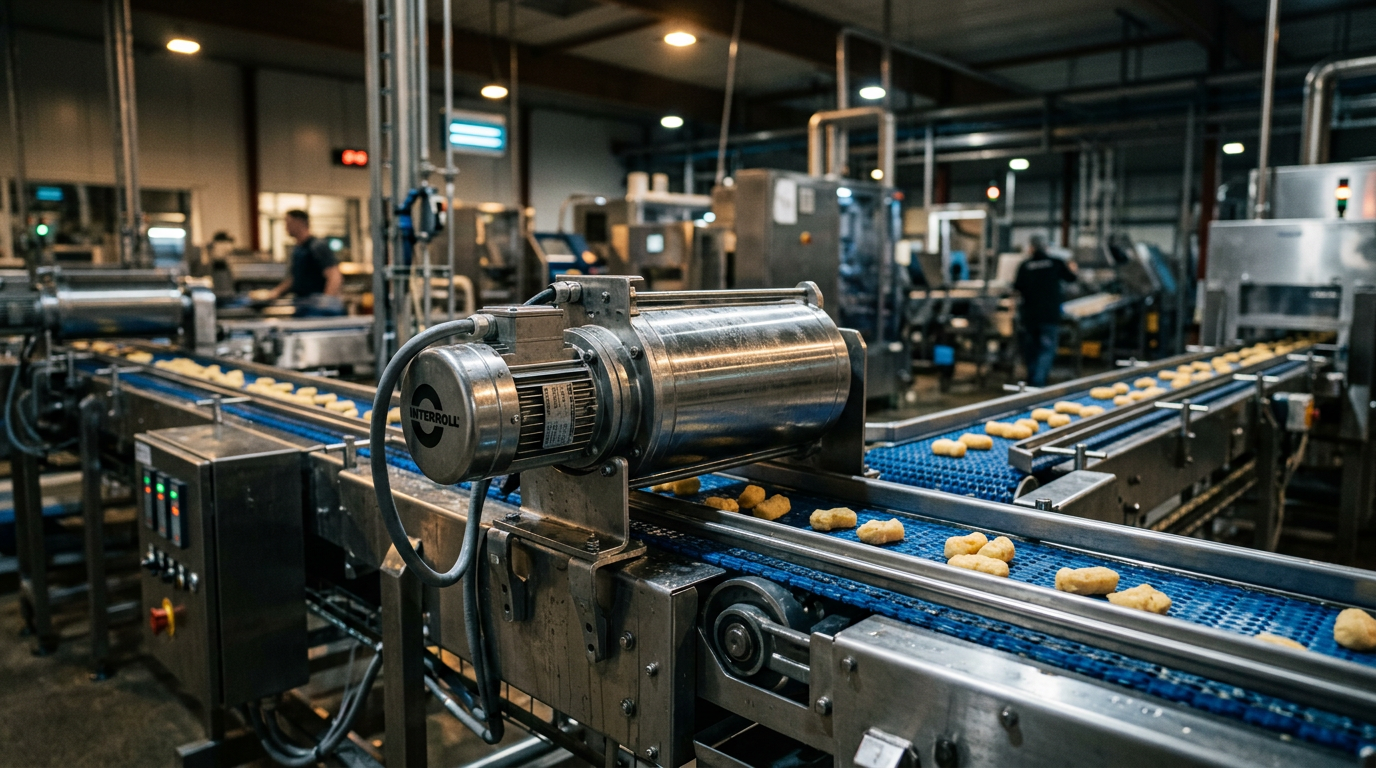
A drum motor (or motorized pulley) is an all-in-one drive unit. The stator, rotor, and gear train are situated within a rotating shell. The internal components run in an oil bath, which serves as both a lubricant and a coolant, transferring heat from the motor windings to the shell and then to the conveyor belt. This design eliminates the need for external components like chains, sprockets, or bulky motor mounts.
What is a Conventional Gearmotor?
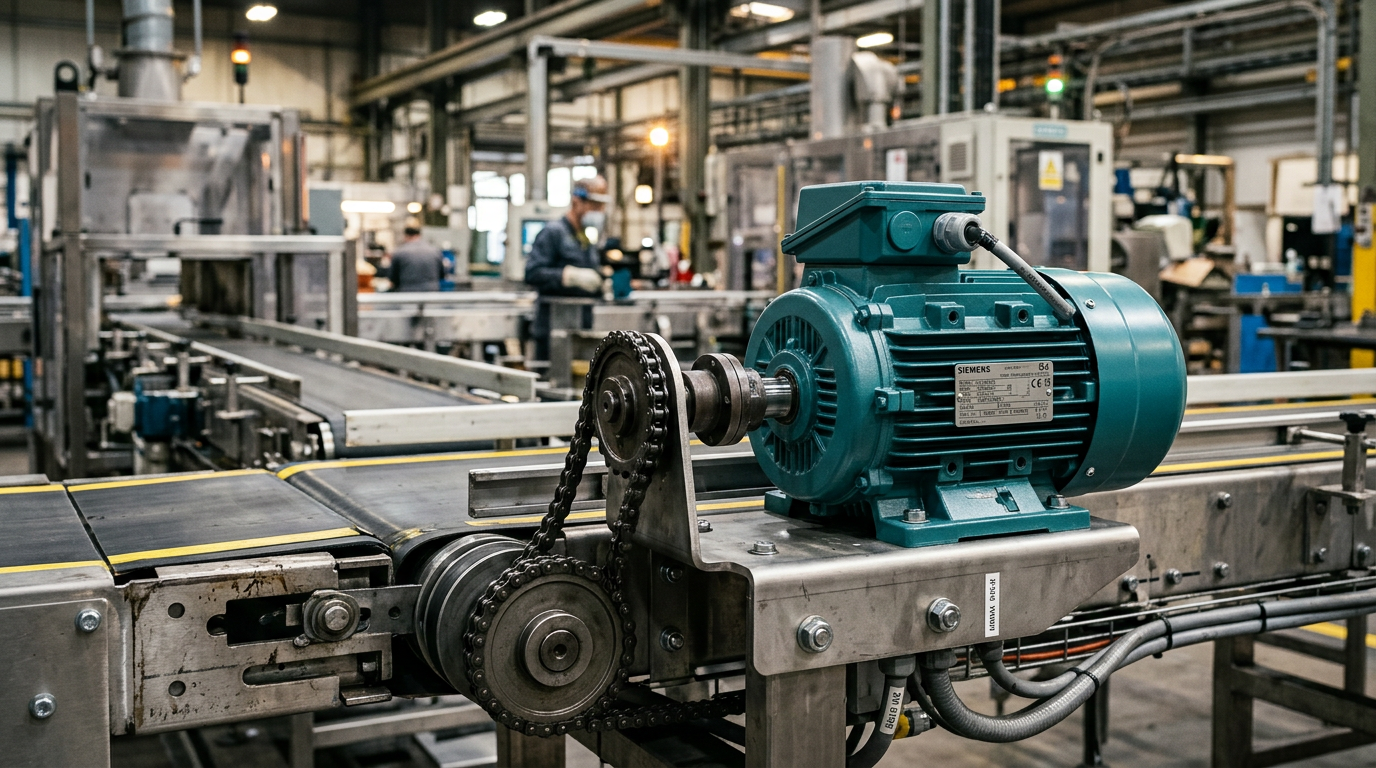
The conventional gearmotor setup consists of a standard AC or DC motor—often complying with efficiency classes like IE3 or IE4 (IEC 60034-30-1)—bolted to a gearbox (worm, helical, or bevel). This assembly is mounted to the side of the conveyor frame and connected to the drive pulley. It is the "workhorse" of the industry, known for its modularity and ease of repair.
Technical Comparison: Performance and Specifications
Selecting the right drive requires an analysis of mechanical efficiency, thermal management, and hygiene requirements. While drum motors are often preferred in food processing, gearmotors dominate in heavy-duty logistics and automotive assembly.
| Feature | Drum Motor (Motorized Pulley) | Conventional Gearmotor |
|---|---|---|
| Space Requirement | Extremely Compact (Internal) | High (External protrusions) |
| Ingress Protection | Up to IP69K | Typically IP55 - IP66 |
| Efficiency Class | Up to IE4 (Permanent Magnet) | IE2 to IE5 available |
| Cooling Method | Conduction (to belt/oil bath) | Convection (fan-cooled) |
| Maintenance | Low (Oil change @ 10,000 hrs) | Moderate (Seals, chains, fans) |
| Safety | High (No exposed moving parts) | Moderate (Requires guarding) |
Key Selection Criteria
1. Hygiene and Sanitation
In the food and pharmaceutical sectors, the choice is often driven by the European Hygienic Engineering & Design Group (EHEDG) standards. Drum motors are the gold standard for hygienic wash-down design. Because the motor is sealed inside a stainless steel cylinder, there are no cooling fans to circulate airborne contaminants and no external surfaces where debris can accumulate.
2. Space Constraints and Integration
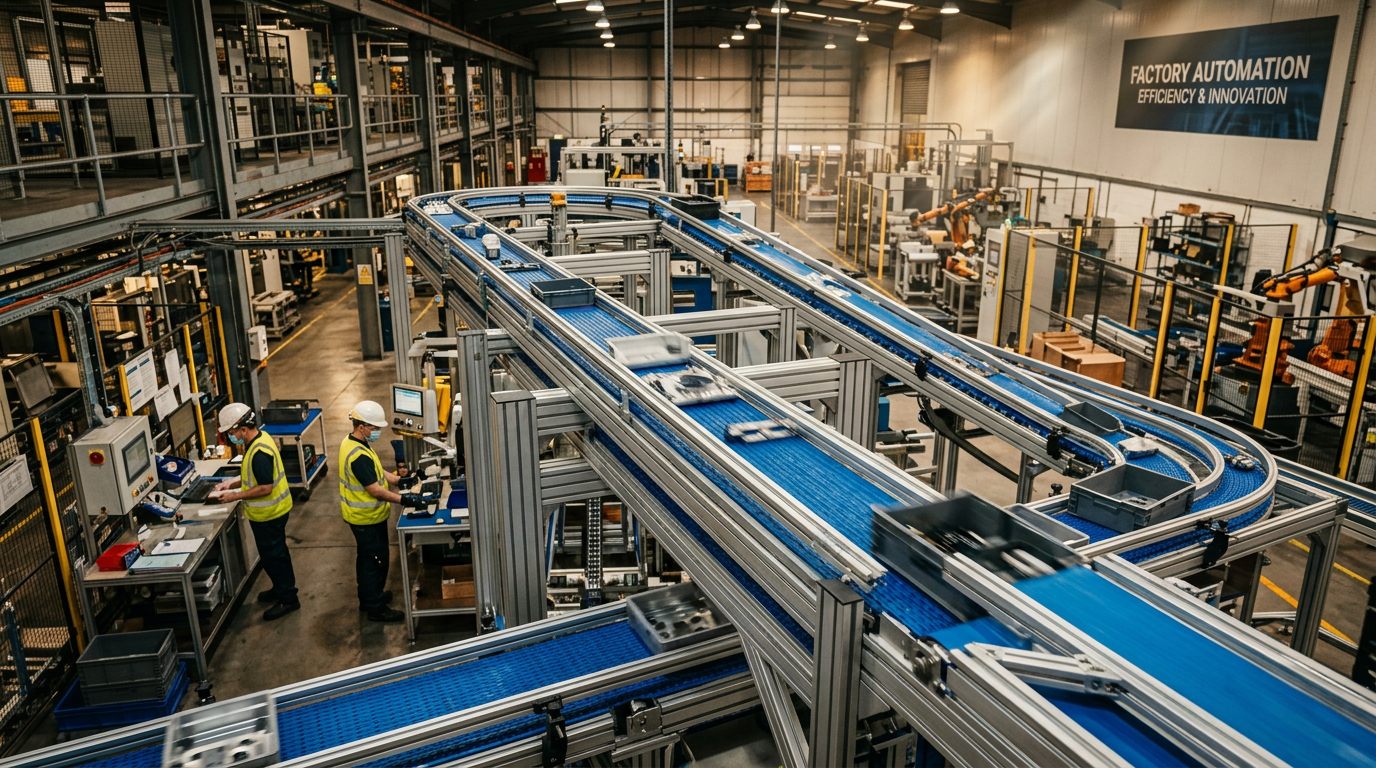
In modern "dark warehouses" and e-commerce sortation centers, space is at a premium. For systems requiring tight transfers or multi-lane sortation, the external protrusion of a gearmotor can be a significant bottleneck. Easy Conveyors specializes in modular systems that leverage these compact drive profiles to maximize floor-space efficiency. Using a drum motor allows for a "flush" conveyor side, enabling machines to be placed side-by-side without interference.
3. Thermal Management and Duty Cycle
Thermal behavior is the Achilles' heel of the drum motor. Because it relies on the conveyor belt to dissipate heat, running a drum motor without a belt (or with a highly insulated belt) can lead to overheating. In contrast, a gearmotor uses an external fan to pull air over the cooling fins, making it better suited for high-torque, low-speed applications or environments with high ambient temperatures.
Easy Conveyors stocks the conveyor components discussed here — ready to ship across Europe.
Maintenance and Total Cost of Ownership (TCO)
The "Buy vs. Maintain" debate is central to the drum motor vs. gearmotor selection.
- Drum Motor Maintenance: Typically requires an oil change every 10,000 to 50,000 hours of operation depending on the manufacturer. However, if an internal component fails, the entire unit must be removed from the conveyor, which can result in longer MTTR (Mean Time To Repair).
- Gearmotor Maintenance: Components are accessible. A failed motor can be swapped while leaving the gearbox and pulley in place. This is a critical factor in heavy-duty mining or bulk material handling where downtime costs thousands of dollars per minute.
Advanced Control: VFD and Soft-Starts
Regardless of the drive type, modern automation requires precision. Both systems benefit from VFD soft-start tuning to prevent belt stretch and mechanical shock. When using drum motors with Variable Frequency Drives (VFDs), engineers must ensure the motor is rated for inverter duty to prevent insulation breakdown.
For high-speed sortation, permanent magnet drum motors offer the highest power density and can achieve IE4 efficiency levels, surpassing standard induction motors in energy savings during continuous operation.
Common Failure Modes to Avoid
- Drum Motors: Over-tensioning the belt can lead to internal bearing failure. Additionally, using "lagging" (the rubber coating on the drum) that is too thick can act as an insulator, causing the motor to overheat.
- Gearmotors: Misalignment between the gearbox output shaft and the drive pulley is the most common cause of premature seal failure and vibration. Proper "drum motor selection" logic involves calculating the radial load to ensure the bearings can handle the belt tension.
Summary: When to Choose Which?
Choose a drum motor if your application requires IP69K wash-down capabilities, has limited footprint, or demands a "clean" aesthetic without external guards. This is common in food, pharma, and secondary packaging.
Choose a gearmotor if you are handling heavy loads (e.g., >2000 kg), require frequent start/stop cycles under high load, or operate in high-temperature environments where external fan cooling is mandatory. This is the standard for pallet handling, automotive logistics, and heavy manufacturing.
Frequently Asked Questions
Do drum motors overheat more often than gearmotors?
Drum motors rely on the conveyor belt and internal oil bath for cooling. If the conveyor runs without a belt or with a heavy lagging material, it may overheat. Gearmotors use external fans and fins for convection cooling.
Is a drum motor better for food-grade wash-down applications?
Yes, drum motors are ideal for food-grade environments. Their sealed stainless steel design meets EHEDG and FDA standards, preventing debris accumulation and making them wash-down safe up to IP69K.
Which drive type is easier to maintain?
Gearmotors are generally easier to repair because the motor and gearbox are external. A drum motor often requires removal from the conveyor frame for internal service, though they generally require less frequent maintenance overall.
What is the cost difference between drum motors and gearmotors?
Generally, drum motors are more expensive upfront due to their specialized sealed engineering. However, they offer a lower Total Cost of Ownership (TCO) in hygienic applications by reducing cleaning time and space requirements.