Drum Motor vs Gearmotor: Choosing the Right Belt Conveyor Drive
Compare drum motors vs gearmotors for conveyor drives. Learn about efficiency, IP69K ratings, hygienic design, and TCO to choose the right drive for your system.
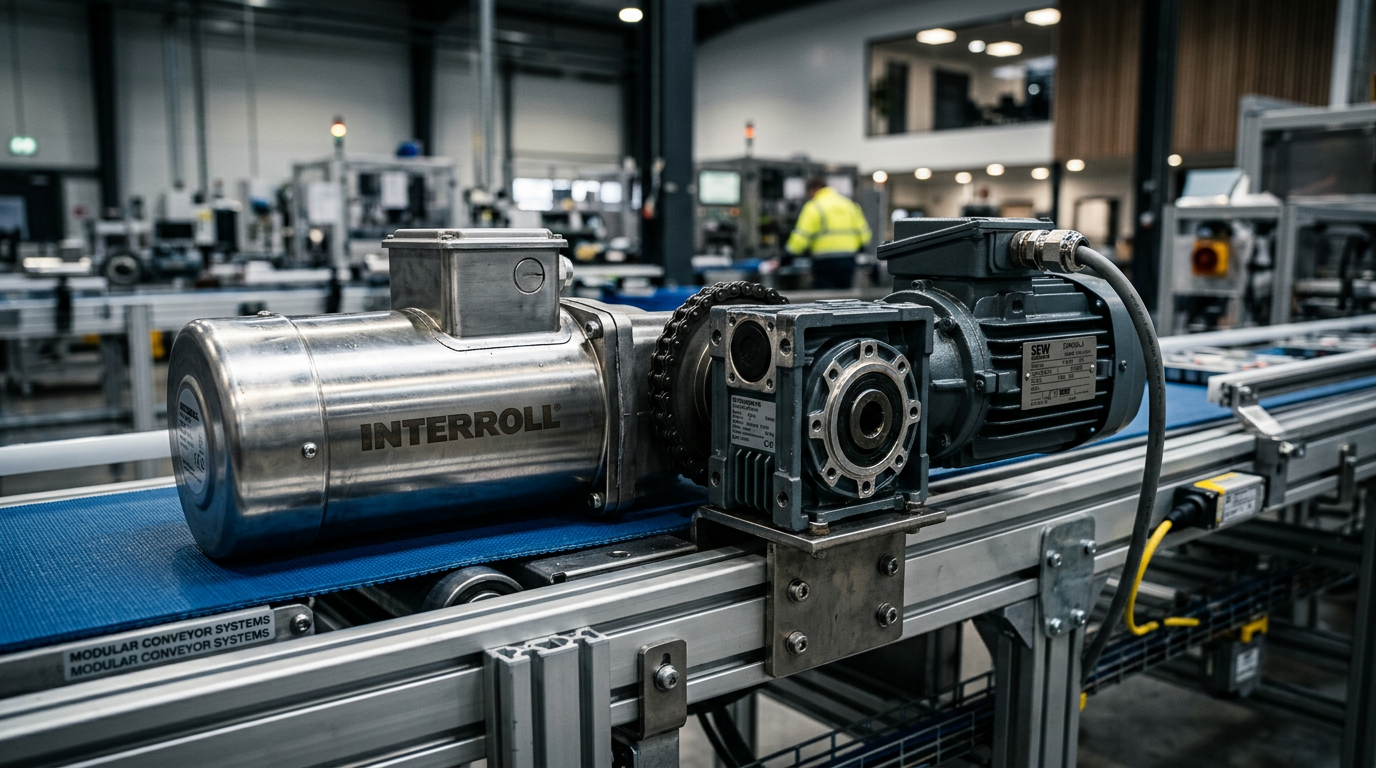
Selecting between a drum motor and a conventional gearmotor for belt conveyor drives requires a trade-off analysis where drum motors offer up to 30% space savings and IP69K sealing as standard, while traditional gearmotors provide roughly 25% lower initial acquisition costs and easier mechanical servicing. Systems requiring high hygienic standards or compact footprints favor the drum motor, whereas high-torque, heavy-duty applications often find the modularity of external gearmotors more economical over a 15-year lifecycle.
Understanding the Architecture: Integrated vs. External Drives
The fundamental difference between these two technologies lies in their physical integration. A drum motor (also known as a motorized pulley) houses the motor, gearbox, and bearings inside a sealed cylindrical shell. This shell acts as the drive pulley for the conveyor belt.
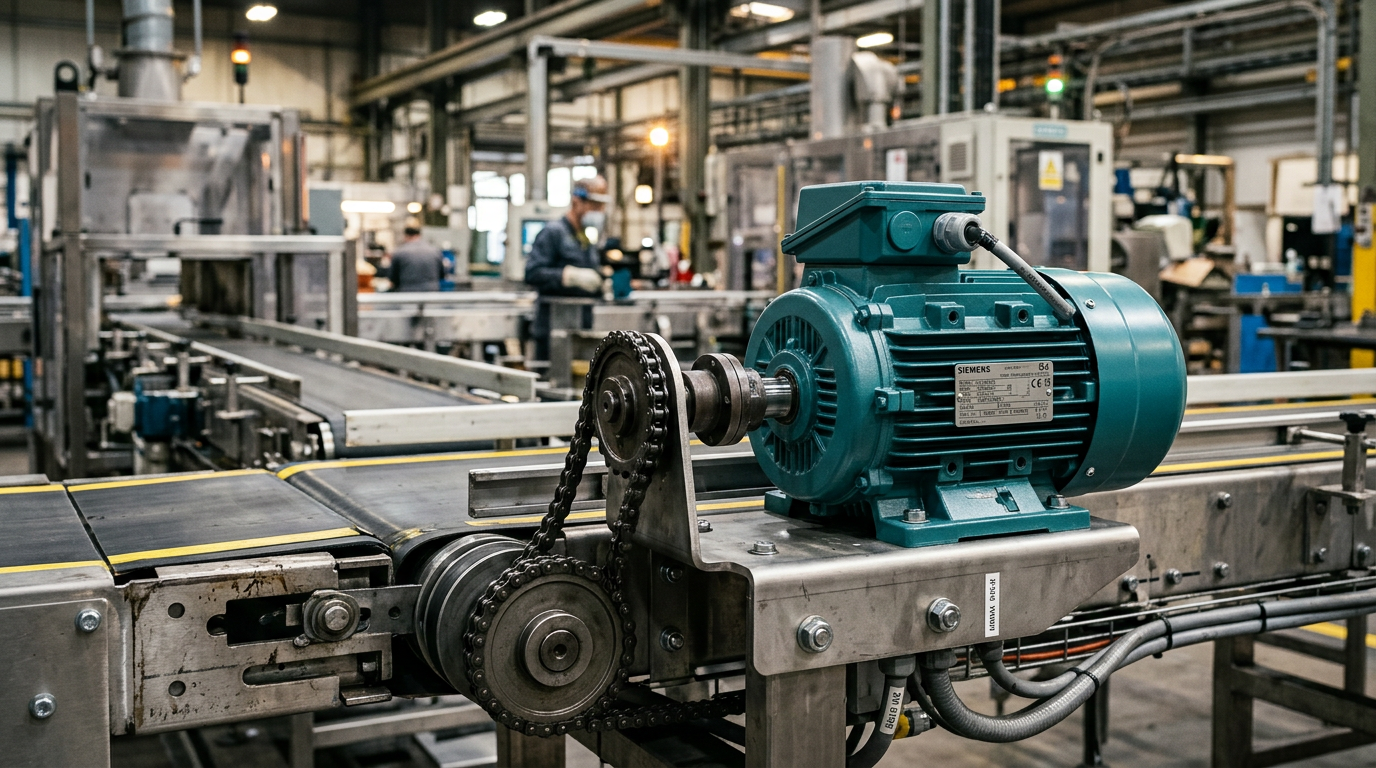
In contrast, a gearmotor setup consists of a separate motor and gearbox mounted externally to the conveyor frame, usually connected to the drive pulley via a hollow shaft, coupling, or a chain and sprocket arrangement.
Technical Performance and Efficiency Standards
Modern conveyor design is increasingly driven by energy efficiency standards such as IEC 60034-30-1, which defines efficiency classes from IE1 to IE4 (IEC).
- Drum Motor Efficiency: Because the motor is directly coupled to the load within the drum, there are no external transmission losses (like those found in chain drives). High-end permanent magnet drum motors can achieve IE4 Super Premium Efficiency ratings, making them ideal for high-duty cycle environments.
- Gearmotor Efficiency: While modern helical-bevel gearmotors are highly efficient (often >95% for the gearbox alone), the total system efficiency can be degraded by misaligned couplings or poorly maintained external chains. However, for extremely high-torque requirements (above 1,000 Nm), conventional gearmotors typically offer a wider range of ratios and larger thermal dissipate surfaces.
Comparison Table: Drum Motor vs. Gearmotor
| Feature | Drum Motor (Motorized Pulley) | External Gearmotor |
|---|---|---|
| Space Requirement | Extremely Compact (Inside frame) | Larger (Protrudes from side) |
| Ingress Protection | Up to IP69K (Standard) | Typically IP55/IP65 (IP66 optional) |
| Heat Dissipation | Via belt/conveyed product | Air-cooled (Integrated fan) |
| Maintenance Level | Nearly zero (Sealed for life) | Regular (Oil changes, chain tension) |
| Repairability | Factory service required | In-field repairable |
| Hygienic Rating | Excellent (EHEDG compliant) | Moderate (Requires stainless covers) |
Impact on Hygienic Design and Food Safety
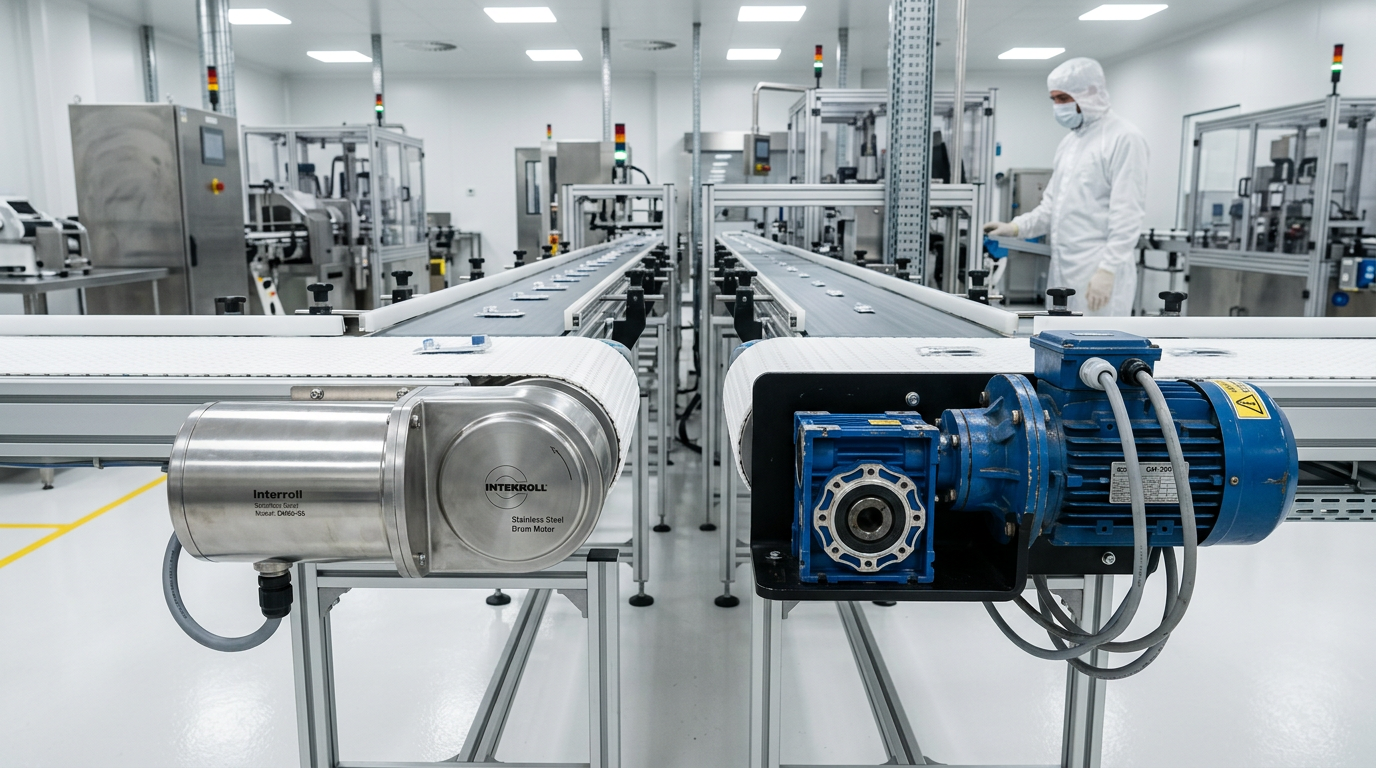
In the food and pharmaceutical sectors, the choice is often dictated by EHEDG (European Hygienic Engineering & Design Group) guidelines (EHEDG). Drum motors are the gold standard for hygienic conveyors because they eliminate external flat surfaces, cooling fans that can circulate airborne contaminants, and grease-leaking seals located directly over the product zone.
The smooth, stainless steel finish of a drum motor allows for rapid "Wash-down" procedures. Conversely, a standard gearmotor has cooling fins and recessed bolts that act as "bacteria traps." When using external drives in food zones, engineers must often specify expensive stainless steel housings or spe
Easy Conveyors stocks the conveyor components discussed here — ready to ship across Europe.
cialized antimicrobial coatings.
Operational Trade-offs: Heat and Maintenance
One critical design consideration for drum motors is thermal management. Since the motor is encapsulated, it relies on the conveyor belt to act as a heat sink. If the conveyor is running at very low speeds with high torque, or if the belt is stationary for long periods under load, the motor can overheat.
Traditional gearmotors are air-cooled by an integrated fan. This makes them more resilient in high-ambient temperature environments or in applications requiring frequent starts and stops (S3 duty cycle) without continuous belt movement. When selecting a drive for a system utilizing modular plastic belts, the choice of the right drive partner is essential. Easy Conveyors, for instance, provides engineering support to ensure that the chosen drive—whether internal or external—is perfectly matched to the belt's friction coefficients and the system's thermal limits.
Installation and Total Cost of Ownership (TCO)
While the purchase price of a drum motor is typically higher than a standard AC motor and worm gearbox combination, the Total Cost of Ownership often tells a different story:
- Assembly Time: Drum motors act as the drive pulley, reducing the number of parts to be sourced and assembled. This can reduce conveyor manufacturing time by up to 2 hours per unit.
- Operational Safety: Since there are no external moving parts (shafts, sprockets, keys), drum motors inherently meet higher safety standards without the need for additional guarding. This aligns with ISO 14120 safety requirements for fixed guards (ISO).
- Energy Savings: The higher efficiency of synchronized drum motors can lead to a ROI of less than 24 months in multi-shift sortation centers.
Reliability and Failure Modes
The "failure mode" is perhaps the most significant differentiator for maintenance managers. If a drum motor fails, the entire drive pulley must be removed, which usually requires slacking or removing the conveyor belt. This can lead to significant downtime.
With an external gearmotor, the motor can often be swapped out in minutes without touching the belt or the drive pulley. For critical path conveyors in e-commerce fulfillment centers where "mean time to repair" (MTTR) is a primary KPI, this modularity often outweighs the space-saving benefits of the drum motor.
Conclusion: Which Should You Choose?
Choose a Drum Motor when:
- Space is at a premium (e.g., inside an AGV or a compact machine).
- The environment requires high-pressure wash-down (IP69K).
- You want to reduce noise levels (sealed units are significantly quieter).
- Reducing assembly parts counts is a priority for OEM production.
Choose an External Gearmotor when:
- The application involves extreme heavy-duty cycles or high torque (>2,000 Nm).
- In-house maintenance teams need to perform rapid repairs or motor swaps.
- The environment is extremely hot, requiring fan cooling.
- Budget constraints prioritize low initial capital expenditure over long-term energy savings.
For advanced automation, integrating these drives with VFD soft-start tuning and drum motor selection software ensures the system operates within its optimal torque curve, extending the life of both the belt and the internal gearing. Proper selection today prevents the costly "over-engineering" or premature failures of tomorrow.
Frequently Asked Questions
Why are drum motors preferred in food processing?
Drum motors are significantly better for hygiene because they are fully sealed (often IP69K), made of stainless steel, and lack cooling fans or external shafts that trap bacteria.
Do drum motors overheat more than gearmotors?
A drum motor relies on the belt and the conveyed material to dissipate heat. If the belt is not moving or the motor is oversized, it can overheat. Some modern units use oil cooling to mitigate this.
Can I use a VFD with both types of drives?
Yes, while the initial cost and maintenance complexity differ, both can be controlled using standard Variable Frequency Drives (VFDs) to manage speed and ramp-up torque.
Which drive type is more cost-effective?
Generally, external gearmotors have a lower purchase price (20-30% less), but drum motors can be cheaper when factors like installation labor and safety guarding are included.
What is the biggest downside of a drum motor?
The main disadvantage is repairability; if an internal component fails, the entire pulley usually needs to be removed and sent to a specialist, causing more downtime than a simple external motor swap.