Drum Motor vs Gearmotor: A Technical Selection Guide for Belt Conveyors
Compare drum motors vs gearmotors for conveyor drives. Learn about efficiency (IE3/IE4), IP69K hygiene standards, space savings, and thermal management for modular systems.
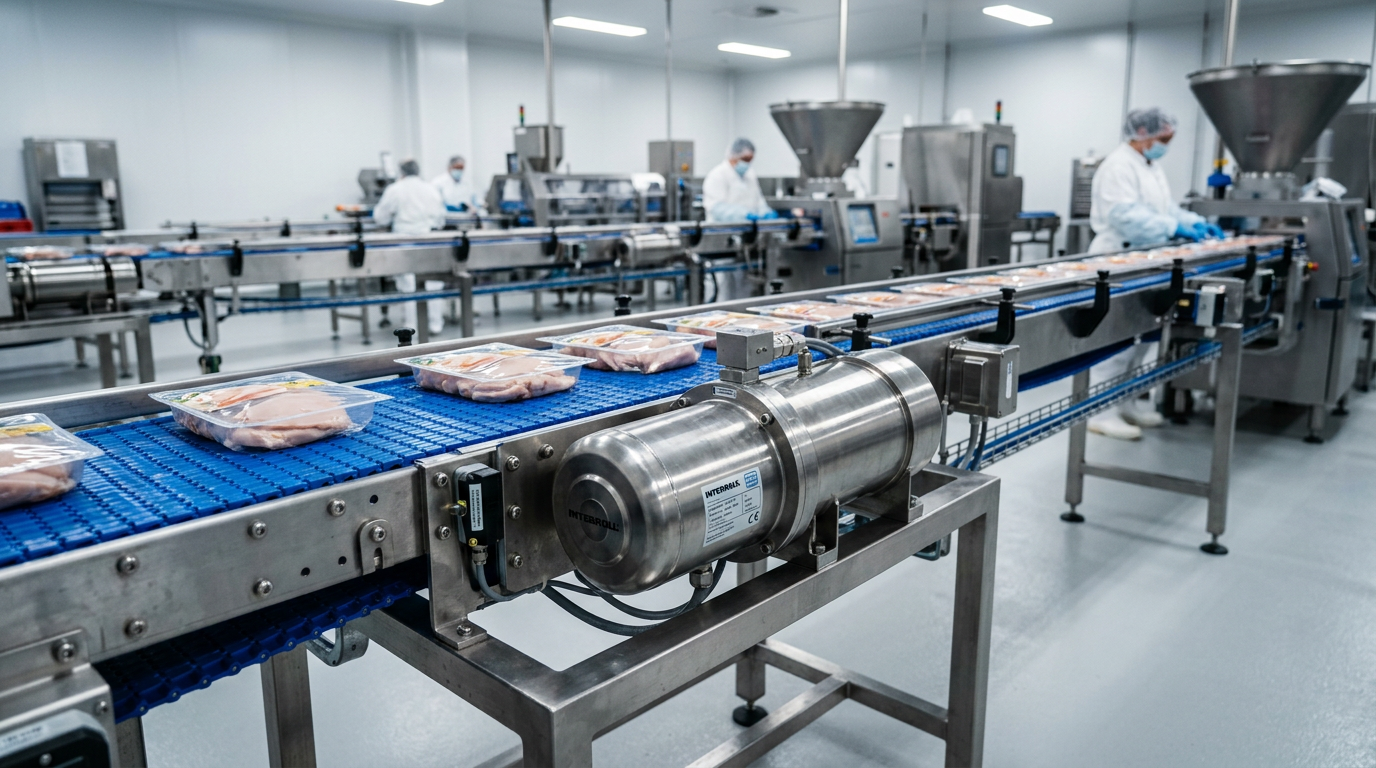
Selecting between a drum motor and a traditional gearmotor involves balancing mechanical efficiency, space constraints, and hygiene requirements, where drum motors offer up to 30% space savings and an enclosed design rated up to IP69K for wash-down environments. While conventional gearmotors remain the standard for heavy-duty applications exceeding 132 kW, drum motors provide a superior solution for modular belt systems where a compact, oil-cooled, and high-efficiency drive is required.
Understanding the Mechanical Architectures
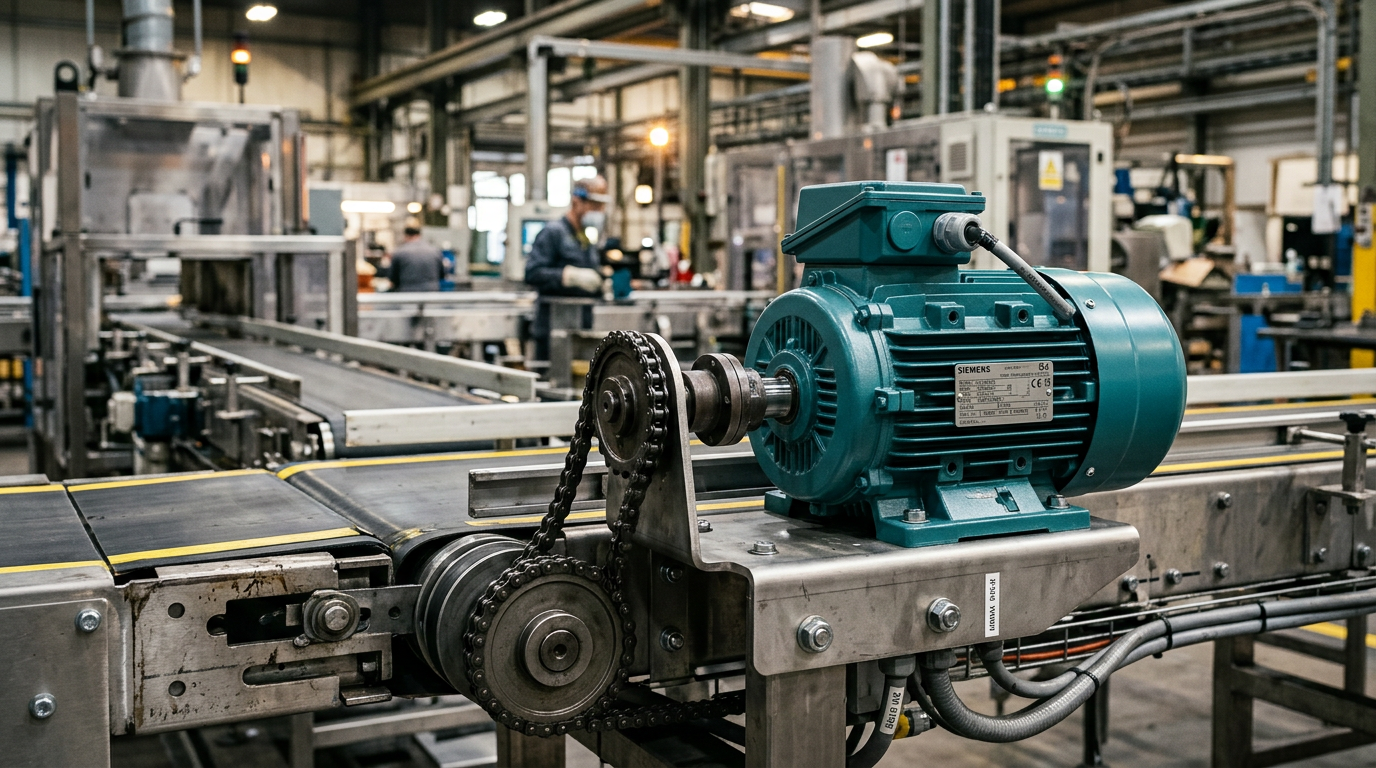
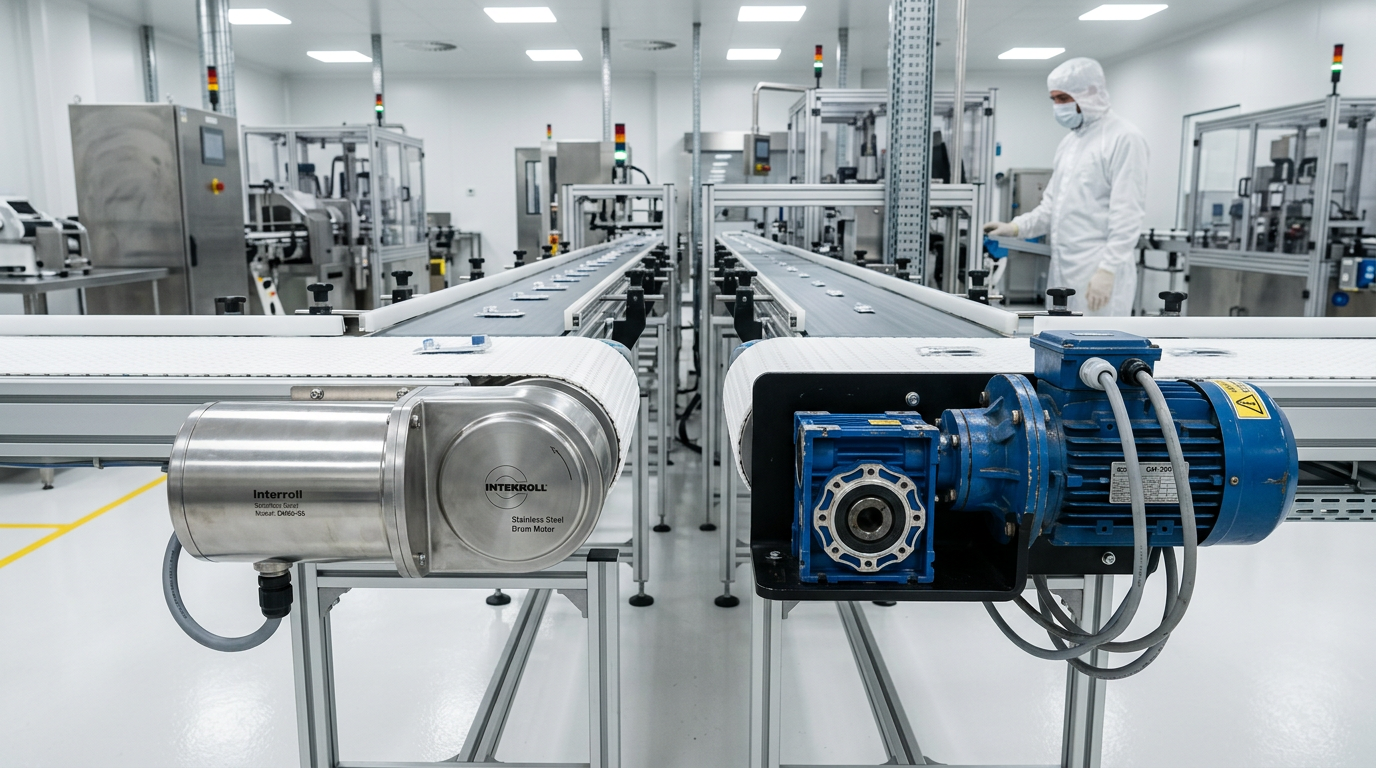
The fundamental difference between these two drive technologies lies in the integration of the powertrain. A gearmotor consists of an external electric motor coupled to a gearbox, which then drives the conveyor head pulley via a sprocket, chain, or direct shaft mount. Conversely, a drum motor (or motorized pulley) houses the motor, gearbox, and bearings inside a sealed cylindrical shell.
In a drum motor, the internal motor rotates against a fixed internal gear, causing the outer shell to rotate. This design eliminates the need for external components like pillow block bearings, chain guards, and motor mounts. For engineers designing modular conveyor systems, the decision often hinges on whether the application favors the serviceability of external components or the streamlined footprint of an integrated drive.
Technical Comparison: Performance and Specifications
When evaluating drive systems, engineers must look at efficiency classes (IE3/IE4), ingress protection, and thermal management. Modern drum motors often utilize permanent magnet synchronous motors (PMSM) to achieve high torque even at low speeds, whereas traditional induction gearmotors may require larger frames to achieve similar performance without overheating.
| Feature | Drum Motor (Motorized Pulley) | Conventional Gearmotor |
|---|---|---|
| Space Requirement | Ultra-compact (Internal) | High (External Mounting) |
| Efficiency Class | Up to IE4 (Permanent Magnet) | IE2 to IE4 (IEC 60034-30-1) |
| Ingress Protection | Often IP66 / IP69K | Typically IP55 (IP66 optional) |
| Maintenance | Sealed-for-life or 50k hr oil change | Regular lubrication/chain tensioning |
| Heat Dissipation | Transferred to conveyor belt | Ambient air (Fan cooled) |
| Max Power Output | Typically up to 132 kW | Up to 500 kW+ |
Space Constraints and Modular Integration
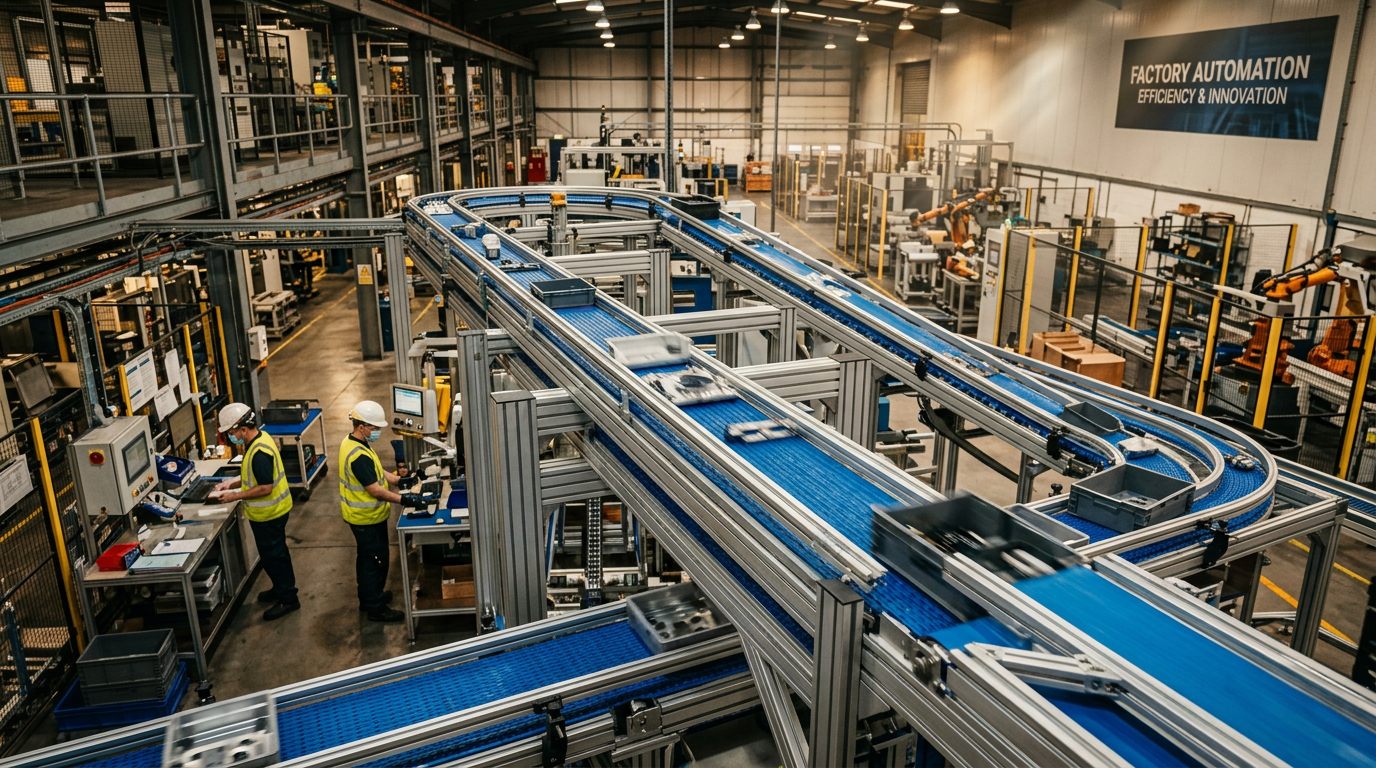
In modern fulfillment centers and food processing plants, floor space is at a premium. The external protrusion of a gearmotor can create "dead zones" in a layout, preventing conveyors from being placed side-by-side or requiring wider safety guarding.
The drum motor’s "all-in-one" design allows for a significantly smaller machine footprint. This is particularly advantageous in modular systems where standardized sections are shipped and assembled on-site. Companies like Easy Conveyors leverage these compact drive solutions to ensure their modular belt conveyors remain versatile and easy to integrate into existing production lines without requiring extensive structural modifications for motor mounts.
Hygiene and Environmental Factors
For the food, beverage, and pharmaceutical industries, hygiene is the primary driver for component selection. Traditional gearmotors have cooling fins, fans, and external drive chains that trap dust, debris, and pathogens. These areas are notoriously difficult to clean and often fail to meet stringent EHEDG or FDA guidelines.
Drum motors, being complet
Easy Conveyors stocks the conveyor components discussed here — ready to ship across Europe.
ely enclosed and usually constructed from stainless steel, present a smooth, cylindrical surface. There are no external moving parts to catch debris, and the high IP69K rating makes them resistant to high-pressure, high-temperature wash-down procedures.
- Failure Mode Note: In food applications, if a drum motor seal fails, food-grade oil must be used to prevent batch contamination. In contrast, gearmotor failures often involve grease leakage from external bearings or chain drives directly onto the product zone.
Thermal Management and Duty Cycles
One critical design trade-off for drum motors is heat dissipation. Since the motor is encased in a steel shell, the heat generated is primarily dissipated through the conveyor belt itself. In applications involving plastic modular belts or thick rubber belts, this can act as an insulator.
If the conveyor runs at very low speeds with high torque, the lack of airflow (which a gearmotor's external fan provides) can lead to thermal tripping. Engineers must ensure that "drum motor selection" includes a thermal calculation based on the belt material and the ambient temperature. For high-duty cycle applications, gearmotors are often preferred because their external fans provide constant cooling regardless of the conveyor's belt speed.
Installation and Maintenance Considerations
The "total cost of ownership" (TCO) differs significantly between these two systems.
- Installation: Drum motors are faster to install. There are no sprockets to align or chains to tension. You simply bolt the shafts into the conveyor frame.
- Maintenance: Gearmotors offer easier access. If a motor fails, you can swap the motor without dismantling the conveyor belt. With a drum motor, a total failure requires "breaking" the belt and removing the entire drive pulley, which can lead to longer unplanned downtime if a spare unit is not on hand.
- Efficiency: Drum motors eliminate the 3-5% energy loss typically found in external chain and sprocket transmissions. By driving the belt directly, they maximize the transfer of torque from the motor to the load.
Sizing and VFD Selection
Both drive types benefit from Variable Frequency Drives (VFDs) for soft-starts and speed control. When tuning for a drum motor, it is vital to set the VFD torque limits correctly. Because the internal gears are compact, excessive shock loads can cause internal mechanical failure more easily than in a heavy-duty external industrial gearbox.
For "VFD soft-start tuning", ensure that the ramp-up time is sufficient to prevent belt slippage on the drum surface, especially in wet environments where the friction coefficient (μ) between the lagging and the belt decreases. Standardizing on Siemens or Rockwell Automation drive profiles can help in maintaining consistent performance across different drive architectures.
Conclusion: Which Should You Choose?
The choice depends on your specific operational priorities:
- Choose a Drum Motor if you are limited by space, operate in a wash-down/hygienic environment (EHEDG/FDA), or want to reduce energy losses from external transmissions.
- Choose a Gearmotor for heavy-duty applications (>132 kW), high-temperature environments where belt-cooling is impossible, or when rapid, external serviceability is the top priority for the maintenance team.
By understanding these trade-offs, plant engineers can optimize their "material handling" systems for both reliability and long-term cost-efficiency. Utilizing modular components and specialized engineering partners ensures that the drive selection aligns with the throughput and safety requirements of the modern smart factory.
Frequently Asked Questions
What is the difference between a drum motor and a gearmotor?
A drum motor is an all-in-one drive where the motor and gearbox are inside the pulley shell. A gearmotor is an external unit connected to the pulley via a shaft or chain.
Are drum motors better for food-grade applications?
Yes, drum motors are ideal for food grade environments because their smooth, stainless steel, enclosed design meets EHEDG and FDA standards and supports IP69K wash-down.
Do drum motors overheat more than gearmotors?
Drum motors are cooled by the conveyor belt. If the belt is an insulator (like thick plastic) or the motor runs at very low speeds under high load, it can overheat.
Which drive type is easier to maintain?
While drum motors require less daily maintenance, a major failure requires removing the conveyor belt. Gearmotors allow for motor replacement without disturbing the belt.