Drum Motor vs Gearmotor: Selecting the Right Belt Conveyor Drive
Compare drum motors vs gearmotors for conveyor drives. Learn about efficiency, hygiene (EHEDG), space savings, and TCO to select the best drive for your modular system.
The choice between a drum motor and a conventional gearmotor represents a 30% to 50% difference in space requirements and a significant variance in long-term maintenance costs, with drum motors offering up to 97% mechanical efficiency due to their internal planetary or helical gearing. While traditional gearmotors remain the standard for heavy-duty applications exceeding 132 kW, drum motors are the preferred architectural choice for modular conveyor systems where hygiene, space constraints, and energy efficiency IEC 60034-30-1 are primary design drivers.
Understanding the Architectural Difference
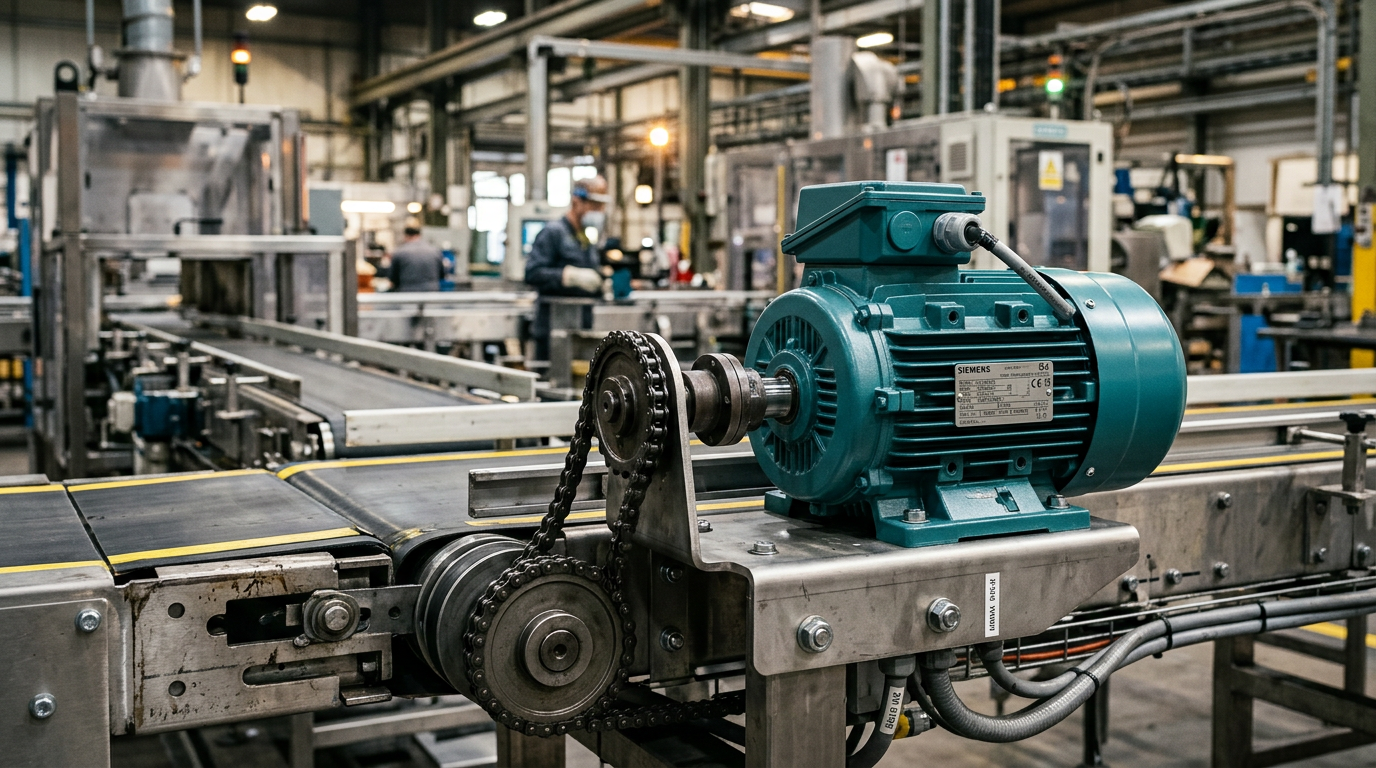
To select the correct drive technology, one must first distinguish between the two mechanical paradigms. A conventional gearmotor (often referred to as an external drive) consists of an electric motor coupled to a gearbox, which then transfers power to the conveyor's drive pulley via a sprocket and chain, a coupling, or a hollow shaft mount.
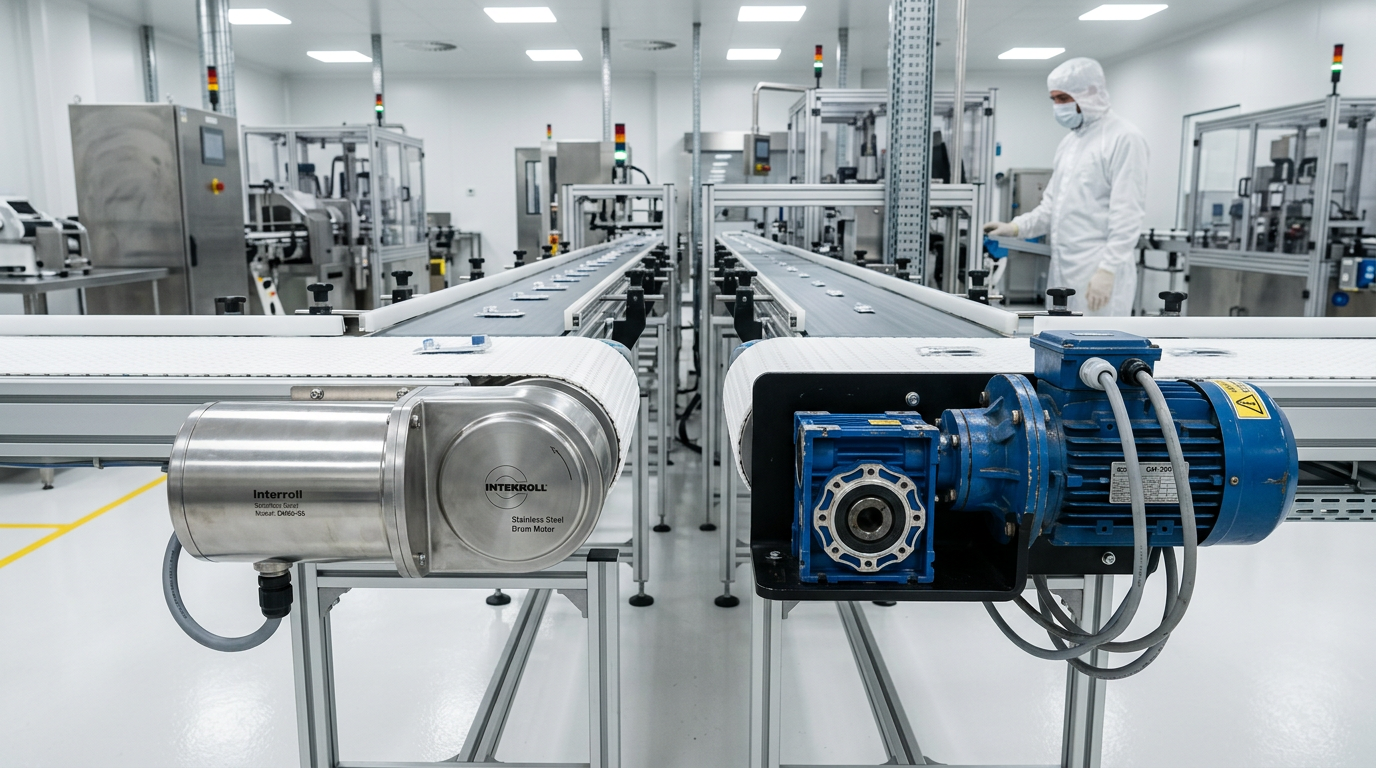
In contrast, a drum motor is a "one-component" drive system. The electric motor, gear transmission, and all bearings are housed inside a sealed cylindrical shell. The shell itself acts as the drive pulley, rotating around a fixed internal shaft. This integration eliminates the need for external guards, secondary transmissions, and external bearings.
Performance and Efficiency Metrics
Efficiency in conveyor drives is not just about the motor's nominal rating (such as IE3 or IE4); it is about the total system efficiency from the electrical input to the belt's linear force.
- Mechanical Loss: Standard gearmotors lose 3–5% efficiency per stage of gearing, plus an additional 5–10% if a chain and sprocket transmission is used. Drum motors generally operate at 95% to 97% efficiency because the motor is directly coupled to the internal gears with no external transmission losses.
- Thermal Management: Because drum motors are "oil-cooled" (the internal oil bath transfers heat from the motor windings to the shell and eventually the belt), they are highly efficient at heat dissipation in continuous-run applications. However, this means they may not be suitable for heat-sensitive products like chocolate or frozen foods without specific internal thermal insulation or low-temperature oil.
- Inverter Compatibility: Both systems are compatible with Variable Frequency Drives (VFDs). When tuning VFD soft-start tuning, drum motors require careful parameterization of the motor's thermal model, as they lack the external cooling fan found on traditional TEFC (Totally Enclosed Fan Cooled) motors.
Technical Comparison: Drum Motor vs. Gearmotor
| Feature | Drum Motor (Internal) | Gearmotor (External) |
|---|---|---|
| Space Requirement | Minimal (Completely within frame) | Significant (Protrudes from side) |
| Ingress Protection | Typically IP66, IP69K | IP54 to IP66 (Standard) |
| Hygiene Rating | High (EHEDG/FDA Compliant) | Moderate (Requires guarding/washdown) |
| Installation Time | Low (Bolt-on) | High (Alignment/Tensioning required) |
| Efficiency Class | Up to IE4 Equivalent | IE1 to IE4 |
| Maintainability | Service often requires removal | Components easily accessible |
Selection Criteria: When to Choose Each
1. Hygiene and Food Safety
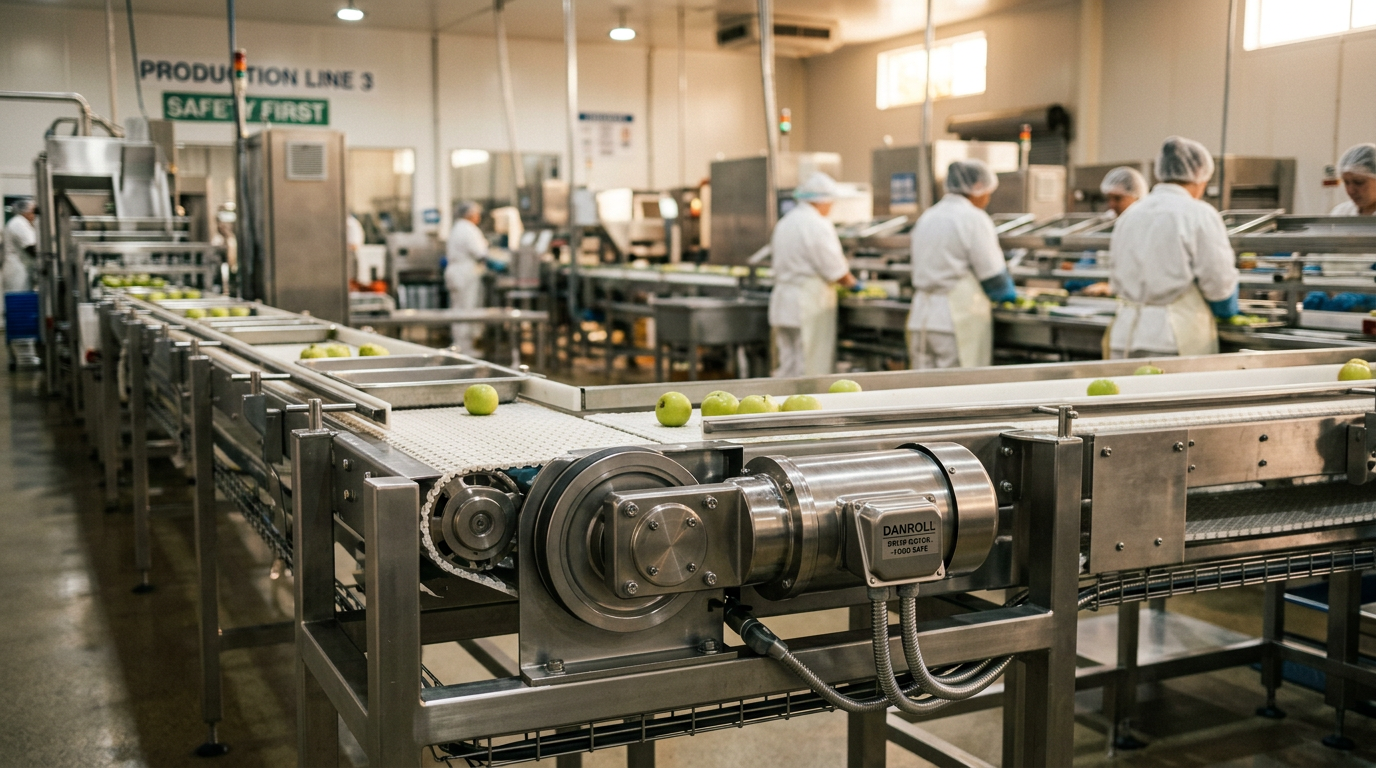
For food processing and pharmaceutical environments, the drum motor is the undisputed leader. The absence of external moving parts, chains, and grease-filled gearboxes significantly reduces the risk of product contamination. Modern stainless steel drum motors are designed to meet EHEDG guidelines, featuring non-toxic oil and smooth surfaces that eliminate "catch points" for bacteria.
2. Space and Safety Constraints
In modern e-commerce sortation centers, conveyors are often packed in tight grids. An external gearmotor can protrude 300mm to 500mm from the side of the conveyor frame, creating a safety hazard and requiring bulky guarding. Using a drum motor allows for a "clean-line" conveyor design, where the drive is flush with the frame. This is why Easy Conveyors utilizes modular components that can accommodate various drive types depending on the spatial requirements of the warehouse layout.
3. Maintenance and Total Cost of Ownership (TCO)
The TCO of a drive system is the sum of the purchase price, installation cost, energy consumption, and maintenance.
- Gearmotors: Lower initial purchase price. However, they require regular chain lubrication, sprocket alignment, and seal inspections.
- Drum Motors: Higher initial cost (often 20-40% more than a standard gearmotor). However, they are virtually maintenance-free. Most units only require an oil change every 10,000 to 50,000 operating hours.
Easy Conveyors stocks the conveyor components discussed here — ready to ship across Europe.
Sizing Rules of Thumb
When sizing a drive, engineers must calculate the Effective Pull ($F_e$) required to move the belt and load.
$$F_e = g \cdot L \cdot [C_{f1} \cdot (2 \cdot m_b + m_p) + C_{f2} \cdot m_p]$$
Where:
- $m_b$ = belt mass per meter
- $m_p$ = product mass per meter
- $C_f$ = friction coefficients
Once $F_e$ is determined, you must select a drive that provides the necessary Belt Tension ($T_{max}$) and Torque. For drum motors, ensure the shell length matches the belt width to prevent uneven wear. For gearmotors, the choice of gearbox type (worm, helical, or bevel-helical) will dictate the back-driving capability and efficiency.
Common Failure Modes and Prevention
Drum Motor Failures
The most common failure in drum motors is thermal overload. Because the motor is enclosed, if it is operated at a torque level exceeding its rating for extended periods, the internal oil will degrade, and the windings will burn out. Always specify an internal thermal protector (bi-metal switch or thermistor) to be wired into the control circuit.
Another failure point is "belt over-tensioning." Excessive tension puts a radial load on the internal bearings that exceeds their L10 life calculation. Following proper drum motor selection guides regarding belt tension is critical.
Gearmotor Failures
External drives frequently fail due to contamination of the external transmission. Dust and grit in the chain and sprockets lead to rapid wear. Misalignment between the gearbox output shaft and the pulley shaft is another common issue, leading to premature failure of the input bearings. Frequent inspections of the hygienic wash-down design components are necessary in wet environments to prevent corrosion.
Conclusion: Making the Right Engineering Decision
The transition toward automated, compact, and energy-efficient factories favors the drum motor. While the traditional gearmotor remains a robust workhorse for heavy aggregate or high-torque applications, the drum motor's 95%+ efficiency and maintenance-free design offer a faster ROI in logistics, packaging, and food-grade environments.
Engineers should prioritize drum motors when hygiene, space, and safety are the top three requirements. Conversely, for ultra-high torque applications or when individual components (motor vs. gearbox) must be replaced independently on a tight budget, the conventional gearmotor remains a viable solution. Regardless of choice, ensuring compliance with ISO 12100 safety standards during the integration phase is paramount for long-term operational success.
Frequently Asked Questions
What is the main difference between a drum motor and a gearmotor?
A drum motor is an all-in-one drive where the motor and gears are inside the pulley shell. A gearmotor is an external assembly that drives the pulley via a shaft or chain.
Are drum motors more energy efficient than gearmotors?
Yes, drum motors are highly efficient (up to 97%) because they eliminate external transmission losses from chains, sprockets, and external bearings.
Which drive type is better for food-grade environments?
Drum motors are superior for food safety because they are sealed, hygienic (often IP69K), and eliminate exposed lubricants and moving parts that harbor bacteria.
Do drum motors require frequent maintenance?
Most drum motors require an oil change every 10,000 to 50,000 hours, depending on the load and duty cycle, but otherwise require no daily maintenance.
Can I use a VFD with a drum motor?
Yes, but they require proper VFD parameterization to prevent overheating, as they lack the external cooling fans found on standard motors.