Side Guides, Transfer Plates and End Rollers Explained: Optimizing System Flow
The definitive guide to side guides, transfer plates, and end rollers. Learn how to eliminate product tipping, reduce friction, and optimize conveyor transitions.
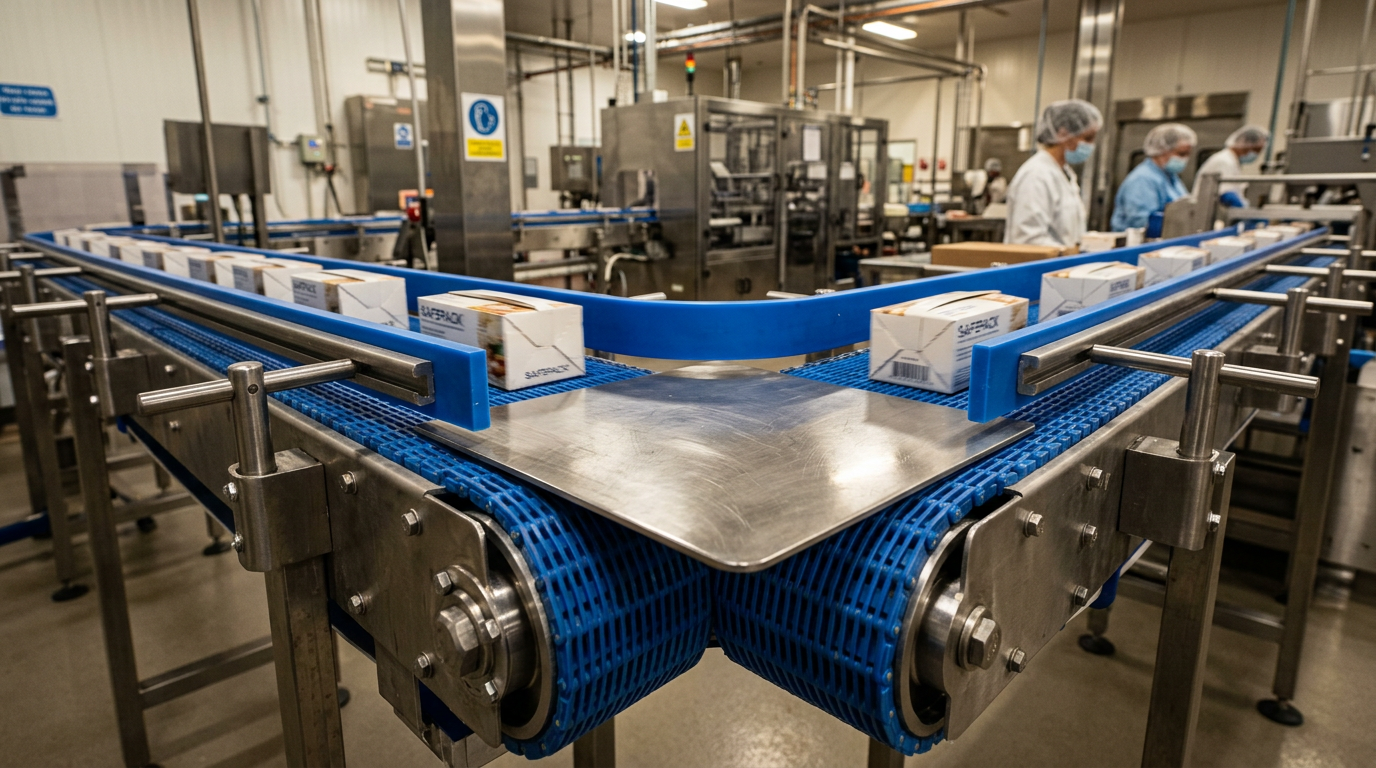
Optimizing conveyor performance requires a precise interface between system components, where side guides must maintain a clearance of 3mm to 5mm for product stability, and transfer plates should bridge gaps larger than 15mm to prevent catastrophic product "bottlenecking" or tip-overs. These peripheral components are the primary control points for ensuring consistent product orientation and smooth transitions between disparate conveyor modules in automated material handling ecosystems.
The Role of Side Guides in Product Tracking
Side guides, or lateral railings, serve as the physical boundaries of the conveyor path. Their primary function is not merely to keep products from falling off the belt, but to maintain a specific orientation required for downstream processes like barcode scanning, inkjet coding, or robotic picking.
In high-speed beverage or pharmaceutical lines, the choice of side guide material is critical. Low-friction liners, typically made of Ultra-High Molecular Weight Polyethylene (UHMW-PE), are preferred to minimize drag and prevent marring on sensitive packaging. According to VDMA standards, minimizing friction at the guide rail can reduce the required motor torque by up to 15% in accumulation scenarios.
Types of Side Guides:
- Fixed Rail Guides: Best for dedicated lines with a single product size. Usually comprised of a stainless steel profile with a plastic clip-on wear strip.
- Adjustable Guides: Essential for flexible manufacturing. These use handwheels or pneumatic actuators to adjust the width of the conveyor path. For rapid changeovers, many modern systems utilize digital position indicators to ensure repeatable accuracy within ±0.5mm.
- Roller Side Guides: Used in heavy-duty applications or where lateral pressure is high, such as in curved sections. Small vertical rollers reduce friction to nearly zero, preventing heat buildup and wear on the belt edges.
Eliminating the "Gap": Transfer Plates and Bridge Components
The transition between two independent conveyor modules is often the site of unplanned downtime. As products move from a drive tail to a take-up tail, a physical gap is formed by the radius of the end rollers. If this gap exceeds the footprint of the product, the item will tip or "bridge" the gap, leading to a pile-up.
Transfer plates (also known as transition plates or dead plates) solve this by providing a continuous surface. In hygienic environments, these plates are often made of 316-grade stainless steel or food-grade plastics compliant with FDA regulations.
For high-speed sorting, "active transfers" are often preferred. Instead of a static plate, a series of micro-rollers or a powered transition belt is used. Intralox pioneered several modular plastic belt solutions that incorporate "nose-over" transitions to reduce the gap to as little as 3mm, effectively eliminating the need for traditional dead plates in many small-package applications.
End Rollers: The Foundation of Belt Dynamics
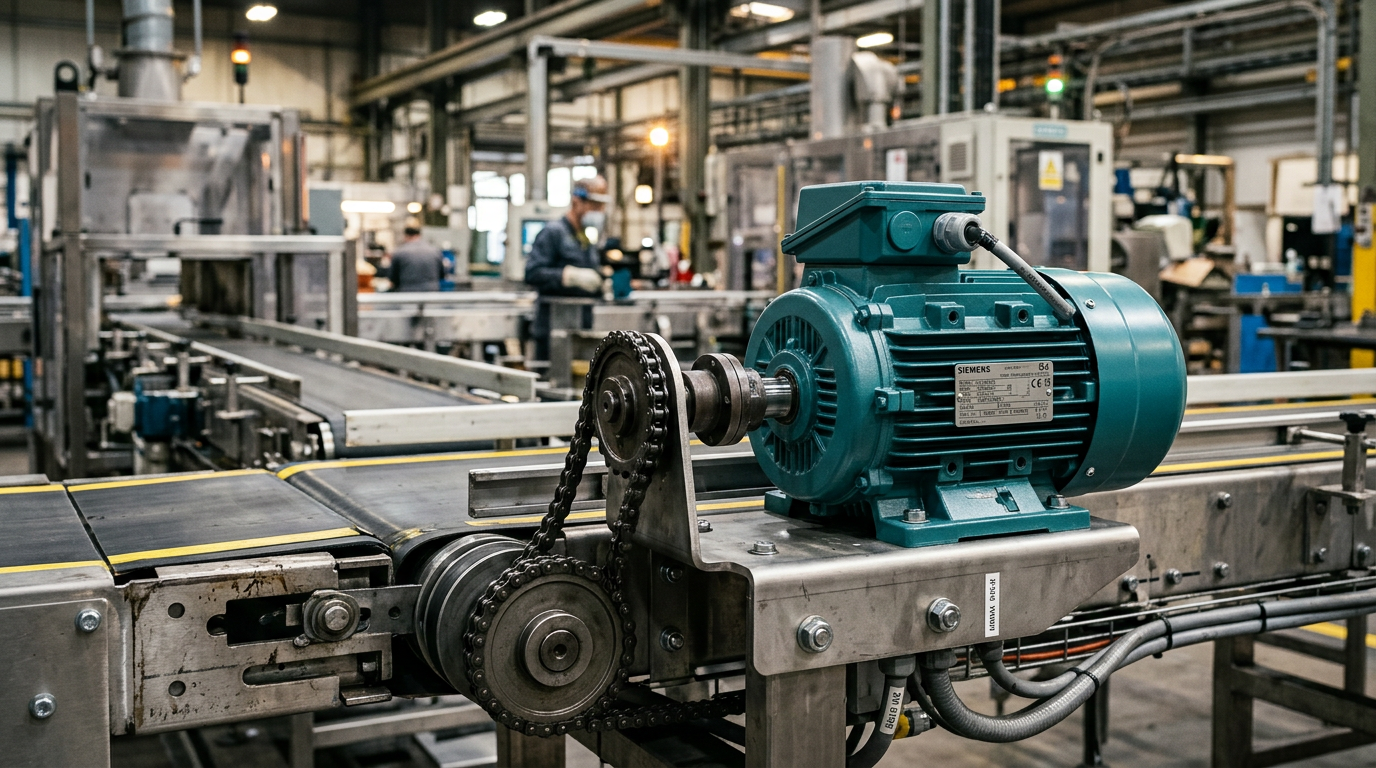
End rollers (or terminal pulleys) define the geometry of the conveyor loop. Their diameter is a critical design constraint; a smaller roller allows for tighter transfers but increases the cyclic fatigue on the belt material.
| Feature | Small D
Easy Conveyors stocks the conveyor components discussed here — ready to ship across Europe.
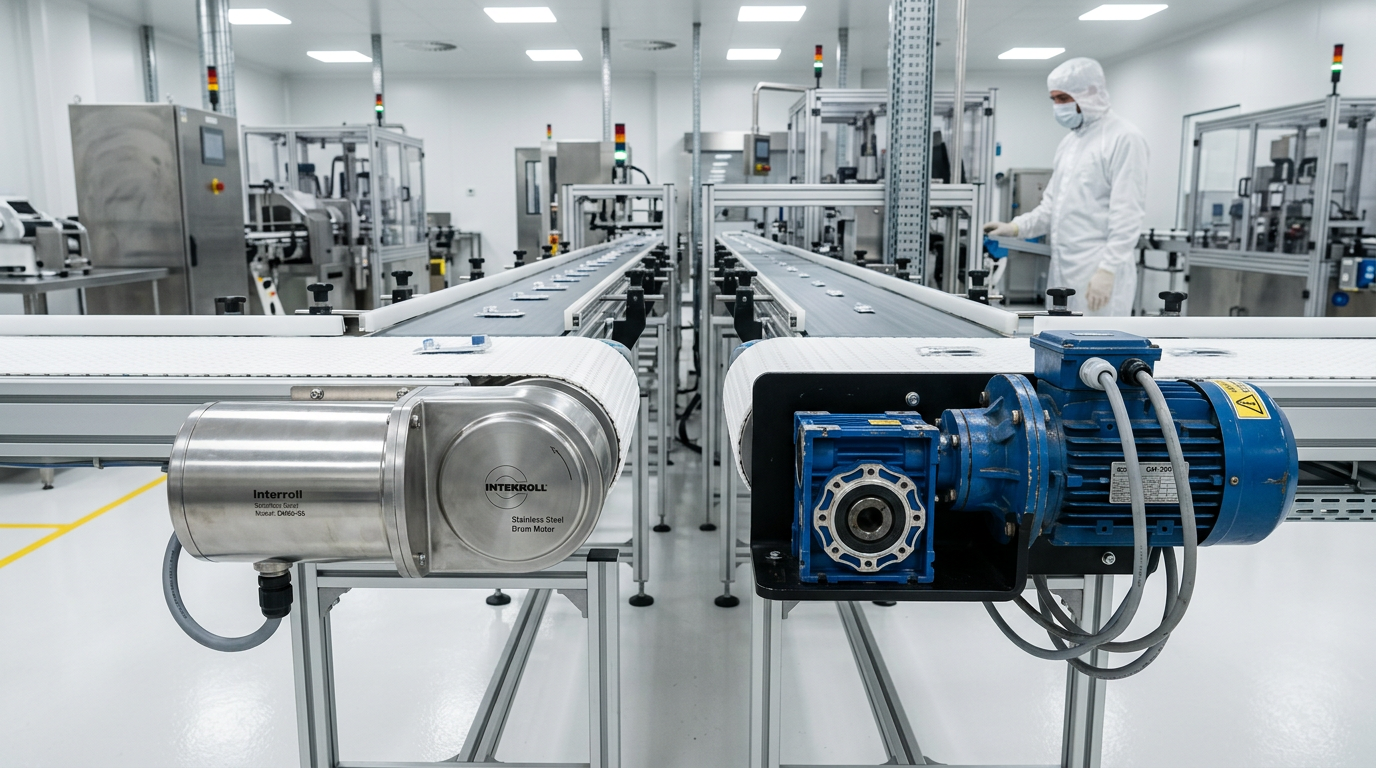
iameter Roller (15-30mm) | Large Diameter Roller (50mm+) | | :--- | :--- | :--- | | Primary Use | Small parts, tight transfers | Heavy loads, long conveyors | | Belt Stress | High (Fatigue risk) | Low (Extended life) | | Drive Type | Typically slave-driven | Often integrated drum motors | | Flexibility | High-density layouts | Robust industrial transport | | Hygiene | Challenging (Tight clearances) | Superior (Easier to clean) |
When designing a system, engineers must reference the minimum back-flex radius of the belt. For modular plastic belts, the number of teeth on the sprocket or the radius of the "nose bar" determines the chordal action—a pulsating motion caused by the belt’s modules rotating around the roller. Minimizing this effect is essential for stabilizing products during the transition.
Integration with Modular Systems
In the world of modular automation, components must be "plug-and-play." Easy Conveyors specializes in these modular interfaces, providing standardized side guides and transfer modules that integrate seamlessly with aluminum or stainless steel frames. Their approach emphasizes the reduction of "total cost of ownership" by using wear-resistant materials that require minimal maintenance.
Key Considerations for Selection
When specifying these components, one must consider the environment. In "wash-down" environments common in the food industry, side guide brackets must be designed without horizontal surfaces to prevent water pooling, adhering to EHEDG guidelines. Furthermore, end rollers must be equipped with high-IP-rated bearings (typically IP66 or IP69K) to withstand high-pressure cleaning.
The synchronization of these peripherals is what differentiates a standard conveyor from a precision material handling system. Proper "conveyor component selection" involves balancing the friction coefficients of side guides against the drive power of the motor, while ensuring "transfer plate geometry" matches the specific center-of-gravity of the transported goods.
Failure Modes and Troubleshooting
- Guide Rail Chattering: Often caused by thermal expansion in long runs. Side guides should be installed with expansion gaps if the ambient temperature fluctuates more than 10°C.
- Transfer Plate Wear: Product debris (like glass shards or grit) can become trapped between the belt and a static transfer plate, acting like sandpaper. Regular inspection for "scuffing" on the underside of the belt is required.
- End Roller Misalignment: If the drive and idler rollers are not perfectly parallel within a tolerance of 0.1°, the belt will "track" to one side, leading to premature edge wear and side guide damage.
By focusing on these often-overlooked "interface" components, plant engineers can significantly improve the OEE (Overall Equipment Effectiveness) of their production lines. Whether it is ensuring a smooth "VFD soft-start tuning" transition or selecting the right "hygienic wash-down design", the details often reside in the guides and plates that shepherd the product through the value stream.
Frequently Asked Questions
How large can the gap be between two conveyors before a transfer plate is required?
The gap should be no more than 1/3 of the length of the smallest product being transported to prevent tipping without a transfer plate.
What is the best material for side guide liners?
UHMW-PE (Ultra-High Molecular Weight Polyethylene) is the industry standard due to its low coefficient of friction, high wear resistance, and FDA compliance.
When should I use roller side guides instead of static rails?
Roller side guides are used in accumulation zones or high-speed curves where lateral friction could cause product damage or excessive belt wear.
What is chordal action in end rollers?
Chordal action is a pulsating movement caused by the polygonal geometry of belts as they wrap around small end rollers. It can be minimized by using rollers with more teeth or larger diameters.
What is the difference between a dead plate and an active transfer?
Dead plates are static (fixed) while active transfers use micro-rollers or mini-belts to physically drive the product across the gap, ideal for lightweight items.