Conveyor Bearings and Shaft Seals for Hygienic Applications: A Design Guide
Learn how to select conveyor bearings and shaft seals for IP69K washdown environments, focusing on EHEDG compliance, stainless steel materials, and bacterial prevention.
Hygienic conveyor systems in food, pharmaceutical, and biotechnology sectors rely on specialized bearings and shaft seals to prevent bacterial growth and chemical contamination, typically requiring components rated for IP69K washdown environments and compliance with EHEDG guidelines. Standard industrial bearings fail in these settings due to high-pressure cleaning cycles, while non-hygienic seals can harbor pathogens in "dead zones," making specialized, smooth-surfaced, and corrosion-resistant assemblies mandatory for regulatory compliance.
The Role of Bearings in Sanitary Environments
In a hygienic conveyor system, bearings are often the most vulnerable mechanical point. Standard chrome steel bearings will oxidize rapidly when exposed to the caustic cleaning agents and frequent water ingress characteristic of food processing. To mitigate this, engineers must specify housing materials and internal components that withstand aggressive sanitation protocols.
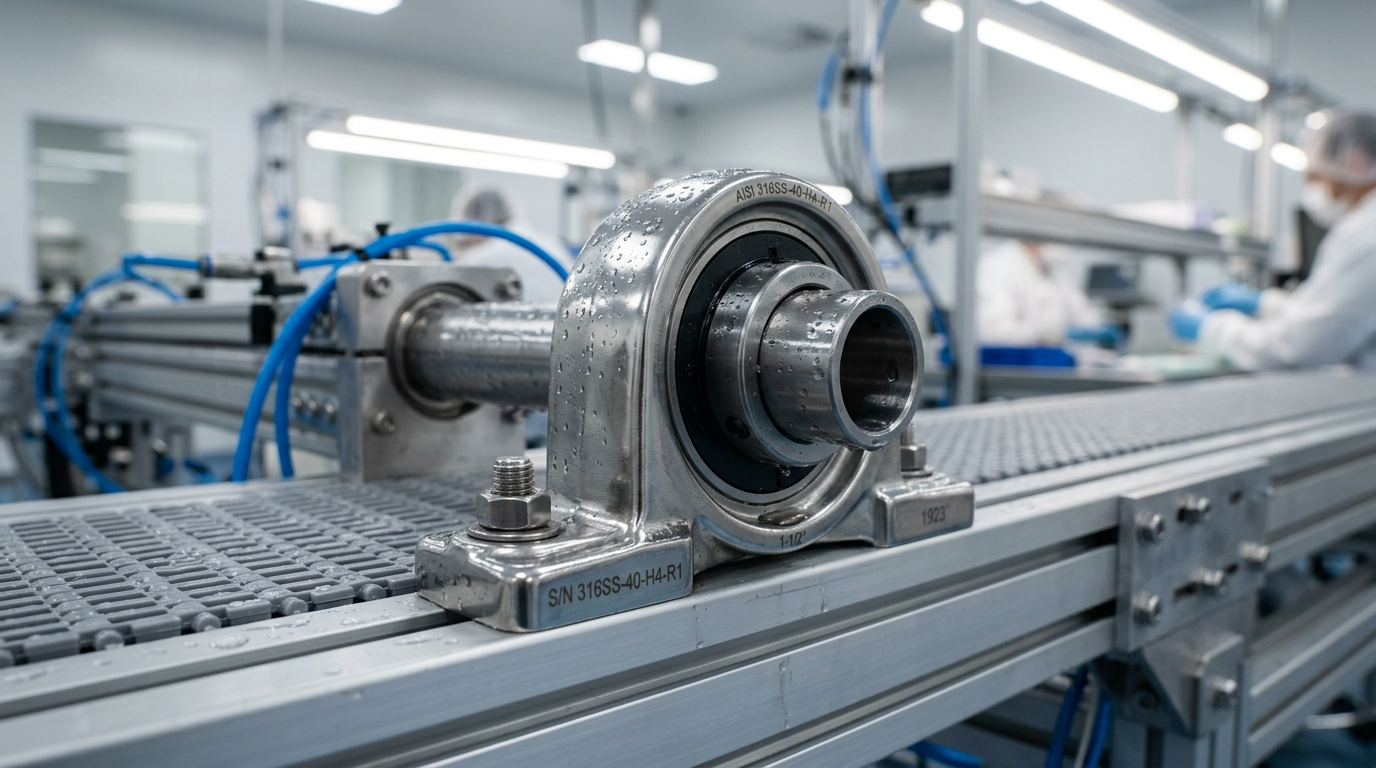
- Material Selection: Stainless steel (typically AISI 304 or 316) is the baseline for housings. For the internal rolling elements, high-grade stainless steel or ceramic silicon nitride balls are preferred to prevent pitting and surface degradation.
- Surface Topography: According to ISO 14159, surfaces in the "food zone" must be smooth, typically with a roughness (Ra) of less than 0.8 µm. This prevents microbial adhesion.
- Lubrication Management: Bearings must be lubricated for life with H1-certified food-grade grease. Any leakage of lubricant must be non-toxic, as per FDA 21 CFR regulations.
Shaft Seals: The First Line of Defense
Shaft seals act as the primary barrier between the internal mechanical components of a conveyor—such as the motor or gearbox—and the external environment. In washdown applications, the seal must perform two roles: keeping process fluids out and keeping lubricants in.
Traditional lip seals often fail in hygienic applications because the contact point creates a groove in the shaft over time, leading to leaks. Modern hygienic designs utilize labyrinth seals or magnetic face seals. Labyrinth seals use a complex path to prevent liquid ingress without direct contact, reducing friction and heat. However, for full submersion or high-pressure spray, a multi-lip seal with a protective flinger (deflector) is often required to achieve an IP69K rating.
Comparison: Standard vs. Hygienic Bearing Units
| Feature | Standard Industrial Unit | Hygienic/Washdown Unit |
|---|---|---|
| Housing Material | Cast Iron (Painted) | 316 Stainless or Reinforced Polymer |
| Sealing Rating | IP65 | IP69K (High-Pressure Washdown) |
| Lubrication | Standard Mineral Grease | H1 Food-Grade Synthetic |
| Bolt Hole Design | Open Cavities | Closed/Solid Base (No Voids) |
| Corrosion Resistance | Low (Corrodes in Humidity) | High (Resistant to Acids/Alkali) |
Design Considerations for Washdown Integrity
When designing a modular conveyor system, the integration of these
Easy Conveyors stocks the conveyor components discussed here — ready to ship across Europe.
components requires a holistic approach. For instance, using Easy Conveyors modules allows for the seamless inclusion of stainless steel bearing blocks that are specifically engineered to eliminate "dead spaces"—areas where water can pool and bacteria can thrive.
The "Dead Zone" Problem
A common failure in conveyor design is the use of hollow-back bearing housings. In a sanitary environment, the area between the bearing and the conveyor frame becomes a breeding ground for Listeria or Salmonella because cleaning fluids cannot reach the gap. Hygienic bearings feature a solid base or are mounted on stand-offs to allow 360-degree cleaning access.
Thermal Expansion and Shaft Alignment
In food processing, systems often move between extreme temperatures (e.g., from a flash-freezer to a steam-cleaning station). According to engineering standards from SKF (a key reference in the industry), shaft seals must be able to accommodate axial movement caused by thermal expansion without losing their sealing integrity. Failure to account for this leads to "breathing," where the cooling of the bearing creates a vacuum that sucks in contaminated washwater.
Advanced Sealing Technologies: NEMA and IEC standards
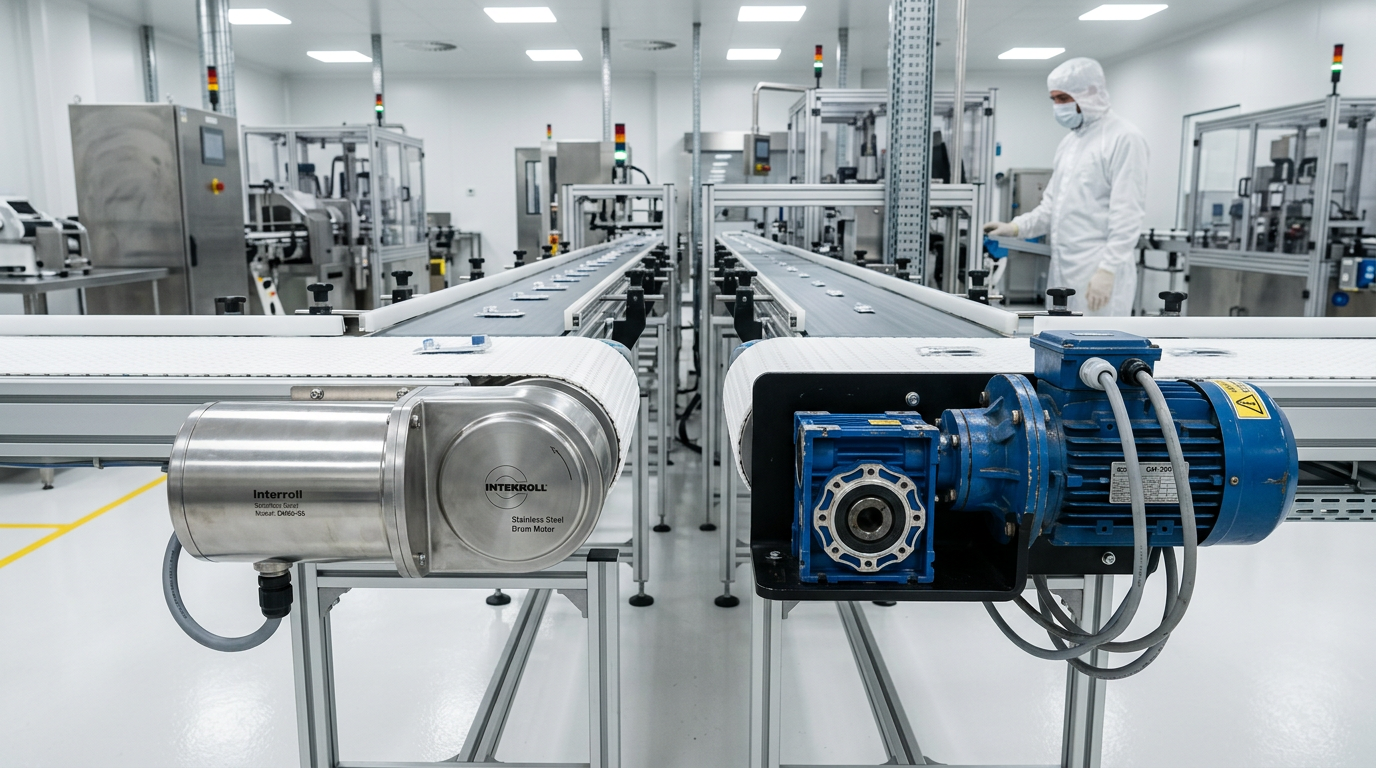
For motorized components, the seal at the output shaft must comply with specific ingress protection levels. NEMA 4X and IEC 60529 IP69K are the benchmarks. These standards ensure the component can withstand water jets at pressures up to 100 bar (1,450 psi) at temperatures of 80°C.
Engineers should also consider the use of end covers. These high-visibility (often blue, for food safety detection) caps snap over the bearing housing to provide a secondary physical barrier against physical impact and high-pressure spray, while also protecting personnel from rotating shafts.
Maintenance and Lifecycle of Hygienic Components
Proper maintenance of hygienic bearings involves more than just re-greasing. It requires regular inspection of the seal integrity. If a seal shows signs of hardening or cracking due to chemical exposure, it must be replaced immediately to prevent contamination of the production line.
When selecting components, refer to the "hygienic wash-down design" principles which emphasize self-draining surfaces. Any flat surface on a bearing housing should have a minimum slope of 3 degrees to ensure fluids drain away naturally. This is a critical factor in passing third-party audits by organizations like the EHEDG.
Finally, consider the total cost of ownership. While a stainless steel, IP69K-rated bearing unit may cost 3 to 4 times more than a standard cast-iron unit, the reduction in downtime, the elimination of product recalls, and the extended service life in corrosive environments provide a rapid return on investment. Accurate "drum motor selection" and "material handling" planning must prioritize these components to ensure long-term operational viability in sensitive industries.
Frequently Asked Questions
What does an IP69K rating mean for conveyor bearings?
IP69K is a German standard (DIN 40050-9) and later IEC 60529, indicating that a component can withstand high-pressure (80-100 bar), high-temperature (80°C) water jets from multiple angles, which is the gold standard for food safety cleaning.
Why can't I use standard stainless steel bearings in a food plant?
Standard bearings have 'dead zones' or hollow backs where water and food particles get trapped, leading to bacterial growth. Hygienic bearings have solid bases and smooth, rounded surfaces to ensure 100% drainage and accessibility for cleaning.
What is the difference between a labyrinth seal and a lip seal in conveyors?
Labyrinth seals provide a non-contact, frictionless barrier that is excellent for high speeds and preventing large debris ingress, whereas lip seals provide a positive contact barrier better suited for stopping fine liquids under pressure.
What is H1 food-grade grease?
H1 lubricants are 'food-grade,' meaning they are safe for incidental food contact (up to 10 ppm) during processing, which is mandatory for all bearings located above or near the product flow.