Designing Scalable Case and Tote Conveyors for 3PL Warehouses
Optimizing 3PL warehouses with modular case and tote conveyors. Learn how 24V MDR technology and modular plastic belts enhance flexibility and reduce energy costs.
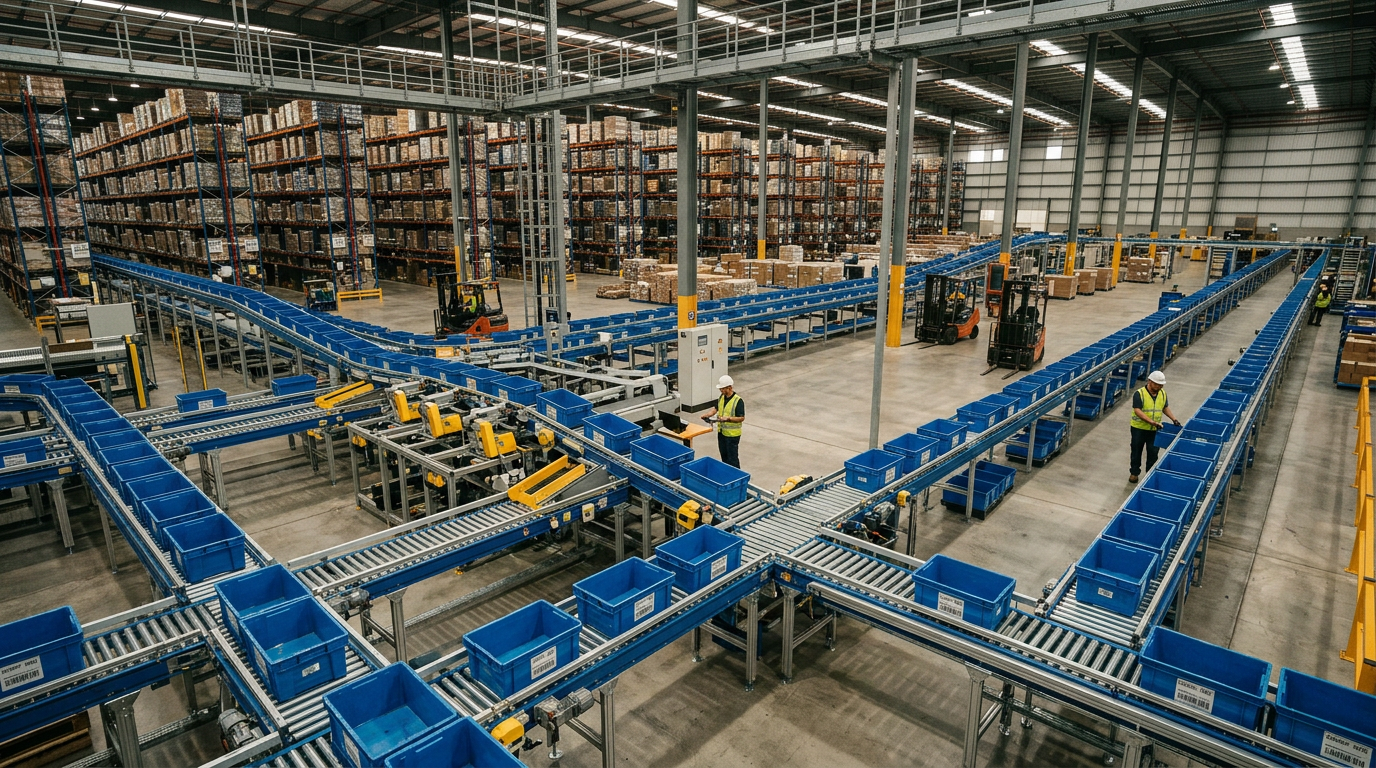
Predictive performance in 3PL (third-party logistics) environments requires case and tote conveyors to handle throughput rates exceeding 1,200 units per hour while maintaining a modular footprint that can be reconfigured within 48 hours to meet changing tenant demands. By utilizing 24V DC Motorized Lead Rollers (MDR) and modular plastic belt systems, modern 3PL facilities achieve energy savings of up to 40% compared to traditional AC motor systems.
The Architecture of 3PL Case and Tote Conveyors
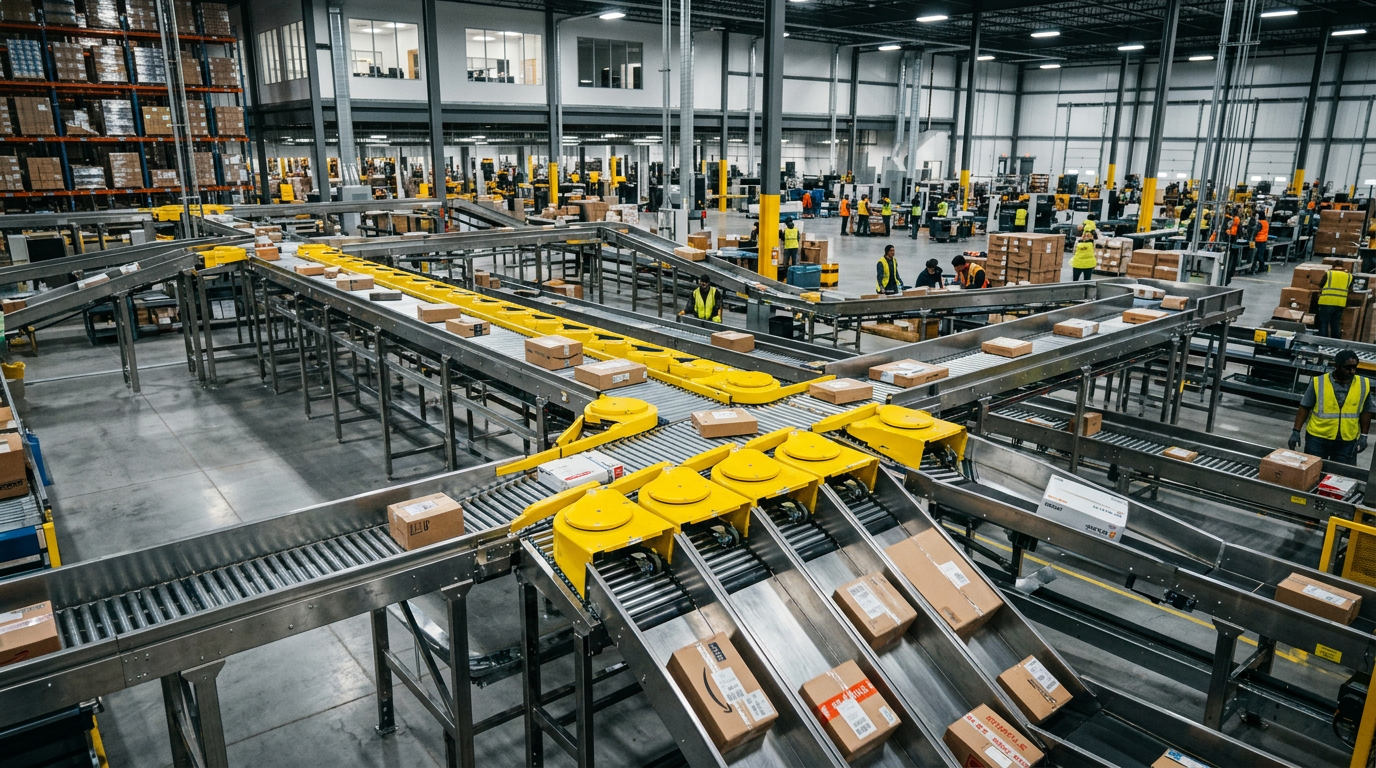
In the high-velocity world of third-party logistics, the conveyor system is the central nervous system of the warehouse. Unlike single-brand distribution centers, 3PLs must design their material handling layout for maximum elasticity. This requires conveyor modules that can handle a vast spectrum of "unit loads"—from lightweight cardboard cases to rigid plastic totes and polybags.
The primary engineering challenge lies in the transition zones. Modular conveyor modules must provide a seamless flow regardless of the bottom surface of the package. While standard roller conveyors are excellent for rigid totes, corrugated cases with sagging bottoms often require the continuous surface of a modular plastic belt. To solve this, many 3PLs are turning to hybrid designs that combine both technologies on a single chassis.
24V DC MDR: The New Standard for Zero-Pressure Accumulation
Zero-Pressure Accumulation (ZPA) is non-negotiable in 3PL environments where fragile goods share the same line as heavy totes. 24V DC Motorized Lead Rollers allow for "run-on-demand" logic. Here, the conveyor only moves when a load is present, reducing noise levels below 60 dB and significantly lowering the mechanical wear and tear associated with constant-run AC motors.
Modular Plastic Belting for High-Incline and Curve Areas
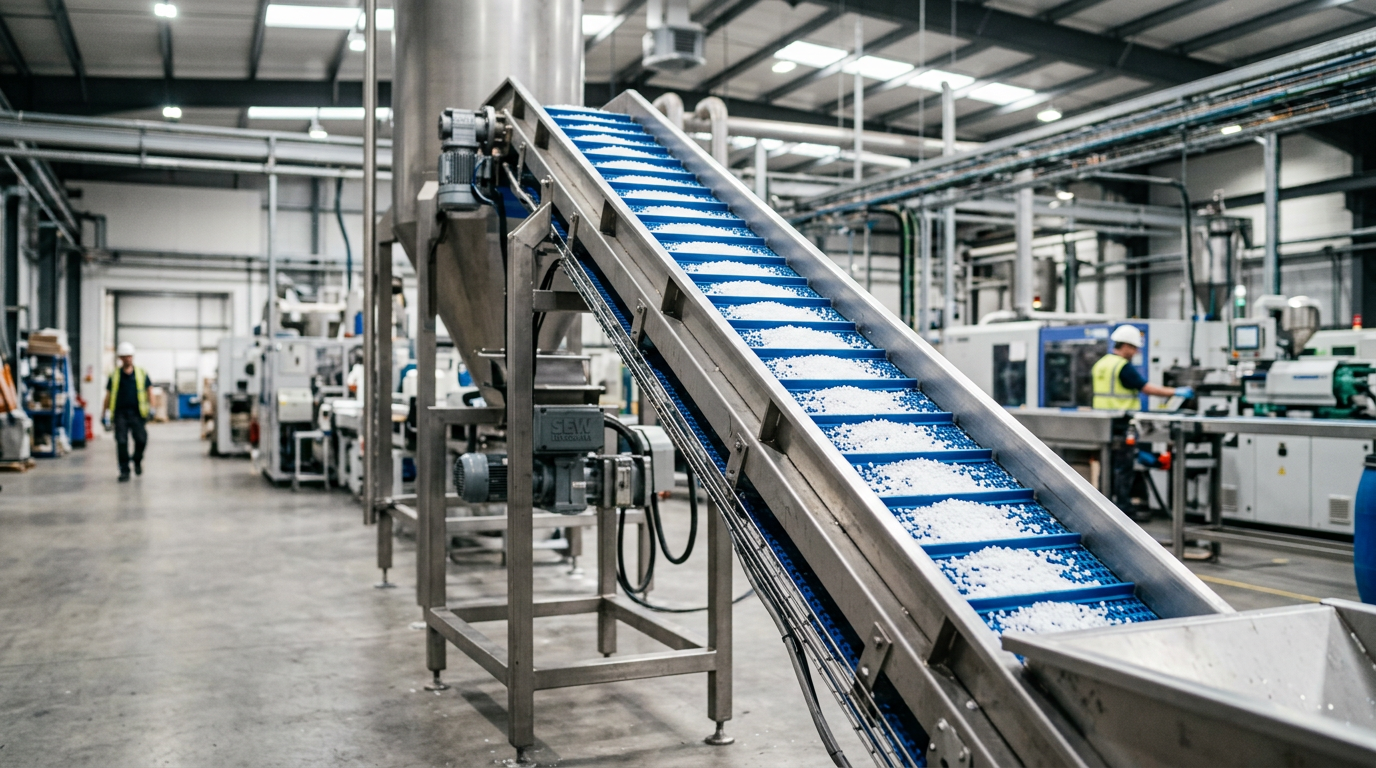
For multi-level mezzanines common in European 3PL hubs, modular plastic belts offer superior traction and safety. Unlike traditional PVC belts, modular belts are composed of interlocking polymer segments (usually POM or PP). If a section is damaged, only the affected modules need replacement, reducing Mean Time To Repair (MTTR) from hours to minutes.
Performance Comparison: Conveyor Drive Technologies
When selecting a drive system for case and tote handling, engineers must balance initial CAPEX against long-term OPEX and maintenance complexity.
| Feature | 400V AC Geared Motor | 24V DC MDR (Motorized Roller) | Drum Motor (Integrated) |
|---|---|---|---|
| Efficiency Class | IE2 - IE3 | Ultra-High (Run-on-Demand) | IE4 Equivalent |
| Throughput | High Constant Speed | Variable / Precise Control | High Torque / Heavy Loads |
| Maintenance | Periodic Oil/Chain Care | Plug-and-Play Replacement | Low (Oil-filled/Sealed) |
| Energy Consumption | High (Always On) | Very Low (Internal Logic) | Low |
| Noise Level | 70-80 dB | < 60 dB | 65-70 dB |
| Integration Cost | High (Wiring/VFDs) | Medium (Control Cards) | High (Specialized Mounts) |
Easy Conveyors stocks the material handling discussed here — ready to ship across Europe.
Key Design Considerations for 3PL Scalability
Designing for a 3PL involves anticipating the unknown. A system commissioned today for a fashion client might need to handle small electronics or automotive components six months from now.
1. Width Standardization
While 400mm and 600mm are standard widths for small case conveyors, a 3PL should typically standardize on a wider frame (e.g., 650mm or 850mm) to accommodate the widest possible range of future client SKUs. Using wide-track Easy Conveyors modules allows for this future-proofing without requiring a total overhaul of the floor-bolted headers.
2. Divert and Sortation Flexibility
The ability to quickly add or move "outfeeds" is critical. Modern 3PL conveyors utilize 90-degree pop-up transfers or swivel-wheel diverters that can be integrated into a standard conveyor frame. These modules are often controlled via IO-Link or EtherNet/IP, allowing for rapid software re-configuration without pulling new high-voltage cables.
3. Hygienic vs. Industrial Finish
While many 3PL warehouses are dry goods environments, those serving the pharmaceutical or food industries require specific IP ratings. IP66-rated motorized rollers and stainless steel frames (AISI 304) are essential for "cleanroom-lite" 3PL zones. Understanding the nuances of hygienic wash-down design is vital if the facility handles unsealed food products or medical grade totes.
Integrating Automation: Sorters and Scanners
The conveyor system must play nicely with the Warehouse Management System (WMS). In a 3PL, the WMS often changes or undergoes significant updates as new clients are onboarded.
- Barcode Scanning Tunnels: Conveyors must provide a vibration-free platform for multi-sided scanning. Vibrations exceeding 0.5G can lead to "no-reads," forcing manual intervention.
- Automatic Weighing (Weigh-in-Motion): Integrating load cells directly into the conveyor frame allows for real-time dimensioning and weighing (DWS), which is critical for 3PL billing accuracy.
- VFD soft-start tuning: For larger AC-driven sections, proper VFD soft-start tuning prevents tote "toppling" during acceleration—a common cause of downtime in high-speed sortation.
Maintenance and Longevity in 24/7 Operations
3PLs often operate on thin margins where downtime represents an immediate penalty. Implementing a predictive maintenance strategy for conveyors involves monitoring the current draw of the 24V rollers. An increase in amperage often signals a flattened roller or a bearing nearing end-of-life.
By selecting modular systems, the 3PL operator avoids the "single point of failure" risk. If one zone controller fails, the rest of the line continues to function, and the faulty component can be swapped by a floor technician without requiring a specialized master electrician. This modular philosophy ensures that the facility remains as agile as the market it serves.
Related topics to consider during the design phase include drum motor selection for heavy pallet-to-tote decanting stations and the implementation of automation sensor calibration to maximize the accuracy of high-speed diverters.
Frequently Asked Questions
Why is 24V MDR technology preferred in 3PL warehouses?
24V MDR (Motorized Drive Roller) systems are ideal for 3PLs because they offer 'run-on-demand' functionality, reducing energy use by up to 40% and providing built-in zero-pressure accumulation for fragile goods.
What is the best conveyor width for a multi-client 3PL facility?
Standard widths of 650mm or 850mm are recommended for 3PLs to provide the versatility needed to handle a wide range of client SKU sizes without requiring hardware upgrades.
How does modularity impact the ROI of a 3PL conveyor system?
A modular conveyor allows for specific sections to be replaced, added, or moved within hours. This enables 3PLs to reconfigure their warehouse layout to meet new client contracts or seasonal volume spikes.
When should I choose modular plastic belts over roller conveyors?
Modular plastic belts are superior for inclines, curves, and handling damaged or soft-bottomed cases that might stall or slip on traditional roller conveyors.
Can modular conveyors handle food or pharma totes in a 3PL?
Yes, by selecting IP66-rated components and stainless steel frames, modular systems can meet the stringent requirements of pharmaceutical and food-grade logistics.
Sources & references
- [1]ISO 23412:2020 - Indirect, temperature-controlled delivery services — Land transport of parcels with intermediate transfer
- [2]Motorized Drive Roller (MDR) Conveyor Systems Overview
- [3]Conveyor System Design and Safety Standards
- [4]Modular Plastic Belts for Case and Tote Handling
- [5]Automated Logistics Systems: 3PL Requirements and Solutions