Optimizing Case and Tote Conveyors for 3PL Warehouses
3PL warehouses require high-throughput case and tote conveyors. Learn about ZPA, MDR technology, and how to optimize modular systems for maximum warehouse efficiency.
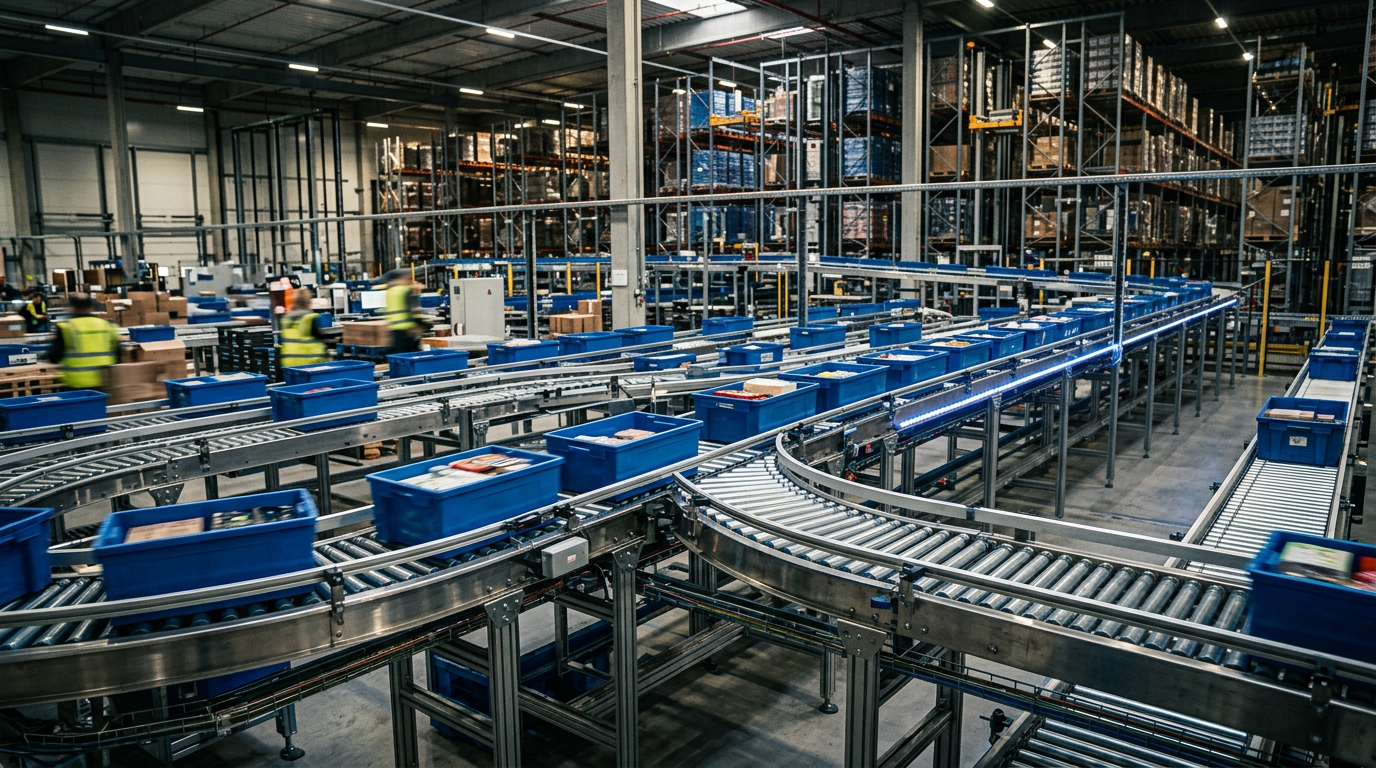
Modern 3PL (Third-Party Logistics) warehouses achieve throughput rates exceeding 3,000 cases per hour by utilizing modular conveyor systems specifically engineered for high-frequency stop-start cycles and variable weight loads. Optimizing these systems requires a balance between 24V DC pulse roller zones for energy efficiency and AC-driven high-speed sorters to manage the fluctuating demands of e-commerce fulfillment and omnichannel distribution.
The Evolution of 3PL Conveyor Requirements
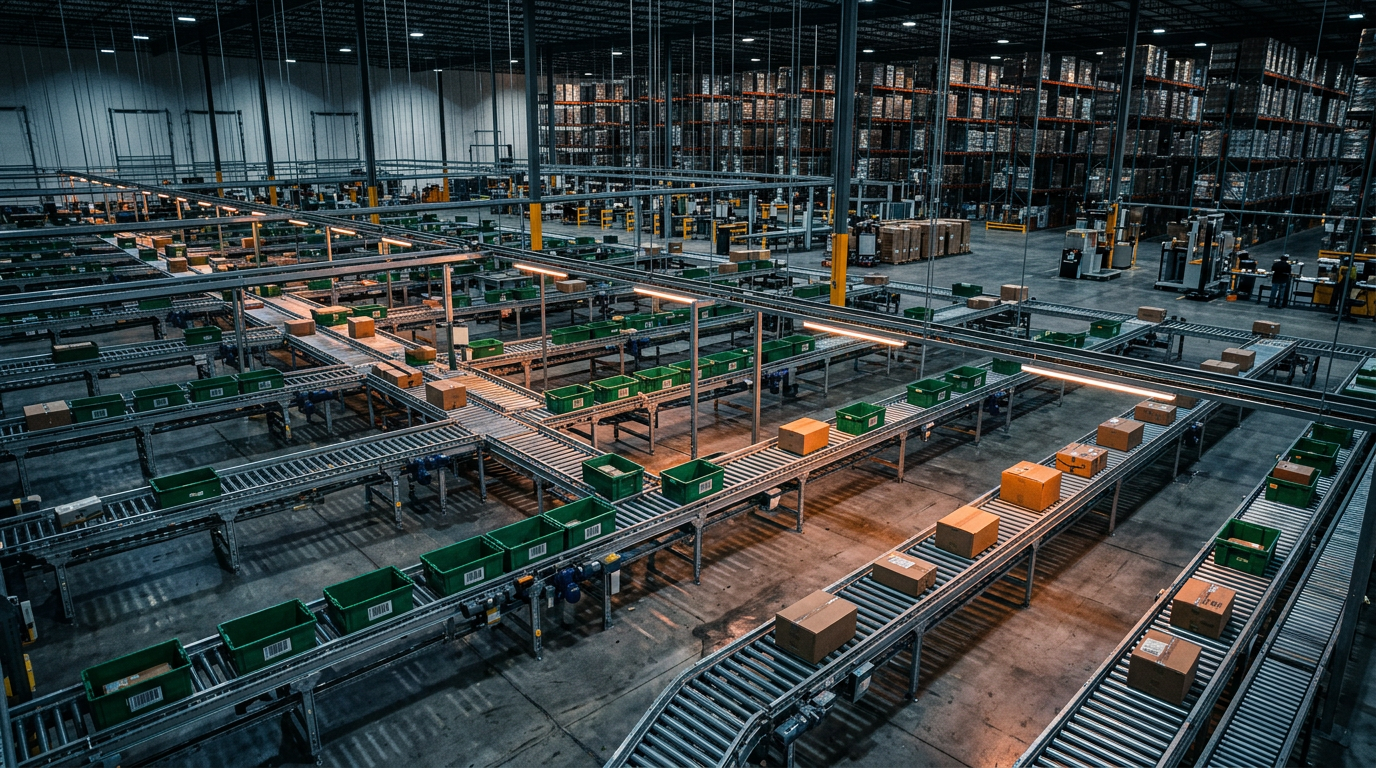
The landscape of third-party logistics has shifted from pallet-level storage to high-velocity piece picking and case handling. In this environment, case and tote conveyors serve as the arterial system of the warehouse, connecting receiving, automated storage and retrieval systems (AS/RS), picking stations, and shipping docks.
For 3PL providers, flexibility is the primary engineering constraint. Unlike a dedicated manufacturing plant, a 3PL facility may handle small electronics one month and heavy automotive parts the next. Consequently, the conveyor infrastructure must adhere to modular standards like ISO 4414 for pneumatic systems or IEC 60204-1 for electrical safety, ensuring that modules can be reconfigured without replacing the entire backbone.
Key Technologies in Case and Tote Handling
1. Motorized Drive Rollers (MDR) and Zero Pressure Accumulation
Zero Pressure Accumulation (ZPA) is the standard for modern 3PL facilities. By using 24V or 48V DC motorized rollers, the system can stop individual "zones" to prevent packages from touching. This eliminates product damage and reduces noise levels to below 70 dB(A), which is a critical factor for operator ergonomics in multi-shift environments.
MDR systems offer significant energy savings. Because the rollers only run when a sensor detects a tote approaching, energy consumption is reduced by up to 60% compared to traditional AC-driven conveyors that run continuously. Furthermore, the decentralized control of ZPA allows for easier integration with Warehouse Control Systems (WCS).
2. High-Speed Sortation and Diverts
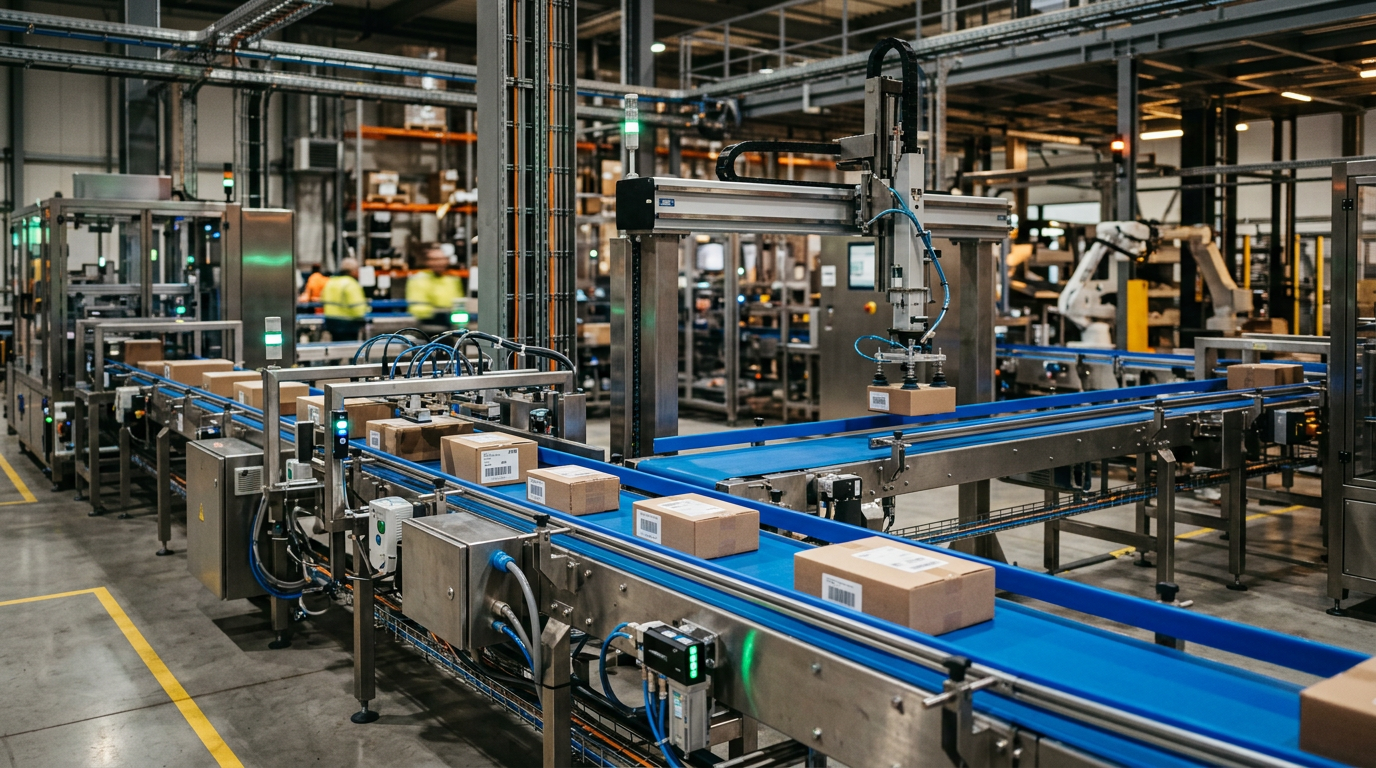
In 3PL hubs, the ability to sort totes to various shipping carriers is vital. Pop-up wheel diverts, shoe sorters, and right-angle transfers are the three primary mechanisms used. For high-volume e-commerce, shoe sorters are preferred due to their ability to handle fragile items at speeds up to 3 meters per second while maintaining high positional accuracy.
3. Modular Plastic Belting
For steep inclines or declines (typically exceeding 5 to 7 degrees), modular plastic belts are often superior to traditional rollers. These belts provide high-friction surfaces and positive drive mechanisms that prevent slippage. Manufacturers like Intralox provide specialized "activated roller belt" (ARB) technology that allows for complex sorting and alignment within a small footprint, a major advantage in space-constrained urban 3PL centers.
Engineering Trade-offs: AC vs. DC Drive Systems
Choosing the right drive system is a balance of initial CAPEX and long-term OPEX. While 24V DC systems are safer and more energy-efficient for short runs and accumulation, AC gearmotors are still preferred for long transport lines (over 50 meters) where high torque and constant speed are required.
| Feature | 24V/48V DC (MDR) | AC Gearmotor (VFD) |
|---|---|---|
| Throughput Range | Low to Medium-High | High to Ultra-High |
| Energy Efficiency | High (On-demand) | Medium (Continuous) |
| Noise Level | < 65 dB | 75-85 dB |
| Maintenance | Low (Plug-and-play) | Moderate (Oil/Chain) |
| Safety | SELV (Safety Extra Low Voltage) | Requires High-Voltage Guarding |
| Control | Integrated Zone Logic | External PLC/VFD |
Easy Conveyors stocks the material handling discussed here — ready to ship across Europe.
Integrating Modular Systems in 3PL Workflows
The modularity of the hardware must match the scalability of the software. When designing a tote handling system, engineers must account for "peaks"—such as Black Friday or Cyber Monday—where volumes can spike by 400%.
Partnering with an experienced system integrator is crucial for navigating these design complexities. For instance, Easy Conveyors offers a range of modular roller and belt conveyors that are specifically designed for rapid deployment and reconfiguration, allowing 3PLs to scale their infrastructure alongside their client contracts.
Design Considerations for Totes and Cases
- Bottom Surface Quality: The "footprint" of the tote determines the roller pitch. A rule of thumb is to have at least three rollers under the shortest product at all times to prevent "stair-stepping."
- Weight Distribution: 3PLs often deal with unevenly loaded totes. Selecting rollers with reinforced bearings and high-torque motors ensures that off-center loads do not stall the system.
- Static Dissipation: In electronic fulfillment, ESD-safe rollers and belts are required to prevent static buildup that could damage sensitive components or cause sensor interference.
Safety and Standards Compliance
Safety in case handling is governed by strict international standards. In the EU, the Machinery Directive and EN ISO 13849-1 define the safety-related parts of control systems. For 3PLs, this means implementing emergency stop zones that can halt specific segments without crashing the entire WMS.
Furthermore, the rise of AMR (Autonomous Mobile Robot) integration requires "handshake" zones where the conveyor and the robot communicate via optical or wireless signals to ensure safe transfer. This requires precise speed control, often achieved through VFD soft-start tuning to match the robot’s acceleration profile.
Maintenance and Predictive Monitoring
The cost of downtime in a 3PL facility can be measured in thousands of Euros per minute. Modern systems leverage "Industry 4.0" features, such as vibration sensors on gearboxes and thermal monitoring on MDR controllers. By analyzing current draw patterns, maintenance teams can identify a failing bearing weeks before it seizes, transforming reactive maintenance into a scheduled, proactive task.
Key areas for routine inspection include:
- Belt Tension: Over-tensioning leads to premature motor failure, while under-tensioning causes tracking issues.
- Roller Lagging: The rubber coating on drive rollers can wear down, leading to reduced friction and inaccurate sorting.
- Sensor Alignment: Dust accumulation on photo-eyes is the leading cause of "ghost" packages in the WCS.
Conclusion
Selecting case and tote conveyors for 3PL warehouses is no longer just about moving a box from Point A to Point B. It is about creating a flexible, data-driven ecosystem that can adapt to the volatile demands of global trade. By prioritizing modularity, energy efficiency through DC technology, and robust safety standards, 3PL providers can ensure their operations remain competitive in an increasingly automated world. 🔍
For more technical insights, explore our guides on drum motor selection for heavy-duty applications or hygienic wash-down design for specialized food-grade 3PL facilities.
Frequently Asked Questions
What is Zero Pressure Accumulation (ZPA) in 3PL warehouses?
Zero Pressure Accumulation (ZPA) uses sensors and decentralized motor control to ensure that totes or cases do not touch while queuing on the conveyor, preventing product damage and jams.
How do Motorized Drive Rollers (MDR) compare to traditional AC drives?
MDR systems (24V/48V DC) are generally more energy-efficient, quieter, and safer for personnel, but AC systems are still preferred for high-torque, long-distance transport.
What is the 'Rule of Three' in roller conveyor design?
To ensure stability, a minimum of three rollers must be in contact with the bottom of the smallest tote or case at all times. This prevents the item from tipping or getting stuck between rollers.
Why is modularity critical for Third-Party Logistics providers?
Modular systems allow 3PLs to reconfigure layouts quickly as client needs change, reduce installation time by up to 40%, and lower total cost of ownership through interchangeable parts.
Sources & references
- [1]IEC 60204-1 Safety of machinery - Electrical equipment of machines
- [2]ISO 4414:2010 Pneumatic fluid power — General rules and safety requirements for systems and their components
- [3]ISO 13849-1:2023 Safety of machinery — Safety-related parts of control systems
- [4]Standardized Conveyor Components and ARB Technology