Optimizing 3PL Warehouses with Modular Case and Tote Conveyors
Optimize 3PL warehouse efficiency with modular case and tote conveyors. Learn about 24V MDR technology, ZPA logic, and energy-saving designs for high-throughput fulfillment.
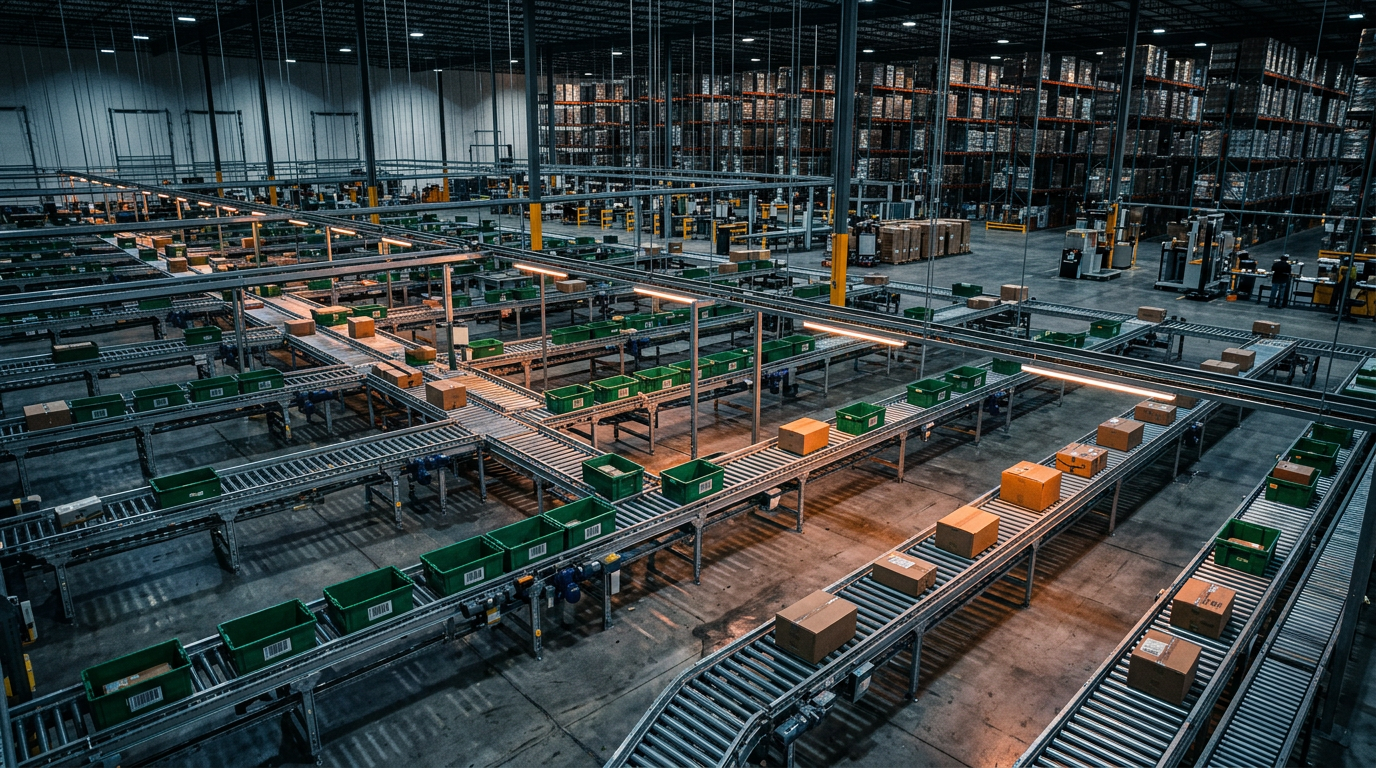
Effective case and tote conveyors for 3PL warehouses utilize 24V DC roller technology to achieve up to 60% energy savings compared to traditional AC motor drives while maintaining throughput rates of 30 to 60 cartons per minute. These modular systems are designed to handle payloads typically ranging from 0.5kg to 50kg, providing the flexibility required for rapid SKU turnover and seasonal scalability in third-party logistics environments.
The Role of Case and Tote Conveyors in Modern 3PL
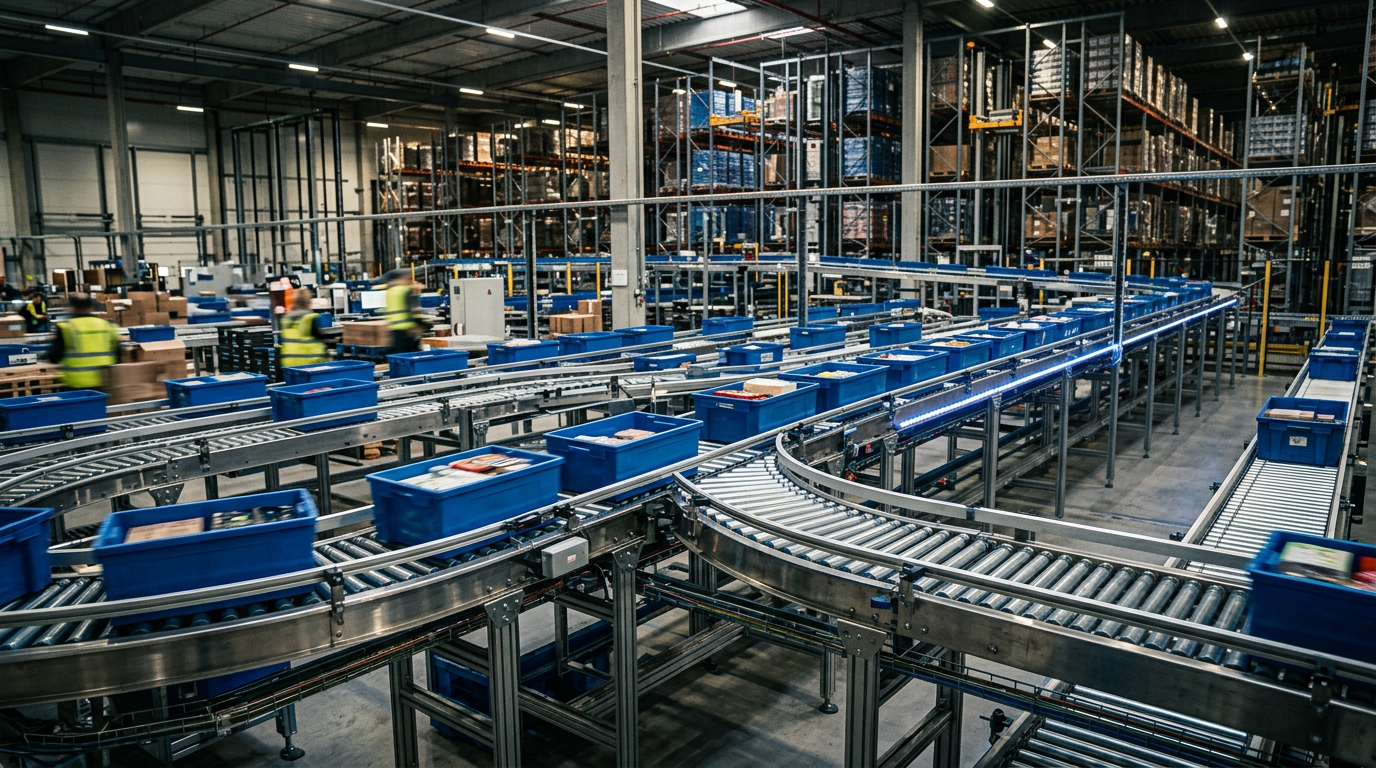
Third-party logistics (3PL) providers operate in an environment characterized by high variability and thin margins. The ability to move plastic totes, corrugated cases, and polybags efficiently is the backbone of fulfillment operations. Unlike dedicated manufacturing lines, 3PL conveyors must accommodate a "parcel mix" that changes monthly.
The shift toward Motorized Drive Roller (MDR) technology has redefined the baseline for these facilities. By using decentralized 24V or 48V power, warehouses can implement "Run-on-Demand" logic. According to IEC 60034-30-1, high-efficiency motors (IE3 and IE4) are now the standard for reducing operational expenditures in large-scale sortation centers.
Key Technologies: MDR vs. AC Gearmotors
In the selection process for case and tote conveyors, engineers typically choose between two primary drive architectures.
| Feature | 24V/48V Motorized Drive Roller (MDR) | Traditional AC Gearmotor (400V) |
|---|---|---|
| Efficiency | High (Run-on-demand) | Medium (Continuous run) |
| Noise Level | < 60 dB | > 75 dB |
| Maintenance | Plug-and-play components | Chain/Sprocket lubrication required |
| Accumulation | True Zero Pressure (ZPA) | Minimum Pressure / Mechanical |
| Scalability | High (Modular zones) | Low (Fixed motor sections) |
Zero Pressure Accumulation (ZPA)
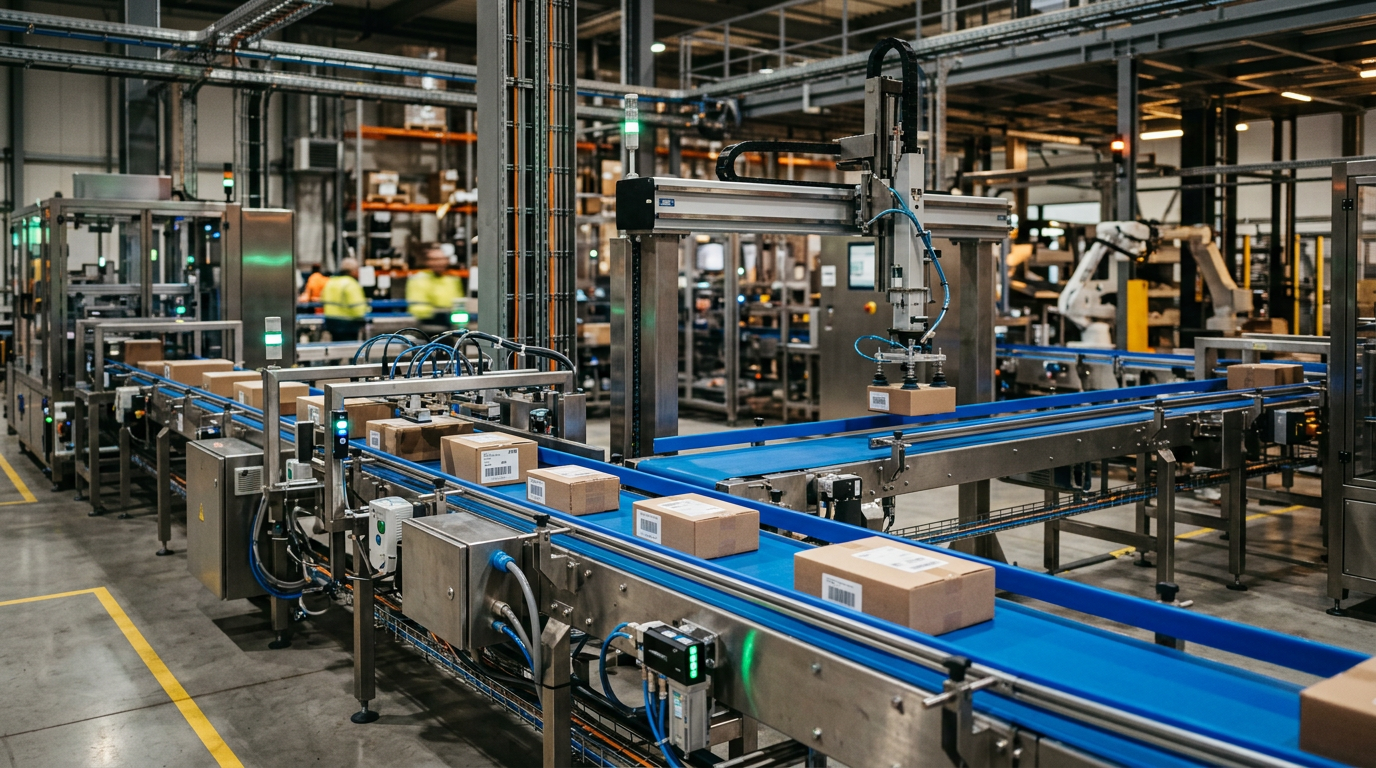
For 3PLs handling fragile e-commerce goods, Zero Pressure Accumulation is critical. ZPA ensures that totes or cases never touch one another during transit or buffering. This is achieved through integrated photo-eyes and logic controllers that stop a specific zone if the downstream zone is occupied. This prevents product damage and "accordion" jams that plague traditional belt conveyors.
Modular Design and Flexibility
The most significant advantage for 3PL providers is modularity. A warehouse layout designed in September might need to be reconfigured by July to accommodate a new client contract. Systems like those offered by Easy Conveyors allow for rapid assembly and reconfiguration using standardized aluminum profiles and snap-in roller components.
Handling Diverse Load Types
3PLs rarely handle a single container size. A robust system must accommodate:
- Plastic Totes: Smooth bottoms, high stability, ideal for automated storage and retrieval systems (ASRS).
- Corrugated Cases: Variable friction, potential for "soft" bottoms that require closer roller centers.
- Polybags: Often require "belt-over-roller" modules to prevent the bag from sagging between rollers and causing a jam.
Easy Conveyors stocks the material handling discussed here — ready to ship across Europe.
Throughput and Sortation Integration
High-speed 3PL operations require seamless integration between transport conveyors and sortation subsystems. For case and tote handling, diverters and transfers are the "traffic cops" of the system.
- Right-Angle Transfers: Use pop-up rollers or chains to move a tote 90 degrees.
- Narrow Belt Diverters: Employed for high-speed sortation where items are diverted at 30- or 45-degree angles to maintain momentum.
- Vertical Conveyors: Essential for multi-tier mezzanine picking operations, moving totes between levels without taking up a large footprint.
According to safety standards such as ISO 13849-1, all automated transfer points must be designed with performance levels (PL) that ensure operator safety during manual interventions.
Power and Control Architecture
The intelligence of a 3PL conveyor lies in its control layer. Modern systems utilize industrial Ethernet protocols (EtherNet/IP, PROFINET, or EtherCAT) to provide real-time diagnostics.
- Predictive Maintenance: By monitoring the current draw of individual rollers, the system can predict a bearing failure before it stops the line.
- Variable Frequency Drives (VFDs): For heavy-duty sections, VFD soft-start tuning is utilized to reduce mechanical stress and peak power consumption.
- Hygienic Considerations: While most 3PLs are "dry" environments, those handling packaged food or pharma must adhere to basic FDA guidelines regarding non-toxic materials and cleanability of the conveyor surfaces.
Optimizing for "The Last Mile"
The final stage of the 3PL conveyor system is often the shipping sorter. Here, the reliability of the drum motor selection or roller drive becomes paramount. If the shipping sorter fails, the entire warehouse stops. High-performance systems often incorporate redundant power supplies and bypass lanes to ensure that a single component failure does not lead to a total facility shutdown.
When designing these systems, engineers must calculate the "effective friction" of the various materials being moved. For example, a worn corrugated box has a much higher coefficient of friction than a new plastic tote. Ensuring the drive rollers have sufficient torque to overcome this variance is a core requirement of a successful 3PL material handling strategy.
Future Trends: 48V Systems and AI Diagnostics
The industry is currently transitioning from 24V to 48V DC systems. The higher voltage allows for longer cable runs and the ability to drive heavier loads (up to 100kg per zone) without increasing wire gauge. Furthermore, the integration of AI-driven warehouse execution systems (WES) allows conveyors to dynamically adjust speeds based on real-time picker productivity, further optimizing energy use.
Choosing the right partner for these modular systems involves looking for components that offer long-term availability and global support. Whether implementing a simple gravity roller lane or a complex multi-tier automated sortation system, the focus remains on throughput, reliability, and the flexibility to adapt to an ever-changing logistics landscape.
Frequently Asked Questions
What are the benefits of Motorized Drive Rollers (MDR) over traditional AC motors?
MDR systems use 24V or 48V DC rollers that only run when a product is detected, saving up to 60% energy compared to continuously running AC gearmotors. They also offer quieter operation and modular plug-and-play installation.
How does Zero Pressure Accumulation (ZPA) improve 3PL operations?
ZPA is a control logic that prevents items on a conveyor from touching one another. Each 'zone' is controlled by a sensor; if the downstream zone is full, the upstream zone stops, preventing product damage and jams.
What is the recommended roller pitch for small totes?
For standard 3PL totes, a 75mm or 100mm roller pitch is common. However, the rule of thumb is that at least three rollers must be under the smallest product at all times to ensure stable transport.
Can case conveyors handle polybags and flexible packaging?
Yes, by using 'belt-over-roller' modules or specialized modular plastic belts, these systems can handle polybags that would otherwise sag or jam between standard rollers.