Optimizing Case and Tote Conveyors for 3PL Warehouses
Optimize your 3PL warehouse with case and tote conveyors. Learn about ZPA logic, MDR vs. AC drives, and modular designs for high-velocity fulfillment.
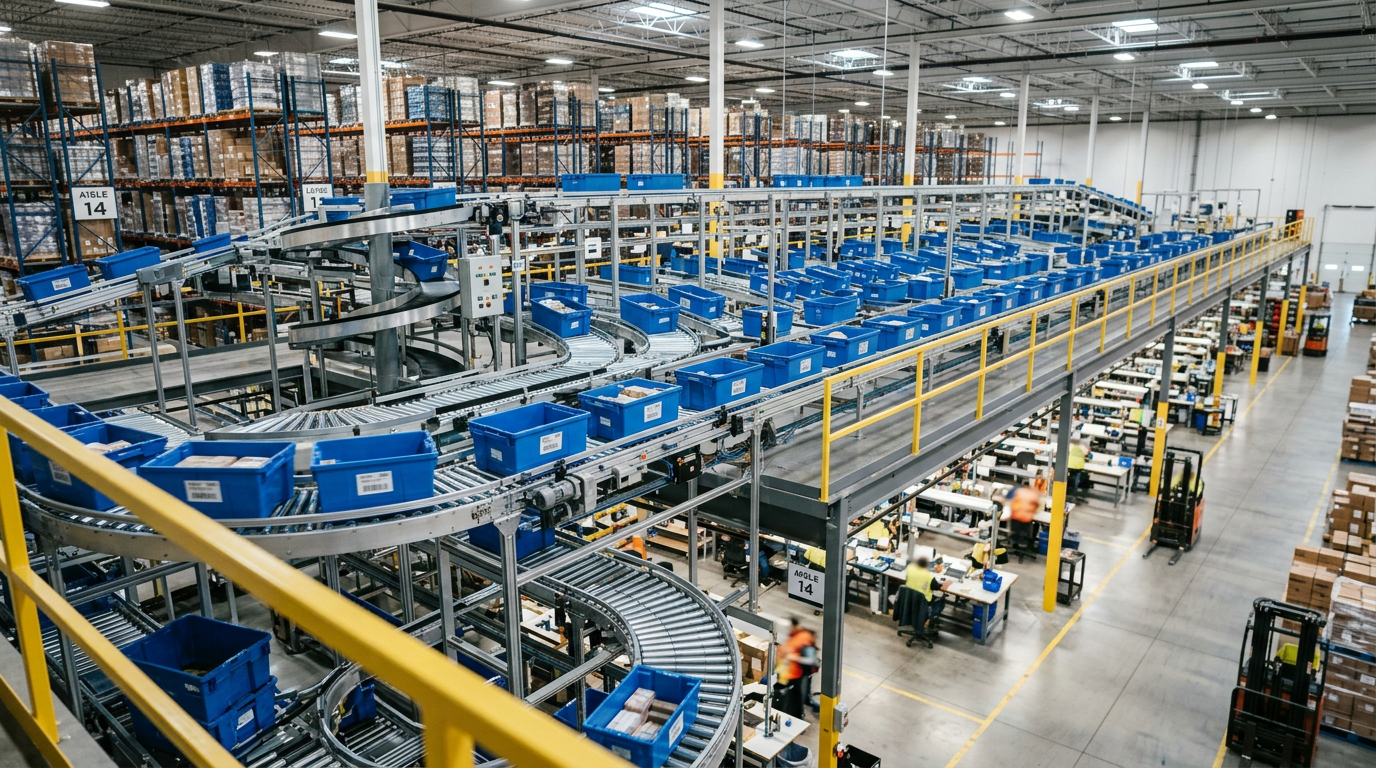
In the modern logistics landscape, case and tote conveyors for 3PL warehouses provide the backbone for high-velocity fulfillment, typically supporting throughput rates of 1,500 to 4,000 units per hour while handling payloads ranging from 0.5 kg to 50 kg. These systems utilize a combination of Motorized Drive Roller (MDR) technology and 24V DC controls to enable Zero Pressure Accumulation (ZPA), ensuring that fragile inventory is transported without product-to-product contact or crushing forces.
The Architecture of 3PL Conveyor Systems
Third-party logistics (3PL) providers operate in a high-variability environment. Unlike a dedicated manufacturing line, a 3PL warehouse must handle fluctuating SKUs, diverse packaging types (from corrugated cardboard to plastic totes), and seasonal volume spikes. The fundamental engineering challenge lies in balancing flexibility with energy efficiency.
Motorized Drive Rollers (MDR) vs. AC Drives
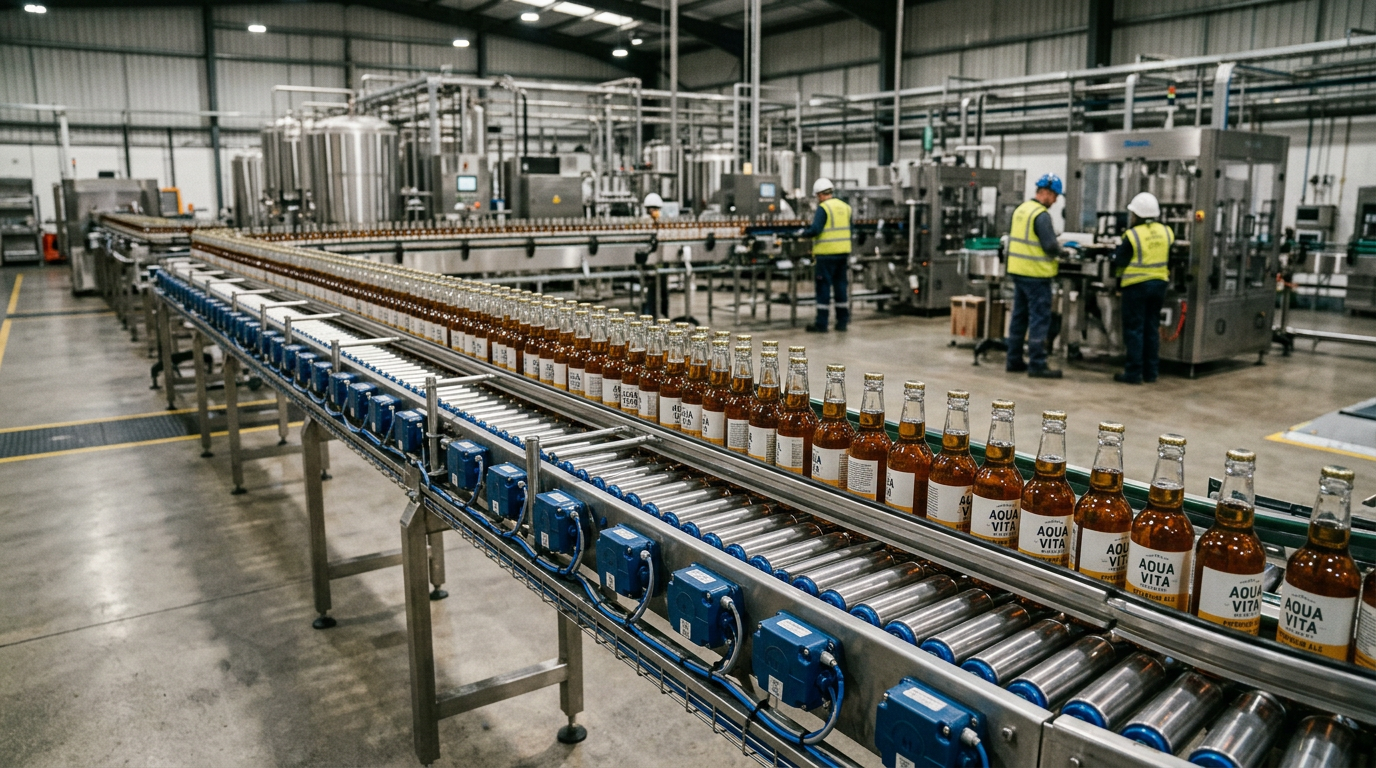
Most modern case conveyors have shifted toward MDR technology. These rollers integrate the motor and gearbox within the roller tube itself, operating on 24V DC power. According to IEC 60034-30-1, high-efficiency classes like IE3 and IE4 are increasingly standard for the AC motors that power the long-haul transport sections, but for zonal control, MDR is king.
| Feature | MDR (24V DC) | Conventional AC Gearmotor |
|---|---|---|
| Control Logic | Zonal (ZPA) integrated | Centralized VFD/PLC |
| Energy Efficiency | High (Run-on-demand) | Medium (Continuous run) |
| Noise Level | < 60 dB | 70-75 dB |
| Maintenance | Plug-and-play | Mechanical alignment required |
| Scalability | High (Modular) | Limited by drive capacity |
Modular Belt and Roller Integration
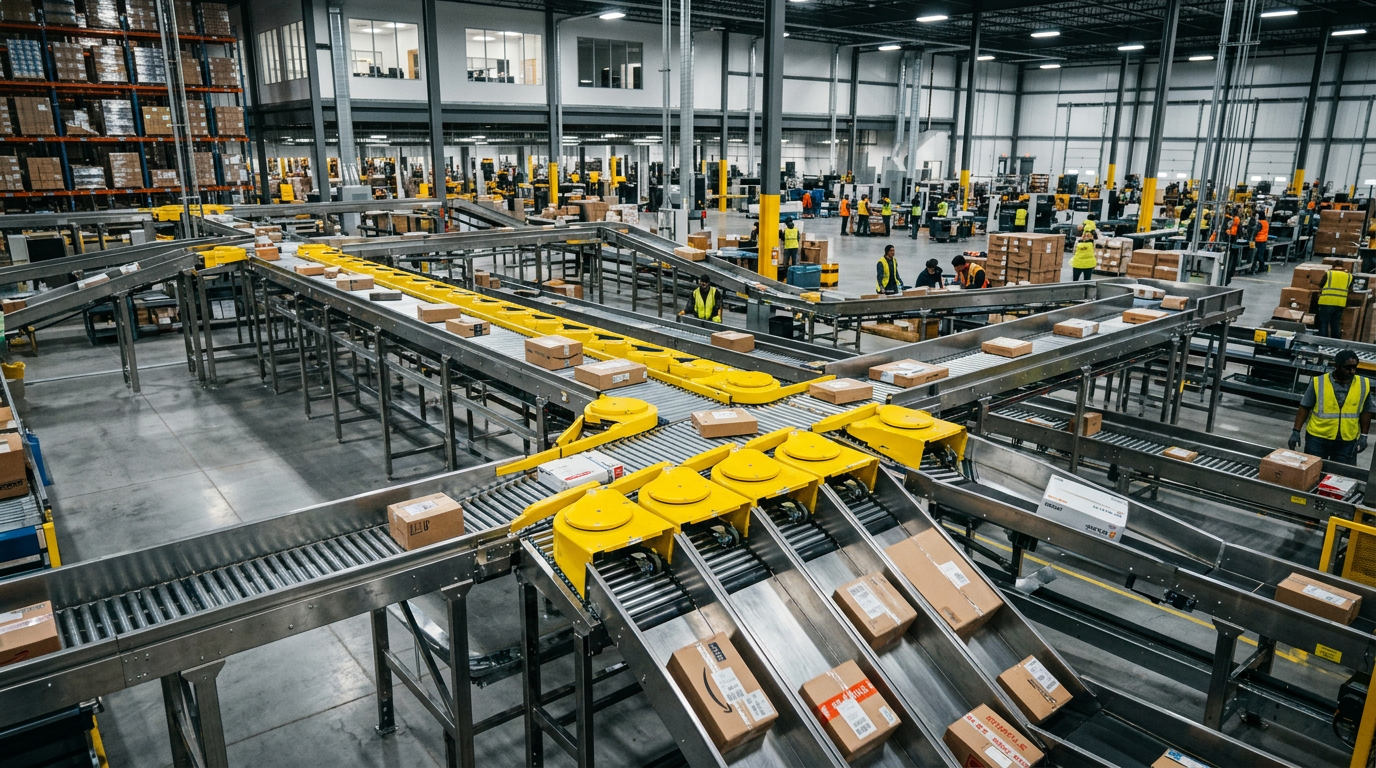
For 3PLs, the ability to reconfigure a layout is a competitive advantage. Modular conveyor systems allow for rapid changes in line direction and elevation. Easy Conveyors specializes in these modular components, providing the structural flexibility required to scale from a manual packing station to a fully automated sortation loop.
Key Performance Indicators in Case Handling
When designing or procuring case and tote conveyors for 3PL warehouses, engineering teams focus on three primary metrics: throughput, accumulation density, and reliability.
Throughput and Velocity
System speed is typically measured in meters per second (m/s). For standard tote handling, speeds of 0.6 m/s to 1.0 m/s are common. However, in high-speed sortation induction zones, velocities can reach 2.0 m/s or higher. It is critical to ensure that the belt friction coefficient is sufficient to prevent package slippage during rapid acceleration or deceleration, a specification often governed by materials from Habasit.
Zero Pressure Accumulation (ZPA)
In a 3PL environment, items are frequently buffered before reaching a sorter or a palletizer. ZPA logic divides the conveyor into discrete zones, each controlled by a sensor. When a zone downstream is occupied, the upstream zone stops. This prevents "line pressure"—the cumulative force of multiple cases pushing against one another—which is a leading cause of package damage and equipment jams.
Safety and Compliance Standards
Designers must adhere to rigorous safety standards to protect warehouse personnel.
- ISO 13849-1: Relates to the safety-related parts of control systems, ensuring that E-stops and light curtains function reliably.
- OSHA 1910.212: General requirements for all machines, focusing on guarding pinch points where rollers meet belts.
- Noise Regulations: The move toward plastic-link belts and MDRs helps facilities stay below the 85 dB(A) threshold mandated by OSHA for 8-hour shifts without hearing protection.
Easy Conveyors stocks the material handling discussed here — ready to ship across Europe.
Selecting the Right Conveyor Surface
The choice between roller and belt surfaces depends on the variety of the 3PL's client base.
Roller Conveyors
Best for rigid-bottom containers like plastic totes and sturdy corrugated boxes. They offer the easiest integration for diverts and transfers, such as right-angle pop-up transfers or steerable wheel sorters.
Belt-Over-Roller
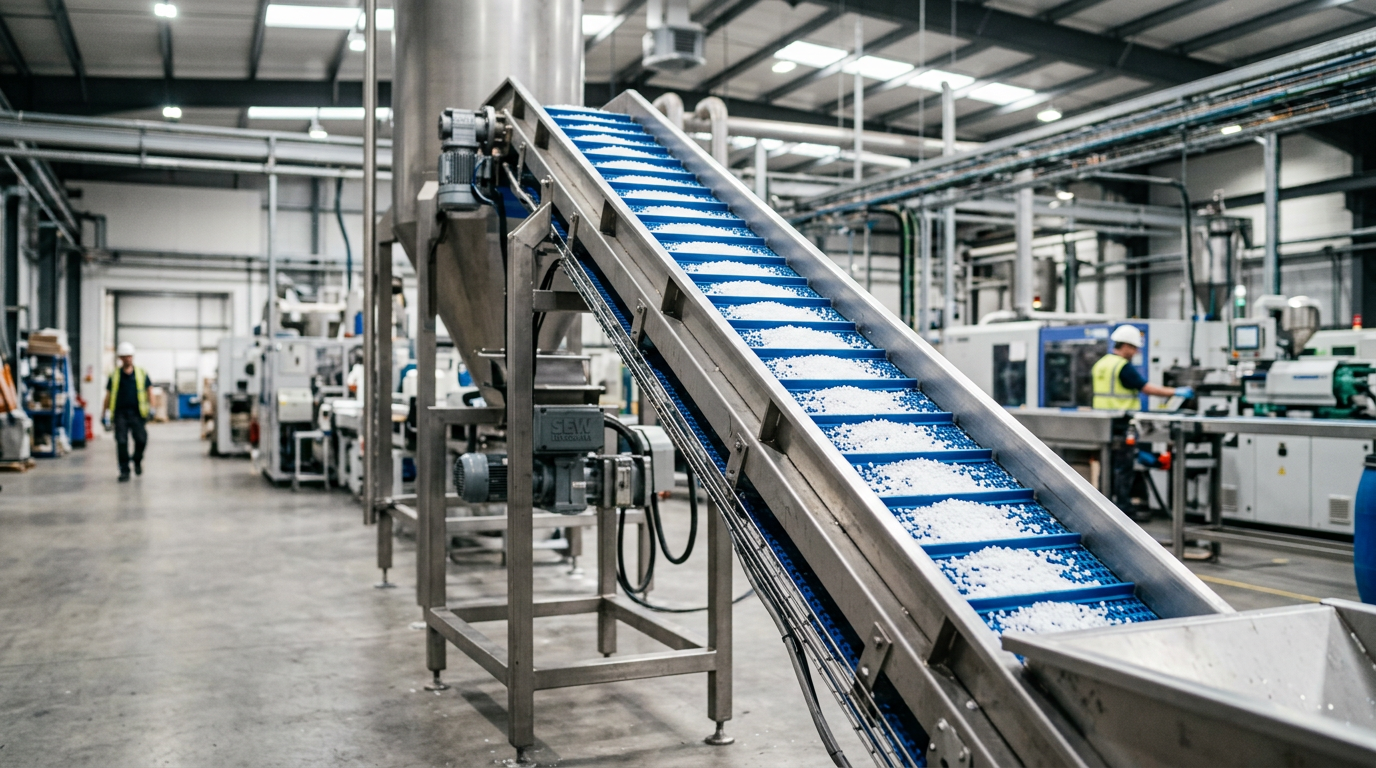
Preferred for polybags, small envelopes, and irregular packaging common in e-commerce 3PL operations. The continuous surface prevents small items from getting caught in the gaps between rollers. Manufacturers like Intralox provide modular plastic belts that combine the benefits of a solid surface with the ability to replace individual damaged links rather than an entire belt.
Integration with Automation Cells
Modern 3PL conveyors no longer operate in isolation. They are increasingly integrated with:
- Print-and-Apply Systems: Requiring precise speed control to ensure labels are placed accurately within ±2mm.
- In-Motion Weighing: Utilizing load cells integrated into the conveyor frame to verify order accuracy.
- Vision Systems: For barcode reading and volumetric dimensioning (DWS systems).
Proper VFD soft-start tuning is essential for these integrated zones to prevent the "jerking" motion that can tip tall, narrow totes or shift the contents of an open box.
Maintenance and Lifecycle Management
Failure modes in 3PL environments often stem from debris (dust, cardboard fibers) infiltrating bearing housings or tape residue buildup on rollers. A proactive maintenance schedule should include:
- Bearing Thermography: Using IR cameras to detect overheating in drive motors.
- Belt Tension Verification: Ensuring that modular belts are not running with excessive slack, which leads to sprocket wear.
- Sensor Calibration: Cleaning photo-eyes to prevent "false full" signals in accumulation zones.
By utilizing high-quality components and modular designs, 3PL operators can ensure their material handling infrastructure remains an asset rather than a bottleneck, adapting to the ever-changing demands of global commerce.
Frequently Asked Questions
What is Zero Pressure Accumulation in 3PL conveyors?
Zero Pressure Accumulation (ZPA) is a control logic that divides a conveyor into zones, ensuring that items are buffered without touching each other. This prevents package damage and 'line pressure' jams.
Should I use roller or belt conveyors for my 3PL warehouse?
For rigid plastic totes, roller conveyors are ideal. For polybags, small mailers, or irregular packages common in e-commerce, modular plastic belt conveyors or belt-over-roller systems are preferred to prevent snags.
Are MDR systems more energy-efficient than AC motors?
24V DC Motorized Drive Rollers (MDR) are generally more energy-efficient because they only run when a package is detected in the zone, whereas AC gearmotors often run continuously.
What is the typical speed of a case conveyor?
Standard transport speeds for totes range from 0.6 m/s to 1.0 m/s. High-speed sortation induction zones can reach velocities exceeding 2.0 m/s depending on the sorter technology.