Optimizing Case and Tote Conveyors for High-Throughput 3PL Warehouses
Learn how 3PL warehouses optimize case and tote handling using 24V MDR technology, ZPA logic, and modular design to achieve 98%+ system availability.
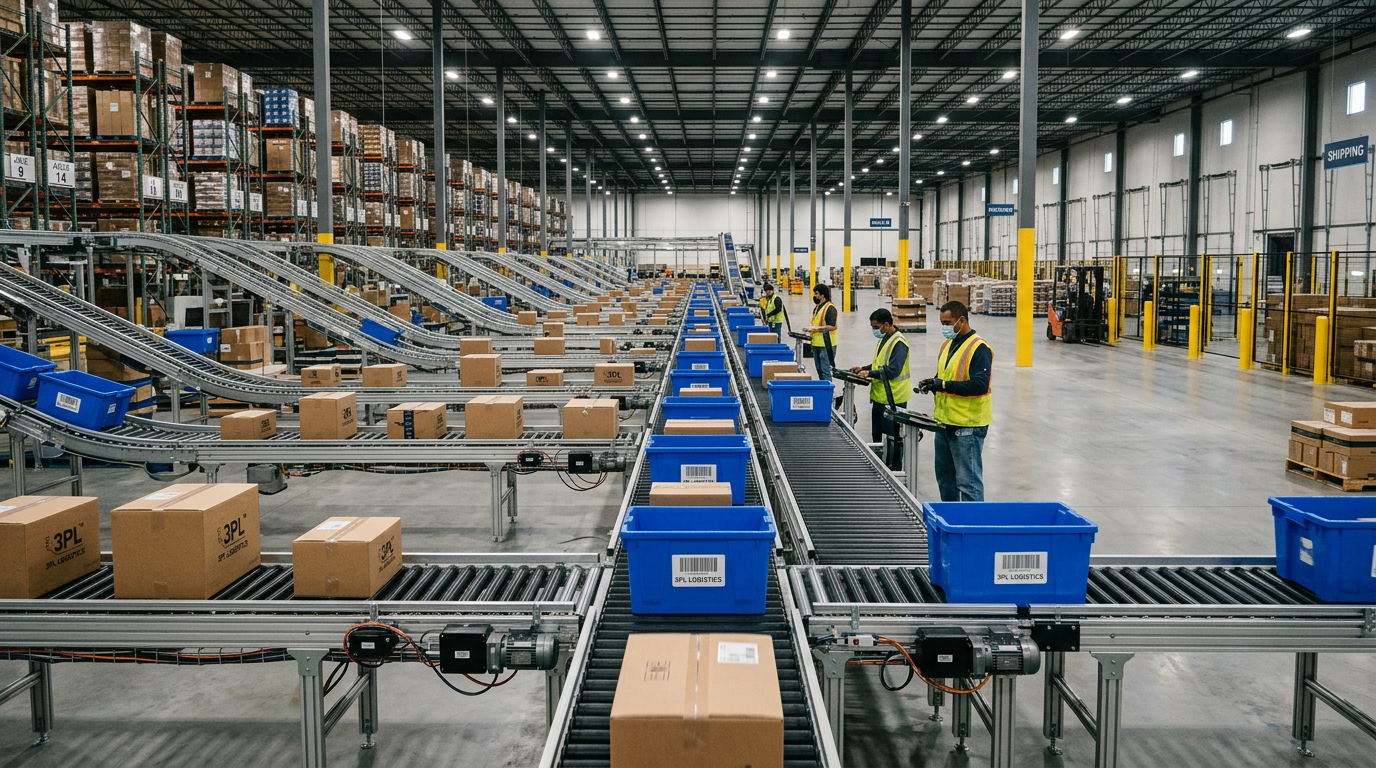
In high-throughput 3PL (Third-Party Logistics) environments, case and tote conveyors must maintain a minimum system availability of 98% while handling diverse load profiles ranging from 1kg plastic bins to 35kg corrugated cases. Modern e-commerce fulfillment relies on modular 24V DC roller systems or plastic modular belts to achieve throughput rates exceeding 2,500 units per hour per line, utilizing zero-pressure accumulation (ZPA) to prevent product damage during peak induction.
The Evolution of 3PL Conveying Systems
The rise of e-commerce has fundamentally shifted 3PL requirements from pallet-level movement to unit-level sortation. Case and tote conveyors for 3PL warehouses are no longer static transport lines; they are dynamic data-collection arteries. Whether moving cardboard shipping containers or reusable plastic totes, these systems must integrate seamlessly with Warehouse Management Systems (WMS) and Warehouse Control Systems (WMS/WCS) to handle rapid SKU fluctuations.
Standardization is the bedrock of modern 3PL scalability. By utilizing standardized modules for straights, curves, and merges, facilities can reconfigure layouts in a matter of days rather than weeks. This modularity is often achieved through the use of Easy Conveyors, a specialist in European-engineered modular systems that allow 3PL providers to scale throughput without replacing entire infrastructure segments.
Key Technologies in Case and Tote Handling
Selecting the right mechanical platform depends on the variety of packaging materials and the required "intelligence" of the line.
1. Motorized Drive Roller (MDR) Conveyors
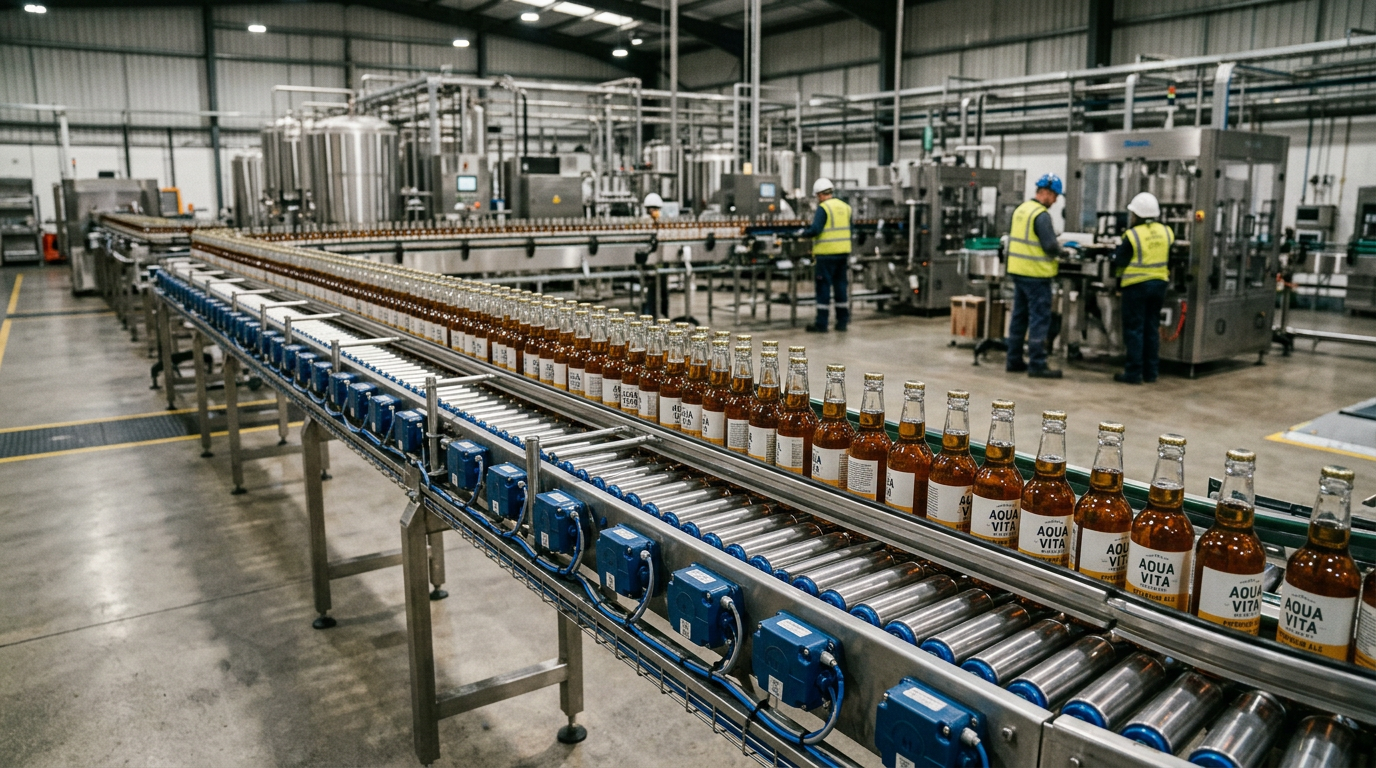
MDR systems represent the gold standard for case and tote handling. Operating on 24V or 48V DC power, these rollers only spin when a product is present.
- Energy Efficiency: Potential energy savings of up to 50% compared to AC-driven systems (IEC 60034-30-1).
- Zero Pressure Accumulation (ZPA): Logic controllers ensure that totes never touch, preventing "shingling" or damage to fragile contents.
- Safety: Low-voltage operation and low-torque motors eliminate many mechanical pinch points.
2. Plastic Modular Belt (PMB) Conveyors
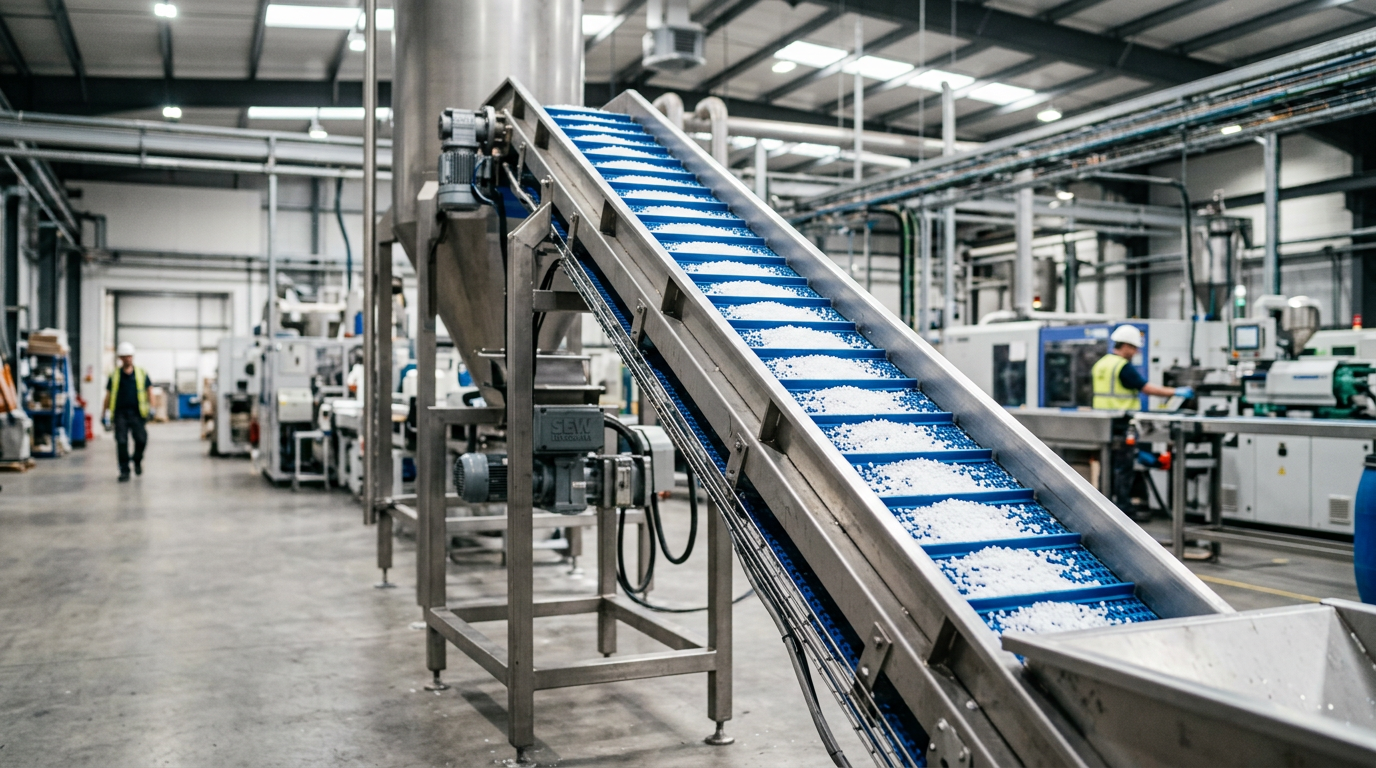
For heavy totes or high-speed inclines, plastic modular belts offer superior stability. Unlike traditional fabric belts, PMB systems are positive-drive, meaning they do not slip under heavy loads.
- Pitch Selection: Small pitch belts (e.g., 1-inch) reduce the gap at transfer points, critical for small e-commerce mailers.
- Durability: Acetal (POM) materials offer high wear resistance and a low coefficient of friction (Intralox Engineering Manual).
3. Belt-Over-Roller Systems
Often used for long-distance transport of varying case sizes, these systems provide a consistent friction surface, which is essential when handling recycled cardboard boxes that may have inconsistent bottom surfaces.
Technical Comparison: Tote Conveying Platforms
| Feature | 24V MDR Roller | Plastic Modular Belt | Fabric Belt Conveyor |
|---|---|---|---|
| Max Load (per zone) | 50 kg | 500+ kg/m | 100 kg |
| Throughput (Units/hr) | Up to 3,000 | Up to 4,500 | Up to 2,000 |
| Accumulation Logic | Internal (ZPA) | External (Stop/Start) | Difficult |
| Noise Level | < 65 dB | 70-75 dB | 72-78 dB |
| Maintenance | Low (Plug & Play) | Medium (Sprockets) | High (Tracking) |
| Energy Profile | On-demand only | Continuous | Continuous |
Design Considerations for 3PL Scalability
When engineering a 3PL case conveyor, designers must account for "The Three C’s": Coefficient of friction, Center of gravity, and Container quality.
Load Stability and Friction
Totes are typically made of High-Density Polyethylene (HDPE) or Polypropylene (PP). These materials have a low coefficient of friction on steel rollers. To prevent sliding during acceleration, rollers may require Polyurethane (PU) lagging. In contrast, corrugated cases provide high friction but can lose structural integrity if exposed to moisture, leading to "sagging" between rollers.
The Role of VFD Soft-Start Tuning
Even in 24V systems, managing acceleration ramps is vital. Precise VFD soft-start tuning prevents totes from toppling when exiting a high-speed sorter or entering a spiral incline. This is particularly relevant in 3PLs handling high-center-of-gravity items like bottled liquids or stacked electronics.
Sizing and Pitch Rules of Thumb
For reliable transport, a minimum of three rollers must be under the smallest product at all times. If the smallest tote is 300mm long, the roller pitch (center-to-center distance) should be no more than 75mm to 100mm. Exceeding this ratio risks "stalling" where the product drops into the gap between rollers.
Easy Conveyors stocks the material handling discussed here — ready to ship across Europe.
Advanced Sortation and Induction
In 3PL hubs, the conveyor's primary job is often feeding a sorter.
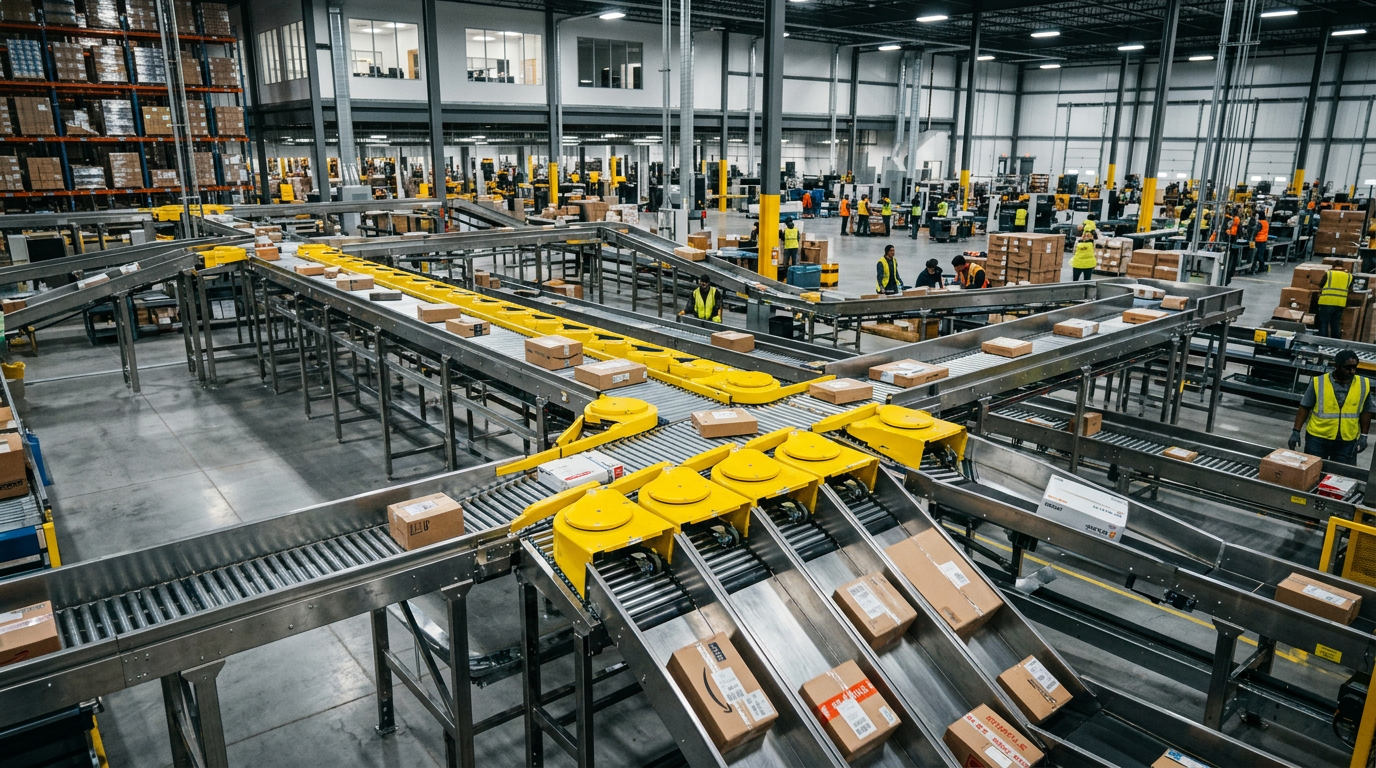
- Pop-up Diverts: Use 24V rollers that lift to redirect cases at 30-degree or 90-degree angles.
- Pusher Modules: Ideal for heavy-duty cases where speed is less critical than positive displacement.
- Shoe Sorters: High-speed applications requiring throughput of 10,000+ units per hour (Interroll Sortation Guide).
Effective induction requires gapping logic. By using varying speeds on successive conveyor segments, the system creates the precise physical gap required for barcode scanners (fixed-mount or 6-sided tunnels) to register each unit.
Failure Modes and Preventive Maintenance
3PL warehouses often run 24/7 during peak seasons (Q4), making "drum motor selection" and thermal management critical. Common failure points include:
- O-ring/Poly-V Belt Fatigue: In MDR systems, the drive belts between rollers are wear items. Using high-tension Poly-V belts increases torque but requires more precise alignment.
- Sensor Fouling: Dust from cardboard boxes can coat photo-eye lenses, leading to "false occupancy" signals in the ZPA logic.
- Debris Accumulation: Totes often shed small pieces of plastic or shipping labels, which can jam roller bearings or gum up sprockets.
Integrating automated diagnostic tools into the WCS can flag a motor that is drawing higher-than-normal amperage, indicating a mechanical bind before the component fails.
Energy Efficiency and Sustainability
Sustainability is no longer optional in global logistics. Modern 3PL conveyor designs prioritize IE3 or IE4 motor efficiency classes (SEW-Eurodrive Efficiency Standards). By transitioning from centralized AC motors to decentralized DC drive technology, facilities reduce their carbon footprint and heat load, which is especially important in temperature-controlled pharmaceutical 3PL warehouses.
Conclusion
The architecture of case and tote conveyors for 3PL warehouses is shifting toward "intelligence at the edge." By utilizing modular components, 24V DC technology, and sophisticated ZPA logic, 3PL operators can create a flexible, energy-efficient foundation that adapts to the ever-changing demands of global e-commerce. Success lies in balancing initial CAPEX with long-term OEE (Overall Equipment Effectiveness), ensuring that the conveyor remains a silent, reliable partner in the fulfillment process.
Frequently Asked Questions
What is Zero Pressure Accumulation (ZPA) in 3PL conveyors?
ZPA is a control methodology where conveyors are divided into zones. A zone only runs if the zone ahead is clear, ensuring products (totes or cases) never touch or collide, preventing damage and jams.
How do I determine the correct roller pitch for small totes?
Use the 'Rule of Three': At least three rollers must be in contact with the bottom of the smallest item at all times. For a 300mm tote, a 75mm pitch is ideal.
Are 24V MDR systems more efficient than traditional AC motors?
MDR (Motorized Drive Roller) systems are significantly more energy-efficient because they use 'run-on-demand' logic, only consuming power when a product is physically present in a zone.
Can I use the same conveyor for plastic totes and cardboard cases?
While totes are standardized, corrugated cases can vary in friction and structural integrity. Belt-over-roller or plastic modular belts are often better for low-quality or damaged cardboard than pure roller systems.
What is the typical throughput limit for a case conveyor?
Standard throughput for 24V MDR lines is between 1,500 and 3,000 units per hour. For higher rates, high-speed plastic modular belts or specialized sorters are required.