Case and Tote Conveyors for 3PL Warehouses: Engineering for Scalability
Case and tote conveyors for 3PL warehouses require modular 24V MDR technology and ZPA logic to handle high-velocity e-commerce demands and diverse load profiles.
The Architecture of 3PL Conveyor Systems
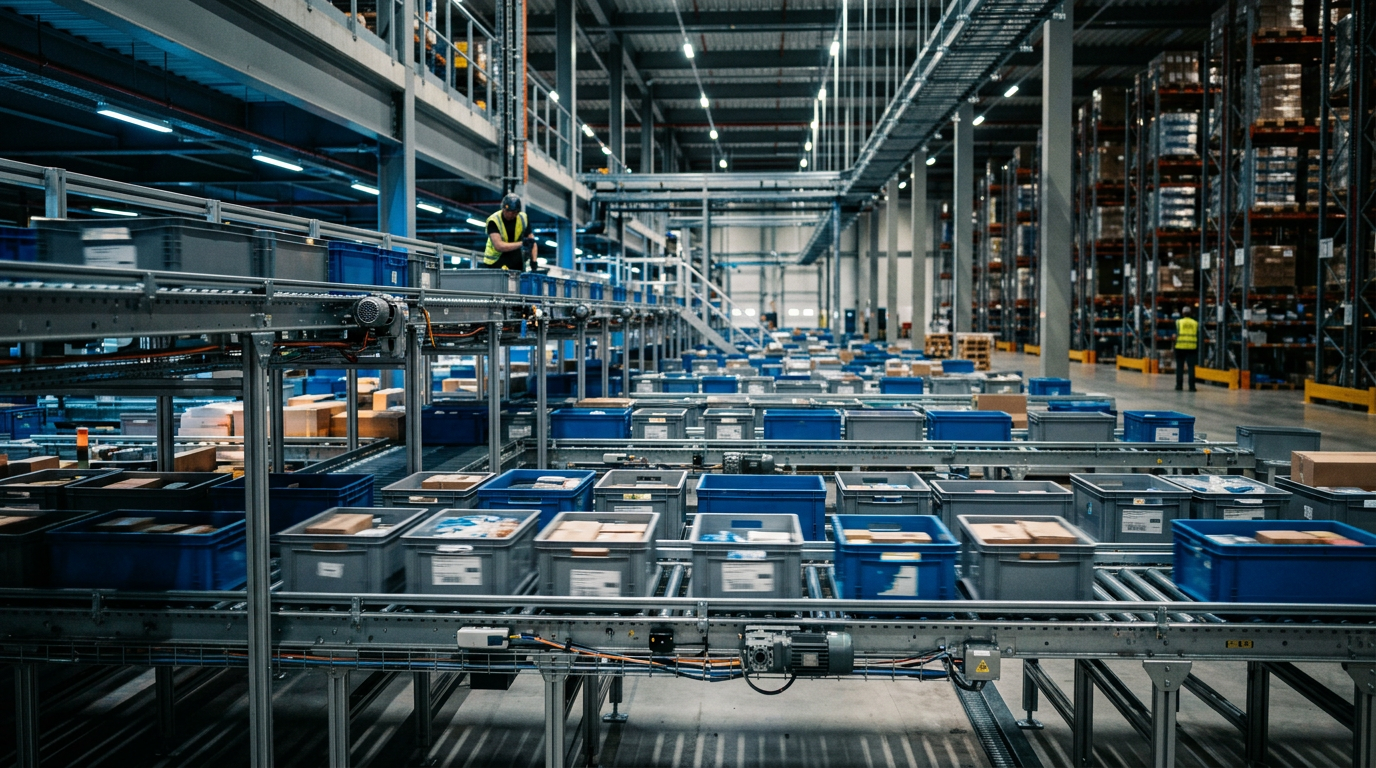
In the high-velocity environment of Third-Party Logistics (3PL), case and tote conveyors serve as the vascular system of the facility. These systems are designed to handle standardized transport units—typically plastic totes ranging from 400x300mm to 600x400mm and corrugated cases weighing up to 35kg—across multi-level mezzanines and picking zones.
Modern 3PL operations face a unique challenge: volatility. Unlike dedicated manufacturing lines, a 3PL might handle apparel today and electronics tomorrow. Consequently, the conveyor architecture must utilize modular sections that allow for rapid reconfiguration. The industry standard has shifted toward 24V DC Motor Driven Roller (MDR) technology, which offers "run-on-demand" capabilities, reducing energy consumption by up to 50% compared to traditional AC-driven systems.
Selecting the Right Conveyor Type: Belt vs. Roller
Choosing between belt-driven and roller-driven systems depends on two primary factors: the nature of the load and the required throughput.
Roller Conveyors (MDR and Line-Shaft)
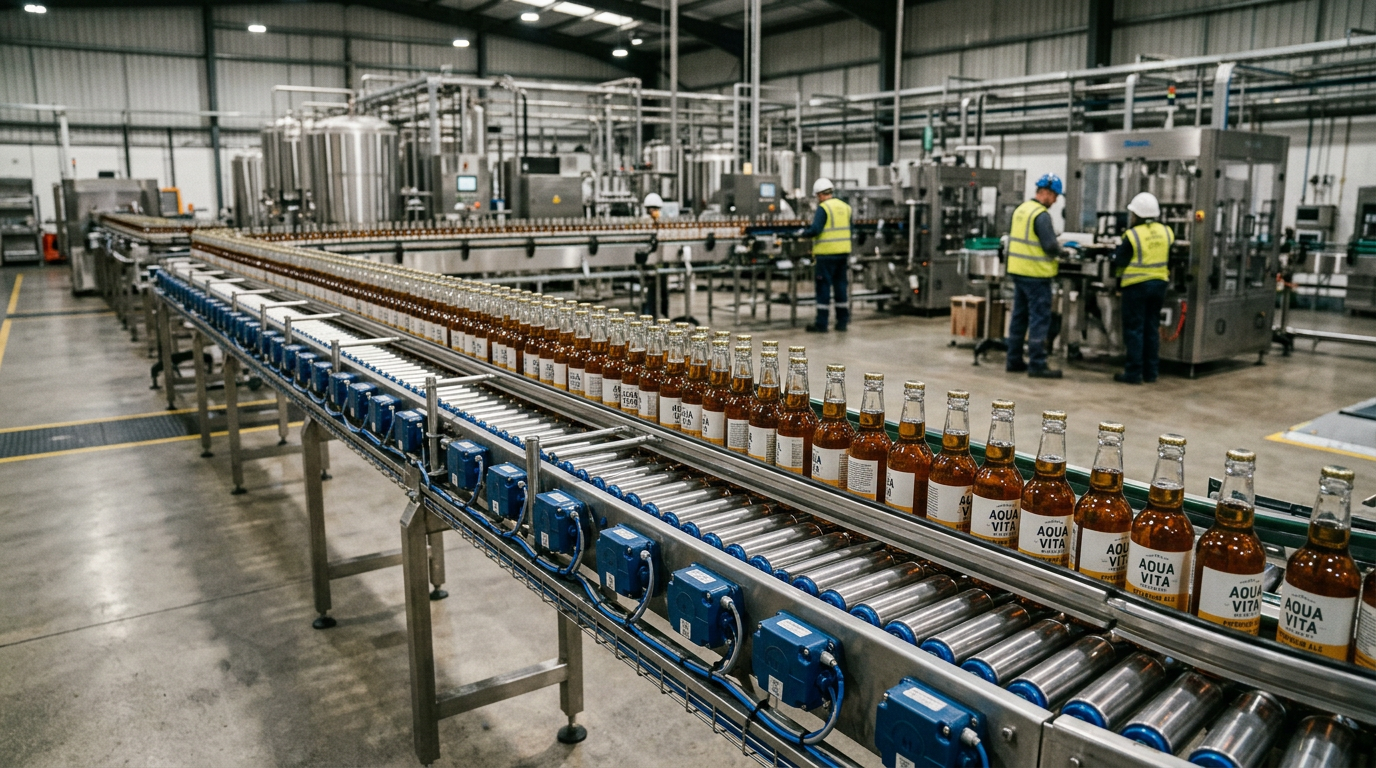
Roller conveyors are the workhorses of 3PL centers. 24V MDR systems allow for ZPA (Zero Pressure Accumulation), where individual zones only run when a package is present and the zone ahead is clear. This prevents "slug" collisions and product damage.
- Best for: Rigid plastic totes, heavy corrugated cases, and zones requiring accumulation.
- Technical Edge: Low noise levels (typically <65 dB) and integrated logic controllers.
Belt Conveyors
Belt conveyors provide a continuous carrying surface, making them essential for small items, polybags, or cases with damaged bottoms that might get stuck between rollers.
- Best for: Incline/decline sections (up to 25 degrees with high-friction belts), high-speed induction, and small parcel handling.
- Technical Edge: Consistent tracking and high speed (up to 2.0 m/s) for sorter induction.
| Feature | 24V MDR Roller | AC Belt Conveyor | Modular Plastic Belt |
|---|---|---|---|
| Energy Efficiency | High (IE4 equivalent) | Medium (IE2/IE3) | Medium |
| Max Load (kg/m) | 50 kg | 100+ kg | 150+ kg |
| Accumulation | Zero Pressure (ZPA) | None/Contact | Minimum Pressure |
| Noise Level | < 60 dB | 70-75 dB | 75+ dB |
| Maintenance | Low (Plug & Play) | Moderate (Tracking) | Moderate (Cleaning) |
Throughput Optimization and Sortation Strategies
In 3PL warehouses, throughput is measured in units per hour (UPH). To achieve rates exceeding 3,000 UPH, the integration of high-speed sortation is mandatory.
Diverters and Transfers
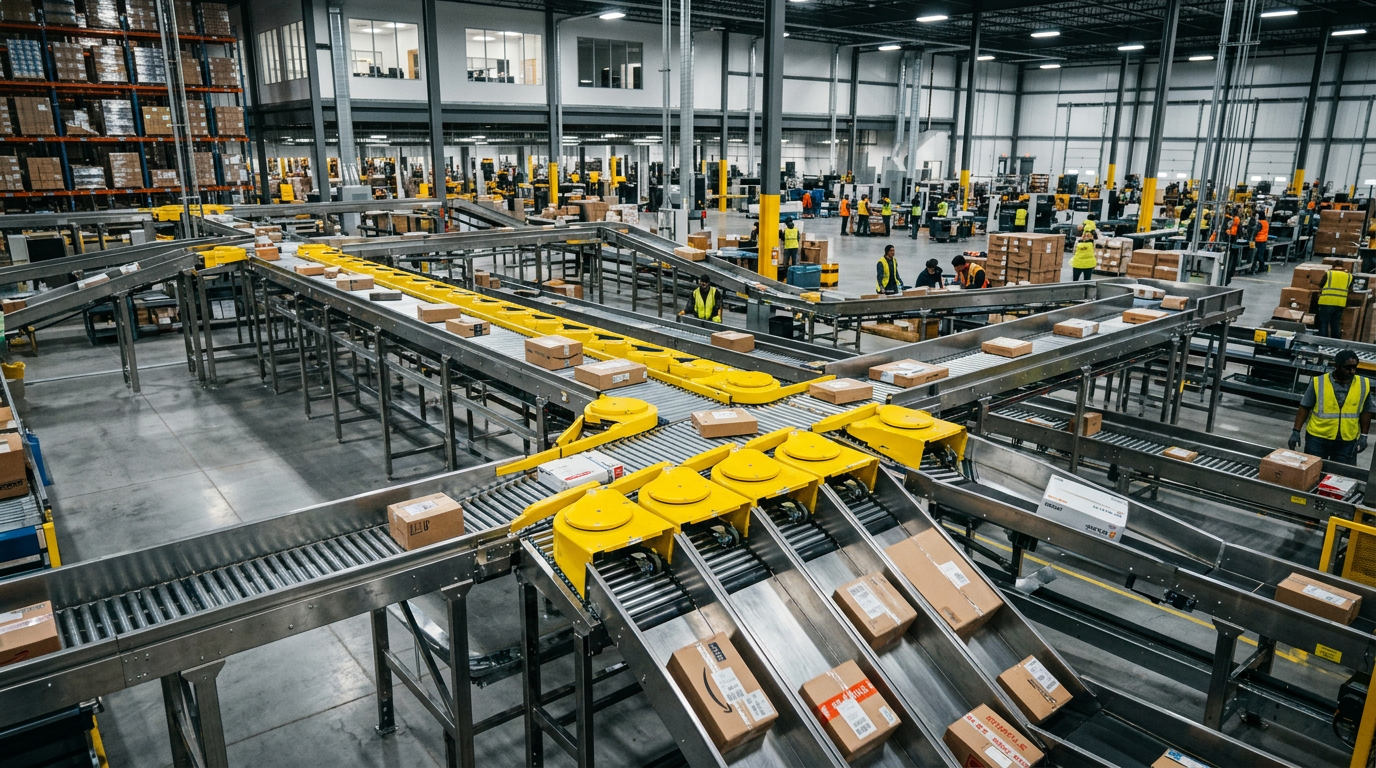
The transition point between a main trunk line and a picking galley often utilizes a 90-degree pop-up transfer or a swivel wheel diverter. For 3PLs handling sensitive electronics or fragile perishables, a pusher sorter might be too aggressive; here, a sliding shoe sorter or a modular plastic belt with integrated rollers (activated by a secondary belt) provides a gentler divert.
Incline and Decline Modules
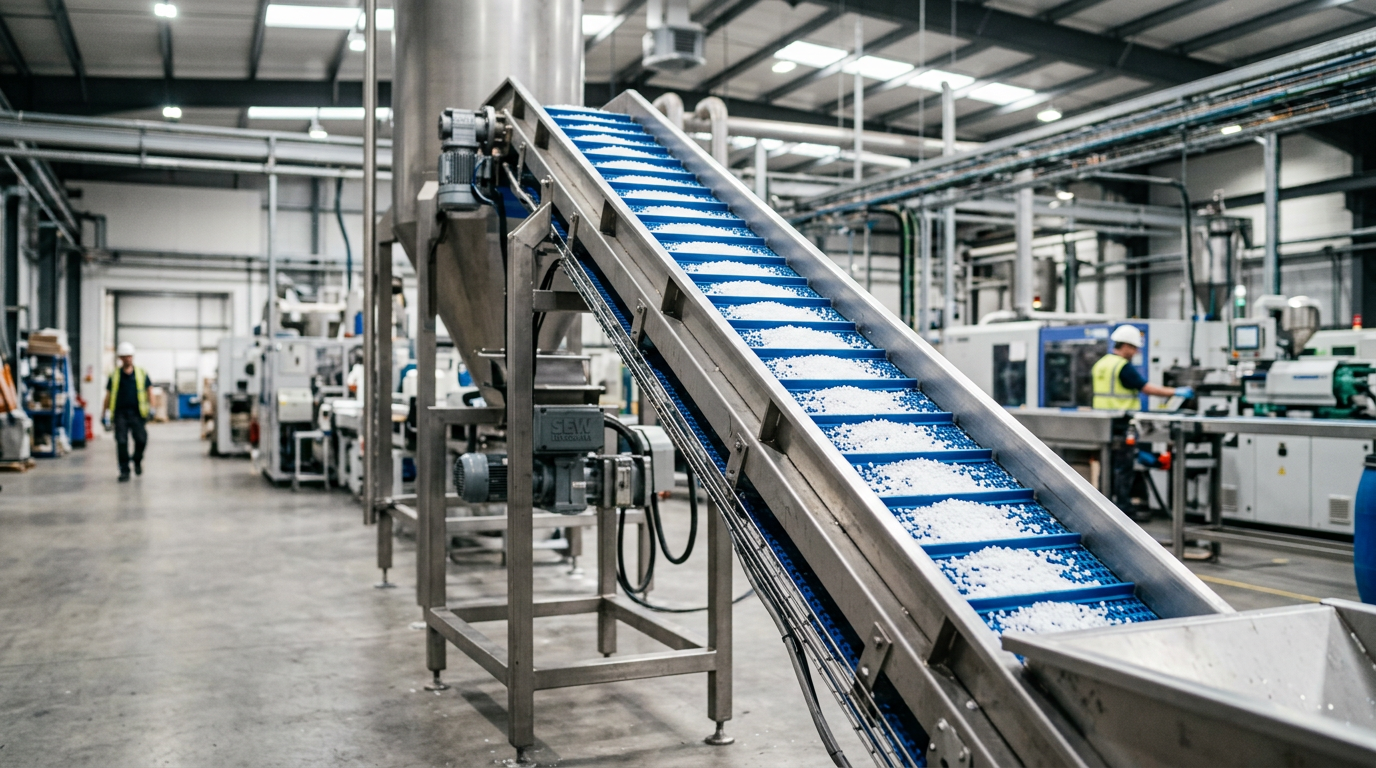
Vertical space utilization is critical in 3PL centers to minimize the footprint cost per square meter. Spiral conveyors have largely replaced long incline belt runs because they maintain a constant product orientation and occupy significantly less floor space. When designing these, plant engineers must account for the "friction angle" of the tote material—polypropylene totes on a textured belt typically allow for steeper inclines than waxed cardboard.
Easy Conveyors stocks the material handling discussed here — ready to ship across Europe.
The Role of Modular Design in Scalability
The ability to scale is what differentiates a profitable 3PL from an e-commerce bottleneck. Using modular components allows maintenance teams to swap out a failed drive roller or damaged frame section in minutes rather than hours. Easy Conveyors specializes in these modular systems, providing the versatile aluminum and stainless steel frameworks that allow 3PL providers to expand their "plug-and-play" conveyor loops as seasonal demand spikes.
Integrating modular systems involves standardizing on specific widths—typically 400mm, 600mm, or 800mm—to ensure that all future additions of belt conveyor tensioning modules or diverter control logic units are backward compatible.
Automation and Intelligence: Integrating WCS
A physical conveyor is only as effective as the Warehouse Control System (WCS) directing it. In 3PL environments, the WCS must interface with a WMS (Warehouse Management System) to perform real-time decisions:
- Weight Verification: Inline check-weighing modules ensure the case weight matches the order profile.
- Volume Scanning: Dim-weight scanners optimize shipping lane assignment.
- Dynamic Routing: Bypassing full picking zones to prevent gridlock.
To ensure long-term reliability, engineers should prioritize VFD soft-start tuning for heavy incline sections. This reduces the mechanical stress on the belt and motor, extending the Mean Time Between Failures (MTBF) beyond the standard 20,000-hour industrial threshold.
Failure Modes and Maintenance in 3PL Environments
The high-duty cycle of 3PL conveyors (often 18-24 hours a day during peak seasons) leads to specific wear patterns.
- Roller Lagging Wear: In high-speed sorters, the friction coating on rollers can delaminate, leading to package slippage.
- Sensor Misalignment: Dust accumulation on photo-eye sensors is the #1 cause of "phantom jams." Utilizing IP67-rated sensors with "dirty lens" indicators can reduce downtime by 15%.
- Belt Tracking Drift: On long transport sections, temperature fluctuations in the warehouse can cause belt expansion, necessitating precision drum motor selection and periodic tensioning.
By adhering to a predictive maintenance schedule—focusing on motor amperage draw and thermal imaging of gearboxes—3PL operators can avoid the catastrophic costs of a conveyor failure during Black Friday or Cyber Monday peaks. Choosing systems with IE3 or IE4 motor classes further ensures that the operational cost of the "vascular system" doesn't erode the thin margins characteristic of the logistics industry.
Frequently Asked Questions
What is the most efficient drive technology for 3PL tote conveyors?
For most 3PL operations, 24V DC Motor Driven Roller (MDR) systems are preferred due to their energy efficiency, low noise, and inherent Zero Pressure Accumulation (ZPA) capabilities.
How does Zero Pressure Accumulation (ZPA) protect fragile goods?
A 24V ZPA system uses sensors to divide the conveyor into zones; a zone only moves if the package in front of it has moved, preventing items from touching or crushing one another.
What is the maximum incline angle for a standard case conveyor?
While belt conveyors can handle 20-25 degrees depending on the product, spiral conveyors are recommended for 3PLs to save floor space and maintain high throughput.
Why is modularity critical for 3PL warehouse conveyors?
Modular systems allow for 'plug-and-play' expansion, meaning sections can be added or rearranged in a weekend without major welding or structural rework, accommodating seasonal growth.
What are the standard widths for industrial tote conveyors?
Standard widths are typically 400mm, 600mm, and 800mm, designed to accommodate the ISO standard plastic totes used across European and North American logistics.